VIAIR 88P Alternatives: Top Portable Air Compressors
A portable air compressor can help inflate car tires, bicycle tires, sports equipment, and other items without visiting a gas station. The VIAIR 88P is a popular 12-volt model designed for roadside tire inflation, but different drivers may need more power, faster inflation, longer cables, or a lower price.
When comparing VIAIR 88P alternatives, we focus on air delivery, maximum pressure, power source, hose and cable length, build quality, and ease of storage. The best alternative should match your vehicle’s tire size and offer enough airflow to inflate a tire without overheating or creating unnecessary delays.
We compared portable tire inflators to find reliable options for different vehicles, budgets, and roadside needs.
Best VIAIR 88P Alternatives
We reviewed portable air compressors that offer reliable performance, useful features, and good value. Our list includes the best VIAIR 88P alternatives for inflating car, truck, SUV, and off-road tires.
VIAIR 88P Portable Compressor

We recommend the VIAIR 88P for drivers who want a sturdy, battery-powered compressor for cars, trucks, SUVs, and tires up to about 33 inches.
Pros
- Inflated our truck tire quickly and steadily
- Long hose and power cord reached every wheel
- Compact case kept the parts organized
Cons
- Battery clamps cannot use a standard cabin power socket
- The pressure gauge is small and needs close attention
- The motor becomes warm during extended use
We found the 88P simple to operate. We connected the clamps to the vehicle battery, started the engine, attached the brass chuck, and switched on the compressor. Its direct-battery connection provided enough power for larger tires.
The 16-foot hose and 10-foot power cord made placement easy, even on longer vehicles. We also liked the included adapters for bikes, balls, and other inflatables. The carrying bag made storage in a trunk or truck bed more convenient.
This compressor works best for roadside top-offs and occasional off-road use. We would let it cool between long inflation jobs, especially with several large tires. Drivers who want a plug-in cabin connection may prefer a different VIAIR model, but the 88P remains a practical choice when stronger power matters.
AstroAI T4 Truck Tire Inflator

We recommend the AstroAI T4 for drivers who want a faster, more controlled alternative to the VIAIR 88P for trucks, SUVs, RVs, and off-road vehicles.
Pros
- Strong inflation performance for large tires
- Automatic shutoff and a clear digital display
- Long cables make battery connections and rear tires easier to reach
Cons
- Requires a direct battery connection
- Needs a cool-down period after extended use
- Bulkier than basic portable inflators
We found the T4 easy to operate once connected to the battery. The digital display helped us set the target pressure, while the automatic shutoff reduced the need to watch the gauge during inflation.
Its motor handled larger tires with less strain than small cigarette-lighter pumps. The long hose and power cable also gave us more flexibility around pickups and SUVs, especially when reaching rear tires.
The main drawback is the battery connection. Unlike some smaller inflators, this model does not focus on simple outlet use. We also had to pause after extended operation, so it works best when we inflate several tires with short breaks between them.
Kohree 12V Air Compressor
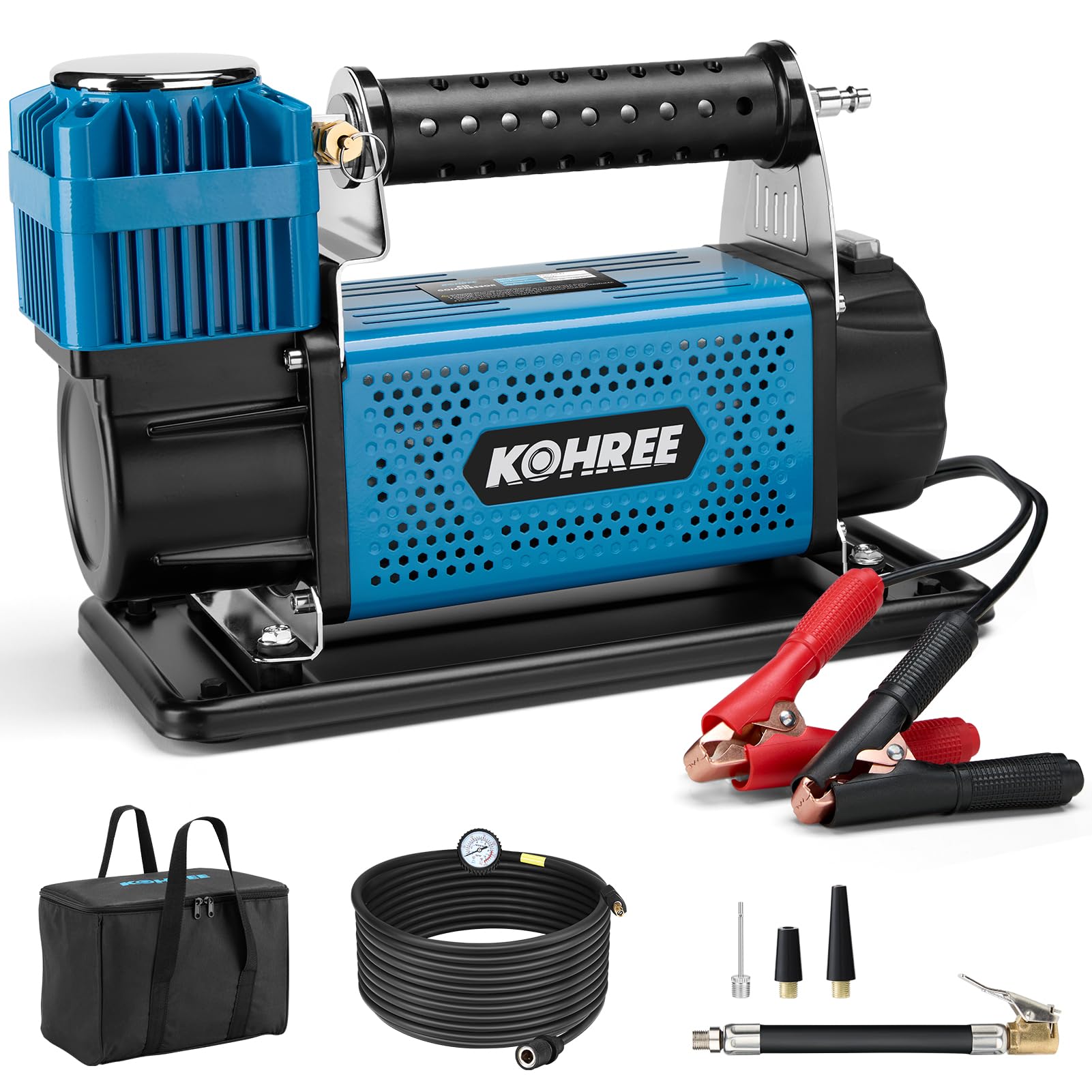
We recommend this compressor for drivers who want faster inflation for trucks, RVs, and off-road tires than the VIAIR 88P typically provides.
Pros
- Fills larger tires quickly
- Long hose reaches all four wheels
- Solid build with heat protection
Cons
- Heavy to carry
- Takes up more storage space
- Pressure readings need careful checking
When we used it on larger tires, the Kohree moved air much faster than compact 12V pumps. The long hose reached each wheel without moving the compressor, which made the job easier around a truck or trailer.
Its metal body and rubber feet kept it steady during use. We also liked the included storage bag and adapters, since they kept the hose and accessories together after the work was done.
The main drawback is its weight. This is not a small emergency pump for a glove box. We found it better suited to a vehicle storage area, especially when carrying it for RV trips or off-road use.
The built-in gauge helped us check pressure while inflating, though we would still confirm the final reading with a separate tire gauge. Short pauses during operation can also occur as the unit manages heat and airflow.
VEVOR Dual-Cylinder Air Compressor

We recommend this VEVOR compressor for drivers who need fast inflation for trucks, SUVs, RVs, and off-road tires.
Pros
- Inflates large tires quickly
- Includes a long air hose and useful adapters
- Handles repeated use with overheat protection
Cons
- Draws heavy current from the vehicle
- The gauge may not be fully accurate
- Lacks an automatic pressure shutoff
We found the dual-cylinder design noticeably faster than small 12-volt inflators. It handled large tires at a useful pace and stayed reasonably cool during repeated inflation. For off-road use, the long hose made it easier to reach each tire without moving the compressor.
The included tool bag, thumb-lock connector, and adapters add practical value. We could use it for vehicle tires, bikes, and other inflatables, though its size and weight make it less convenient than a compact emergency pump.
We would run the engine while using this compressor because it can pull substantial power. Since it does not stop automatically at a set pressure, we would watch the tire gauge and check the final pressure with a separate, trusted gauge.
VIAIR 85P Portable Tire Inflator

We recommend the VIAIR 85P for drivers who want a compact, reliable way to top off tires from a 12-volt outlet.
Pros
- Inflates most car and SUV tires quickly
- Long reach and simple twist-on chuck
- Includes a storage bag, adapters, and LED light
Cons
- Requires the vehicle engine to run
- Manual gauge needs close monitoring
- Can become hot during repeated use
We found the 85P easy to carry and store in a vehicle. Its metal body feels sturdy, while the included bag keeps the hose and power cord organized.
The cigarette-lighter plug makes setup simple. We connected the hose, started the engine, and used the basic on/off switch without dealing with digital controls or preset programming.
During use, the compressor handled regular tire top-offs with little trouble. The built-in gauge helped us track pressure, but we still checked the final reading with a separate gauge for added accuracy.
The 13-foot reach worked well on a typical car. However, the unit needs breaks between tires because extended operation makes it hot. Drivers with larger off-road tires may prefer the battery-clamp connection and higher output of the VIAIR 88P.
Buying Guide
We should match the compressor to our vehicle, tire size, and intended use. Check the manufacturer’s stated maximum pressure, airflow, and duty cycle rather than relying only on appearance or price.
| Feature | What we should check |
|---|---|
| Power source | Confirm the plug, voltage, and fuse rating suit our vehicle. |
| Air hose | Choose a hose long enough to reach all tires. |
| Power cable | A longer cable can reduce the need for an extension. |
| Pressure gauge | Look for clear markings and easy reading. |
| Inflation speed | Compare airflow ratings when faster inflation matters. |
| Duty cycle | Check how long the unit can run before cooling. |
| Portability | Consider size, weight, storage case, and carrying handle. |
| Safety features | Look for thermal protection and secure power connections. |
We should also check whether the compressor includes useful fittings for tires, sports equipment, or other inflatables. A digital display may make pressure checks easier, while an analog gauge can remain simple to operate.
For regular off-road use, we should favor durable construction, a long hose, and a higher duty cycle. For occasional roadside use, compact storage and simple controls may matter more than maximum airflow. We should read the warranty terms and verify that replacement parts or accessories are available.
Editor’s picks
We recommend these VIAIR 88P alternatives based on power, portability, and ease of use. Each model suits a different type of driver and vehicle.
| Model | Best for | Key advantage |
|---|---|---|
| AstroAI 12V 100 PSI | Daily drivers | Digital display and automatic shutoff |
| EPAuto 12V DC | Budget buyers | Simple controls and useful adapters |
| GSPSCN Silver Tire Inflator | Larger vehicles | High airflow and a sturdy design |
| Slime 40050 | Emergency kits | Compact size and built-in storage |
| DEWALT 20V MAX Inflator | Cordless use | Battery operation and strong portability |
We would choose the AstroAI 12V 100 PSI for most cars and SUVs. Its digital display helps us set the target pressure, while the automatic shutoff reduces the chance of overinflation.
For trucks, vans, or frequent off-road use, we would consider the GSPSCN Silver Tire Inflator. It offers higher airflow than many compact inflators, but its larger size may not suit every trunk.
The DEWALT 20V MAX Inflator works well for drivers who already own compatible DEWALT batteries. We avoid a 12V power cord when using it, although the complete setup can cost more than a basic plug-in model.
Frequently asked questions
What makes a good VIAIR 88P alternative?
We look for a compressor with enough airflow, suitable pressure, a reliable power source, and a hose that reaches all four tires. Automatic shutoff, a built-in gauge, and thermal protection can also improve daily use.
Which alternative works best for larger tires?
For truck, SUV, and off-road tires, we recommend a model with a higher duty cycle and stronger airflow than basic compact compressors. We should also check its maximum tire size rating and expected inflation time.
Are cordless compressors a good replacement?
Cordless models offer easy setup and avoid power cables. However, we must monitor battery life, charging time, and performance because some lose power before inflating several large tires.
Can we use a portable compressor for roadside emergencies?
Yes. We should choose a unit with a long power cord, durable construction, and a bright work light if we plan to use it at night. Keeping a tire plug kit and pressure gauge in the vehicle adds useful backup.
What features should we compare?
| Feature | Why it matters |
|---|---|
| Airflow | Affects inflation speed |
| Duty cycle | Limits continuous run time |
| Power source | Determines vehicle compatibility |
| Hose length | Makes tire access easier |
| Safety protection | Helps prevent overheating |
Do all alternatives include a pressure gauge?
No. Some models use a digital display, while others require a separate gauge. We should confirm the included accessories before buying.
Conclusion
We can choose a strong VIAIR 88P alternative by matching the compressor to our vehicle, tire size, and expected use. A compact model works well for routine pressure checks, while a higher-capacity unit better suits larger tires and frequent use.
We should compare maximum pressure, airflow, power connection, hose length, duty cycle, and included accessories before buying. These details affect how quickly and easily we can inflate a tire.
Portability also matters. A smaller compressor takes less storage space, while a heavier model may offer better cooling and longer operating time. We should also check the warranty and user reviews for signs of reliable build quality.
For occasional roadside use, we can focus on a simple 12-volt compressor with a clear gauge and secure connections. For regular off-road driving or larger tires, we should consider a model with higher airflow, a longer duty cycle, and a durable carrying case.






One Comment