Milwaukee M18 Inflator 2848-20 vs DeWalt: Which Cordless Inflator Is Best?
The Milwaukee M18 Inflator 2848-20 and DeWalt 20V MAX DCC020IB serve different needs. Milwaukee focuses on higher pressure and faster inflation, while DeWalt offers a lighter design with built-in corded and 12V power options.
Milwaukee suits demanding jobs and high-pressure tires, while DeWalt fits users who value lighter weight and flexible power sources. Battery ownership also matters, since each inflator works with a different tool platform.
The full comparison examines speed, pressure limits, portability, controls, warranty coverage, and value. It also explains how the DeWalt DCC030 differs and which model makes the better choice for common vehicle and jobsite use.
Key Takeaways
- Milwaukee provides higher pressure and strong inflation performance.
- DeWalt offers lighter handling and more power-source options.
- The best choice depends on tire needs and battery platform.
Core Specifications
The Milwaukee M18 2848-20 and DeWalt DCC020IB are cordless inflators designed for vehicle tires and other inflatables. Their main differences involve battery platforms, rated pressure, inflation speed, hose design, and control features.
Power Source And Battery Compatibility
The Milwaukee 2848-20 uses an 18-volt M18 lithium-ion battery. The battery slides into the tool’s base, which gives the inflator a stable footprint during use. It is sold as a bare tool or in kits that include an M18 battery and charger.
The DeWalt DCC020IB uses a 20V MAX battery, which has a nominal voltage of 18 volts during normal operation. It accepts DeWalt 20V MAX packs and is also sold as a bare tool. Users who already own batteries from either system can avoid buying a separate power source.
Neither model uses the other brand’s battery. Battery size affects runtime and weight, so a larger pack may support more tire fills but make the inflator less convenient to carry. Both tools can also connect to a vehicle’s 12-volt power outlet, giving users another option when a charged battery is not available.
Maximum Pressure And Airflow
The Milwaukee inflator has a maximum pressure rating of 150 psi. Milwaukee rates it for passenger tires, light-truck tires, and other medium-duty applications. Its high-output motor is designed to fill a 33-inch light-truck tire in under one minute under stated test conditions.
The DeWalt DCC020IB also reaches up to 160 psi, giving it a slightly higher published pressure rating. In practical use, the Milwaukee often fills tires faster, especially during larger pressure increases. One comparison reported the Milwaukee reaching 13 psi in about 50 seconds, while the DeWalt took about two minutes under similar testing.
Both tools suit cars, trucks, motorcycles, bicycles, and sports equipment. They are not substitutes for high-volume shop compressors, since their design favors pressure-based inflation rather than continuous airflow for air tools.
Hose Length And Controls
The Milwaukee includes a flexible high-pressure hose with an integrated storage area on the tool. Its digital control panel lets the user set a target pressure, and TrueFill technology checks pressure during operation to help limit overinflation. The tool stops when it reaches the selected setting.
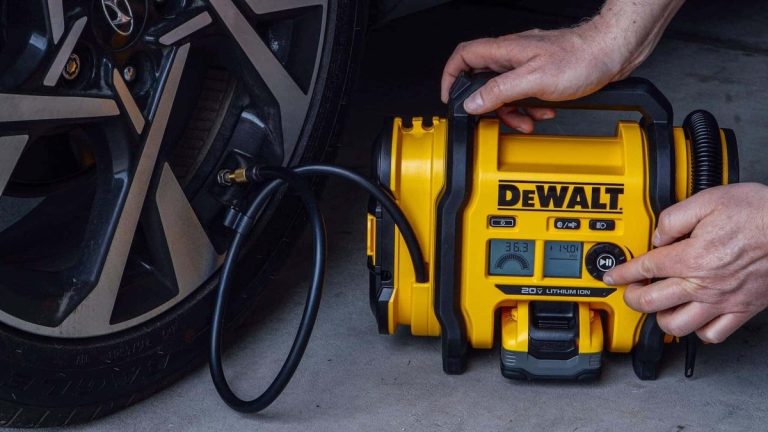
The DeWalt uses a roughly 31-inch high-pressure hose and includes a digital gauge, target-pressure controls, and automatic shutoff. It also provides a high-volume inflation mode for items such as air mattresses and pool floats. A built-in LED light improves visibility during roadside use.
The Milwaukee’s layout emphasizes fast tire inflation and a stable base. The DeWalt offers more connection options, including a high-volume outlet and a 12-volt power cord, which may better suit users who inflate both tires and large low-pressure items.
Inflation Performance
The Milwaukee M18 2848-20 focuses on speed, higher pressure, and stable operation. The DeWalt DCC020IB weighs less and suits routine tire top-offs, while its lower 80 PSI limit makes it less suitable for some high-pressure tasks.
Vehicle Tire Speed
The Milwaukee generally fills vehicle tires faster than the DeWalt. In one comparison, the M18 raised a tire from 0 to 13 PSI in about 50 seconds, while the DeWalt took roughly two minutes under similar conditions.
The Milwaukee also reaches a maximum pressure of 150 PSI, compared with 80 PSI for the DeWalt. That difference matters for users who maintain truck tires, trailers, or other tires that need more than standard passenger-car pressure.
The DeWalt remains practical for emergency use and regular top-offs. Its lighter 2.9-pound body makes it easier to carry, while the Milwaukee weighs about 7.72 pounds without its battery. Actual speed varies with tire size, starting pressure, battery charge, and temperature.
High-Volume Inflation Capability
Neither tool replaces a high-volume air compressor for large inflatables, air mattresses, or other items that need a large amount of air. Both models primarily serve as high-pressure inflators for vehicle tires and similar applications.
The Milwaukee’s stronger motor and higher pressure rating give it an advantage when filling demanding tires. Its design also provides a stable base, which helps keep the tool steady during longer inflation cycles.
The DeWalt offers more portability for small jobs. Its compact design works well for roadside tire repairs, bicycle tires, and routine vehicle maintenance, but users should check the required pressure before starting. A tool’s maximum PSI does not indicate how quickly it fills a large, empty tire.
Pressure Accuracy And Auto Shutoff
Both inflators include digital pressure controls and automatic shutoff. The user can set the target pressure, start the tool, and let it stop when it reaches that setting. This reduces the risk of overinflating a tire during routine maintenance.
The Milwaukee supports stored pressure settings, which helps users repeat common tasks without entering the same value each time. Its higher pressure range also gives it more flexibility for tires and equipment that require elevated settings.
The DeWalt’s controls are straightforward and suitable for normal vehicle tire pressures. Users should verify the reading with a separate gauge when exact pressure matters, especially after a long inflation cycle or when the tire and inflator have different temperatures.
Portability And Jobsite Design
The DEWALT favors lower weight and flexible power options, while the Milwaukee uses a heavier design built for faster, repeated inflation. Both include features that help users carry, store, and operate them around vehicles and job sites.
Size And Weight
The DEWALT DCC020IB weighs about 2.9 pounds without a battery. Its lighter body makes it easier to carry between vehicles, store in a tool bag, and use for roadside repairs. It also supports DEWALT 20V MAX batteries and a 12V DC power connection, giving users more options when a charged battery is unavailable.
The Milwaukee M18 2848-20 weighs about 7.72 pounds without a battery. Its larger, heavier body takes more space, but the added weight can help keep the inflator steady during use. Users who already carry M18 tools can share batteries, while those who value minimum carry weight may prefer the DEWALT.
Storage And Durability
The Milwaukee uses a sturdy, jobsite-focused frame designed for regular use around trucks, equipment, and service vehicles. Its heavier construction provides a stable base, which reduces movement while the hose connects to a tire. The design also suits users who need repeated inflation rather than occasional emergency use.
The DEWALT takes up less room and offers easier storage in a vehicle or compact toolbox. Its lighter construction improves portability, but users should protect it from impacts, moisture, and loose debris. Neither tool replaces a full-size compressor for air tools, so storage decisions should match tire and equipment needs.
Display Visibility And Usability
Both inflators use a digital display and automatic shutoff. The user sets a target pressure, connects the hose, and lets the tool stop when it reaches that setting. This reduces the need to monitor a separate tire gauge during routine inflation.
The Milwaukee’s controls and display support frequent jobsite use, with a layout designed for quick adjustments. Its higher 150 PSI maximum suits tires and equipment that need more pressure. The DEWALT reaches 80 PSI, which covers many car, SUV, and light-truck tires. Its lighter body and flexible power options make it practical for roadside use, while the Milwaukee’s heavier platform better suits repeated work.
DeWalt Model Considerations
DeWalt offers both 12V and 20V MAX inflators, so buyers should match the model to their battery system and workload. Corded operation on some models also gives users more flexibility when battery capacity or charging access becomes a concern.
12V And 20V MAX Options
DeWalt’s 20V MAX DCC020IB is the closest match to the Milwaukee M18 2848-20. It includes a digital pressure display, an automatic shutoff, and storage for its inflation hose and power cord. Its 20V battery system suits drivers who already own DeWalt tools and batteries.
The 12V MAX DCC010IB is smaller and easier to carry. It works well for emergency tire pressure checks, bicycles, motorcycles, and occasional passenger-car use. However, its lower power reserve makes it less suitable for repeated inflation or larger light-truck tires.
| Model | Best suited for | Main consideration |
|---|---|---|
| DCC020IB | Cars, trucks, and regular use | Larger and more capable |
| DCC010IB | Compact emergency kits | Lighter but less powerful |
The Milwaukee M18 model reaches up to 150 PSI and targets passenger, light-truck, and other medium-duty tires. DeWalt buyers should compare inflation speed, battery availability, and the tire sizes they expect to service rather than relying only on maximum PSI.
Corded And Cordless Flexibility
The DCC020IB can run from a DeWalt 20V MAX battery or a vehicle’s 12V DC outlet. It also includes a 120V AC adapter, allowing use near a household outlet. This three-source design helps when the battery is empty or the inflator must handle several tires in one session.
Its corded options make the DeWalt more flexible for roadside use and garage work, but the added cables require storage and setup. The Milwaukee M18 2848-20 uses an M18 battery and focuses on cordless operation. Buyers who already own M18 packs may prefer its simpler setup, while DeWalt users may value the DCC020IB’s power-source choices.
Value, Warranty, And Best Use Cases
The Milwaukee M18 and DeWalt 20V inflators both offer cordless convenience, digital pressure control, and automatic shutoff. Their value depends mainly on existing batteries, tool-only prices, warranty coverage, and the type of tires they need to fill.
Tool-Only Pricing
Both models typically sell as bare tools, so buyers must already own a compatible battery and charger or purchase them separately. The Milwaukee 2848-20 uses M18 batteries, while the DeWalt DCC020IB uses DeWalt 20V MAX batteries. Battery ownership can make either option much less expensive than starting a new platform.
| Factor | Milwaukee M18 2848-20 | DeWalt DCC020IB |
|---|---|---|
| Battery platform | M18 | 20V MAX |
| Tool-only value | Best for M18 owners | Best for DeWalt owners |
| Power sources | Battery | Battery, 12V car outlet, or AC power |
| Main advantage | Faster inflation | Greater power-source flexibility |
The Milwaukee generally appeals to buyers who value faster inflation and a stable design. The DeWalt can provide better value for users who want backup power options, especially when a battery is unavailable or discharged. Buyers should compare current retailer prices and confirm whether a battery, charger, or accessories come in the package.
Ideal Buyer Profiles
The Milwaukee 2848-20 suits contractors, truck owners, and drivers who already use M18 tools. Its strong airflow and automatic shutoff make it useful for regular tire pressure checks, roadside repairs, trailers, and light-truck tires. It also fits users who prefer a sturdy inflator built mainly for speed and portability.
The DeWalt DCC020IB fits homeowners, tradespeople, and vehicle owners invested in the 20V MAX system. Its ability to run from a 20V battery, a 12V vehicle outlet, or an AC outlet gives it more flexibility for garages and roadside use. It may suit buyers who inflate several types of equipment, including car tires, sports gear, and small inflatables.
Neither model replaces a high-volume compressor for heavy shop work. Both work best for tire maintenance, pressure corrections, and occasional inflation tasks.
Frequently asked questions
Which inflator is faster?
The Milwaukee M18 2848-20 generally fills tires faster than the DeWalt DCC020IB. It can inflate a 33-inch light-truck tire in under one minute under suitable conditions. Actual speed depends on tire size, starting pressure, battery charge, and temperature.
Which model reaches higher pressure?
| Feature | Milwaukee M18 2848-20 | DeWalt DCC020IB |
|---|---|---|
| Maximum pressure | 150 PSI | 80 PSI |
| Platform | M18 batteries | 20V MAX batteries |
| Auto shutoff | Yes | Yes |
The Milwaukee suits users who need higher pressure or frequently inflate truck and off-road tires. The DeWalt handles passenger-car, bicycle, and light-duty inflation tasks.
Which inflator is easier to carry?
The DeWalt weighs about 2.9 pounds without a battery, while the Milwaukee weighs about 7.72 pounds. The DeWalt works better for emergency kits and jobs that require frequent carrying.
Do both tools include a battery?
Both models commonly sell as bare tools, although kit options may include a battery and charger. Buyers should check the package contents before ordering.
Which battery platform should a buyer choose?
The best choice depends on the batteries already owned. A Milwaukee M18 user can share existing packs with the 2848-20, while a DeWalt 20V MAX user can use batteries with the DCC020IB.
Conclusion
The Milwaukee M18 Inflator 2848-20 suits users who need higher pressure, fast filling, and a stable design. Its 150 PSI rating makes it useful for truck tires, trailers, and other demanding jobs. It also fits buyers who already own Milwaukee M18 batteries.
The DeWalt DCC020IB offers a lighter and more portable design. Its 80 PSI limit handles cars, bikes, sports equipment, and most everyday inflation tasks. It also makes sense for users who already own DeWalt 20V MAX batteries.
| Best choice | Inflator |
|---|---|
| Higher pressure and heavy-duty use | Milwaukee M18 |
| Lower weight and easy transport | DeWalt DCC020IB |
| Existing Milwaukee battery collection | Milwaukee M18 |
| Existing DeWalt battery collection | DeWalt DCC020IB |
Battery compatibility should guide the purchase as much as performance. Buying a tool that matches an existing battery system can reduce the total cost and eliminate the need to manage another charger and battery line.