What Is a Normal Long Term Fuel Trim Reading? the Safe Range
A normal long-term fuel trim reading is usually between -10% and +10%, with 0% to ±5% as the ideal zone. Values outside that range point to a lean or rich condition that needs diagnosis.
If you’re wondering what is a normal long term fuel trim reading before you start chasing a check-engine light or a rough idle, the short answer is that most engines stay between -10% and +10%, with the ideal zone closer to 0% to ±5%. Long-term fuel trim (LTFT) is one of the most useful live-data values on an OBD2 scanner because it shows how the engine computer has learned to adjust the air-fuel mixture over time. This guide explains the safe range, what pushes fuel trim out of it, and how to check it without replacing parts on a guess.
- Normal range: LTFT between -10% and +10% is generally acceptable; 0% to ±5% is the ideal.
- Positive vs. negative: Positive LTFT means the ECU is adding fuel (lean); negative means removing fuel (rich).
- Scanner needed: You need an OBD2 scanner with live data to read fuel trim values.
- Diagnosis order: Check vacuum leaks, MAF sensor, fuel pressure, and injectors before replacing oxygen sensors.
- Know when to stop: Fuel system and wiring work can be safety-sensitive; get professional help when needed.
What Is a Normal Long Term Fuel Trim Reading? The Safe Range Explained
Long-term fuel trim is a percentage value that tells you how much the engine computer has permanently adjusted fuel delivery to keep the air-fuel mixture near the ideal 14.7:1 ratio for gasoline engines. When the computer adds fuel, LTFT goes positive. When it removes fuel, LTFT goes negative.
Normal LTFT Falls Between -10% and +10% (Ideal: 0% to ±5%)
For most modern gasoline vehicles, a long-term fuel trim reading between -10% and +10% is considered normal at idle and cruising speeds. The ideal range is tighter: 0% to ±5%. That means the engine is running close to the factory-calibrated mixture with only small corrections.
These numbers are a general diagnostic guideline, not a manufacturer specification. Some vehicles may set a check-engine light with fuel trim below the ±10% threshold, while others may tolerate slightly larger values before setting a code. Always compare your reading with the vehicle-specific service information when available.
Why Your Engine Won’t Always Sit at 0%
Zero percent is the theoretical ideal, but real engines rarely hold there for long. Small variations in fuel quality, ethanol content, air filter condition, oxygen sensor response, and even weather can shift the mixture slightly. The computer constantly adjusts to keep emissions low and performance smooth.
A reading of +3% or -4% is usually nothing to worry about. It simply means the engine is compensating for normal wear or fuel differences. Problems start when LTFT climbs steadily toward +10% or drops toward -10% and stays there across multiple drive cycles.
Short-Term vs. Long-Term Fuel Trim: How the ECU Balances the Air-Fuel Mixture
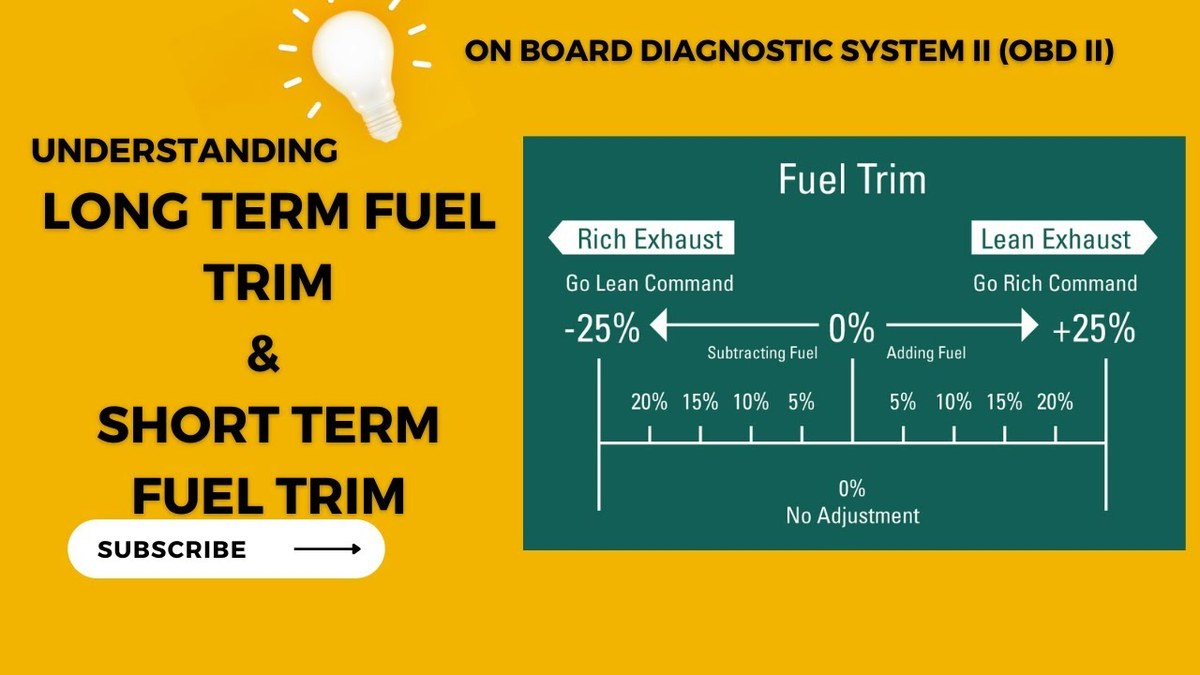
The engine control unit (ECU) uses two separate fuel trim values to manage the mixture: short-term fuel trim (STFT) and long-term fuel trim (LTFT). They work together, but they answer different questions.
STFT Handles Real-Time Corrections While You Drive
Short-term fuel trim is a fast-moving correction that changes every second based on oxygen sensor feedback. If the sensor detects a lean mixture, STFT jumps positive to add fuel. If the mixture is rich, STFT goes negative to pull fuel back. STFT reacts in real time and returns toward zero when conditions stabilize.
LTFT Stores Learned Adjustments for Recurring Conditions
Long-term fuel trim is the learned average of those short-term corrections over a longer period, usually several minutes of driving. If the computer keeps needing the same correction, it stores that adjustment in LTFT so the engine starts closer to the right mixture on the next cold start. This is why LTFT changes slowly and holds steady while STFT fluctuates.
How the ECU Calculates Fuel Trim and What the Numbers Actually Mean
Fuel trim is not a direct measurement of air or fuel. It is a calculated correction applied to the base fuel pulse width, which is the amount of time a fuel injector stays open. The percentage tells you how much the computer is adding or removing from that base value.
Oxygen Sensor Input and Closed-Loop Operation
Fuel trim only works in closed-loop mode, meaning the engine is warm enough and the oxygen sensors are active enough to provide feedback. The upstream oxygen sensors measure oxygen in the exhaust before the catalytic converter. When the mixture is lean, the sensor voltage drops and the computer adds fuel. When the mixture is rich, the voltage rises and the computer removes fuel. A lazy or failing oxygen sensor can create false fuel trim readings, so it is worth checking sensor data before blaming other parts. If you need a refresher on how scanners help here, read our guide on whether an OBD2 scanner can tell which oxygen sensor is bad.
MAF/MAP Sensor Data and Fuel Pressure Assumptions
The mass airflow (MAF) sensor or manifold absolute pressure (MAP) sensor tells the computer how much air is entering the engine. The computer also assumes a certain fuel pressure based on the fuel pressure regulator and fuel pump condition. If the MAF reads low airflow, the computer adds less fuel, which can make the mixture lean. If fuel pressure is higher than expected, the mixture runs rich and LTFT goes negative. This is why fuel trim problems often trace back to air metering or fuel delivery issues.
What Causes High Positive LTFT (Lean Condition)
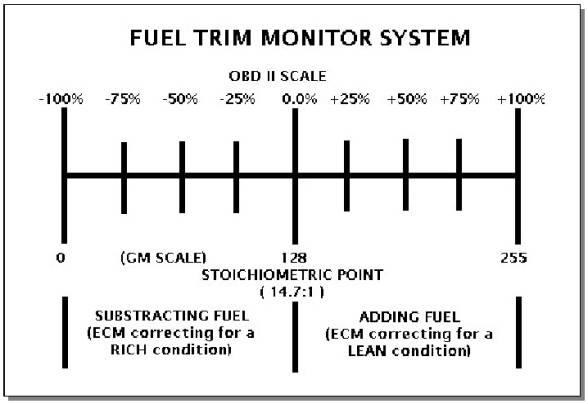
When LTFT sits above +10%, the computer is adding a lot of fuel to compensate for a lean condition. The engine is getting too much air or not enough fuel, and the computer is trying to catch up.
Vacuum Leaks and Intake Air Leaks
A vacuum leak lets unmetered air enter the engine after the MAF sensor, which leans out the mixture. Common leak points include cracked intake hoses, worn intake manifold gaskets, loose PCV hoses, and brake booster lines. The computer adds fuel to compensate, pushing LTFT positive. A smoke test or propane test at a shop can locate these leaks quickly.
Failing MAF Sensor, Clogged Fuel Filter, or Weak Fuel Pump
A dirty or failing MAF sensor can under-report airflow, causing the computer to command less fuel than the engine actually needs. A clogged fuel filter or weak fuel pump reduces fuel pressure, which also leans out the mixture. Both conditions show up as high positive LTFT, often accompanied by hesitation, surging, or a slow crank.
What Causes High Negative LTFT (Rich Condition)
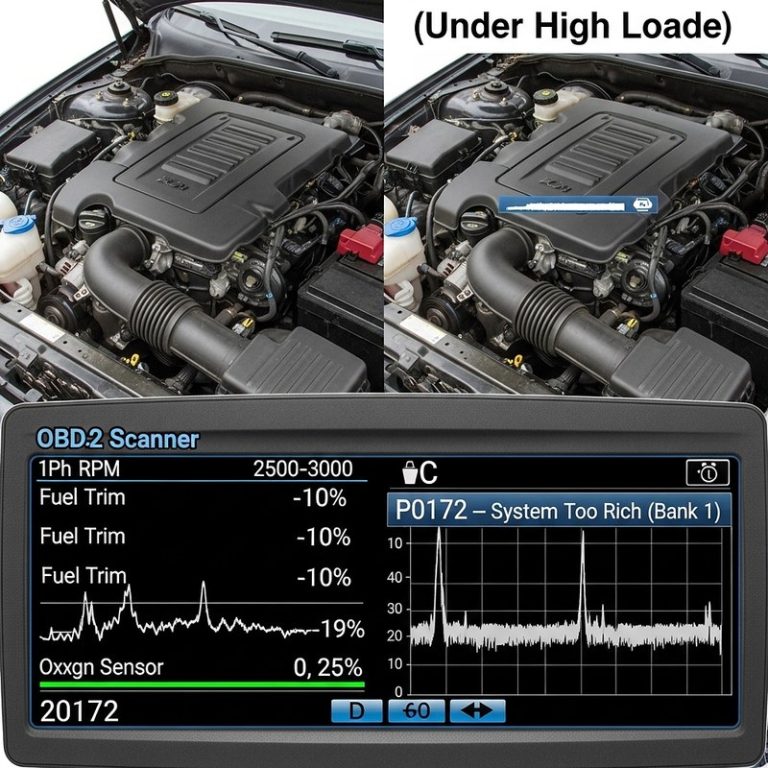
When LTFT drops below -10%, the computer is removing fuel because the mixture is too rich. There is too much fuel or not enough air entering the engine.
Leaking Fuel Injectors or a Stuck-Open Fuel Pressure Regulator
A leaking fuel injector drips fuel into the cylinder even when it should be closed, making the mixture rich. A stuck-open fuel pressure regulator can push fuel pressure too high, which causes the injectors to deliver more fuel than commanded. Both issues can also foul spark plugs and contaminate engine oil over time.
Restricted Air Intake and EVAP System Faults
A clogged air filter, collapsed intake hose, or blocked air box reduces airflow, which makes the mixture rich. EVAP system faults can also cause rich conditions when fuel vapor is purged incorrectly into the intake. Check the air intake path first because it is the easiest and cheapest thing to inspect.
How to Read Fuel Trim Data on Your OBD2 Scanner
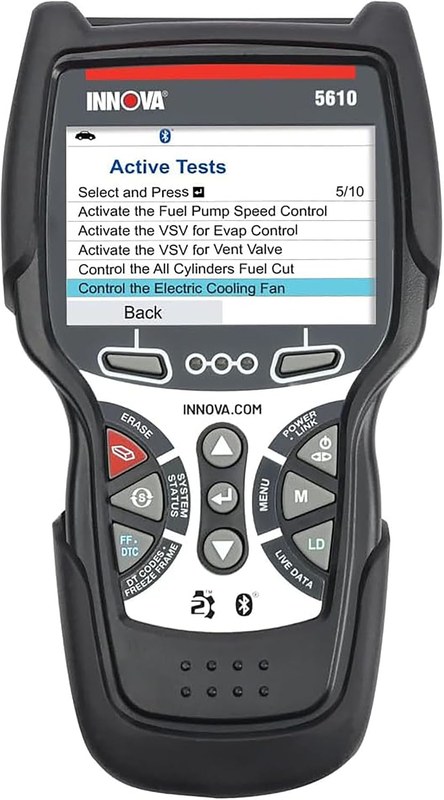
Reading fuel trim requires a scanner that supports live data, not just code reading. Most entry-level and mid-range OBD2 scanners can display fuel trim, but the menu names and update speeds vary by brand and model.
OBD2 Protocol Coverage and Model-Year Compatibility
Fuel trim is a generic OBD2 parameter, which means it is available on most vehicles sold in the US from 1996 onward. However, not every scanner displays it the same way. Some scanners label it “Fuel Trim Bank 1 Sensor 1” or “Long Term Fuel Trim,” while others use abbreviations like “LTFT1” and “LTFT2.” Verify that your scanner supports live data and generic OBD2 mode 1 parameters before you rely on it. If you own a Foxwell NT301, our walkthrough on how to read fuel trim on a Foxwell NT301 shows the exact menu path.
Check: Confirm the scanner works with your vehicle’s make, model, year, and OBD2 protocol before purchase. Limitations: Some scanners only read generic OBD2 data and may not display manufacturer-specific fuel trim values on newer vehicles.
Locating the Diagnostic Port and Choosing the Correct Ignition Mode
The OBD2 diagnostic port is usually under the driver’s side dashboard, near the steering column or fuse panel. Plug in the scanner, turn the ignition to the “On” position without starting the engine, and let the scanner connect. Then select “Live Data” or “Data Stream” and scroll to the fuel trim values. Start the engine and let it reach normal operating temperature before recording readings.
Live-Data Limits, App Permissions, and Scan Tool Quality
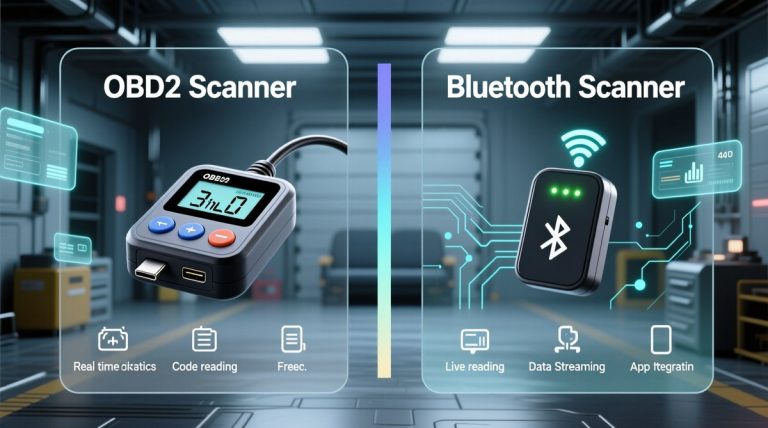
Cheap code readers often lack live data entirely, while some Bluetooth scanners rely on a smartphone app that may require account creation, location permissions, or a subscription for advanced features. Check what the app collects and whether the scanner’s live data updates fast enough for fuel trim diagnosis. A good scanner should refresh fuel trim at least a few times per second, not once every several seconds.
Resetting Fuel Trim: What It Does, What It Won’t Fix, and Emissions Readiness
Clearing diagnostic trouble codes or disconnecting the battery resets LTFT back to zero. This can make the engine feel better for a short time, but it does not fix the underlying problem.
Reset Limitations and Emissions Readiness Flags
When you clear codes, the ECU also resets its emissions readiness monitors. Those monitors must complete a specific drive cycle before the vehicle can pass an OBD2 emissions inspection. If you clear codes right before a test, the readiness monitors may show “incomplete,” which can cause a failure even if the check-engine light stays off. Our guide on what readiness monitor incomplete means explains how this works, and mode 6 data can show the actual monitor results if your scanner supports it.
When a Reset Is Legitimate vs. Masking a Real Problem
A reset is legitimate after a repair, when you need to verify that the fix worked and that new codes do not appear. It is not a valid way to hide a problem before selling a vehicle or passing an inspection. If LTFT climbs back out of range within a few drive cycles, the root cause is still present and needs a real repair.
When Fuel Trim Diagnosis Requires a Professional
Some fuel trim causes are easy to check at home, but others require specialized tools and experience. Know the difference before you start pulling parts apart.
Safety Risks, Specialized Tools, and Wiring/Connector Checks
Fuel system work involves pressurized fuel lines, which can spray fuel and create a fire risk. Wiring checks for oxygen sensors and MAF sensors require a digital multimeter and knowledge of the correct connector pins. If you see damaged wiring, melted connectors, or fuel smell, stop and get professional help. The same applies if the vehicle is a hybrid or electric model with high-voltage components near the engine bay.
Firmware Updates and Dealer-Level Diagnostics
Some fuel trim issues are caused by outdated ECU firmware or a known factory calibration problem. These require dealer-level scan tools and software updates that a basic OBD2 scanner cannot perform. If your vehicle has a factory service bulletin related to fuel trim or driveability, a dealership or qualified shop may be able to apply a calibration update that resolves the issue permanently.
Next Steps: What to Do If Your LTFT Is Out of Range
If your LTFT is outside the normal range, do not start replacing parts randomly. Work through the most likely causes in order of cost and difficulty.
Prioritize Repairs by Likely Cause and Ownership Cost
Start with the cheapest and easiest checks: inspect the air intake path, listen for vacuum leaks, and clean or test the MAF sensor. Then move to fuel delivery items like the fuel filter, fuel pressure, and injectors. Oxygen sensors and catalytic converters are usually not the first cause of fuel trim problems, so test them only after ruling out air and fuel issues.
Re-Test and Monitor Fuel Trim After Each Repair
After each repair, clear the codes, drive the vehicle through a normal drive cycle, and re-read LTFT. The value should move back toward the 0% to ±5% zone. If it does not, the repair did not address the root cause, and you should continue with the next likely item or take the vehicle to a professional.
- Confirm your scanner supports live data before relying on fuel trim readings
- Record LTFT at idle, cruise, and light acceleration for a full picture
- Check the cheapest causes like air leaks and dirty sensors first
- Clear codes before recording the fuel trim values and any stored codes
- Replace oxygen sensors or catalytic converters without testing fuel trim first
- Work on pressurized fuel lines or high-voltage systems without proper training
- Best for: DIY owners who want to catch air, fuel, and sensor problems before they turn into costly repairs.
- Think twice if: You are not comfortable with live data, wiring checks, or fuel system safety risks.
- Next step: Confirm your OBD2 scanner shows live fuel trim, then record readings at idle and cruise before replacing any parts.
Frequently Asked Questions
Most gasoline engines show long-term fuel trim between -10% and +10% during normal operation, with 0% to ±5% as the ideal zone. Readings beyond that range usually point to a mechanical or sensor issue that needs diagnosis.
Positive LTFT means the engine computer is adding fuel to correct a lean condition. Common causes include vacuum leaks, a dirty or failing MAF sensor, a weak fuel pump, or a clogged fuel filter.
Negative LTFT means the computer is removing fuel because the mixture is running rich. Leaking fuel injectors, excessive fuel pressure, a restricted air intake, or EVAP system faults are common reasons.
Most OBD2 scanners with live data can display fuel trim, but the exact menu name and update speed vary by brand. Some basic code readers only show diagnostic trouble codes and cannot display live data at all.
Yes, clearing codes or disconnecting the battery resets LTFT back to zero, but it also resets emissions readiness monitors. If the underlying problem is still there, fuel trim will climb back out of range within a short drive cycle.
Stop and get professional help if you see wiring damage, fuel leaks, high-voltage hybrid components, or if the problem involves the fuel tank or fuel pump. Also stop if you are not comfortable working with live fuel pressure or sensitive engine sensors.