What Causes Positive Fuel Trims at Idle? 5 Checks for DIYers
Positive fuel trims at idle mean the engine computer is adding fuel to fix a lean condition. The usual causes are vacuum leaks, MAF sensor issues, low fuel pressure, slow oxygen sensors, or exhaust leaks before the O2 sensors.
Understanding what causes positive fuel trims at idle can save you hours of guessing and prevent unnecessary parts replacement. Positive fuel trims mean the engine computer is adding extra fuel to correct a lean mixture. At idle, this condition becomes more obvious because the engine has less airflow to mask small problems.
- Vacuum leaks: The top cause of high positive fuel trims at idle is unmetered air entering.
- MAF sensor: A dirty or failing MAF under-reports airflow and forces the ECM to add fuel.
- Fuel pressure: Low rail pressure from a weak pump, clogged filter, or bad regulator creates lean.
- O2 sensors: Slow upstream sensors and exhaust leaks before the sensor produce false lean readings.
- Scanner first: Read STFT and LTFT with a live-data OBD2 scanner before replacing any parts.
What Positive Fuel Trims at Idle Tell You
Fuel trim is how the engine control module (ECM) adjusts the air-fuel mixture to stay near the ideal 14.7:1 ratio. When the ECM sees a lean condition, it adds fuel. That addition shows up as a positive fuel trim percentage. When it sees a rich condition, it removes fuel, showing a negative trim.
Positive fuel trims at idle are common. The real question is whether they point to a minor sensor issue or a mechanical problem. The answer depends on how high the numbers are and whether they change when you rev the engine.
Short-Term vs. Long-Term Fuel Trim: The 10% Rule
Your OBD2 scanner will show two fuel trim values: short-term (STFT) and long-term (LTFT). Short-term trim reacts quickly to oxygen sensor readings. Long-term trim is the ECM’s learned correction over time.
A general rule: fuel trims within plus or minus 10 percent are often considered normal. Once long-term trim climbs past 10 percent at idle, you likely have a real issue worth chasing. Past 15 to 20 percent, the ECM may set a lean code like P0171 or P0174.
Why Idle Makes Lean Conditions More Obvious
At idle, the throttle plate is nearly closed. The engine pulls air through the small idle passage, so any vacuum leak becomes a larger percentage of total airflow. A small crack that lets in extra air matters more at idle than at 3,000 RPM when the engine is swallowing far more air. This is why positive fuel trims at idle often drop when you raise engine speed.
Check #1: Inspect for Vacuum Leaks (Unmetered Air)
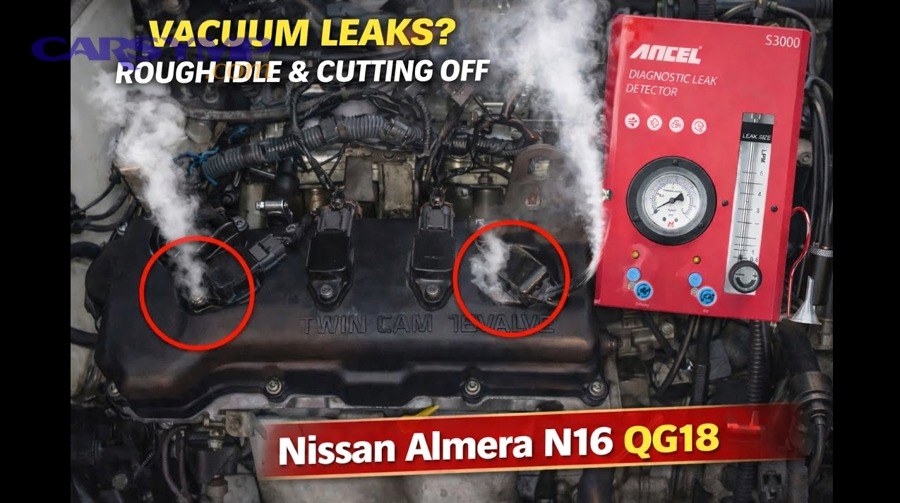
Vacuum leaks are the most common cause of positive fuel trims at idle. The ECM calculates fuel based on the air it measures through the mass air flow (MAF) sensor. Any air entering after the MAF sensor is “unmetered.” The ECM does not know about it, so the oxygen sensors report a lean mixture and the ECM adds fuel.
Common Leak Points: PCV Hoses, Intake Gaskets, Brake Booster
Start with the most common failure points. PCV hoses crack and dry out over time. A split PCV hose is a classic source of unmetered air. Intake manifold gaskets often develop leaks where the manifold meets the cylinder head. Brake booster hoses can crack or fail at the check valve. Also inspect vacuum lines to the fuel pressure regulator, EVAP canister, and cruise control.
DIY Smoke Test vs. Propane Enrichment
A smoke test is the safest and most reliable way to find vacuum leaks. A smoke machine pushes harmless smoke into the intake system. Smoke escaping from a hose, gasket, or seal pinpoints the leak. Many auto parts stores rent smoke machines, and some shops run a smoke test for a reasonable fee.
Another method is propane enrichment. You carefully wave an unlit propane torch tip around suspected leak areas while watching fuel trims. If the trim drops when the propane is near a spot, you found the leak. The propane is pulled into the leak and enriches the mixture.
Check #2: Test the Mass Air Flow Sensor
The MAF sensor measures the air entering the engine. The ECM uses this reading to calculate fuel delivery. If the MAF reads lower than the actual airflow, the ECM under-fuels, the oxygen sensors see a lean condition, and positive fuel trims appear.
MAF Scaling Errors and Contamination
MAF sensors fail in two ways. Contamination is the first. A dirty hot wire or film element reads less air than is actually flowing. This is common on vehicles with dirty air filters or oiled cotton filters that shed oil onto the sensor. Scaling errors are the second. The sensor may produce an incorrect voltage curve as it ages, even if it looks clean.
Cleaning a MAF sensor with dedicated MAF cleaner is a low-cost first step. But not all MAF sensors can be cleaned safely. Check your vehicle service manual first.
Live Data Verification at Idle vs. 2,500 RPM
Use your OBD2 scanner to watch the MAF reading in grams per second (g/s). At warm idle, most engines read between 2 and 7 g/s depending on engine size. At a steady 2,500 RPM, the reading should be roughly four to five times the idle value.
If the MAF reading looks low at idle but the engine runs smoothly, the sensor may be under-reporting. A beginner-friendly OBD2 scanner can display this live data.
Check #3: Verify Fuel Pressure and Volume
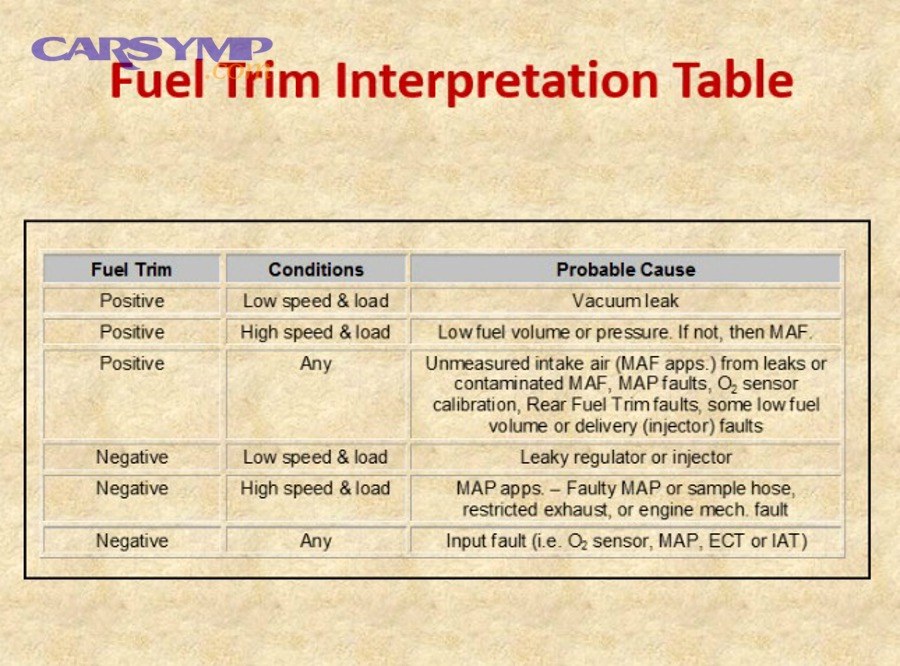
Low fuel pressure means less fuel reaches the injectors. The ECM adds fuel to compensate, which shows up as positive fuel trims. At idle, fuel demand is low, so pressure problems can be subtle. Under load, they become more obvious.
Fuel Filter, Pump, and Pressure Regulator Failure Modes
Three parts control fuel pressure: the fuel pump, the fuel filter, and the pressure regulator. A clogged fuel filter restricts volume. A weak fuel pump cannot maintain pressure. A faulty regulator may bleed fuel back to the tank, dropping rail pressure.
Some vehicles have a fuel pressure test port on the rail. Others require a gauge in line with the fuel hose. Check your service manual for the correct procedure and pressure specification.
- Check fuel pressure at idle and with the regulator vacuum hose disconnected
- Compare readings to the specification in your service manual
- Watch for a slow pressure drop after shutdown, which points to a leaking injector or regulator
- Open a fuel system without relieving pressure first
- Use an unverified pressure spec from a forum post
- Replace a pump without checking the filter, regulator, and relay
Fuel Trim Impact from Low Rail Pressure
When rail pressure drops, the injectors spray less fuel per pulse. The ECM extends the injector pulse width to compensate. This shows up as positive long-term fuel trim. If pressure is low enough, the ECM may also set codes for a lean condition or misfires.
Check #4: Examine Oxygen Sensor Response
Oxygen sensors tell the ECM how well the engine is burning fuel. If the sensor reports lean when the mixture is actually fine, the ECM adds fuel unnecessarily. This creates a false positive fuel trim reading.
Slow-Switching O2 Sensors and False Lean Readings
A healthy upstream oxygen sensor switches between rich and lean many times per second. As sensors age, they slow down. A slow sensor may lag behind the actual exhaust condition, causing the ECM to correct for a condition that no longer exists.
Watch the O2 sensor voltage on your scanner. It should cycle rapidly. A flat or sluggish signal suggests the sensor needs replacement. Some scanners display this as a graph, making the pattern easier to see.
Pre-Cat vs. Post-Cat Sensor Role in Fuel Trim
Pre-cat (upstream) oxygen sensors affect fuel trim. They measure exhaust before the catalytic converter and provide the feedback the ECM uses. Post-cat (downstream) sensors monitor converter efficiency. They have little direct effect on fuel trim but can confirm whether the upstream sensor is working correctly.
If you replace an oxygen sensor, use the correct part for its position. Upstream and downstream sensors are often different part numbers.
Check #5: Look for Exhaust Leaks Before the O2 Sensors
An exhaust leak ahead of the upstream oxygen sensor can cause positive fuel trims. Outside air entering the exhaust dilutes the exhaust stream. The oxygen sensor reads this as a lean mixture, and the ECM adds fuel to correct it.
Why Upstream Exhaust Leaks Trick the ECM
The oxygen sensor measures the oxygen content of the exhaust. When fresh air leaks into the pipe before the sensor, the sensor sees more oxygen than the engine produced. The ECM interprets this as a lean burn and enriches the mixture. The result is positive fuel trims even though the engine is running fine.
Visual and Soapy-Water Leak Checks
Inspect the exhaust manifold, gaskets, and pipe connections before the oxygen sensor. Look for black soot, which often marks a leak point. With the engine off and the exhaust cool, you can spray soapy water on suspected joints. If bubbles appear or the engine note changes when running, you found a leak.
Be careful: exhaust components get extremely hot. Perform this check only when the exhaust is cool to the touch.
How to Read Fuel Trim Data with an OBD2 Scanner
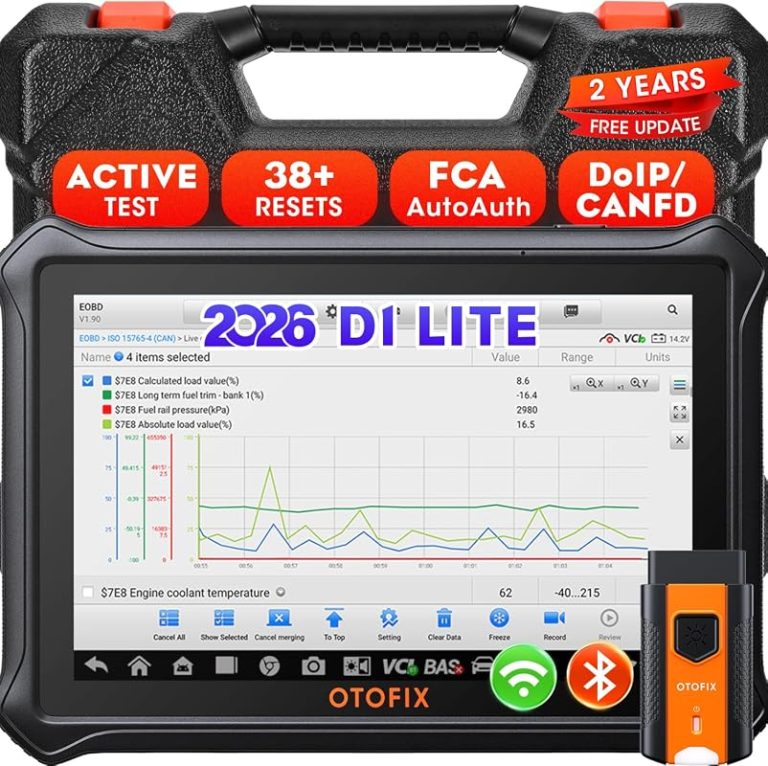
You need a scanner that displays live data, not just codes. Most Bluetooth OBD2 adapters and entry-level handheld scanners can show STFT and LTFT. You do not need a professional bidirectional tool for this step.
OBD2 Port Location, Protocol Coverage, and Ignition Mode
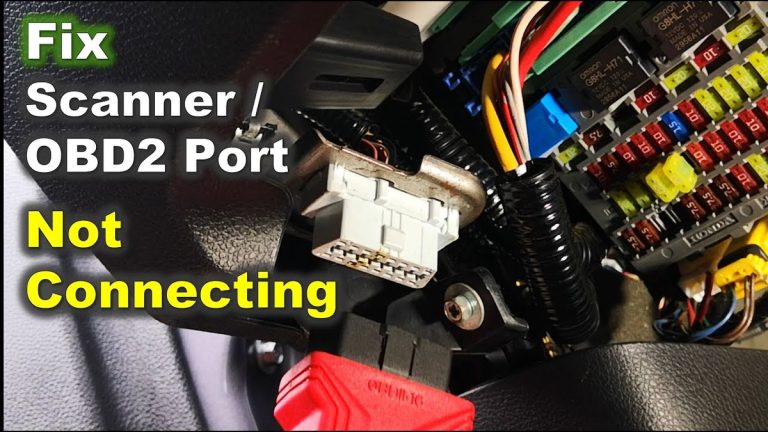
The OBD2 port is usually under the dashboard on the driver’s side. Some vehicles cover it with a small panel. The scanner must support your vehicle’s protocol. Most cars sold in the US since 2008 use the CAN protocol, but older vehicles may use other protocols. Check the scanner’s compatibility list before buying.
For fuel trim data, the engine must be running and warmed up. Start the engine and let it reach normal operating temperature. Cold engines show artificially high fuel trims as the ECM enriches the mixture.
Live-Data Limits, App Permissions, and Firmware Updates
Bluetooth scanners rely on a phone app. Free apps often show fuel trim data, but some hide advanced features behind a subscription. Check the app’s permissions before installing. Some apps request location or account data that is not needed for basic diagnostics.
Keep both the scanner firmware and the app updated. Manufacturers occasionally fix vehicle coverage issues or data display bugs. Our guide on reading fuel trim on the Foxwell NT301 shows how a dedicated handheld scanner handles this task.
Emissions Readiness and Reset Limitations After Repairs
After you fix the cause of high fuel trims, clear the codes with your scanner. The ECM will relearn fuel trims over the next few drive cycles. Do not expect trims to return to zero instantly.
Clearing codes also resets the emissions readiness monitors. If your state requires an emissions inspection, you may need to complete a drive cycle before the monitors show “ready.” Learn more about what readiness monitor incomplete means so you do not fail an inspection unnecessarily.
When to Stop Diagnosing and Call a Professional
DIY diagnosis works well for the five checks above. But some causes require specialized tools and experience. If you have checked vacuum leaks, MAF readings, fuel pressure, oxygen sensors, and exhaust leaks without finding the problem, it is time to stop guessing.
Diagnostic Limits of Consumer Scanners
Consumer scanners read codes and live data, but they cannot command tests such as a fuel injector balance test or a cylinder contribution test. Those require a bidirectional scan tool. A professional shop has the equipment and training to interpret the data correctly.
Some vehicles also have known issues that a generic scanner will not flag. Factory scan tools can access manufacturer-specific data that aftermarket scanners cannot see.
Cost of Professional Diagnosis vs. Blind Parts Replacement
Professional diagnosis typically costs between one and two hours of labor. Replacing parts blindly costs more. A new MAF sensor, oxygen sensor, or fuel pump each runs well over a hundred dollars with parts and labor. If you replace three parts guessing, you have spent far more than a professional diagnosis would have cost.
Preventing Positive Fuel Trims: Maintenance and Next Steps
Most causes of positive fuel trims at idle are preventable with routine maintenance. A clean air filter, fresh spark plugs, and a healthy fuel system keep the engine running near its ideal mixture.
Routine Checks That Keep Fuel Trims Near Zero
Replace the air filter at the recommended interval. Use the correct MAF sensor cleaner and cleaning method. Inspect vacuum hoses for cracks every oil change. Replace the fuel filter at the manufacturer’s interval. Keep the oxygen sensors on schedule if your vehicle specifies one.
Also check for pending codes before they become hard codes. A pending code can warn you about an intermittent issue that has not yet triggered the check engine light.
Ownership Cost and Safety Impact of Ignoring High Trims
Ignoring high positive fuel trims hurts your wallet and your engine. The engine burns more fuel than necessary, reducing fuel economy. A persistent lean condition can cause overheating, detonation, and catalytic converter damage over time.
If your vehicle is running rich to compensate for a false lean reading, the catalytic converter may overheat and fail. Replacing a catalytic converter is an expensive repair that routine diagnosis could have prevented. Catching the problem early is the cheapest repair you will make.
- Best for: DIYers with an OBD2 scanner who want to narrow down the cause of positive fuel trims at idle before spending money on parts.
- Think twice if: You have already checked all five areas and the trims are still high; that is the point to call a professional.
- Next step: Start with a visual inspection of vacuum hoses and a live-data scan of STFT and LTFT at warm idle.
Frequently Asked Questions
Fuel trims between -10% and +10% are generally considered normal. Once long-term fuel trim stays above 10% at idle, investigate the cause. Above 15-20%, the ECM may set a lean code.
Yes. A contaminated MAF sensor under-reports airflow, so the ECM delivers less fuel than needed. The oxygen sensors detect the lean condition and the ECM adds fuel, showing positive trims.
Not immediately. The ECM tolerates small corrections without setting a code. If trims climb high enough, the ECM will set a lean code such as P0171 or P0174.
A professional smoke test typically costs less than one hour of shop labor. Prices vary by shop and region. It is much cheaper than replacing parts blindly.
Short trips may be fine, but long-term driving risks poor fuel economy, overheating, and catalytic converter damage. Diagnose the cause as soon as possible.
No. Most entry-level OBD2 scanners and Bluetooth adapters display short-term and long-term fuel trim as live data. You only need a bidirectional tool for advanced tests.