Cca vs Ca on a Car Battery Tester: Match the Rating to Your Climate
CCA measures cold-weather starting power at 0°F; CA measures standard cranking power at32°F. Always match the tester setting to the rating printed on your battery label, and use CCA when in doubt.
Understanding CCA vs CA on a car battery tester matters more than most drivers realize. The two ratings measure different kinds of cranking power, and choosing the wrong one can make a healthy battery look weak—or a weak battery look fine. This guide explains the difference and how to match the rating to your climate.
- Know the difference: CCA is a stricter cold-weather rating than CA, so CA numbers usually look higher.
- Match the label: Enter the exact CCA or CA number printed on your battery into the tester.
- Test seasonally: Check battery health before winter and before summer to avoid a no-start.
- Use CCA when unsure: CCA gives a harder test and is the safer default for most drivers.
- Stop if damaged: Never test a swollen, leaking, cracked, or frozen battery; get professional help.
Direct Answer: What CCA vs CA on a Car Battery Tester Means for Owners and Drivers
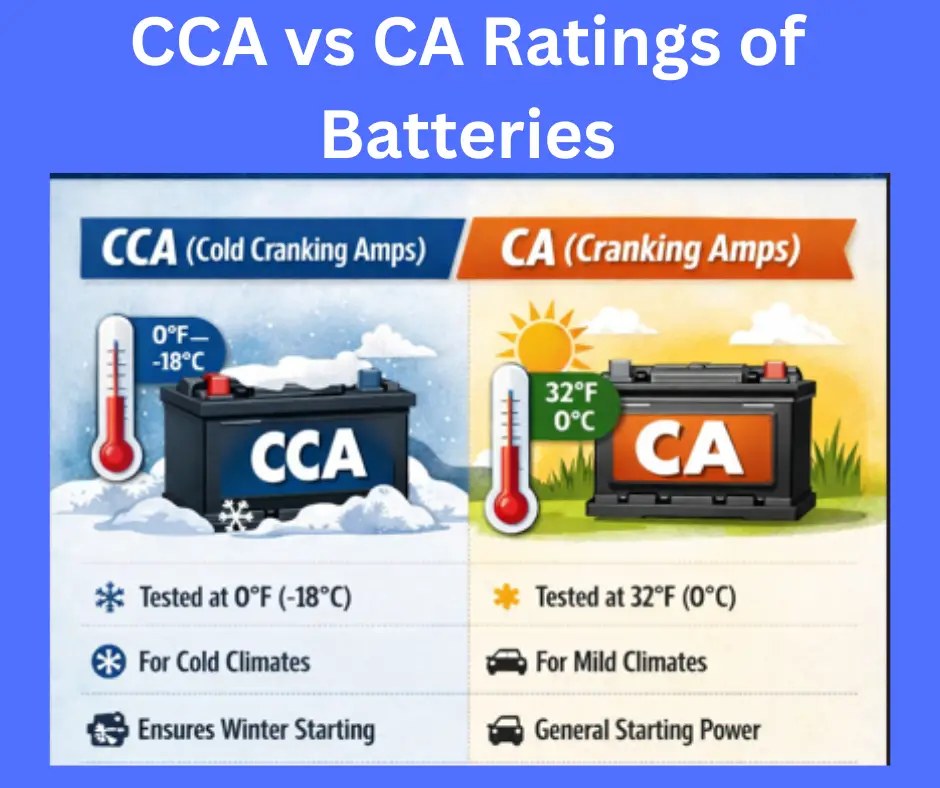
CCA stands for Cold Cranking Amps. It measures how much current a battery can deliver for 30 seconds at 0°F while keeping voltage above a minimum level. CA stands for Cranking Amps. It measures the same kind of power, but at 32°F instead of 0°F.
Because warmer temperatures make chemical reactions easier, the CA number on a battery is almost always higher than the CCA number. For example, a battery rated at 600 CCA might show 750 CA on the label. If you enter CA when the tester expects CCA, the tester may compare your battery to the wrong benchmark.
For most drivers, CCA is the safer choice when a tester asks you to pick a rating. It tests the battery under colder, harder conditions. If the battery passes a CCA test, it will usually handle warmer weather even better. If you live in a cold climate, matching the tester to the battery’s CCA rating is essential. In a warm climate, you can still use CCA; it just gives you a stricter result.
Check the battery label before you test. Look for a number followed by CCA or CA. If the label is worn off, check your owner’s manual or search online using your car’s year, make, and model. A battery tester can tell you more than voltage alone, but only if you feed it the right starting information.
How It Works and What It Can Actually Do
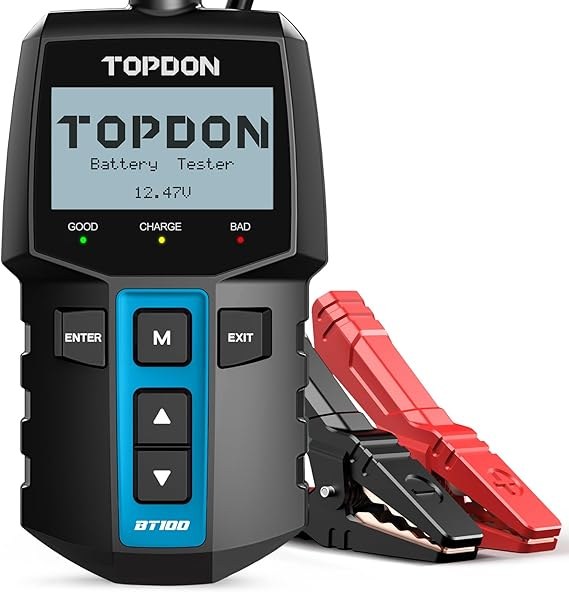
A modern car battery tester does not measure CCA or CA directly like a ruler measures length. Instead, it sends a small electrical signal through the battery and measures how well the battery accepts that signal. This is called conductance testing. Some testers also use a short load to stress the battery briefly.
The tester compares its measurement to a table inside the device. That table is based on the rating you enter. If you enter 600 CCA, the tester checks whether your battery still behaves like a healthy 600 CCA battery. If you enter 750 CA instead, the tester uses a different comparison. That is why the rating you choose changes the result.
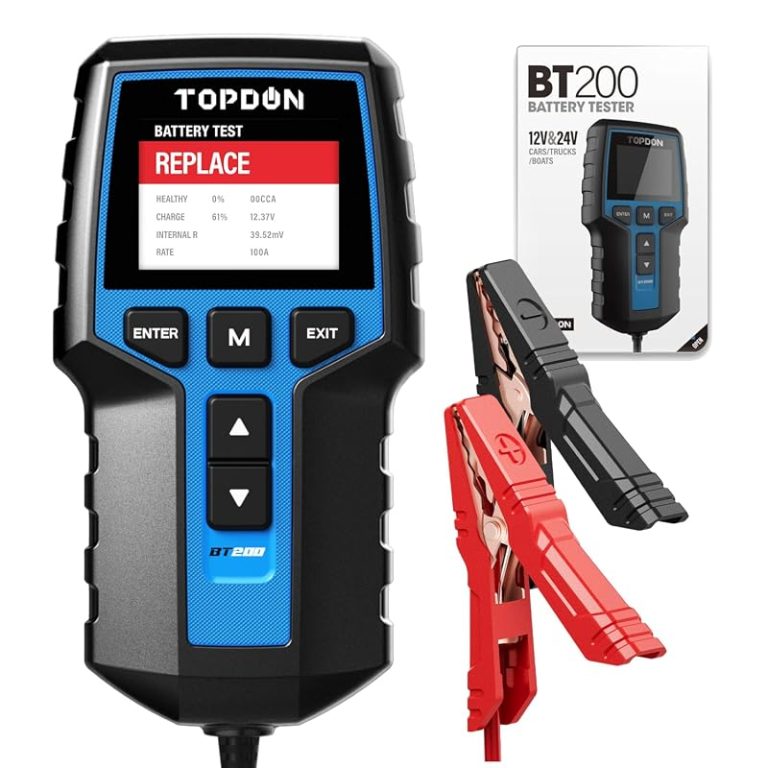
A good battery tester can show you:
- State of charge (how full the battery is)
- State of health (how much usable life remains)
- Measured CCA or CA capacity
- Battery voltage
- Internal resistance
Some testers also check the starting system and charging system. That helps you find out whether the alternator is actually recharging the battery. But remember, a battery tester gives you a snapshot. It cannot see a broken cell caused by vibration, a cracked case, or corrosion inside the cables. If you want to know how accurate a battery tester can be, the short answer is: accurate enough for routine checks, but not perfect.
What a battery tester can actually do is save you from getting stranded. If it shows low state of health before winter, you have time to replace the battery on your schedule. That is much better than discovering a dead battery on a cold morning.
Vehicle and Tool Compatibility Requirements
Most 12-volt car battery testers work with standard lead-acid batteries, AGM batteries, EFB batteries, and some lithium starting batteries. But not every tester supports every chemistry. Some older testers only handle standard flooded batteries. If you have an AGM battery, make sure the tester has an AGM setting.
Check your battery voltage too. Most cars use 12-volt batteries, but some motorcycles, ATVs, and tractors use 6-volt systems. Heavy-duty trucks may use 24-volt systems. A tester made for 12-volt batteries will not test a 6-volt battery safely.
You also need to match the tester’s supported rating standards. Besides CCA and CA, you may see EN, IEC, DIN, JIS, MCA, or SAE. These are different regional standards for measuring cranking power. If your battery label lists CCA, choose CCA on the tester. If it lists CA, choose CA. If the tester does not have that exact standard, use the closest one listed in the manual.
Check: Verify battery type (flooded, AGM, EFB, lithium), system voltage (6V, 12V, 24V), and the rating standard printed on the battery label. Limitations: Some testers cannot test lithium or AGM batteries without a dedicated mode. Some app-based testers require a smartphone and firmware updates.
Correct Connection, Measurement, or Repair Procedure
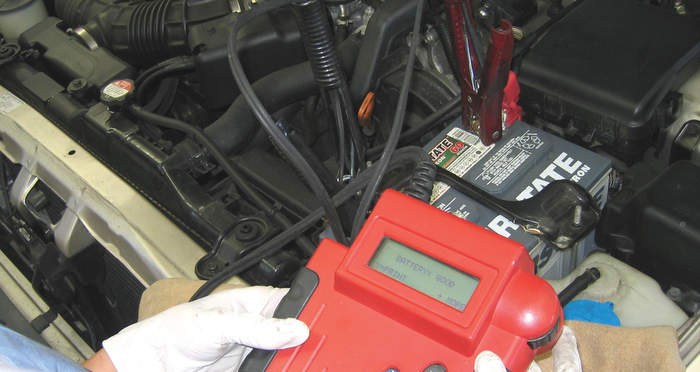
Before you connect anything, turn off the ignition, headlights, radio, and all other loads. If the vehicle has been driven recently, the battery may have surface charge. Surface charge is a thin layer of higher voltage on the plates that can fool a tester. Many testers tell you to turn on the headlights for a few minutes to remove it, or you can wait a few hours. Follow your tester’s instructions.
Here is a safe, basic testing procedure:
Look for cracks, swelling, leaks, or heavy corrosion. If you see damage, do not test it. Replace or get professional help.
Use a wire brush or battery terminal cleaner to remove corrosion. Make sure the clamps can make solid contact with bare metal.
Attach the red clamp to the positive (+) terminal first. Then attach the black clamp to the negative (-) terminal. Do not let the clamps touch each other.
Choose flooded, AGM, EFB, or lithium as needed. Then enter the CCA or CA number from the battery label.
Follow the prompts on screen. Most testers finish in a few seconds. Write down the state of health, voltage, and measured CCA/CA.
After testing, remove the black clamp first, then the red clamp. Store the tester somewhere dry. If the tester says “replace battery,” do not ignore it just because the engine still starts. A battery can have enough power to start a warm engine but fail on a cold morning.
For a more detailed walkthrough, see our step-by-step guide on how to test a battery with a battery tester. It covers the same steps with extra tips for different tester styles.
Safety Limits, Results, and Ownership Costs
Results from a battery tester are not a lifetime guarantee. A battery that tests “good” can still fail a week later if it develops an internal short or if the charging system stops working. Likewise, a battery that tests “replace” might still crank the engine for now, but its reserve capacity is too low for reliable use.
Temperature affects test results. Cold lowers a battery’s cranking power; heat speeds up internal corrosion. For the most useful reading, test when the battery is near normal room temperature if possible. If you must test in extreme cold, understand that the result may look worse than it would at 70°F.
Ownership costs for a battery tester are modest compared to the cost of a new battery. Basic home-use testers cost far less than a typical battery replacement, while professional-grade models with printers cost more. There are no ongoing subscription fees for most simple testers, but some app-connected models may require an account or firmware updates. The bigger cost is usually the battery itself, so catching a weak battery early can save you money.
Testing, Maintenance, and Storage
Test your battery at least twice a year: once before winter and once before summer. Winter is the hardest season for a battery because cold reduces cranking power. Summer heat can also damage a battery by speeding up chemical wear. A spring or fall check gives you time to plan a replacement.
If your battery tests low on state of charge, recharge it before you judge its health. A discharged battery will often test weak even if it is still good. Use a battery charger made for your battery type, then retest after the battery has rested.
Also maintain the car battery itself. Keep the terminals tight and clean. If your battery has removable caps, check electrolyte levels only if the manual says you can. Many modern batteries are sealed and need no water. If you park for weeks at a time, use a battery maintainer to keep the charge up.
If a battery tests good but your car still dies, the problem may not be the battery. A parasitic drain, a failing alternator, or corroded cables can cause the same symptoms. In that case, a battery tester alone will not find the cause. You may need a multimeter or a professional electrical check.
Common Mistakes and When to Get Professional Help
One of the most common mistakes is entering the wrong rating standard. Drivers see “CA” on the battery label and enter that into a tester that expected “CCA.” That can make a weak battery look stronger than it is. Always choose the exact standard printed on the label.
Another mistake is testing a battery immediately after charging or driving. Surface charge can inflate voltage and make a weak battery look healthy. Remove surface charge first, or wait several hours.
Do not test a frozen battery. If electrolyte freezes, it can crack the case and cause acid to leak. Let the battery warm up above freezing before testing. Do not charge a frozen battery either.
Also, do not use a 12-volt battery tester on a hybrid or electric vehicle’s high-voltage traction battery. Those systems carry hundreds of volts and require special training. A battery tester is only for the small 12-volt accessory battery in most vehicles.
- Confirm the battery type, voltage, and rating standard before testing
- Follow the tester and vehicle manual instructions in order
- Clean terminals and remove surface charge before a meaningful test
- Test a damaged, leaking, or frozen battery
- Ignore a “replace” result just because the engine still starts
- Use a 12V battery tester on hybrid/EV high-voltage battery packs
When should you call a professional? If you see a swollen battery case, leaking acid, or cracked terminals, stop and have the battery handled safely. If your charging system warning light comes on, or if you need to disconnect a battery in a modern car with memory settings, radio codes, or battery registration requirements, a professional or the dealership may be safer. Some European vehicles require battery registration after replacement; skipping it can lead to charging problems.
Final Recommendation
CCA vs CA on a car battery tester is not a trick question. It is a simple match-the-label task. Use CCA if your battery label lists CCA; use CA only if the label actually lists CA. In cold climates, CCA matters most because it measures starting power at 0°F. In warmer climates, you can still use CCA as a stricter benchmark and avoid surprises on cool mornings.
For most home garages, a simple conductance tester is enough. You do not need a shop-grade model unless you work on many vehicles or want printed receipts. Check out our roundup of the best car battery tester for home use to find a model that fits your budget and battery type.
- Best for: Drivers who want to avoid cold-weather no-starts and extend battery life with a five-minute check twice a year.
- Think twice if: You expect a cheap tester to diagnose every electrical problem, including alternator faults or parasitic drains. It cannot do that alone.
- Next step: Read the CCA or CA number on your battery label, choose the matching setting on your tester, and test before the next cold snap.
Frequently Asked Questions
CCA stands for Cold Cranking Amps and measures starting power at ́0°F. CA stands for Cranking Amps and measures starting power at32°F. CA numbers are usually higher because warmer temperatures make it easier for a battery to deliver current.
Use the rating printed on your battery label. If the label lists CCA, choose CCA on the tester. If it lists CA, choose CA. When in doubt, CCA is the stricter test and the safer default.
Only if your tester supports AGM batteries. Many modern testers have a battery type setting for flooded, AGM, EFB, or lithium. Selecting the wrong type can give a misleading result.
A tester measures the battery’s current condition, not its original factory rating. As a battery ages, its actual delivered CCA drops. The tester compares that measured value to the rating you entered and reports the difference as state of health.
At least twice a year: once before winter and once before summer. Cold weather and hot weather both stress batteries, so seasonal checks help you catch a weak battery before it fails.
No, most DIYers can safely test a standard 12-volt battery with a home-use tester if they follow the instructions. Call a professional if you see a swollen, leaking, or cracked battery, or if your vehicle requires battery registration after replacement.

One Comment