How Long Should a Car Battery Last in Cold Weather? Practical Guide
In cold-weather states like New Jersey, expect a car battery to last 3 to 4 years, not the 5 years you might get in milder climates. Test your battery before the first hard freeze because cold temperatures can cut cranking power by roughly 60%.
Wondering how long should a car battery last in cold weather? The honest answer is 3 to 4 years in New Jersey winters, but the real test is how many cold cranking amps your battery can still deliver on a freezing morning. This guide covers the warning signs, the testing steps, and the safe jump-start procedures that keep you moving when temperatures drop.
- Lifespan: Plan on 3-4 years in New Jersey winters, not the 5-year average for mild.
- CCA matters: Cold cranking amps, not calendar age, determine whether your battery starts on a 15°F.
- Test early: A load test in October or November beats a tow truck in January.
- Match the spec: Use the CCA, group size, and battery type listed in your owner’s manual.
- Skip unsafe jumps: Never jump-start a frozen, cracked, or swollen battery.
How Long Should a Car Battery Last in Cold Weather? The Direct Answer
In most cases, a car battery lasts 3 to 5 years in normal conditions, but in cold-weather states like New Jersey, you should expect 3 to 4 years. At 0°F, a battery loses about 60% of its cranking power, so a battery that struggles in September will often fail completely in January. The calendar age matters less than how many cold cranking amps (CCA) the battery can still deliver at freezing temperatures.
A battery that tests fine in a warm auto parts store parking lot can still leave you stranded a week later. Temperature changes the rules. That is why winter is the season when most dead-battery calls happen, and why testing before the first hard freeze is the smartest move you can make.
Why Cold Weather Drains and Damages Car Batteries
The Chemistry of Cold Cranking Amps (CCA)
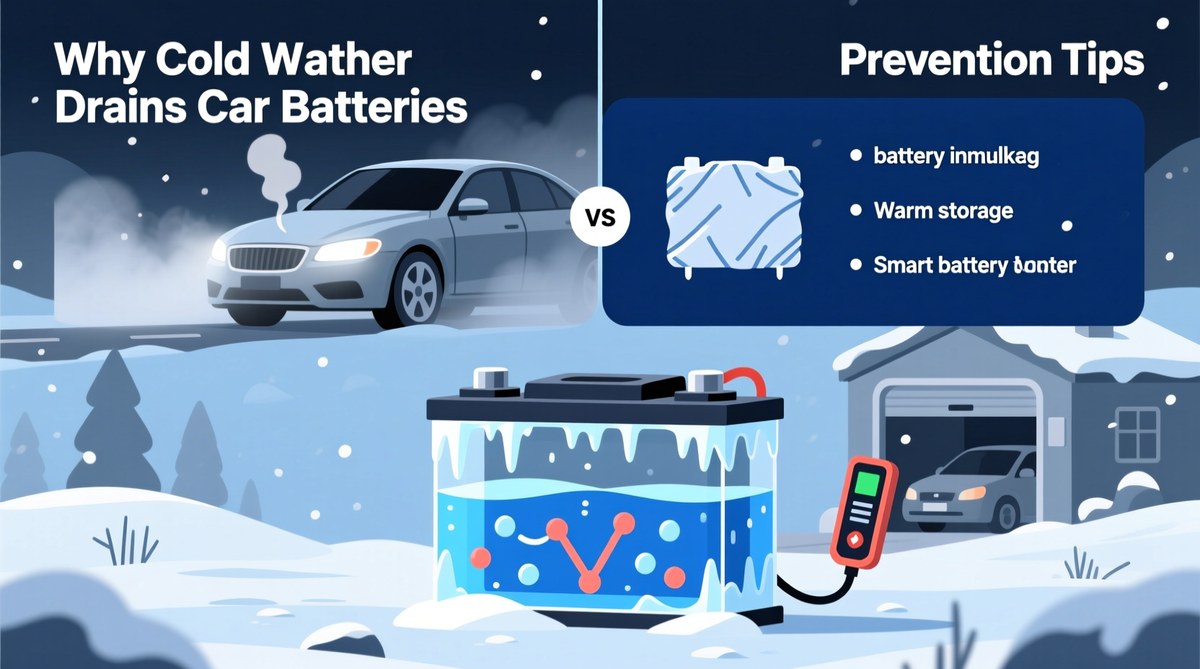
Cold temperatures slow the chemical reaction inside a lead-acid battery, reducing the current it can supply. At the same time, cold engine oil makes the starter motor work harder. This double load is why a battery can read 12.6 volts at rest but still fail to crank the engine on a 15°F morning.
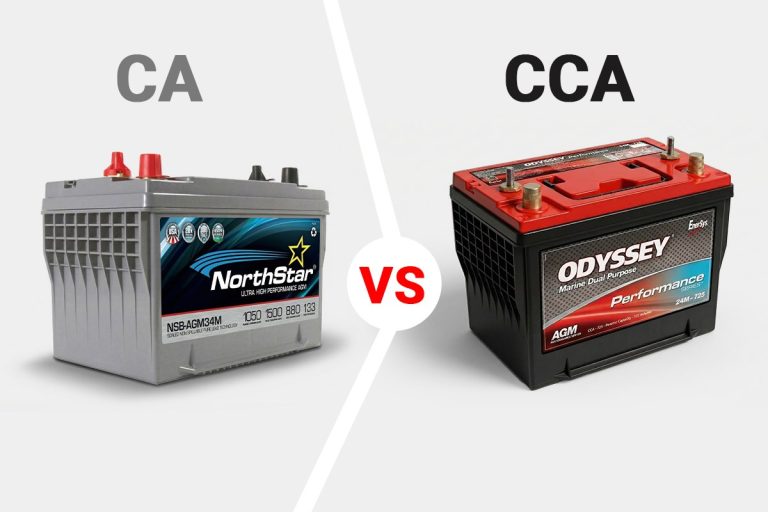
CCA is the rating that measures how many amps a battery can deliver at 0°F for 30 seconds while staying above 7.2 volts. If you want to understand the difference between CCA and the less strict CA rating, our guide on CCA vs. CA on a car battery tester explains why the cold-weather number matters more.
State of Charge vs. State of Health
State of charge (SoC) tells you how full the battery is right now. State of health (SoH) tells you how much usable capacity remains compared to when the battery was new. A battery at 80% SoH can still start a car in summer, but in winter that lost 20% is often the difference between a start and a tow. A fully charged battery also resists freezing better than a discharged one.
A fully charged battery has a much lower freezing point than a discharged battery. That is why a battery that survives a mild November can die after a few short trips in January. Each start drains a little more than the alternator puts back, and the state of charge keeps dropping.
Early Warning Signs of a Failing Battery in Winter
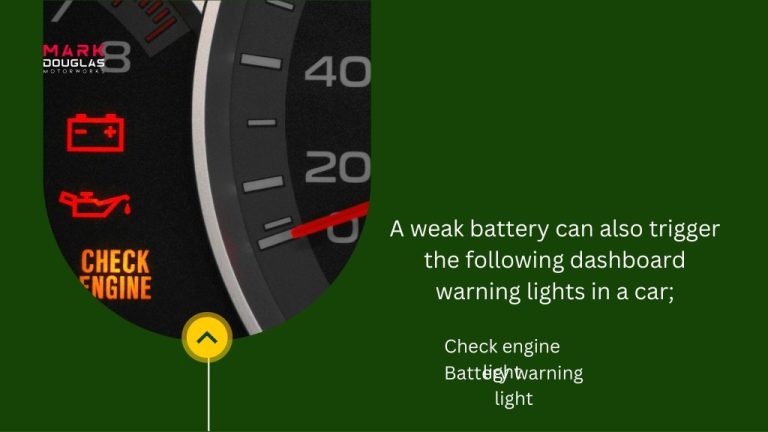
Slow cranking, dim headlights at idle, a clicking sound when you turn the key, and a swollen or bulging battery case are all signs the battery is nearing the end of its life. If your dashboard battery warning light flickers during cold starts, the alternator may be struggling to compensate for a weak battery. Address these symptoms before the battery leaves you stranded in a parking lot.
Pay attention to how the engine sounds on the first start of the day. A healthy battery cranks the engine with a strong, steady rhythm. A weak battery sounds slower, and the starter may hesitate before the engine catches. That hesitation is your warning.
How to Test Your Battery Before Winter Hits
Voltage Readings: What 12.6V, 12.4V, and 12.0V Really Mean
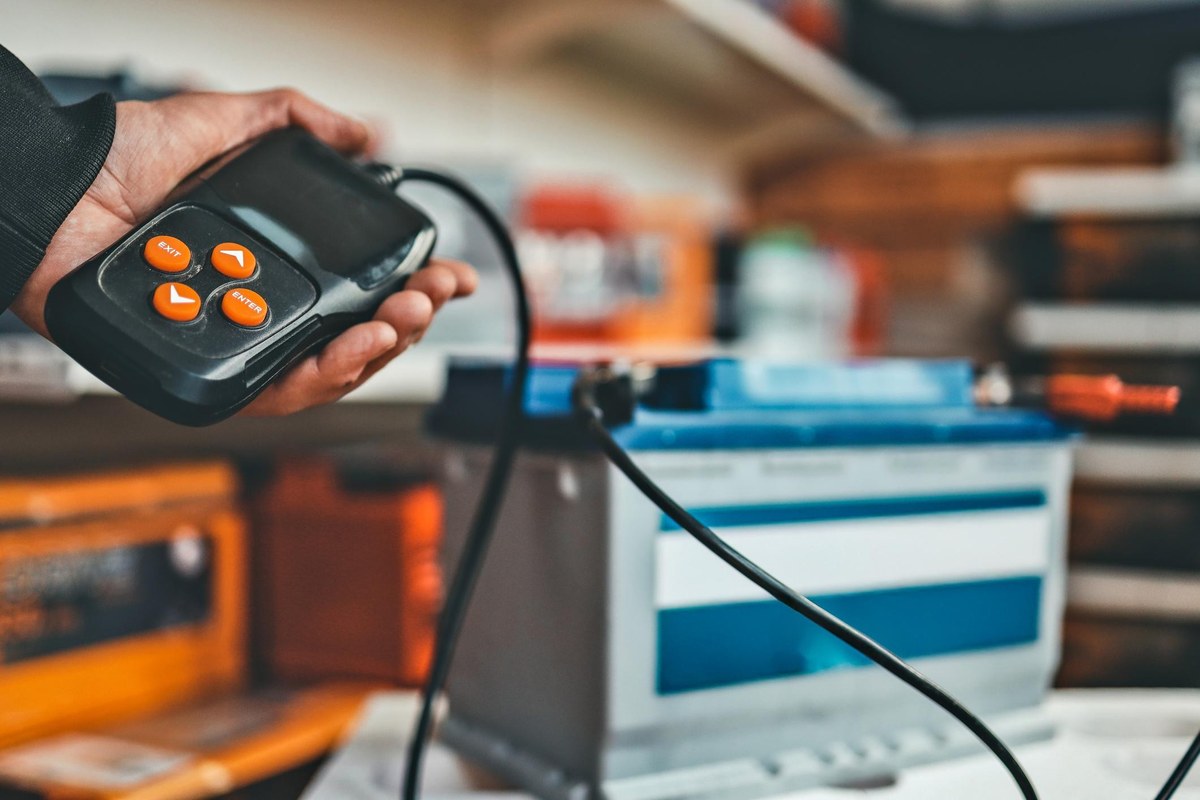
With the engine off, a healthy battery reads about 12.6 volts. At 12.4 volts, the battery is about 75% charged. At 12.0 volts or lower, the battery is roughly 25% charged and may freeze in extreme cold. Voltage alone does not confirm battery health, but it is the first indicator that something is wrong.
For a deeper look at the numbers, our article on what battery voltage is too low to start a car walks through the exact readings that matter at the key turn.
Load Testing and Correct Multimeter Connection Order
A load test measures the battery’s ability to hold voltage while delivering current, which is the closest home test to what your starter demands. When connecting a multimeter, always attach the red lead to the positive terminal first, then the black lead to the negative terminal. Reverse this order when disconnecting. Never connect a multimeter to a battery that is cracked, leaking, or swollen.
If you want to test the battery the way a shop would, check our step-by-step guide on how to test a car battery after sitting overnight. An overnight rest gives you the most honest voltage reading because the surface charge has had time to dissipate.
Damaged-Battery Stop Conditions: When Not to Test or Charge
If the battery case is swollen, cracked, or has acid residue around the terminals, stop immediately. A damaged battery can release hydrogen gas or sulfuric acid, and attempting to charge or jump-start it creates a fire and burn risk. Replace it and dispose of the old battery at an auto parts store or recycling center.
Cold-Weather Battery Maintenance That Actually Works
Keep the battery fully charged, especially if you take only short trips in winter. A 10-minute drive may not replace the energy used to start the engine, leaving the battery in a constant partial state of charge. Clean corrosion off the terminals with a baking soda and water mixture, and tighten the connections. Consider a battery insulation blanket if you park outside overnight, and test the charging system voltage to confirm the alternator is putting out between 13.8 and 14.4 volts.
Choosing a Replacement Battery for New Jersey Winters
Flooded, EFB, or AGM: Which Chemistry Fits Your Car?
Standard flooded batteries are the budget choice for older vehicles without heavy electrical loads. Enhanced flooded batteries (EFB) suit start-stop systems and moderate accessory loads. Absorbent glass mat (AGM) batteries handle high electrical demand, deep cycling, and vibration better, but cost more. Check your owner’s manual before upgrading, because some vehicles require AGM and will overcharge a flooded battery.
| Battery type | Best for | Owner consideration | Driver consideration |
|---|---|---|---|
| Flooded | Older vehicles with low electrical loads | Lowest upfront cost; shorter service life under heavy use | May struggle with start-stop or high-accessory vehicles |
| EFB | Start-stop systems and moderate accessory loads | Mid-range price; better cycling than flooded | Handles repeated restarts without deep discharge damage |
| AGM | High electrical demand, deep cycling, vibration | Highest cost; longer service life if charged correctly | Strong cold-cranking performance; requires compatible charging |
CCA and Reserve Capacity: Matching the Spec Sheet
Buy a battery with at least the CCA rating recommended in your owner’s manual or on the door-jamb sticker. Reserve capacity matters too: it tells you how long the battery can run the car’s electrical systems if the alternator fails. In cold weather, a higher CCA rating gives you a larger safety margin for the coldest mornings.
Do not assume a bigger battery is always better. A battery with a higher CCA than the original can help in extreme cold, but it must fit the same group size and terminal layout. If the battery is too tall or too wide, the hood may not close properly, and vibration can damage the case.
Compatibility, Warranty, and Ownership Cost
Confirm the group size, terminal orientation, and hold-down bracket fit before purchasing. Compare the free replacement period and prorated warranty terms, not just the total warranty length. A cheaper battery with a shorter free replacement period can cost more over a 5-year ownership span than a premium battery with a 3-year free replacement warranty.
Check: Verify make, model, year, trim, group size, terminal orientation, and CCA requirement in your owner’s manual or on the door-jamb sticker. Limitations: Some vehicles with start-stop or regenerative braking require AGM or EFB batteries; installing a flooded battery in those systems can cause charging errors and shorter battery life.
Safe Jump-Start and Installation Steps in Cold Weather
Correct Connection Order for Jump-Starting
Connect the red clamp to the dead battery’s positive terminal, then the other red clamp to the good battery’s positive terminal. Connect the black clamp to the good battery’s negative terminal, and the final black clamp to an unpainted metal ground on the dead car, not the negative battery post. Start the good car, wait a few minutes, then start the dead car. Remove the cables in reverse order. If the dead battery is frozen, leaking, or swollen, do not jump-start it.
If you are using a portable jump starter instead of another vehicle, the connection order is usually the same, but the amp output matters. Our guide on how many amps you need to jump-start a car explains the difference between a small pack for a four-cylinder and a larger unit for a truck or SUV.
- Confirm both vehicles use the same system voltage before connecting cables
- Connect clamps in the order listed in your owner’s manual
- Attach the final black clamp to unpainted metal away from the battery
- Jump-start a battery that is frozen, leaking, cracked, or swollen
- Let the clamps touch each other while either vehicle is running
- Lean over the battery while connecting or disconnecting cables
Hybrid and EV Cautions: The 12V Auxiliary Battery
Hybrids and electric vehicles still use a 12V auxiliary battery to power computers and contactors, and it can die in cold weather just like a conventional battery. Do not attach jumper cables to the high-voltage orange cables or battery pack. Use the dedicated jump-start terminals under the hood, which are clearly marked in the owner’s manual. If in doubt, call roadside assistance rather than risking a high-voltage injury.
When to Stop Guessing and Call a Professional
If a new battery fails within a few weeks, the problem is likely not the battery. A failing alternator, a parasitic electrical drain, or a faulty battery management system can kill a fresh battery quickly. Professional diagnostics can test charging output, measure parasitic draw, and check for fault codes in vehicles with smart charging systems. In modern cars, a battery registration or reset may also be required after replacement, and that step cannot be skipped without risking overcharging or undercharging the new battery.
Some European and start-stop vehicles require the battery to be registered to the vehicle’s computer when installed. If you skip this step, the charging system may not know the battery’s age and capacity, which can shorten its life. A shop with the right scan tool can handle this in a few minutes.
- Best for: Drivers who park outside in New Jersey winters and want to replace a weak battery before it fails on a cold morning.
- Think twice if: Your battery is less than 3 years old and passed a load test; you may only need a full charge and terminal cleaning.
- Next step: Test your battery with a load tester or multimeter before winter, and match the replacement’s CCA and group size to your owner’s manual.
Frequently Asked Questions
In cold-weather states like New Jersey, expect 3 to 4 years. At 0°F, a battery loses about 60% of its cranking power, so a battery that tests borderline in fall will often fail in January.
A fully charged battery can survive temperatures well below zero, but a discharged battery can freeze at around 20°F. The lower the state of charge, the higher the freezing point, which is why keeping the battery charged matters in winter.
Yes. Cold slows the chemical reaction inside the battery, and a weak battery that still started the car in September can fail without warning on a freezing morning. Slow cranking and dim headlights are usually the first signs.
Only if your vehicle requires it or your driving habits demand it. AGM batteries handle cold cranking and deep cycling well, but they cost more. Check your owner’s manual first, because some vehicles with start-stop systems require AGM or EFB.
Have the battery load-tested and check the voltage after the car sits overnight. A reading below 12.4 volts, a swollen case, or slow cranking on a cold morning all point to replacement.
No. A frozen battery can crack and release hydrogen gas, which may explode when sparked. If the case is swollen or feels hard, call a professional instead.