Can a Weak Battery Cause Warning Lights to Come on? How to Diagnose
Yes, a weak battery can trigger warning lights on your dashboard. Low voltage confuses your car’s computers, so test the battery before replacing expensive sensors.
Can a weak battery cause warning lights to come on? Yes, and it’s more common than many drivers realize. When voltage drops, your car’s computers can misread sensor signals and light up the dashboard with false warnings.
- Low voltage causes false warnings: ABS, traction control, check engine, and TPMS lights can appear when battery voltage drops.
- Test before replacing parts: A multimeter check at rest, during cranking, and while charging identifies the real problem.
- Match the battery to your vehicle: Verify group size, CCA rating, and flooded vs. AGM type before buying a replacement.
- Jump-start with care: Follow the correct cable order and never jump a cracked, swollen, or leaking battery.
- Check the alternator too: If the battery tests fine, the alternator or a parasitic drain may be the.
Yes, a Weak Battery Can Trigger Warning Lights — Here’s the Short Answer
A weak battery can absolutely trigger warning lights. Your dashboard warning system depends on steady electrical power. When voltage sags, the modules that control your car send and receive confusing signals.
Modern vehicles have dozens of electronic control modules sharing data through one electrical network. Low voltage can interrupt that communication and create false failures.
Why Low Voltage Confuses Your Car’s Computers
Your car’s computers expect a stable voltage range, usually around 12.6 volts at rest and 13.5 to 14.5 volts while charging. When voltage drops below that range, sensors may report values the computer considers impossible.
The ABS module might think a wheel is locked. The engine computer might see a misfire that isn’t there.
State of Charge vs. Battery Health: What Actually Matters
State of charge tells you how full the battery is right now. Battery health tells you how much usable capacity the battery has left over time. Both matter, but they answer different questions.
A battery can show a full charge and still be weak. Internal damage can limit its ability to deliver current. A simple voltage reading isn’t enough.
Which Warning Lights Appear First When the Battery Is Weak?

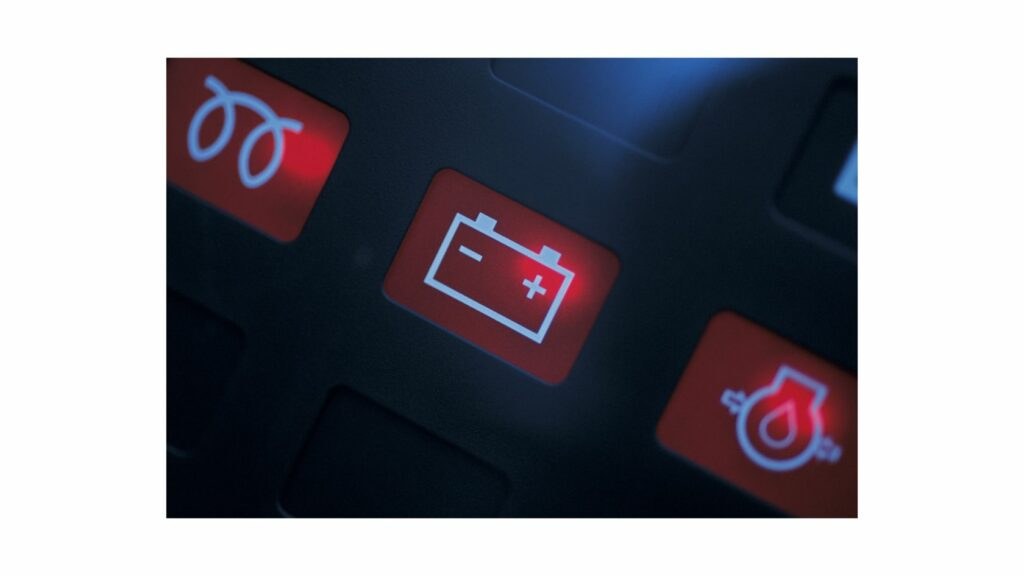
The first warning lights depend on the vehicle. Some show the battery light first. Others show ABS, traction control, or check engine lights.
ABS, Traction Control, and Stability Lights
ABS and traction control lights are common with weak batteries. Wheel speed sensors send small electrical signals to the ABS module. Low voltage can make those signals look wrong.
The module then turns on the warning light. The brakes may work normally, but the system is disabled until the fault clears.
Check Engine, Airbag, and Power Steering Warnings
A weak battery can also trigger the check engine light. The engine computer may log random misfire codes, lean fuel codes, or communication faults that disappear once voltage is restored.
Airbag warnings are more serious. If the airbag module sees a voltage fault, it may disable the airbag system. Do not ignore this light. Have it checked by a professional.
Electric power steering can act up, too. Low voltage may make the steering feel heavy or trigger a warning light.
TPMS and Tire-Pressure Warnings: Door-Jamb Placard, Cold Pressure, and Relearn Limits
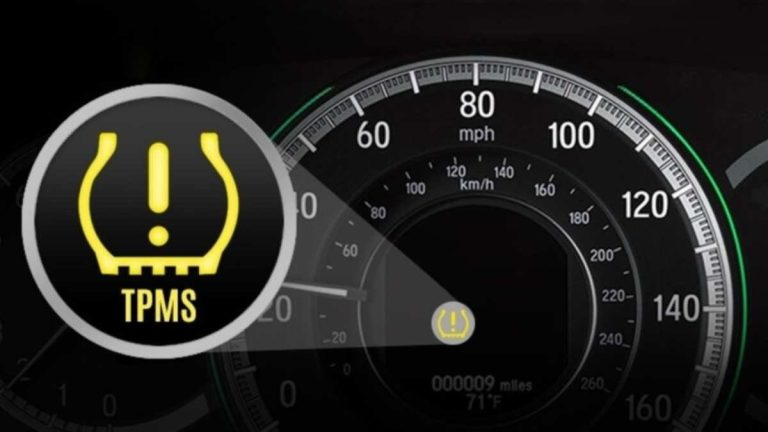
Tire-pressure monitoring system lights can appear as well. Low system voltage can affect the TPMS module’s ability to process sensor signals. But before blaming the battery, check your tire pressures.
Use the pressure listed on the driver’s side door-jamb placard, not the number molded into the tire sidewall. Measure when tires are cold for the most accurate reading.
If you’ve recently replaced a TPMS sensor, many vehicles require a relearn procedure. Our guide on why the tire pressure light comes on when tires are fine covers the most common causes.
How to Diagnose a Weak Battery Without Guessing
Diagnosing a weak battery starts with the right tools. You don’t need a shop, but you do need a safe, logical process.
Multimeter Testing: System Voltage at Rest, Crank, and Charging
A digital multimeter is the cheapest way to check voltage. With the engine off, a rested battery should read around 12.6 volts. Below 12.4 volts suggests a low state of charge.
Next, watch the voltage while someone cranks the engine. A healthy battery should stay above 9.5 or 10 volts during cranking. If it drops much lower, the battery is struggling.
With the engine running, voltage should rise to about 13.5 to 14.5 volts. That confirms the alternator is charging. For the exact numbers that matter, see our guide on what battery voltage is too low to start a car.
See our guide on how to test a car battery after sitting overnight for a step-by-step approach.
OBD2 Scanner Basics: Port Location, Ignition Mode, and Protocol Coverage
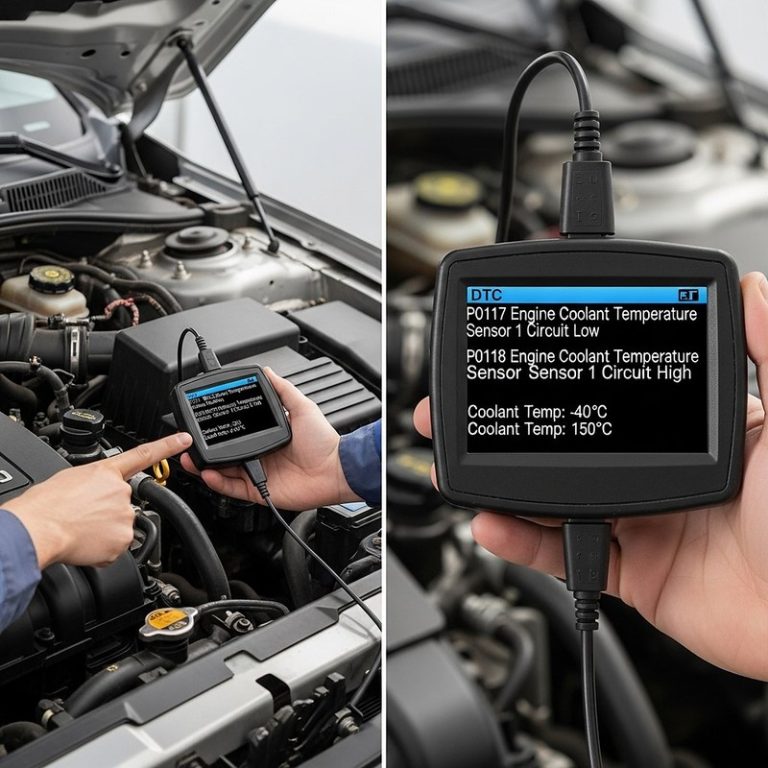
An OBD2 scanner can read the fault codes behind your warning lights. Most cars have the diagnostic port under the dashboard on the driver’s side. It’s a trapezoid-shaped connector, usually easy to reach.
Some scanners need the ignition on without the engine running. Others need the engine running for live data. Check your instructions first.
OBD2 Codes, Live Data, and Emissions Readiness: Reset Limits, App Permissions, and Firmware
Write down your codes before clearing anything. Clearing codes erases the evidence and can reset emissions monitors. That can cause you to fail an emissions test if the system isn’t ready.
Live data can help you spot voltage problems in real time. Many scanners show battery voltage, alternator output, and sensor readings while the engine runs.
Bluetooth scanner apps may request vehicle data permissions. Review the app’s privacy policy, and keep the scanner’s firmware updated for proper protocol support.
Battery Chemistry and Ratings: Choosing the Right Replacement
If testing confirms the battery is weak, you need the right replacement. Batteries come in different chemistries, sizes, and power ratings. Choosing the wrong one can cause starting problems or damage the charging system.
Flooded vs. AGM vs. Lithium: Pros, Cons, and Compatibility
Flooded lead-acid batteries are the traditional choice. They’re affordable and widely available, but they need occasional maintenance and can spill acid if tipped.
AGM (absorbent glass mat) batteries are sealed, vibration-resistant, and often required in vehicles with start-stop systems. They cost more.
Lithium batteries are lighter and charge faster, but they’re expensive and require a charging system designed for lithium chemistry. Most modern cars are not set up for them.
Check: Verify the exact make, model, year, trim, and whether the vehicle has start-stop technology. Check the owner’s manual for the required battery type and group size. Limitations: AGM and flooded batteries are not always interchangeable. Using the wrong type can lead to undercharging or overcharging.
Cranking Amps, Reserve Capacity, and Group Size
Cranking amps (CA) and cold cranking amps (CCA) measure starting power. CCA is the more important number in cold climates. It tells you how much current the battery can deliver at 0°F.
Reserve capacity measures how long the battery can run electrical loads if the alternator fails. A higher number means more safety margin.
Group size is the battery’s physical dimensions and terminal layout. It must match your vehicle’s battery tray. Check the owner’s manual.
Damaged-Battery Stop Conditions: When Not to Charge or Jump
Never charge or jump a battery that is cracked, swollen, leaking, or producing a strong sulfur smell. A damaged battery can release hydrogen gas, which is explosive.
If the battery case is warm, smoking, or hissing, stop immediately and call a professional. Check for heavy terminal corrosion, too.
How to Safely Jump, Charge, and Replace a Weak Battery
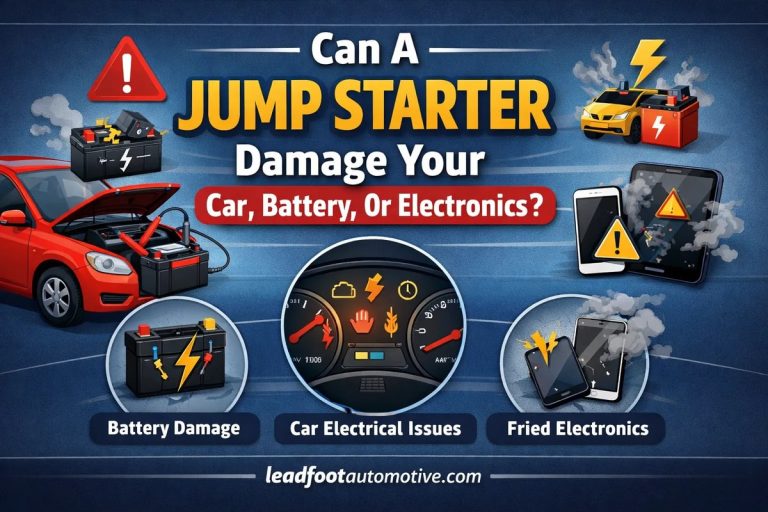
If you’re stuck with a weak battery, a jump start can get you moving. But safety comes first. Follow the correct procedure every time.
Correct Connection Order for Jumper Cables
Follow this order for jumper cables:
1. Connect the red clamp to the positive terminal of the dead battery.
2. Connect the other red clamp to the positive terminal of the good battery.
3. Connect the black clamp to the negative terminal of the good battery.
4. Connect the final black clamp to a metal ground on the dead car, not the battery’s negative terminal.
Start the good car, wait a minute, then start the dead car.
Charging Safety and Post-Use Inspection
If you use a battery charger, read the instructions first. Set the charger to match the battery type. Flooded, AGM, and lithium batteries have different charging profiles.
Charge in a well-ventilated area. Remove the battery from the vehicle if the manual says so, and disconnect the negative cable first when removing.
After charging, inspect cables and terminals for cracks, fraying, or corrosion.
- Confirm the battery type, voltage, and group size before buying a replacement
- Follow the jumper cable connection order exactly
- Inspect cables, terminals, and the battery case for damage
- Jump or charge a cracked, swollen, or leaking battery
- Clear OBD2 codes before writing them down
- Work near traffic without hazard lights and safe positioning
Hybrid and EV Cautions: Don’t Jump These Without Checking First
Hybrid and electric vehicles have high-voltage systems that can be dangerous. The 12-volt battery in a hybrid is usually in the trunk or under the rear seat, not under the hood.
Jump-starting a hybrid or EV incorrectly can damage electronics or create a shock hazard. Check the owner’s manual first.
When the Battery Isn’t the Problem: Alternator, Parasitic Drain, and Wiring
A weak battery isn’t always the root cause. The alternator, a parasitic drain, or damaged wiring can also be at fault.
Testing the Alternator and Charging System
With the engine running, measure voltage across the battery terminals. It should read between 13.5 and 14.5 volts. If it stays near 12.6 volts, the alternator may not be charging.
Turn on the headlights, HVAC fan, and rear defroster, then watch the voltage. A healthy alternator should keep voltage stable. If it drops, the alternator may be weak.
An OBD2 scanner can help here, too. Some scanners display charging voltage in live data. Our guide on whether an OBD2 scanner can detect a bad alternator explains what to look for.
Finding a Parasitic Drain: DIY Limits and When to Call a Professional
A parasitic drain draws power when the car is off. Common causes include interior lights, aftermarket accessories, and faulty modules that won’t sleep.
Finding a parasitic drain requires a multimeter set to measure amps, and it’s easy to do wrong. You must disconnect the negative battery cable and connect the meter in series.
If you’re not comfortable working with live circuits, call a professional.
Warning Lights While Driving? Roadside Safety and Emergency Tools
If warning lights appear while driving, get to a safe location first. Diagnosis comes second.
Pull Over Safely: Location, Visibility, and Traffic Laws
Pull off the road as far as possible. Use your turn signal, slow down gradually, and avoid sudden stops. Once stopped, turn on your hazard lights.
If you must exit the vehicle, do so on the side away from traffic. Roadside rules vary by state, so check your state’s laws before you need them.
Jump Pack vs. Jumper Cables: Which Fits Your Driving Style?
Jumper cables are cheap and reliable, but they need a second vehicle. A jump pack is self-contained and works anywhere, but it costs more and needs to stay charged.
Jump packs suit solo drivers, rideshare drivers, and people who drive in remote areas. Cables make sense if you rarely need them and always have access to another car.
Before buying a jump pack, check the peak amperage rating against your engine size.
| Option | Best for | Owner consideration | Driver consideration |
|---|---|---|---|
| Jumper cables | Drivers with access to a second vehicle | Low cost, no maintenance, but need another car | Requires safe positioning of two vehicles |
| Jump pack | Solo drivers, rideshare, remote travel | Higher upfront cost, needs periodic recharging | Works without another vehicle, faster to deploy |
Tire Tools and Inflators: Gauge Accuracy, Duty Cycle, Repair Limits, and Post-Use Inspection
A portable tire inflator and quality pressure gauge are smart emergency kit additions. Check the pressure on the door-jamb placard, not the tire sidewall, and measure when tires are cold.
Portable inflators have a duty cycle. Most can run for 10 to 15 minutes before needing to cool down. After use, inspect the hose and gauge for cracks or damage.
If you use a tire plug kit, know its limits. Plugs are temporary repairs for tread-area punctures only. They are not for sidewall damage, and a single tire should not be plugged repeatedly in the same spot.
Cost, Warranty, and Next Steps: What a New Battery Really Costs
If the battery is the problem, replacement is usually the fix. Here’s what to expect.
Battery Prices, Installation, and Warranty Coverage
Battery prices vary widely by type, group size, brand, and region. Flooded batteries are generally the least expensive. AGM batteries cost more because of their construction and performance.
Installation costs vary. Many parts stores include it in the purchase price. Others charge a separate fee.
Warranty coverage typically includes a free replacement period followed by a prorated period. Keep your receipt.
Your Next Steps: Test, Recharge, Replace, or Call a Pro
Start with a voltage test at rest, during cranking, and while charging. If the battery is low but healthy, a full recharge may fix the problem.
If the battery fails a load test, replace it. If it tests fine but warning lights persist, check the alternator, look for a parasitic drain, or call a professional.
Don’t clear codes until you’ve recorded them. And never ignore airbag or brake warnings, even if you suspect the battery is the cause.
- Best for: Drivers who see multiple dashboard warnings and need a clear, safe path to diagnosis before spending money on repairs.
- Think twice if: The warning involves airbags or brakes and you have no diagnostic experience — have a professional check it first.
- Next step: Test the battery voltage at rest, during cranking, and while charging, then compare the results with your owner’s manual.
Frequently Asked Questions
Yes. Low battery voltage can confuse your car’s electronic control modules, causing them to log false faults and illuminate warning lights such as ABS, traction control, check engine, airbag, and TPMS lights.
It varies by vehicle. ABS and traction control lights are common because wheel speed sensors send weak signals that the module misreads. Some vehicles show the check engine light or the battery charging light first.
Yes. Low voltage can cause the engine computer to log random misfire codes, lean fuel codes, or communication faults. The light often goes out after the battery is recharged or replaced and the codes are cleared.
A rested battery should read around 12.6 volts. Below 12.4 volts suggests a low state of charge, and many vehicles struggle to start below 12.0 volts. During cranking, voltage should stay above 9.5 to 10 volts.
Pull over safely if multiple warning lights appear, especially airbag or brake warnings. A failing electrical system can cause sudden loss of power steering or brakes. Have the vehicle inspected before continuing.
Prices vary by type, group size, brand, and region. Flooded batteries are generally the least expensive, AGM batteries cost more, and lithium batteries are the most expensive. Many parts stores include installation in the price.