Can a Portable Jump Starter Damage a Car Battery? What to Know
A portable jump starter can damage a car battery, but only through user error or an already damaged battery. Used correctly on a healthy 12V battery, it is a safe emergency tool.
Can a portable jump starter damage a car battery? Yes, but only under specific conditions that are mostly avoidable. Used correctly on a healthy battery, a jump starter delivers a controlled burst of power and should not cause harm.
This guide explains how jump starters work, where the real risks sit, and how to protect your battery and your wallet.
- Main risk: Reverse polarity, loose clamps, and long cranking cause most jump-start damage.
- Battery condition: Never jump a swollen, leaking, or frozen battery; call a professional instead.
- Voltage match: Confirm your vehicle’s 12V or 24V system before connecting any jump pack.
- Not a charger: A jump starter only cranks the engine; the alternator does the real recharging.
- Maintenance: Recharge the pack every few months and inspect cables before each use.
Can a Portable Jump Starter Damage a Car Battery? The Short Answer
Yes, But Only Under Specific Conditions
A portable jump starter can damage a car battery, but it usually does not. Damage comes from user error, a failing battery, or the wrong device for the vehicle.
Modern jump starters include protections against reverse polarity, over-current, and overheating. Those features reduce the risk on a normal 12V battery.
State of Charge vs Battery Health: Why a Weak Battery Isn’t Always Damaged
A battery with low state of charge still has healthy internal structure. It simply needs a charge. A battery with poor state of health has physical damage, sulfation, or internal shorts.
Jump starting a weak battery does not fix it, and it does not automatically harm it. The danger rises when the battery is already damaged or deeply discharged for a long period.
How Jump Starters Work: Voltage, Chemistry, and Current Limits
Matching System Voltage: 12V Cars vs 24V Trucks
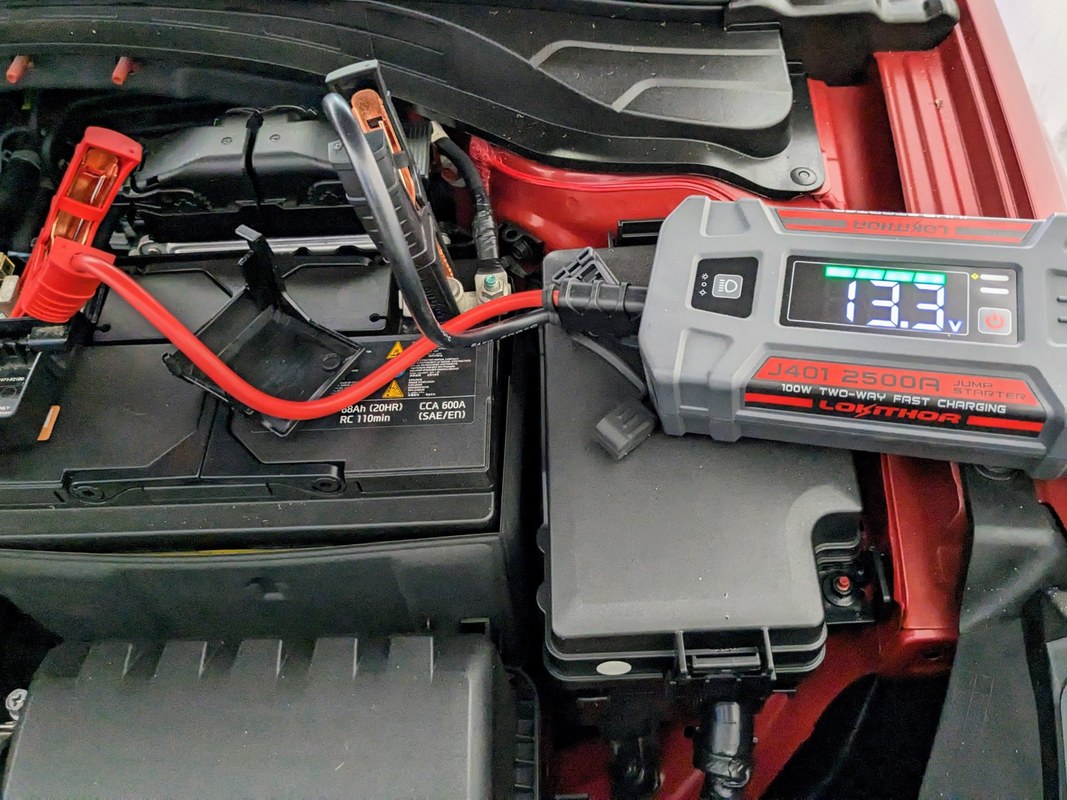
Most cars, SUVs, and light trucks in the US use a 12V electrical system. Many commercial trucks and some heavy-duty diesel trucks use 24V systems.
Using a 12V jump starter on a 24V vehicle can overload the pack or the vehicle’s electronics. Always confirm the system voltage before connecting clamps.
The current needed also matters. A compact car may start with a few hundred peak amps, while a large diesel truck may need well over 1,000. Our guide on how many amps you need to jump start a car explains the details.
Battery Chemistry: Lead-Acid, AGM, and LiFePO4 Jump Packs
Your car battery is likely flooded lead-acid or AGM. The jump starter itself may use lithium-ion or LiFePO4 cells. The chemistry of the jump pack does not need to match the car battery.
What matters is correct voltage and enough cranking current for the vehicle’s battery type and engine size.
Why a Jump Starter Doesn’t Recharge Your Battery
A jump starter supplies a short burst of current to crank the engine. It does not charge the battery like a charger or the alternator does.
After the engine starts, the alternator recharges the battery while you drive. A short drive may not fully restore a deeply discharged battery.
Correct Connection Order and Damaged-Battery Stop Conditions
Step-by-Step Clamp Placement: Red to Positive, Black to Ground
The safest order is simple. Connect the red clamp to the positive terminal. Then connect the black clamp to a clean metal ground on the engine block or chassis, not directly to the negative terminal on many modern vehicles.
This order reduces the chance of sparks near the battery, where hydrogen gas can build up. Follow your jump starter manual and vehicle owner’s manual for the exact procedure.
- Confirm the vehicle system voltage and jump starter compatibility first
- Connect red to positive and black to a grounded metal point
- Follow the exact order in the jump starter manual
- Connect clamps to a swollen, leaking, or frozen battery
- Let the clamps touch each other while the pack is on
- Jump start a battery with visible cracks or corrosion damage
Stop Conditions: Swollen, Leaking, Frozen, or Short-Circuited Batteries
A damaged battery can release hydrogen gas, acid, or heat. If the battery case is swollen, cracked, or leaking, do not attempt a jump start.
A frozen battery is also dangerous. Jump starting it can cause internal damage or rupture. If the battery shows frost, let it thaw and have it inspected.
When a Jump Starter Can Damage Your Battery: Common Mistakes to Avoid
Reverse Polarity and Loose Clamps
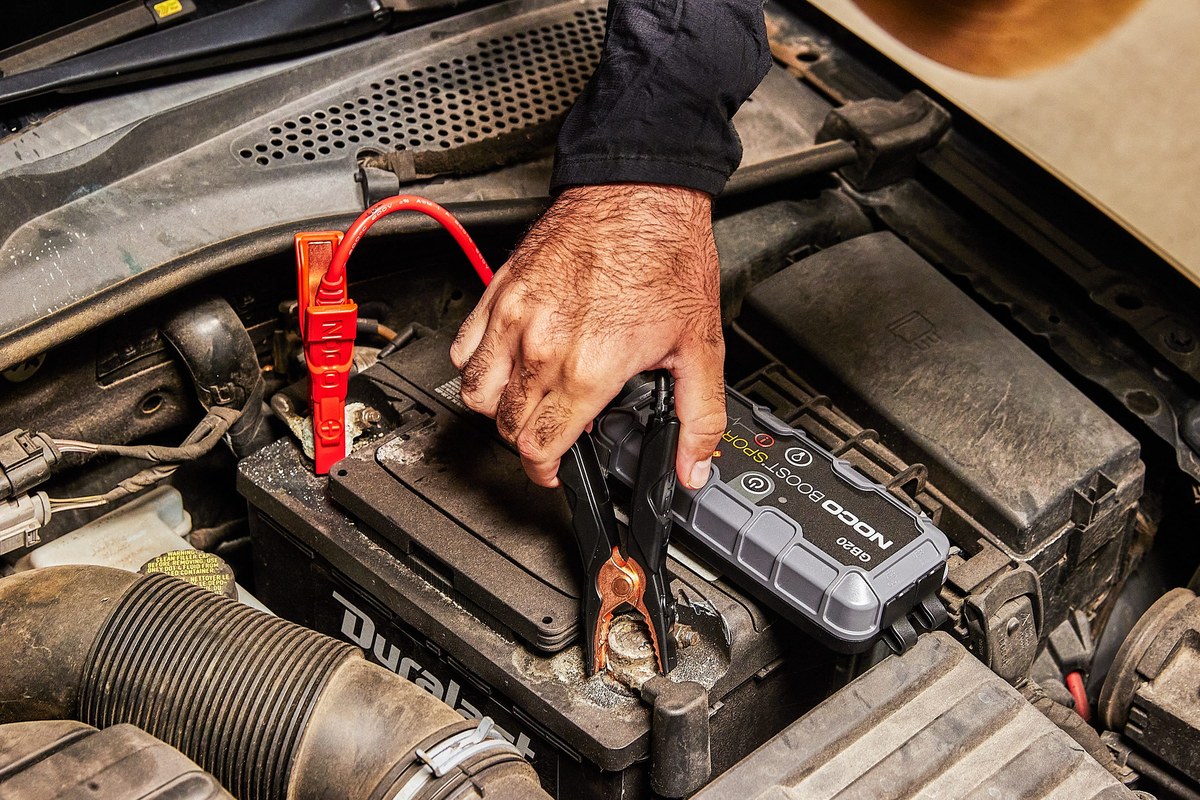
Connecting the clamps backward sends current through the battery in the wrong direction. This can damage the battery, the jump starter, or the vehicle’s electronics.
Loose clamps cause arcing and heat at the connection point. That heat can melt terminal posts or damage the battery case. Make sure both clamps have solid metal-to-metal contact.
Many jump starters display a reverse-polarity warning. If you see one, stop and reconnect. Our article on why your jump starter says reverse polarity covers this common issue.
Cranking Too Long or Too Often
Cranking for more than a few seconds at a time can overheat the jump starter and stress the battery. Most manuals recommend a crank of about 3–5 seconds.
If the engine does not start, wait 30–60 seconds before trying again. Repeated cranking without a pause can drain the pack and heat the starter motor.
Using a Jump Starter on a Deeply Discharged Battery
A battery discharged below roughly 10.5 volts may not accept a jump start cleanly. The jump starter may sense a short circuit and refuse to send power.
Some jump starters have a manual override for low-voltage batteries, but using it on a damaged battery is risky. If the battery has been dead for weeks, a charger and a battery test are safer first steps.
Hybrid and EV Cautions: Why Jump Starters Are Not Universal
Hybrid 12V Auxiliary Batteries: Location and Access
Hybrids have a small 12V auxiliary battery that powers the computer and accessories. It is often in the trunk or under a rear seat, not under the hood.
Jump starting the 12V battery in a hybrid is usually safe, but the location and access panel vary by model. Check the owner’s manual before opening panels.
EV 12V Batteries: Jump Starting vs Calling a Tow
Electric vehicles also have a 12V battery for the computer, locks, and lights. Some EVs can be jump-started like a gas car, but others require a specific procedure or a tow.
If the EV’s high-voltage battery is completely dead, a jump starter will not help. Check the owner’s manual before attempting anything.
Portable Jump Starter vs Jumper Cables vs Battery Charger: Which Is Safest?
Jump Starter: Best for Emergency Power and Built-In Safety Features
A portable jump starter is self-contained, so you do not need another vehicle. It includes built-in protections like reverse-polarity alerts, spark-proof clamps, and over-temperature shutdown.
It is the safest option for a solo driver on a roadside, especially at night or in bad weather.
Jumper Cables: Budget-Friendly but Riskier for Modern Electronics
Jumper cables are cheap and require no charging, but they depend on a second working vehicle. The risk of connecting clamps in the wrong order is higher, and voltage spikes can affect sensitive electronics.
If you use cables, follow the order in your owner’s manual and keep the donor vehicle off while connecting.
Battery Charger: Best for Maintenance, Not Roadside Emergencies
A battery charger restores a battery slowly and safely over hours. It is a great garage tool, but it cannot help you on the side of the road.
For a battery that will not hold a charge, a charger and a battery tester are better than repeated jump starts.
Which Option Fits Your Driving Style and Vehicle?
Choose a jump starter if you drive alone, make long trips, or own a truck with a large engine. Choose cables if you always drive near home with a second vehicle available. Choose a charger if your main goal is battery maintenance.
| Option | Best for | Owner consideration | Driver consideration |
|---|---|---|---|
| Jump starter | Emergency power without a second car | Needs periodic recharging | Compact and safer with built-in protections |
| Jumper cables | Budget roadside help with a donor car | Low cost, no charging needed | Requires another vehicle and careful order |
| Battery charger | Slow charging and maintenance | Low cost, long charge time | Not useful at the roadside |
Choosing a Safe Jump Starter: Evaluation Criteria and Ideal Use Cases
Evaluation Criteria and Evidence Limits: What We Rely On
CarValleyNJ does not claim first-hand lab testing of jump starters. This guidance is based on manufacturer instructions, owner’s manuals, and common owner-reported patterns.
Use the criteria below to compare models, and check the product listing for current specifications before buying.
Peak Current, Capacity, and Safety Certifications
Peak current is the maximum burst the pack can deliver. Capacity, measured in milliamp-hours, affects how many jumps you get per charge.
Look for a model that matches your engine size. A four-cylinder car needs less current than a V8 truck or diesel. Certifications like UL listing can indicate recognized safety standards, but verify the exact claim on the manufacturer’s site.
Reverse Polarity Protection, Spark-Proof Clamps, and Over-Temperature Shutdown
Reverse-polarity protection stops current flow if the clamps are connected backward. Spark-proof clamps reduce sparks near the battery. Over-temperature shutdown turns the pack off if it gets too hot.
These features are the main safety barriers between a clean jump start and a damaged battery or injury.
Ideal User and Vehicle: Compact Cars, Diesel Trucks, and Stop-Start Systems
A compact jump starter works well for small cars and daily commuters. A high-capacity model is better for diesel trucks, large SUVs, and vehicles with stop-start systems.
Stop-start vehicles often use AGM batteries, which handle repeated discharge and recharge cycles well. A jump starter with AGM-compatible output is a safer match.
If you are unsure where to begin, our guide on how to choose a jump starter for your car walks through the key decisions.
Drawbacks, Alternatives, and Warranty Support
Jump starters lose charge over time, even when unused. You need to recharge them every few months, which is easy to forget.
Alternatives include jumper cables, a battery charger, or a roadside assistance plan. Check the warranty and return policy before buying.
A Transparent Verdict: No Single Best Jump Starter
There is no single best jump starter for every driver. The right choice depends on your vehicle, driving habits, and budget.
Compare specs, read recent owner reviews, and confirm the warranty. A safe jump starter matches your vehicle and includes the protections described above.
Roadside Use and Storage: Safety, Inspection, and Maintenance
Safe Location and Traffic Visibility: Pull Off Before You Jump
Never jump start a car in a travel lane. Pull as far off the road as possible, turn on hazard lights, and set up reflective triangles or flares if you have them.
Wear bright clothing and face oncoming traffic while working. Your safety matters more than the battery.
Tool Completeness: What to Keep in Your Jump Starter Kit
Keep the jump starter, charging cable, and manual together in one storage bag. Add a phone charger cable, a flashlight, and a basic tool kit.
Check that the jump starter has enough charge before a long trip. A dead jump starter is just another piece of cargo.
Storage Conditions: Avoiding Extreme Heat and Cold
Store the jump starter in a cool, dry place. Extreme heat can shorten the life of lithium cells, and extreme cold can reduce output when you need it most.
The glovebox is convenient, but a trunk organizer or center console with stable temperatures is often better. Check the product manual for the recommended storage range.
Cable and Pack Condition: Pre-Use Inspection
Before each use, inspect the clamps and cables for cracks, fraying, or corrosion. Inspect the pack for swelling, dents, or damage.
If any part looks damaged, do not use it. A damaged jump starter can fail mid-jump or create a short circuit.
Post-Use Inspection: Recharge, Clean, and Stow
After a jump start, recharge the pack before storing it. Wipe the clamps clean and check for signs of heat or melting.
Recharge the pack every three to six months even if you never use it. This keeps the cells healthy and ready.
Final Verdict and Next Steps: Protect Your Battery and Your Wallet
Ownership Cost: Jump Starter vs Towing vs New Battery
A jump starter costs far less than a tow or a new battery. It also saves time and gives you independence on the road.
Even a premium jump starter is a one-time purchase with no subscription. The main ongoing cost is the small amount of electricity needed to recharge it.
Limitations: When a Jump Starter Isn’t the Answer
A jump starter cannot fix a dead alternator, a broken starter motor, or a battery at the end of its life. It also cannot recharge a deeply damaged battery.
If the vehicle starts but dies again soon after, the problem is not the jump starter. It is the charging system or the battery itself.
When Diagnosis Requires a Professional: Battery Health, Alternator, and Parasitic Draw
Repeated dead batteries point to a real problem. A battery tester can measure state of charge and state of health, but a professional may be needed to test alternator output or find a parasitic draw.
If your battery dies after sitting overnight, do not keep jump starting it. Our article on why your car battery dies after sitting overnight explains likely causes.
Next Steps: Test, Maintain, and Drive Confident
Test your battery twice a year with a home battery tester. Keep your jump starter charged and stored safely. And if a battery fails twice, replace it before it strands you.
With the right tools and habits, a portable jump starter is a reliable safety net, not a threat to your battery.
- Best for: Drivers who want a self-contained emergency start without relying on a second vehicle.
- Think twice if: You have a damaged, frozen, or deeply sulfated battery that needs professional attention instead.
- Next step: Confirm your vehicle’s system voltage, match the jump starter to your engine, and recharge the pack before your next trip.
Frequently Asked Questions
Yes, but only under specific conditions such as reverse polarity, loose clamps, or using it on a damaged battery. On a healthy battery used correctly, damage is unlikely.
Connecting the clamps in the wrong order or to the wrong terminal. Always connect red to positive first, then black to a grounded metal point, and follow the manual.
Yes for the 12V auxiliary battery in many hybrids and some EVs, but the location and procedure vary by model. Never touch the orange high-voltage cables, and check the owner’s manual first.
Most manuals recommend cranking for about 3 to 5 seconds. Wait 30 to 60 seconds between attempts, and stop after a few tries to avoid overheating the pack.
Generally yes, because it is self-contained and includes protections like reverse-polarity alerts and spark-proof clamps. Jumper cables depend on a second vehicle and require careful connection order.
Recharge it every three to six months even if unused, and after every jump start. Store it in a cool, dry place to protect the battery cells.