How Many Amps Do You Need to Jump Start a Car Safely?
Most 12V passenger cars need a jump starter in the 200–400 peak amp range, but engine size, battery health, and cold weather can push the need higher. If the battery is damaged, swollen, leaking, or the vehicle is a hybrid or EV, stop and follow the owner’s manual or get professional help.
how many amps do you need to jump start a car is one of the first questions drivers ask when a battery dies, and the short answer is usually 200 to 400 peak amps for most 12V passenger vehicles. That range is enough for many sedans and crossovers, but the right number still depends on engine size, battery health, and cold weather.
- Most cars: 200–400 peak amps is the practical starting range for many 12V passenger vehicles.
- Big variables: Engine size, battery condition, and cold weather can change the real need fast.
- Safety first: Never jump a swollen, leaking, hot, or cracked battery.
- Choose wisely: Compact packs save space, but mid-range or heavy-duty units are safer for larger engines.
- After the jump: Test and charge the battery so you know whether the issue is temporary or.
How Many Amps Do You Need to Jump Start a Car Safely? The Short Answer for 12V Vehicles
For most everyday gas-powered cars and small SUVs, a jump starter in the 200–400 peak amp range is a practical place to start. Bigger engines, diesel models, and very cold conditions often need more headroom, while a lightly discharged battery may need less.
Why 200–400 peak amps is the practical range for most passenger cars
Peak amps are the short burst a jump pack can deliver, not the steady output it can hold forever. For a typical 12V sedan, crossover, or compact SUV, that burst is often enough to spin the starter and wake up the battery long enough for the alternator to take over.
If you want a broader safety margin, especially for winter use, many buyers move closer to the middle or upper part of that range. A pack that is too small may still light up the dash but fail when the starter asks for more current.
How engine size, battery condition, and temperature change the real requirement
Larger engines usually need more starting current because the starter works harder. Diesel engines are a different story again, since they often need more cranking power than a comparable gas engine.
Battery condition matters just as much. A battery that is simply low on charge may respond to a modest pack, while a battery with age, internal wear, or cold-soaked chemistry may need a stronger booster. In winter, chemical reaction slows down, so the same vehicle can feel much harder to start.
When a low-amp pack can still work and when it won’t
A compact jump starter can work if the battery is only mildly discharged and the vehicle does not demand much cranking power. That is why some small packs are fine for four-cylinder sedans in mild weather.
They are much less reliable for large V6 or V8 engines, diesels, or vehicles that have sat for days in the cold. If the battery is damaged, frozen, or deeply drained, a small pack may not be enough no matter how many times you try.
What “Amps” Actually Mean in a Jump Start: Peak Amps vs Cranking Amps vs Starting Current
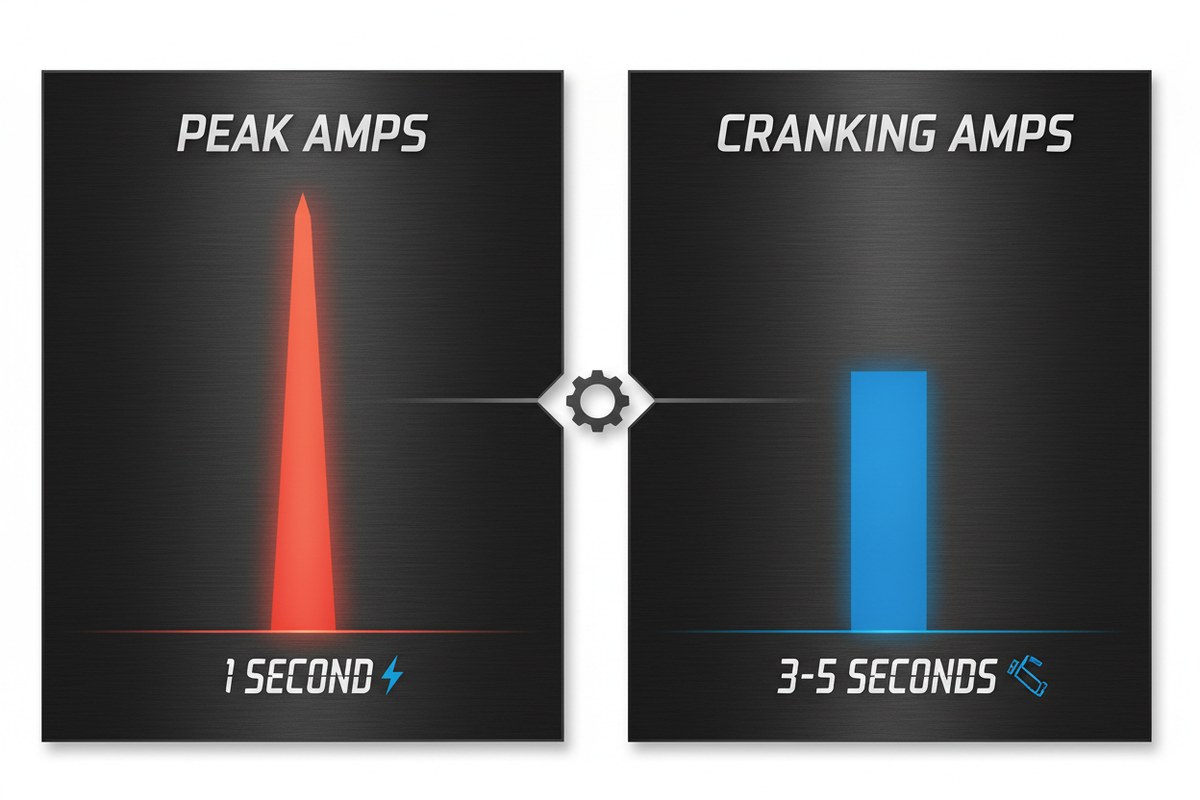
Jump-start packaging can be confusing because different amp labels are not the same thing. A buyer may see peak amps, cranking amps, or starting current and assume they all mean the same job, but they do not.
Why peak amp marketing can be misleading for buyers
Peak amps usually describe the highest short burst the pack can produce. That number is useful, but it does not tell you how long the pack can hold that output or how well it performs in a real roadside start.
Some listings highlight a very large peak number while giving little detail about the vehicle size it can support. For buyers, the safer question is not just “How high is the number?” but “Does that rating match my engine and climate?”
How battery voltage, CCA, and starter load work together
A standard car battery is a 12V system, and the jump starter must match that system. The battery’s cold cranking amps, or CCA, describe how much current the battery can supply in cold conditions, which helps explain why some vehicles are harder to restart than others.
The starter load is the force needed to turn the engine over. When voltage drops and resistance rises, the starter asks for more current, which is why a weak battery can make a jump start feel inconsistent.
Why a healthy battery may need far less current than a deeply discharged one
If the battery is still healthy and only low from leaving lights on, the jump pack may only need to nudge the system enough to wake it up. In that case, the pack’s job is closer to support than rescue.
A deeply discharged battery can behave very differently. It may pull down the available voltage, increase resistance, and force the booster to work much harder, which is why a pack that seems adequate on paper can still fail in practice.
Choosing the Right Jump Starter or Booster Pack for Your Vehicle
The best choice depends on your vehicle, not just the number on the box. Think about engine size, fuel type, climate, storage space, and how often you want to rely on the pack.
| Option | Best for | Owner consideration | Driver consideration |
|---|---|---|---|
| Compact pack | Small sedans, low-displacement engines, light emergency use | Usually easier to store and charge, but may have less reserve power | Less bulk in the trunk, but fewer backup options in tough conditions |
| Mid-range pack | Most family cars, crossovers, and many light trucks | Better balance of size and power for everyday ownership | Often the most practical mix of portability and confidence |
| Heavy-duty unit | Large engines, diesel applications, frequent roadside use | More expensive and heavier, but usually more versatile | Can be harder to carry and store, especially for smaller drivers |
Side-by-side comparison: compact pack, mid-range pack, and heavy-duty unit
Compact packs are the easiest to stash in a glove box or small cargo area, but they are also the first to run out of margin. Mid-range models are often the sweet spot for everyday drivers because they cover more vehicles without becoming too bulky.
Heavy-duty units make sense when you need more reserve power and less guesswork. They are a better fit for trucks, larger SUVs, and drivers who want a stronger backup in cold weather.
Which option fits sedans, SUVs, trucks, and larger engines
Sedans and smaller crossovers usually do fine with a compact or mid-range pack if the battery is healthy. Larger SUVs and trucks are safer with a mid-range or heavy-duty unit, especially if the vehicle has a bigger engine.
For work vehicles or family haulers that see a lot of short trips, choosing extra capacity can be worth the trade-off in size. It reduces the chance of being stranded with a pack that is just a little too small.
Compatibility notes for gasoline, diesel, hybrid, and 12V-only systems
Gasoline vehicles are the easiest match for most consumer jump starters. Diesel engines often need more output, so check the pack’s stated vehicle-size guidance instead of assuming all 12V systems are equal.
Check: Verify make, model, year, trim, voltage, ports, mounting space, and OEM requirements. Limitations: Some hybrid or specialty systems should not be jump-started the same way as a standard 12V car, so follow the owner’s manual exactly.
Hybrid and EV owners should be especially careful. Some vehicles have a separate 12V battery for accessories, while others have high-voltage systems that require different procedures and extra caution.
Ownership cost, warranty/support, and replacement battery considerations
Ownership cost is not just the purchase price. You also want to think about charging habits, battery aging, replacement parts, and whether the pack has a clear warranty or support path if something fails.
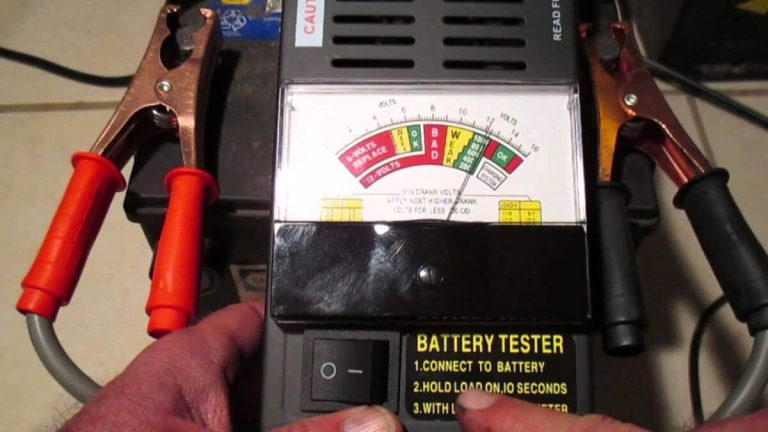
If you want to compare battery health before buying a pack or after a dead-battery event, a guide like how to test a battery with a battery tester can help you separate a weak battery from a one-time discharge.
Battery and Electrical Safety Before You Connect Anything

Jump-starting is simple only when the battery and vehicle are in safe condition. Before you connect clamps, slow down and check the system, the battery case, and the vehicle manual.
System voltage checks and why 12V matters
Most consumer jump starters are designed for 12V vehicles. Using the wrong voltage is a serious mistake, because the pack may not work correctly or could damage the vehicle’s electrical system.
If the vehicle is not clearly a standard 12V system, stop and verify the manual. That is especially important on hybrids, specialty equipment, and some commercial vehicles.
Battery chemistry differences: flooded lead-acid, AGM, EFB, lithium jump packs
Vehicle batteries can use different chemistries, including flooded lead-acid, AGM, and EFB. Those differences matter for charging behavior and sometimes for how the vehicle responds after a jump.
Lithium jump packs are common because they are compact and easy to store, but the vehicle battery chemistry still matters. A pack can help start the car, but it does not change the battery’s underlying condition.
State of charge versus battery health: what a jump can and cannot fix
A jump start helps with state of charge, meaning the battery is low but not necessarily broken. It does not repair a battery that has reached the end of its life.
If the vehicle needs repeated jumps, the problem may be deeper than a one-time drain. Charging, testing, and diagnosis matter more than just adding a stronger pack.
Damaged-battery stop conditions: swelling, leaking, heat, smell, or cracked case
When a battery looks damaged, do not keep trying “one more time.” That can create more heat, more risk, and less chance of a safe start.
Correct connection order and why polarity protection is not a substitute for caution
Always follow the order in the vehicle and jump starter instructions. Many packs include reverse-polarity protection, but that feature is a backup, not a license to connect carelessly.
- Confirm vehicle and pack voltage before connecting
- Inspect clamps and cables for damage
- Follow the manufacturer’s connection order
- Force a connection on a damaged battery
- Assume polarity protection makes mistakes harmless
- Jump a battery that is hot, leaking, or swollen
Hybrid and EV cautions: when to stop and call a professional
If the vehicle is a hybrid or EV and the 12V procedure is unclear, stop and follow the owner’s manual or contact a qualified technician. High-voltage components are not the place for guesswork.
Even when a vehicle has a 12V auxiliary battery, the correct jump points and procedures can vary. A wrong move on a modern electrified vehicle can be expensive and dangerous.
Step-by-Step Jump Start Process: Installation, Connection, and Safe Restart
A safe jump start is mostly about preparation and patience. Work slowly, keep the area visible, and make sure the pack is ready before you ask the car to crank.
Safe location, traffic visibility, and parking setup on the roadside
Pull as far out of traffic as you safely can, turn on hazard lights if appropriate, and keep your body away from moving cars. If visibility is poor, use reflective gear and warning triangles when it is safe to place them.
Cable and pack condition checks, storage conditions, and tool completeness
Before use, inspect the clamps, cable insulation, and battery pack case. A pack stored in extreme heat or cold may not perform as expected, and damaged cables can make a simple job unsafe.
It also helps to confirm that the pack is actually charged and that you have the right adapters or charger. A jump starter that lives in the trunk but never gets checked can fail at the worst time.
Correct clamp sequence, waiting time, and restart attempts
Follow the product instructions exactly, because the clamp order can vary slightly by design. In general, the goal is to make a solid connection, let the pack stabilize for a moment, and then try starting the vehicle without grinding the starter.
If the engine does not start after a reasonable attempt, stop and reassess. Repeated cranking can overheat the starter and drain the pack without solving the real problem.
Post-use inspection: heat, damage, loose terminals, and follow-up charging
After the vehicle starts, check the clamps, terminals, and pack for unusual heat or looseness. If anything looks burned, bent, or cracked, do not store it away and forget it.
Recharge the jump starter as soon as practical so it is ready next time. If the vehicle needed a jump because the battery was weak, plan on a proper battery test and charging session rather than assuming the issue is gone.
OBD2 and Diagnostic Limits After a Dead Battery
Sometimes a dead battery is followed by warning lights or stored trouble codes. That is where a basic scan tool can help, but it has limits, and not every reset should be done right away.
Model-year coverage and common OBD2 protocol support in U.S. vehicles
Most U.S. OBD2-compliant vehicles use standardized diagnostic communication, but coverage still varies by model year and manufacturer. The scanner must support the vehicle’s protocol and the functions you actually need.
Port location basics and ignition mode requirements for scanning
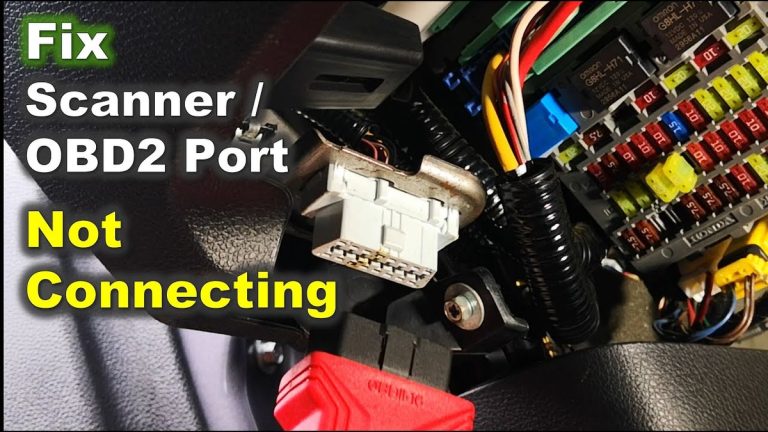
OBD2 ports are usually under the dash on the driver side, but location varies. The ignition may need to be in accessory or run mode for the scanner to communicate properly.
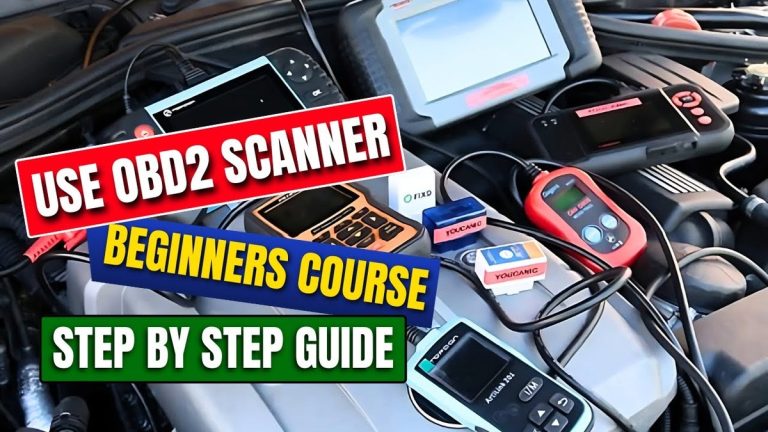
If you want a deeper explanation of scanner behavior after a battery event, our guide on how to use a Foxwell NT301 OBD2 scanner shows the kind of basic scan steps many drivers need.
Live data, code reading, and emissions readiness limits after a jump
A scanner can often read codes and live data after the vehicle powers back up, but that does not mean every system is healthy. Emissions readiness monitors may need time and driving to reset naturally.
For battery-related diagnosis, a tool like how to test a battery with a Topdon scanner can be useful when you want more than a simple yes-or-no start result.
Reset limitations: what a jump start will not clear
A jump start will not erase the reason the battery died. It also will not fix alternator trouble, parasitic draw, corroded terminals, or a failing starter.
Clearing codes too early can hide useful information. It is often smarter to record the codes first, then decide whether a reset is appropriate after the underlying issue is known.
App permissions, firmware updates, and privacy considerations for scan tools
Connected scan tools may request location, Bluetooth, account, or vehicle-data permissions. Review app permissions, update policies, and cloud-retention terms before pairing a phone or sharing VIN data.
Firmware updates can improve compatibility, but they can also change how a tool behaves. Keep the app and device current, and avoid granting more permissions than the tool truly needs.
When diagnosis requires a professional instead of another restart
If the battery dies again soon after a jump, or if the vehicle shows charging-system faults, a professional diagnosis is the safer next step. Repeated restarts can waste time and mask the real problem.
Roadside Emergency Tools: What to Carry Alongside the Jump Starter
A jump starter is only one part of a good emergency kit. The right supporting tools make the roadside job safer, faster, and less stressful.
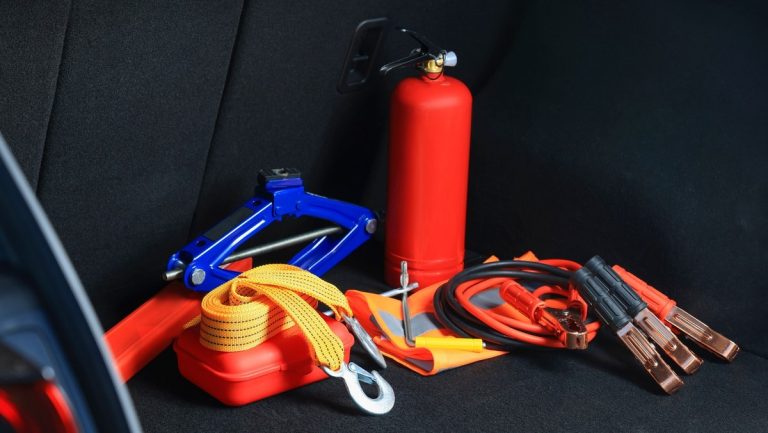
Reflective gear, gloves, flashlight, and warning triangles for visibility
Bright reflective gear and a dependable flashlight help other drivers see you. Gloves also make it easier to handle cold clamps, dirty terminals, and roadside debris.
Warning triangles can improve visibility when used safely and according to the situation. The goal is to be seen before you need to work near the vehicle.
Inflator and tire gauge basics: door-jamb placard, cold pressure, and gauge accuracy
A tire gauge and inflator pair well with a jump starter because battery problems and tire problems often show up on the same roadside trip. Always use the vehicle’s door-jamb placard for the correct cold pressure, not the number molded into the tire sidewall.
If you want a practical walkthrough, our article on how to use a portable tire inflator covers the basics of getting pressure back safely.
Inflator duty cycle, hose condition, and safe run-time limits
Portable inflators are handy, but they are not built for nonstop use. Check the hose, fittings, and duty cycle guidance so the unit does not overheat during a roadside fill-up.
TPMS relearn limits, puncture location, and temporary-repair thresholds
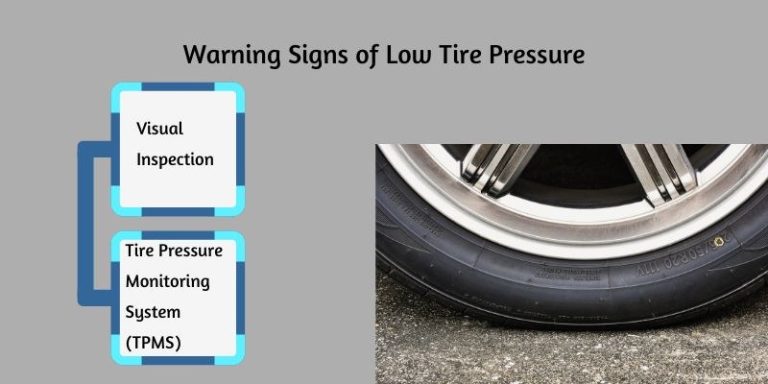
TPMS lights can stay on even after you add air if the system needs time or a relearn process. A puncture in the tread may sometimes be repairable, but damage near the sidewall is a different story.
When tire damage, sidewall cuts, or repeated pressure loss need professional repair
If the tire keeps losing pressure, has a sidewall cut, or shows visible structural damage, stop treating it like a quick fix. Temporary repair products are not a substitute for proper tire service when the damage is serious.
Maintenance, Storage, and Troubleshooting for Better Long-Term Reliability
Jump starters last longer when they are treated like emergency tools, not forgotten gadgets. A little maintenance goes a long way when you need power on the side of the road.
Battery pack charging habits, storage temperature, and periodic self-checks
Charge the pack on a regular schedule, store it in a moderate temperature range, and check it every few months so it is not dead when you need it.
Most packs lose charge over time. A quick self-check before a road trip or winter season is smarter than discovering the battery pack is empty during an emergency.
How to inspect clamps, cables, and connectors for wear before the next emergency
Look for bent jaws, cracked insulation, loose strain relief, and corrosion on the clamps. Small wear signs can become big failures when the pack is under load.
If you also use a battery tester, comparing the pack’s condition with the vehicle battery can help you decide whether the issue is the jumper, the battery, or both. Our guide to how accurate a battery tester is can help set realistic expectations.
Common failure points: no power, reverse polarity alerts, weak cranking, and false confidence
No power often means the pack is discharged or the cable connection is poor. Reverse polarity alerts usually point to a clamp mistake or a battery layout that needs a second look.
Weak cranking can mean the pack is too small, the battery is too damaged, or the starter system has another issue. A jump starter can create false confidence if the real problem is ignored.
When repeated jump starts point to alternator, parasitic drain, or battery replacement
If the car keeps needing a jump, something is wrong beyond a one-time mistake. Common causes include a failing alternator, parasitic drain, loose terminals, or an aging battery that can no longer hold charge.
At that point, it is better to diagnose the charging system than to keep buying bigger jump packs. Bigger is not always better when the underlying problem is electrical.
Best next steps after a successful jump: charging, testing, and deciding on replacement
After a successful start, drive or charge the battery long enough to recover properly, then test the system. If the battery fails again soon, replacement may be the safer and cheaper long-term answer.
For a clearer battery-health check, you can also compare your results with a dedicated tester or scanner-based battery test before deciding what to replace.
- Best for: Most 12V passenger cars, SUVs, and light trucks that need a practical 200–400 peak amp jump starter range.
- Think twice if: Your vehicle is a diesel, hybrid, EV, or has a damaged battery, because the safe answer may be different.
- Next step: Verify your vehicle’s voltage, engine type, and battery condition before buying or using a jump starter.
Frequently Asked Questions
Most 12V passenger cars do well with a jump starter in the 200–400 peak amp range. Larger engines, diesels, and cold weather can require more headroom.
No. Peak amps is a short burst rating, while cranking amps refers more to sustained starting ability. The labels are not interchangeable.
Sometimes, but it depends on engine size, battery condition, and temperature. A compact pack may be fine for a smaller SUV, but bigger engines usually need more capacity.
No. If the battery is swollen, leaking, cracked, hot, or smells strange, stop and get professional help instead of jump-starting it.
Often yes, or at least a special procedure. Some vehicles have a separate 12V battery, while others require different service steps, so check the owner’s manual first.
Confirm your vehicle voltage, engine type, and battery condition. Also review storage needs, warranty, included cables, charging method, and support for your vehicle class.