How to Test a Battery with a Battery Tester for Reliable Results
A battery tester can quickly show whether a battery is weak, healthy, or likely failing under load. The most reliable results come from matching the tool to the battery type, using clean connections, and checking whether the real problem is the battery, charging system, or starter.
How to Test a Battery With a Battery Tester starts with one simple idea: the reading only helps if you know what it means. A battery tester can tell you whether a battery is weak, whether it is failing under load, and whether the problem may actually be in the charging or starting system instead.
- Test the right thing: Voltage, CCA, and battery health are related but not identical.
- Match the tool to the battery: Verify 12V, AGM, EFB, lithium, or hybrid low-voltage support before buying.
- Clean contact matters: Corrosion and loose clamps can create false readings.
- Use the result correctly: A passing battery test does not rule out alternator, starter, or wiring issues.
- Check safety first: Stop if the battery is swollen, cracked, leaking, or hot.
How to Test a Battery With a Battery Tester: What a Good Reading Actually Tells You
A battery tester is most useful when you want a quick, practical answer without guessing. It can show whether the battery still has usable reserve, whether it is holding charge, and whether it can deliver enough power for starting. That said, the result is only part of the picture, especially on vehicles with stop-start systems or newer electronics.
Battery voltage, state of charge, and battery health: why those are not the same thing
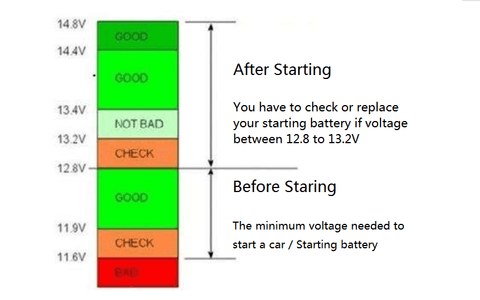
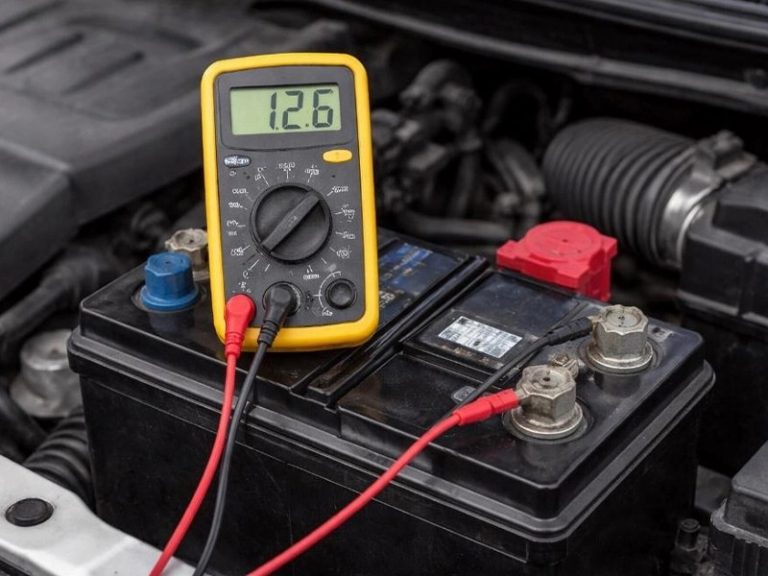
Voltage tells you how much electrical pressure the battery has at that moment. State of charge is the battery’s current fill level, while battery health is about how well it can still perform compared with its original condition. A battery may show decent voltage but still fail a tester if its internal resistance has risen or its cold cranking ability has dropped.
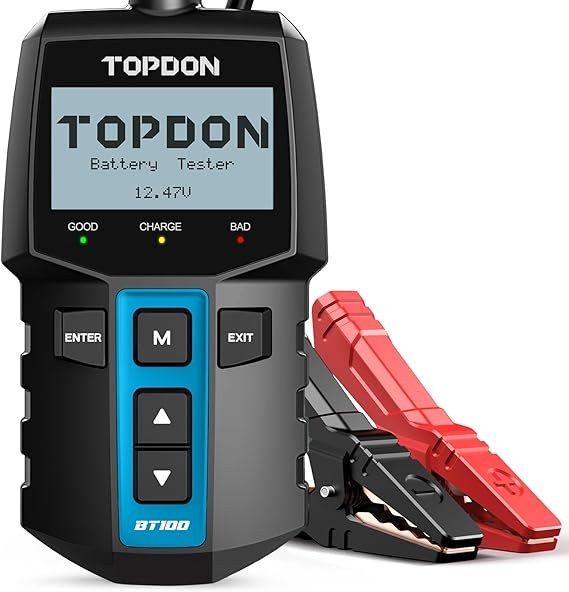
That is why a simple multimeter reading can be helpful, but it does not always settle the question. A tester that checks conductance or applies a load gives more useful information for real-world starting performance. For a deeper look at how a popular diagnostic unit reports results, see how a Topdon battery tester works.
When a battery tester is enough, and when the problem is really charging or starting system related
If the battery tester says the battery is weak, that may be the whole problem. But if the battery passes and the vehicle still cranks slowly or will not start, the issue may be the alternator, starter, connections, parasitic draw, or a bad ground. In that case, a battery test is only the first step.
Many drivers also confuse battery failure with charging failure. If the battery keeps going flat after driving, the alternator or a wiring issue may be the real cause. If the battery is fine in the morning but the car struggles to start after sitting, you may need more than a battery tester to find the fault.
Choosing the Right Battery Tester for Your Vehicle and Use Case
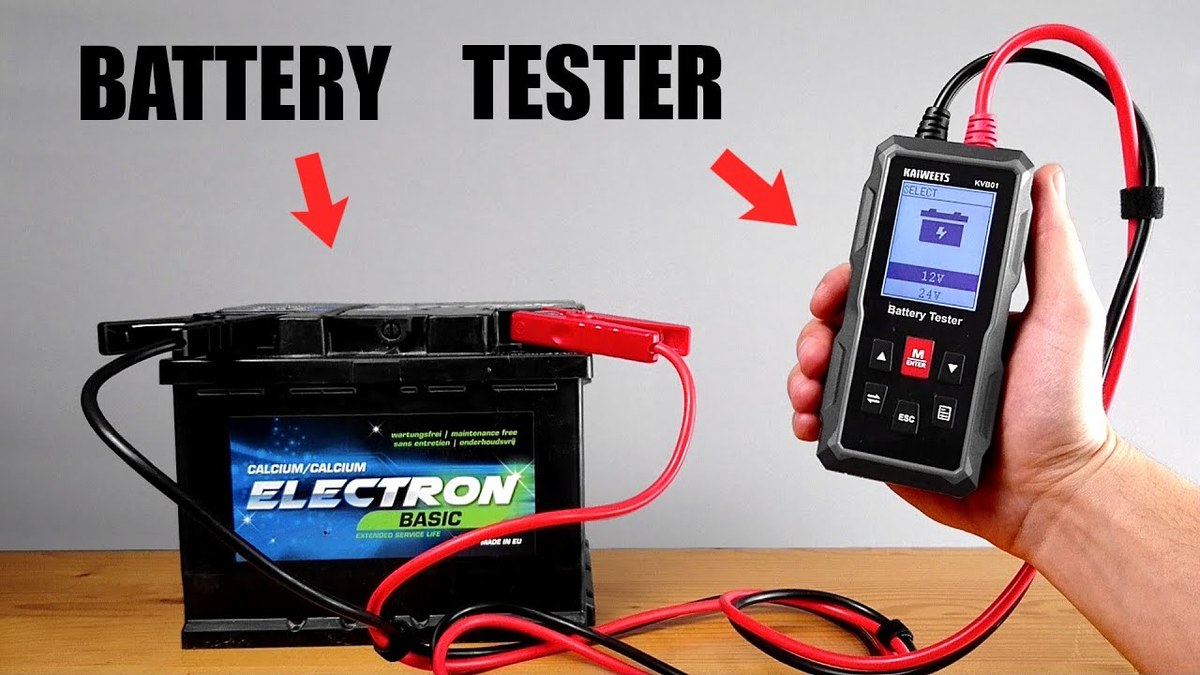
The best tester depends on what you drive and how often you will use it. A commuter who wants a quick home check does not need the same tool as a shop that tests multiple batteries a day. Compatibility matters too, because not every tester handles every battery chemistry or vehicle system the same way.
Conductance testers vs. load testers vs. multimeters: what each one measures
Conductance testers estimate battery condition by measuring how the battery responds to a small signal. They are fast, common, and useful for many 12V batteries. Load testers place a heavier demand on the battery and can show whether it holds up under stress, but they may be less convenient and require more care.
A multimeter only measures voltage unless you add other methods. It is still useful for quick checks, but it cannot fully judge battery health on its own. For many owners, the best setup is a tester for health plus a multimeter for follow-up checks on charging voltage and wiring.
12V lead-acid, AGM, EFB, lithium, and hybrid/EV low-voltage battery compatibility
Most consumer battery testers are built around 12V lead-acid systems, including flooded, AGM, and EFB batteries. Some also support lithium starting batteries, but you need to verify that in the product manual before buying. Hybrid and EV owners should be especially careful, because the low-voltage accessory battery is not the same thing as the high-voltage traction system.
Check: Verify make, model, year, trim, voltage, ports, mounting space, and OEM requirements. Limitations: State verified exclusions.
Which drivers need a basic home tester, and which should buy a pro-grade unit
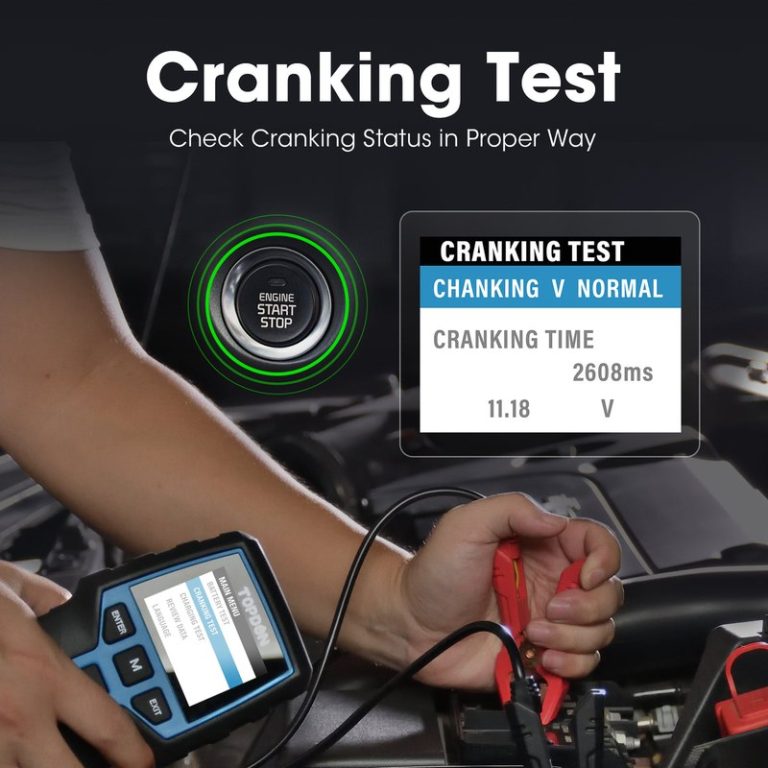
Most daily drivers can get by with a basic tester that checks voltage, cranking performance, and charging system output. That covers the most common roadside and driveway problems. If you maintain multiple vehicles, own a truck or diesel, or work on start-stop systems, a more advanced tester with better coverage and reporting can save time.
Professional-grade units make sense for fleets, shops, and serious DIY owners who want repeatable results. They often offer better clamp quality, more battery profiles, and more consistent interpretation prompts. The trade-off is cost and a little more learning up front.
Step-by-Step: How to Test a Battery Safely and Get Reliable Results
Reliable battery testing depends on safe setup and clean contact. A rushed test can produce a false fail, a false pass, or a result that points you in the wrong direction. Follow the tool’s instructions carefully and stop if the battery looks damaged.
Safety prep, ventilation, and when to stop because the battery is damaged or swollen
Work in a ventilated area, keep sparks and flames away, and wear eye protection if the battery is under the hood or in a confined space. If the battery case is swollen, cracked, leaking, or hot to the touch, do not continue testing. Those are signs the battery may be unsafe and should be handled according to the vehicle and battery maker’s guidance.
Correct connection order, clamp contact quality, and avoiding false readings
Make sure the clamps bite clean metal on the battery posts or the approved test points. Corrosion, loose contact, or paint on the terminal can create bad readings. If the tester uses red and black clamps, connect them exactly as directed and avoid moving them while the test is running.
Good contact matters more than many drivers realize. A weak clamp connection can make a healthy battery look bad, especially when the tester checks cranking or conductance. If the vehicle has hard-to-reach terminals, take the time to position the clamps securely before starting the test.
How to interpret voltage, CCA, internal resistance, and pass/fail prompts
Voltage gives a quick snapshot, but cold cranking amps, or CCA, are usually more important for starting performance. Internal resistance is another clue: higher resistance often means the battery is aging or has lost strength. Pass/fail prompts are helpful, but the exact cutoff depends on the tester’s algorithm and the battery profile you selected.
Testing in-vehicle vs. out of vehicle: what changes and why it matters
Testing in the vehicle is faster and often enough for routine checks. But other electrical loads can affect the reading, especially if accessories, lights, or modules are active. Out-of-vehicle testing can be more controlled, but you lose the context of the car’s charging and starting system.
If a battery passes on the bench but fails in the car, the issue may be with cables, grounds, or the charging system. If it fails out of the vehicle too, replacement is more likely. For owners who want a broader scan-tool workflow after a battery check, this Foxwell NT301 guide shows how code reading fits into the bigger diagnosis.
Battery Tester Comparison: Features That Matter for Accuracy, Speed, and Ownership Cost
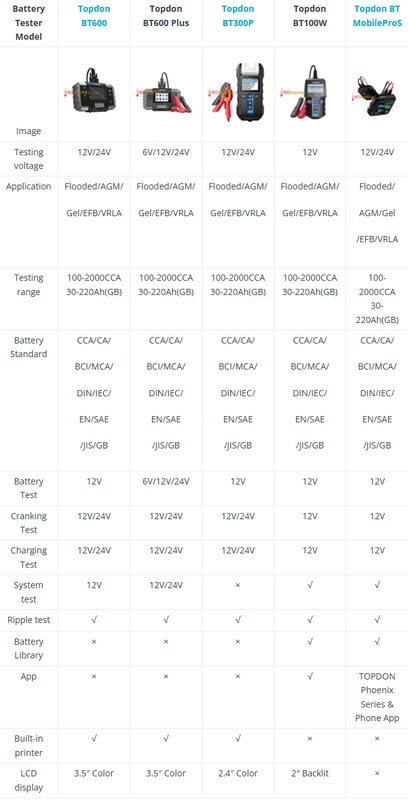
Not every tester is built for the same job. Some prioritize speed and simplicity, while others focus on repeatability, reporting, and broader battery support. The right choice depends on whether you want a quick answer, a more detailed diagnosis, or a tool that will see heavy use.
Accuracy, temperature compensation, and repeatability side by side
Accuracy is not just about one number on the screen. Repeatability matters because a good tester should give similar results when the same battery is checked again under similar conditions. Temperature compensation also matters, since cold weather changes battery behavior and can make a weak battery look even worse.
For most drivers, the goal is not laboratory precision. It is a dependable answer that helps you decide whether to charge, retest, inspect the charging system, or replace the battery. A tester with clear prompts and stable results is usually more valuable than one with flashy features you will never use.
Display quality, cable length, clamp durability, and power source options
A clear screen is easier to read in a dim garage or at the curb. Cable length matters when battery terminals are buried under covers or located in the rear cargo area. Clamp durability also matters because cheap leads wear out quickly and can cause intermittent readings.
Some testers are powered by the battery being tested, while others use internal batteries or USB charging. Each option has trade-offs. Battery-powered units can be more flexible, but they need occasional charging or replacement. Units that draw power from the vehicle may be simpler for occasional use.
Warranty, support, calibration, and long-term cost of ownership
Warranty and support can matter as much as the feature list. A tester that is accurate today but poorly supported later may cost more in the long run. Calibration policies also matter for users who depend on consistent results, especially in fleet or shop settings.
Which tester fits DIY owners, fleet users, and shop-level diagnostics
DIY owners usually want a simple tester that gives a clear pass/fail result and basic charging-system insight. Fleet users need repeatability, durable leads, and quick workflow. Shops often need the broadest coverage, stronger support, and better documentation for customer records.
| Option | Best for | Owner consideration | Driver consideration |
|---|---|---|---|
| Basic tester | Home checks and occasional use | Lower cost and simpler operation | Quick answers with less setup |
| Mid-range tester | Frequent DIY and multiple vehicles | Better reporting and durability | More reliable results in varied conditions |
| Pro-grade tester | Fleet and shop use | Higher cost, stronger support needs | Faster workflow and broader diagnostics |
OBD2 and Diagnostic Limits: What Battery Testers and Scan Tools Can and Cannot Do
Battery testers and OBD2 scan tools often get mentioned together, but they solve different problems. A battery tester checks electrical health at the battery or starting system. An OBD2 tool reads vehicle data and fault codes, which can help explain why the battery is being drained or why the charging system is not behaving normally.
Model-year and protocol coverage, port location, and ignition mode requirements
OBD2 coverage depends on the vehicle, model year, and protocol support. The port is usually under the dash, but location can vary. Some tools also require the ignition to be on, engine off, or a specific accessory mode before they communicate correctly.
If you are pairing battery testing with code reading, make sure the scan tool supports the vehicle you own. For example, this Ancel BD310 code-reading guide explains a common workflow for checking trouble codes after a battery or charging issue.
Live data, code reading, emissions readiness, and reset limitations
Many scan tools can read and clear codes, show live data, and check readiness monitors. But clearing codes does not fix the cause. It only erases the evidence, which can make diagnosis harder if you have not recorded the original fault first.
Some battery-related issues also show up as low-voltage codes, communication faults, or module warnings. That is why it helps to use the battery tester and the scan tool together instead of relying on one tool alone.
App permissions, firmware updates, privacy concerns, and when to involve a professional
Connected tools may ask for Bluetooth, location, account access, or vehicle data permissions. Read the app’s privacy terms before pairing it with your phone. Firmware updates can improve compatibility, but they can also change features or require an account.
If the battery test points to a charging fault, repeated dead batteries, or a possible parasitic draw, a professional diagnosis may save time. That is especially true for newer vehicles with complex power management systems.
Tire Pressure, TPMS, and Emergency Tool Checks That Affect Roadside Reliability
Battery trouble often shows up when a vehicle is already under stress, which is why roadside readiness matters. Good tire pressure, a working inflator, and basic emergency tools can keep a minor electrical issue from becoming a bigger problem on the shoulder.
Using the door-jamb placard and cold pressure to verify inflation correctly
Check the door-jamb placard for the vehicle’s recommended tire pressure and measure when the tires are cold. That gives you the most useful baseline. Do not use the number on the tire sidewall as your everyday inflation target, because that is not the same as the vehicle’s recommended pressure.
Gauge accuracy, inflator duty cycle, and TPMS relearn limitations
A tire gauge or inflator can only help if it is accurate enough for routine use. Portable inflators also have duty cycle limits, which means they may need rest periods during longer inflation jobs. If your vehicle uses TPMS, remember that topping off a tire does not always clear a warning immediately.
For a related roadside tool workflow, see how to use a portable tire inflator. It is a useful companion skill when you are checking both battery health and tire readiness.
Puncture location, temporary repair limits, and when tire damage needs professional repair
Not every tire issue is safe for a quick fix. Sidewall damage, large punctures, and separated tread usually need professional attention or replacement. Temporary repair products have limits and should not be treated as a permanent solution unless the manufacturer says otherwise.
Roadside tool condition: safe location, traffic visibility, storage, cable health, and post-use inspection
Keep roadside tools in good condition and store them where you can reach them quickly. Check cable insulation, clamp condition, and connector wear after use. If you are working near traffic, choose a safe location first and avoid standing in a lane or next to moving vehicles.
Installation, Maintenance, and Storage Tips for Better Tester Performance
Battery testers do not need much maintenance, but the small things matter. Clean contact points, healthy leads, and proper storage help the tool stay dependable over time. That is especially important if you only use it a few times a year.
Keeping clamps, leads, and probes clean for consistent readings
Wipe off corrosion, dirt, and moisture before each test. Dirty clamps can add resistance and distort the result. If the leads are frayed or the jaws do not grip well, the tester may be less trustworthy even if the screen still powers on.
Firmware updates, battery replacement, and storage conditions between uses
If your tester supports firmware updates, check the manufacturer’s instructions from time to time. Updates may improve vehicle coverage or fix bugs. If the unit uses replaceable batteries, inspect them before long storage so the tool is ready when you need it.
Store the tester in a dry place, keep the clamps closed or protected, and inspect the cable insulation before each use. Small wear issues are easier to catch early than after a false reading.
How often to retest a battery and track deterioration over time
There is no single schedule that fits every vehicle. A battery in a daily driver may be worth checking before winter, after a no-start event, or during routine service. If a battery has already shown weakness, retesting over time can help you see whether it is stable or getting worse.
Best Fit Recommendations by Driver Type, Vehicle Type, and Budget
Here is the simplest way to choose: match the tester to your vehicle and how much detail you want. A basic owner may only need a fast answer, while a frequent DIY user may want stronger reporting and better build quality. Fleet and shop users should prioritize durability, repeatability, and support.
Daily drivers, older vehicles, start-stop systems, trucks, motorcycles, and hybrid/EV owners
Daily drivers and older vehicles usually do well with a straightforward 12V tester. Start-stop systems, trucks, and larger batteries may benefit from a more capable unit that clearly supports the battery type and rating. Motorcycle owners should check whether the tester handles smaller batteries well, while hybrid and EV owners should verify that the tool is meant for the low-voltage system they plan to test.
Budget-friendly picks vs. mid-range vs. professional-grade options
Budget-friendly testers are best when you want occasional checks and simple pass/fail results. Mid-range models are a strong middle ground for families with multiple vehicles or anyone who wants more consistent diagnostics. Professional-grade units are worth it when time, repeatability, and broader battery support matter more than price.
A Mid-Range 12V Battery Tester
Best for most drivers who want clear battery health results, basic charging checks, and dependable everyday use without shop-level complexity. The main trade-off is that advanced fleet features and deeper diagnostics may be missing.
Basic 12V Battery and Alternator Tester
A smart pick for occasional home checks, simple starting-system tests, and drivers who mainly want a fast answer. It usually skips advanced battery profiling, app features, and detailed reporting.
Transparent verdict: which type of battery tester makes the most sense for most CarValleyNJ readers
For most US drivers, a mid-range 12V battery tester is the best balance of price, clarity, and usefulness. It gives enough information to separate a weak battery from a charging or starting problem without adding unnecessary complexity. If you only test once in a while, a basic unit is fine. If you work on several vehicles, move up a level.
- Best for: Drivers who want a fast, reliable way to check battery health before a no-start problem leaves them stranded.
- Think twice if: You need deep diagnostics for hybrid systems, complex charging faults, or fleet-level reporting.
- Next step: Verify your battery type, voltage, and tester compatibility before you buy, then keep the clamps and cables clean for better results.
Frequently Asked Questions
Most drivers do well with a 12V conductance or load-style tester. Check that it supports your battery type, such as flooded, AGM, EFB, or lithium if needed.
Some testers can give a basic charging-system result, but they do not replace full diagnostics. If the battery passes and the car still has problems, the alternator, starter, wiring, or grounds may need more checking.
No. Stop testing if the battery is swollen, cracked, leaking, or hot, and follow the vehicle and battery manufacturer’s instructions.
Not usually. In-vehicle testing is common and often enough, but out-of-vehicle testing can help if you suspect a bad battery or want a cleaner reading.
There is no fixed rule, but it helps to retest before winter, after a no-start event, or if the battery has already shown weakness. Tracking results over time can show whether the battery is stable or getting worse.
Confirm battery type compatibility, supported voltage, clamp quality, display readability, warranty, and whether the tester needs an app or firmware updates. Also check whether you need basic home use or more advanced diagnostics.
Related CarValleyNJ Guides
Continue with these related guides in the same topic cluster:



7 Comments