Can I Test a Battery with a Multimeter? Safe, Accurate Steps
Yes, you can test a battery with a multimeter, and it is the fastest way to check basic voltage. It does not prove full battery health, so weak or inconsistent readings should be followed by a deeper test.
Can I Test a Battery With a Multimeter? Yes — a multimeter can quickly tell you whether a battery still has usable voltage, but it cannot confirm full battery health by itself. This guide shows the safe way to check a battery, what the reading really means, and when you need a stronger test or a technician.
- Voltage only: A multimeter shows charge level, not full battery health.
- Safety first: Stop if the battery is hot, swollen, leaking, or heavily corroded.
- Modern vehicles: AGM, EFB, hybrid, and EV support batteries may need model-specific checks.
- Better tools exist: Conductance and load testers give more complete battery-condition data.
- Next step: Retest after charging and cleaning terminals before replacing the battery.
Can You Test a Battery with a Multimeter? The Short Answer and What It Can Tell You
A multimeter is one of the simplest ways to check a battery at home. For most drivers, it answers the first question fast: does the battery have voltage, and is it roughly where it should be?
That said, voltage alone is only part of the story. A battery can show decent voltage and still fail under load, lose capacity in cold weather, or struggle to start the vehicle.
Voltage readings vs. true battery health
Voltage is best treated as a snapshot. It helps you estimate state of charge, not the battery’s full condition.
For a typical 12V automotive battery, a resting reading near 12.6 volts often suggests a full charge, while a much lower reading may point to a weak or discharged battery. But a surface charge right after driving or charging can make the number look better than it really is.
Owner Benefit Knowing the difference between voltage and health can save you from replacing a battery too early or trusting one that is already failing.
What a multimeter can and cannot diagnose
A multimeter can help you check battery voltage, charging voltage, and basic polarity. It can also reveal obvious problems such as a dead battery, a bad alternator output, or a poor connection.
It cannot measure internal resistance, cranking strength, or reserve capacity the way a conductance tester or load tester can. If your car starts weakly only in the morning or only in cold weather, the multimeter may not show the whole problem.
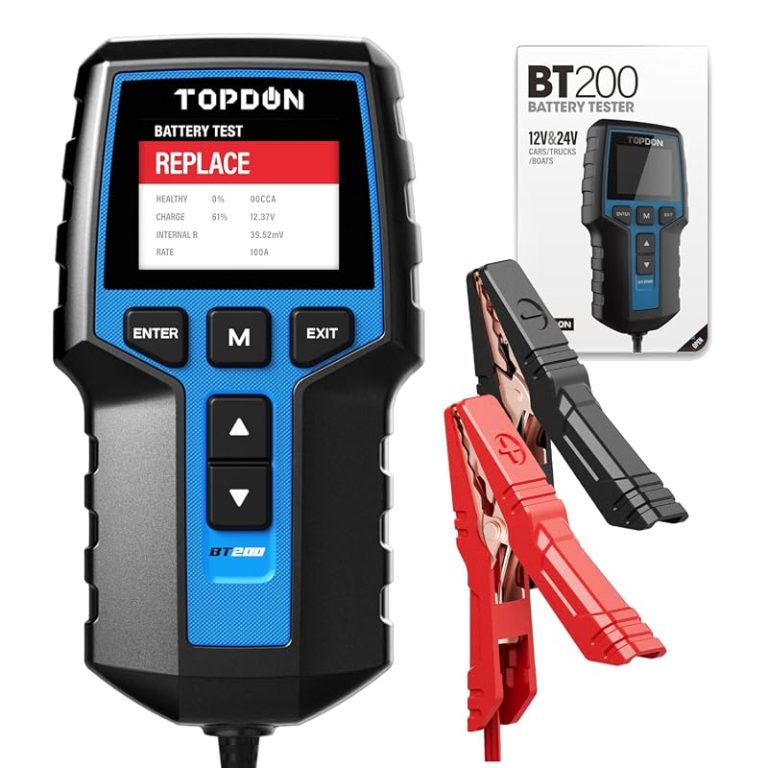
For readers comparing tools, our guide on whether a battery tester is worth it explains why some testers go beyond a simple voltage check.
When a battery should be replaced or professionally tested
If a battery repeatedly drops low after charging, fails to hold a resting voltage, or causes slow cranking, it is time for a deeper test. Professional testing is also smart when the battery is part of a newer charging system, hybrid support system, or stop-start vehicle.
When the battery case is swollen, leaking, or hot, stop using it and seek help. Those are not normal symptoms, and a voltage reading should not be your next step.
How to Test a Battery Safely with a Multimeter

The process is simple, but the safety steps matter. A car battery can deliver very high current, and a slip across the terminals can damage tools or cause a spark.
Tools needed and safe work conditions
You need a digital multimeter, the vehicle parked safely, and enough light to see the battery terminals. Gloves and eye protection are a good idea, especially if the battery is dirty or shows corrosion.
Work with the engine off unless you are checking charging voltage. Keep metal jewelry away from the battery area, and make sure the meter leads are in the correct jacks before you start.
Correct connection order and polarity checks
Set the meter to DC volts, then connect the black lead to the negative terminal and the red lead to the positive terminal. If the display shows a negative number, the leads are reversed.
That reversal usually does not hurt the meter, but it can confuse the reading. A stable, positive reading is what you want before making any judgment.
- Use the DC voltage setting, not AC.
- Touch the probes firmly to clean terminal metal.
- Record the reading with the engine off and again with the engine running if needed.
- Let the probe tips bridge both terminals.
- Assume a good voltage reading means the battery is healthy under load.
- Test a visibly damaged battery without stopping first.
Step-by-step voltage test for 12V automotive batteries
First, let the vehicle sit off for a while if possible. This helps remove surface charge and gives you a more useful resting reading.
Next, read the battery voltage with the engine off. Then start the vehicle and check charging voltage at the battery terminals. A healthy charging system usually shows a higher number than resting voltage, but exact targets vary by vehicle and battery type.
If the reading is low, clean the terminals and retest. Corrosion or a loose clamp can make a good battery look bad.
Damaged-battery stop conditions: heat, swelling, leaks, odor, or corrosion
Do not keep probing a battery that is hot, swollen, leaking, or smelling unusual. Those are warning signs that point to internal damage or a possible safety hazard.
Heavy white or green corrosion around the posts is also a reason to slow down and inspect carefully. Corrosion can be cleaned in some cases, but only if the battery itself is otherwise sound.
Battery Types, Voltage Targets, and Compatibility in 2026 Vehicles
Not every vehicle battery behaves the same way. Modern cars may use standard lead-acid batteries, AGM units, EFB batteries, lithium support batteries, or a 12V battery tied into a hybrid or EV system.
Lead-acid, AGM, EFB, lithium, hybrid, and EV 12V support batteries
Traditional lead-acid batteries are still common, but AGM and EFB batteries are widely used in vehicles with stop-start systems. These batteries can tolerate different charging patterns and may show different resting behavior.
Some hybrids and EVs still use a 12V support battery for accessories, control modules, and starting system functions. That means a simple voltage check may still matter, even in vehicles that do not use a conventional starter in the old sense.
System voltage basics: 12V, 48V mild hybrid, and high-voltage systems
A standard multimeter can check low-voltage systems like 12V and, in some cases, 48V mild-hybrid circuits if the meter is properly rated and the user understands the system. But high-voltage hybrid and EV packs are a different category.
High-voltage systems are not a casual DIY test area. If the battery or cable you want to inspect is orange, sealed, or labeled as high voltage, follow the service manual and do not use normal battery-check habits.
State of charge vs. battery health and why they are not the same
State of charge tells you how full the battery is right now. Battery health tells you how well it can still do its job over time.
A battery may be fully charged and still weak because of age, sulfation, internal wear, or cell damage. That is why a battery can pass a basic voltage check and still fail in daily use.
Model-year and vehicle-specific cautions for modern charging systems
Modern vehicles may use smart alternators, battery sensors, and software-controlled charging. Those systems can change the numbers you see at the battery terminals.
If your vehicle has a battery monitoring sensor, start-stop system, or a recent battery replacement, check the owner’s manual before assuming the voltage target is universal. If you also need scan-tool support, see what an OBD2 scanner can do for battery-related diagnosis.
Multimeter vs. Other Battery Testers: Which Tool Fits Which Driver?

Different tools solve different problems. A multimeter is the cheapest and most flexible starting point, but it is not always the best final answer.
Side-by-side comparison: multimeter, conductance tester, load tester, and OBD2 battery data
| Option | Best for | Owner consideration | Driver consideration |
|---|---|---|---|
| Multimeter | Quick voltage checks | Low cost and simple storage | Fast, but limited detail |
| Conductance tester | Battery condition estimates | More useful than voltage alone | Usually quicker than a load test |
| Load tester | Cranking performance | More demanding to use safely | Better for weak-start complaints |
| OBD2 battery data | System and charging info | May need app support and vehicle coverage | Useful, but not a direct battery test |
Accuracy, speed, cost, and learning curve
A multimeter is usually the easiest tool to learn and the least expensive to own. It is also the fastest way to confirm whether you have voltage at all.
Conductance and load testers provide more useful battery-health clues, but they take more setup and sometimes cost more. OBD2 data can be valuable for modern vehicles, but it depends on protocol support and app quality.
Best choice for DIY owners, commuters, fleet vehicles, and hybrid/EV drivers
DIY owners often do well with a multimeter plus a basic battery tester. Commuters who want a quick check before winter may appreciate the simplicity.
Fleet vehicles and hybrid or EV owners may need better documentation and faster repeat testing. In those cases, a conductance tester or scan tool often gives more useful information than voltage alone.
When a professional test is the safer and more reliable option
Professional testing makes sense when the battery is hard to access, the vehicle has complex charging logic, or the symptom is intermittent. It is also the better path if the battery keeps failing after replacement.
If you are unsure whether the problem is the battery, starter, alternator, or software-controlled charging system, a shop can often save time and reduce guesswork.
OBD2 and Diagnostic Limits: What a Battery Test Cannot Replace
A multimeter tells you a lot about voltage, but it does not replace a full diagnostic scan. Many battery complaints are tied to stored codes, charging behavior, or module communication.
OBD2 model-year coverage, protocol support, and port location
Most US vehicles use an OBD2 port, usually under the dash near the steering column. Coverage and protocol support vary by model year and vehicle brand, so a scan tool may work better on one car than another.
If you are comparing scanner features, our article on checking emissions with a scan tool is a helpful place to start.
Ignition mode requirements for reading codes and live data
Some vehicles require ignition on but engine off to read codes and live data. Others need the engine running for charging-system values to make sense.
That matters because a battery complaint may only appear in one ignition mode. If the tool or app is not connected in the right mode, you can miss the clue.
Code reading, live data, emissions readiness, and reset limitations
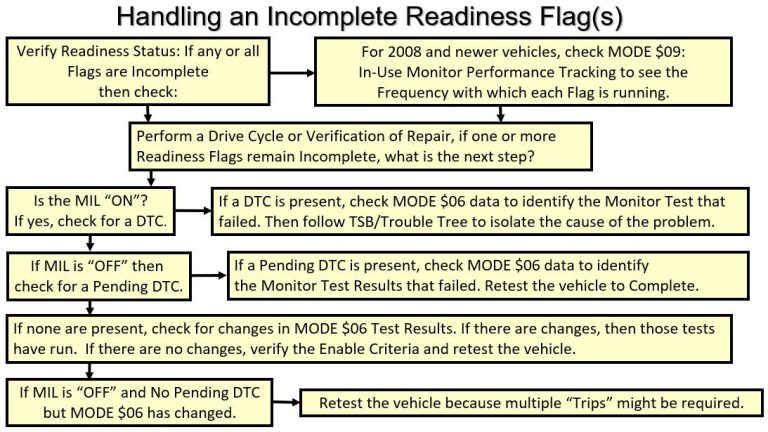
Code reading helps identify what the car has noticed, but it does not prove the exact failed part. Live data can show voltage trends, charging behavior, and module status, while readiness monitors matter for emissions-related checks.
Reset functions are useful, but they should not be used to hide a problem. Clearing codes before recording them can erase the trail you need for a proper diagnosis.
App permissions, firmware updates, and privacy considerations
Connected diagnostic tools may ask for Bluetooth, location, account access, or vehicle data permissions. Read the app settings before pairing and keep firmware updated when the maker supports it.
When battery, charging, or starting diagnosis needs a technician
If you have repeated battery failures, charging warnings, or electrical faults after a replacement, the issue may involve wiring, sensors, or module logic. That is beyond what a multimeter alone can settle.
For readers who want a deeper scan tool comparison, subscription rules for OBD2 tools can affect ownership cost and long-term value.
Tire Pressure and TPMS: Why Electrical Testing Often Goes Hand in Hand with Tire Checks
Battery problems often show up during the same routine checks as tire pressure. Both are part of basic vehicle readiness, especially before long trips or winter driving.
Using the door-jamb placard and checking cold pressure correctly
The correct tire pressure is listed on the driver-side door-jamb placard, not on the tire sidewall. Check pressure when the tires are cold for the most accurate result.
That habit matters because low pressure can make a vehicle feel sluggish, strain fuel economy, and trigger TPMS warnings that distract from a separate battery issue.
Gauge accuracy, inflator duty cycle, and safe inflation limits
Use a reliable gauge and do not overinflate in a hurry. Small errors can become a comfort or safety problem, especially in changing temperatures.
If you use a portable inflator, check its duty cycle and cooling needs. Some units need breaks during repeated use, and the owner manual should guide safe timing.
For a related roadside tool walkthrough, see how a portable tire inflator is used safely.
TPMS relearn limits and model-year compatibility
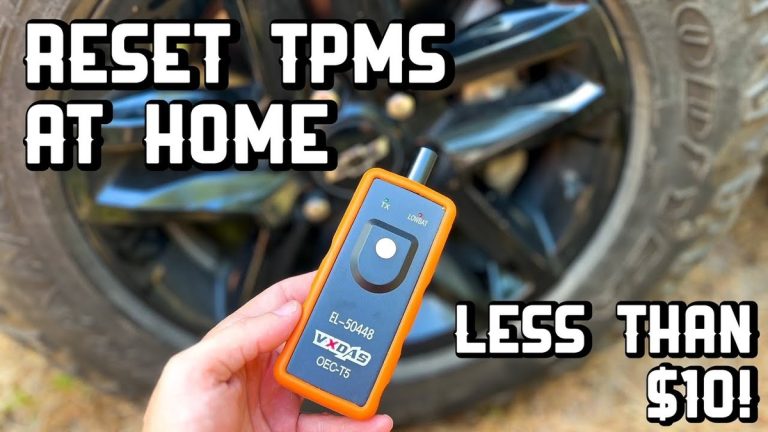
TPMS systems vary by make, model, and year. Some relearn automatically, while others need a scan tool or a specific drive cycle.
If you are changing wheels, sensors, or tire sizes, verify compatibility before you assume the warning light will clear itself.
Puncture location, temporary-repair limits, and professional-repair thresholds
Tire repair is only appropriate in certain puncture locations, and temporary fixes are not always permanent. Sidewall damage, large cuts, and repeated air loss usually need professional attention or replacement.
Roadside and Emergency Power Tools: Safe Use, Storage, and Post-Use Inspection
Battery checks often happen right before or after a roadside problem. That makes safe tool storage and inspection part of the same ownership habit.
Choosing a safe location with traffic visibility
If you are checking a battery at the roadside, move to a safe shoulder or parking area if possible. Use hazard lights and stay aware of traffic around the vehicle.
Visibility matters as much as the test itself. A good reading is not worth standing in a risky lane or blind spot.
Storage conditions, cable condition, and pack health
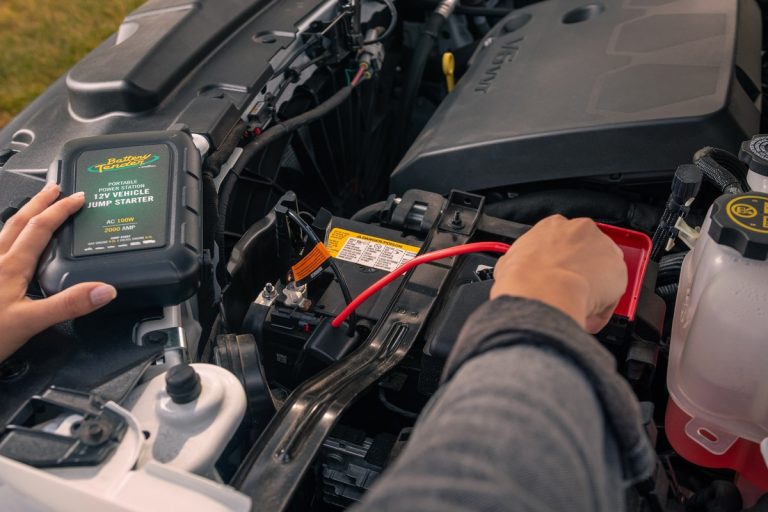
Store meters, jump packs, and cables in a dry place away from extreme heat and cold when possible. Inspect leads, clamps, and insulation before each use.
Cable damage can create false readings or unsafe sparks. A cracked case or frayed lead is a reason to retire the tool or replace the damaged part.
If you carry a jump pack, it helps to know its real battery capacity and storage limits, as discussed in battery capacity and pack storage guidance.
Current limits, tool completeness, and vehicle compatibility
Not every emergency tool fits every vehicle or battery type. Make sure the tool is meant for your battery voltage and that the clamps, cables, and adapters are complete.
Missing accessories can turn a simple roadside fix into a frustrating delay. That is especially true for drivers who rely on one kit for commuting, rideshare work, or family trips.
Post-use inspection and when to retire a jump pack or cable set
After use, inspect the tool for heat, swelling, damaged insulation, loose clamps, or broken housings. Recharge the pack if needed and store it according to the maker’s instructions.
If a jump pack no longer holds charge well or a cable set shows wear, replace it before you need it in a real emergency.
Cost, Maintenance, and Next Steps for Long-Term Battery Reliability
Good battery care is mostly about routine checks, not dramatic repairs. A few minutes with the right tools can prevent a no-start morning.
Ownership cost: meter, tester, replacement battery, and professional diagnostics
The cheapest path is usually a basic multimeter, but the best value depends on how often you diagnose batteries. A more capable tester may cost more up front, yet save time across multiple vehicles.
Professional diagnostics cost more, but they can be worth it when the battery problem is tied to charging, wiring, or software. That is especially true for newer vehicles with more complex electrical systems.
Routine maintenance checks and seasonal testing intervals
Check battery voltage before winter and again before long summer travel, especially if the vehicle sits often. Seasonal temperature swings can expose a weak battery that seemed fine a month earlier.
What to do after a weak reading: charging, retesting, or replacement
If the battery is simply low, charge it fully and retest after it rests. If the voltage keeps falling or the car still cranks slowly, the battery may be nearing replacement.
Do not replace a battery based on one rushed reading alone unless the battery is clearly damaged. A second check after charging and cleaning the terminals is often the smarter move.
Recommended next steps for drivers, DIYers, and shop-bound repairs
Drivers who want a quick answer can start with a multimeter and a careful resting-voltage check. DIYers who handle more than one vehicle may want a conductance tester or scan tool for better context.
If the battery warning keeps returning, or if the vehicle has a complex charging system, schedule professional testing before buying parts. That gives you a better chance of fixing the real cause the first time.
- Best for: Drivers who want a fast, low-cost way to check whether a battery has usable voltage.
- Think twice if: The battery is swollen, leaking, hot, or tied to a hybrid, EV, or smart charging system that needs deeper diagnosis.
- Next step: Verify the vehicle’s battery type and resting-voltage target, then retest or seek professional help if the reading stays weak.
Frequently Asked Questions
It can tell you if the battery has voltage and whether it is roughly charged. It cannot fully prove battery health or cranking strength by itself.
A resting 12V battery often reads around 12.6 volts when fully charged, but the exact target can vary. Check your vehicle and battery manual for the best reference.
Yes, if you are checking charging voltage and you keep clear of moving parts. Make sure the probes do not slip across the terminals.
A basic multimeter can still read voltage on AGM and EFB batteries. For a true health check, a battery tester or professional test is usually more useful.
You can usually check low-voltage support batteries, but high-voltage packs are different and may be dangerous. Follow the vehicle service manual and avoid DIY testing on orange high-voltage components.
Confirm battery type, vehicle compatibility, voltage range, and whether you need only a simple reading or a deeper health test. Also check warranty, support, and any app or subscription requirements.
Related CarValleyNJ Guides
Continue with these related guides in the same topic cluster:



4 Comments