What Does Low State of Health Mean on a Car Battery Tester
A low state of health reading usually means the battery has aged or degraded and no longer performs close to its original level. It may still start the car today, but it has less cranking strength, less reserve, and a higher risk of failure soon.
What does low state of health mean on a car battery tester? In plain terms, it usually means the battery has lost part of its original ability to deliver starting power and hold usable reserve, even if it still shows decent voltage. That matters because a battery can look “charged” today and still be much closer to failure than many drivers expect.
For most US drivers, a low SOH reading is a warning to slow down and diagnose the whole charging system before the next no-start. The battery may need a full recharge and retest, or it may be near replacement time if age, internal resistance, or repeated deep discharge have already reduced its real capacity.
- SOH vs. charge: Low health is not the same as a low charge level.
- Retest first: Recharge and retest if the battery was recently drained or undercharged.
- Check compatibility: Use the correct battery chemistry and rating standard on the tester.
- Inspect the system: Alternator problems and parasitic draw can mimic battery failure.
- Know the limits: Some newer vehicles need battery registration after replacement.
What a Low State of Health Reading Means on a Car Battery Tester
State of health, often shown as SOH, is a battery tester’s estimate of how much of the battery’s original performance is still available. It is not just a voltage reading. It is a condition reading that tries to show battery aging, wear, and loss of cranking ability.
How battery testers define state of health in 2026
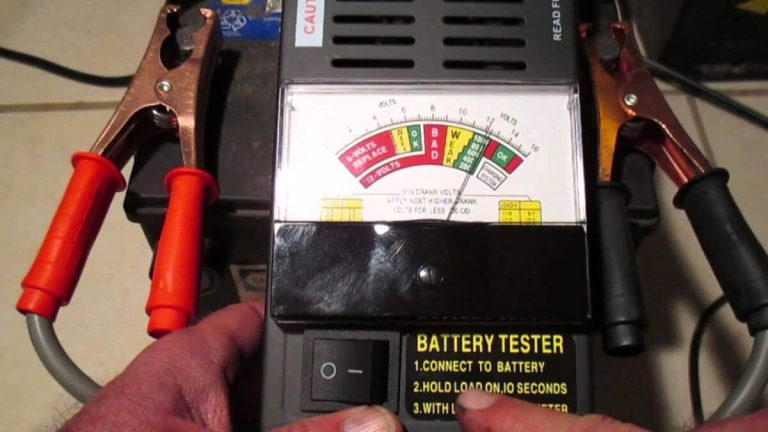
Modern testers usually estimate SOH by comparing the battery’s measured behavior against what a healthy battery of that type and rating should do. Depending on the tester, that may include conductance, internal resistance, available cranking amps, and sometimes temperature-adjusted calculations.
Many smart testers now guide users through battery type, rating standard, and test mode. If those inputs are wrong, the SOH result can be misleading. If you want a broader explanation of what testers report, CarValleyNJ also covers what a battery tester tells you in practical terms.
Why low state of health is different from low state of charge
State of charge, or SOC, tells you how full the battery is right now. State of health tells you how capable the battery still is overall. A weak battery can be fully charged but still unhealthy. That is the part many drivers miss.
Think of it like a water bottle. State of charge is how much water is inside. State of health is whether the bottle still holds the same amount it did when new. A full but damaged bottle is still limited.
What the reading usually means for starting power, reserve capacity, and reliability
A low SOH result usually means reduced starting power, lower reserve capacity, and less confidence in cold starts or repeated trips. The engine may still crank today, but the safety margin is smaller. Lights, accessories, and stop-start operation may also become less stable when the battery is under stress.
Low State of Health vs. Low State of Charge: The Difference Most Drivers Miss
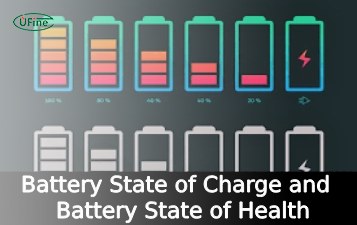
A low charge can often be corrected. Low health usually means lasting wear. That is why charging a battery overnight does not always fix the problem the tester found.
Why a battery can show full voltage but still have poor health
Voltage alone is not enough to judge a starter battery. A battery can rest at a normal-looking voltage after charging, then collapse under load because its internal condition has degraded. Sulfation, plate wear, and age can all reduce performance without causing an obvious voltage drop at rest.
This is also why a multimeter is useful but limited. If you only check voltage, you may miss a battery that cannot deliver real cranking current. For that difference, see CarValleyNJ’s guide on whether you can test a battery with a multimeter.
How system voltage, cranking amps, and internal resistance affect the result
Battery testers look beyond open-circuit voltage. They estimate how much current the battery can deliver and how much resistance exists inside it. As internal resistance rises, the battery wastes more energy as heat and has a harder time supplying starter demand.
Cranking amps matter because the starter needs a large burst of current. If the measured available cranking power falls well below the battery’s rated level, the tester may flag low SOH even when the battery still powers small accessories.
How battery chemistry changes the interpretation for flooded, AGM, EFB, lithium, hybrid, and EV auxiliary batteries
Battery chemistry matters a lot. Flooded lead-acid, AGM, and EFB batteries age differently and may need different tester settings. A result can be wrong if the tester is set to the wrong chemistry or standard.
Lithium 12-volt batteries, hybrid auxiliary batteries, and EV low-voltage support batteries can require special procedures or approved tools. Some vehicles also use battery management systems that affect charging behavior and replacement steps. Always check the vehicle manual before testing or replacing a battery in a hybrid or EV.
Check: Verify make, model, year, trim, battery chemistry, voltage, and OEM battery-management requirements before testing or replacing the battery. Limitations: Some testers do not support every lithium, hybrid auxiliary, or EV low-voltage battery application.
How a Battery Tester Reaches a Low SOH Result
Not all testers work the same way. The method matters, and so does how the test is performed.
Conductance testing, load testing, and what each method can and cannot prove
Conductance testers estimate battery condition by measuring how easily current can move through the battery. They are fast, common, and usually easier for home users. Traditional load testing puts the battery under a heavier demand and watches how voltage responds.
Neither method is perfect. Conductance testing is convenient but still depends on correct inputs and battery condition at the time of testing. Load testing can reveal weakness under stress, but it must be done correctly and safely. If you want to reduce user error, review these common battery testing mistakes before trusting one result.
Correct connection order, ignition mode, and why surface charge can skew readings
Bad clamp contact, corrosion, wrong battery rating entry, or testing right after charging can all distort the result. Surface charge can make a battery look stronger than it really is for a short time. Some testers or service procedures call for removing that surface charge before testing.
Ignition mode matters too. Some tests are done with the vehicle off, while cranking and charging tests require specific steps. Follow the tester manual and the vehicle manual, especially on newer vehicles with battery sensors or sleep modes.
Firmware updates, app permissions, and model-year compatibility on smart battery testers
Some smart testers rely on an app, firmware updates, or a database of battery standards and vehicle notes. Outdated firmware can affect usability or compatibility. App-based tools may also ask for Bluetooth, location, account access, or data-sharing permissions.
What Causes a Car Battery to Show Low State of Health

Low SOH is often real battery wear, but not always. Sometimes the battery is weak because something else in the vehicle has been stressing it.
Sulfation, age, heat, vibration, undercharging, overcharging, and repeated deep discharge
Lead-acid batteries naturally lose performance with age. Sulfation is one of the most common reasons. It happens when sulfate crystals build up and reduce the battery’s ability to accept and deliver energy. Heat speeds up aging, and vibration can damage internal parts over time.
Undercharging leaves the battery chronically low, while overcharging can dry out or damage it. Repeated deep discharge is also hard on starter batteries because they are not designed to be drained heavily over and over.
Parasitic draw, short-trip driving, and charging-system problems that mimic battery failure
Sometimes the battery keeps testing weak because the car is not keeping it healthy. Short trips may not replace the power used for starting. A parasitic draw can drain the battery while the car sits. A failing alternator or charging control problem can also cause repeat low-health complaints.
If the battery dies after sitting, the battery may not be the only suspect. CarValleyNJ has a related guide on why a car battery dies overnight after sitting, which is often where the real diagnosis starts.
Damaged-battery stop conditions, swelling, leaks, odor, and when testing should stop immediately
Visible damage changes the plan. Swelling, leaking fluid, melted terminals, heavy corrosion, or a rotten-egg odor can point to a dangerous battery condition. In those cases, do not keep charging, load testing, or jump-starting it without proper guidance.
What to Do Next After a Low Battery Health Reading
The right next step depends on whether the battery is simply undercharged, truly worn out, or being harmed by another problem.
When to recharge and retest versus when replacement is the safer move
If the battery was low on charge, sitting for a long time, or tested right after short-trip use, a proper recharge and retest can make sense. If the battery is old, repeatedly weak, slow to crank, or still shows low SOH after charging, replacement is usually the safer move.
One weak reading should not always trigger a purchase, but repeated weak readings should not be ignored either. The key is to retest under the right conditions.
How to confirm alternator output and overall system voltage before buying a new battery
Before buying a battery, check charging-system performance. A battery can fail early if the alternator is undercharging or overcharging it. Some battery testers include charging and cranking tests, while scan tools may show system voltage data with limits.
That said, an OBD2 tool does not replace proper electrical testing. CarValleyNJ explains more in its article on whether an OBD2 scanner can detect a bad alternator.
When diagnosis requires a professional instead of another DIY test
If the vehicle has battery registration requirements, repeated dead-battery symptoms, unexplained warning lights, or a possible parasitic draw, professional diagnosis is often worth it. The same goes for hybrids, EVs, luxury vehicles, or any car with hard-to-access batteries and battery sensors.
Can You Keep Driving With Low State of Health?
Sometimes yes, but it is a gamble. A low SOH battery may still work for days or weeks, or it may fail on the next cold morning.
Driver impact in hot weather, cold starts, stop-start systems, and short commutes
Cold weather raises starting demand, while heat speeds battery aging. Stop-start systems can become inconsistent when the battery weakens. Short commutes also make things worse because the battery may never fully recover from each start.
Safety risks, roadside breakdown odds, and emergency-tool readiness
The biggest risk is being stranded, not usually a sudden loss of engine power while driving. But if the battery is weak enough, some vehicles may show electrical glitches, warning messages, or poor accessory performance. That can add stress and distraction.
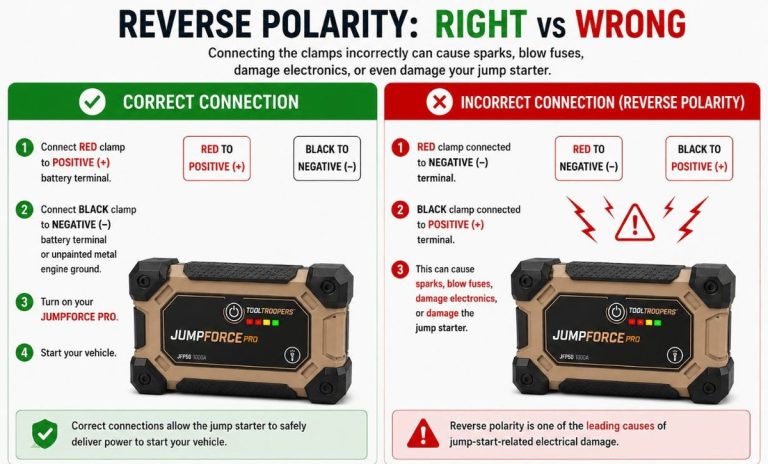
It is smart to keep jumper cables or a jump pack, but that is backup, not a cure. A weak battery that needs frequent jumps is already telling you something important.
Safe storage conditions for jump packs and cables, current limits, and post-use inspection
If you carry emergency starting gear, store it where the manufacturer allows. Extreme heat inside a parked vehicle can shorten the life of some jump packs. Cables should be dry, undamaged, and free from melted insulation or loose clamps.
After use, inspect the tool, recharge it if required, and do not assume one successful jump means the battery is fine. A low-SOH battery often returns to the same problem quickly.
Choosing the Right Replacement Battery and Tester
Once low SOH is confirmed, the best fix is not always the cheapest battery on the shelf. Fit, chemistry, and vehicle demands matter.
Matching group size, CCA, reserve capacity, chemistry, and vehicle power demands
Match the replacement battery to the vehicle’s required group size and approved chemistry. Cold cranking amps and reserve capacity should meet or exceed the vehicle requirement, not just “look close.” Vehicles with stop-start systems often require AGM or EFB, depending on manufacturer specs.
Battery tester compatibility by model year, protocol support, and app-based features
If you are buying a tester, check supported battery types, rating standards, and whether the tool also performs cranking and charging tests. For app-based models, look at firmware support, phone compatibility, update history, and whether the brand clearly explains data handling.
Side-by-side comparison: budget tester vs. pro-grade tester vs. shop diagnosis
| Option | Best for | Owner consideration | Driver consideration |
|---|---|---|---|
| Budget tester | Basic home battery checks | Lower cost, but fewer guided functions and less support | Helpful for early warning, but easier to misuse |
| Pro-grade tester | Frequent DIY users and small fleets | More battery-type support, data, and reporting | Can improve confidence if used correctly |
| Shop diagnosis | Complex or repeat battery problems | May cost more upfront, but can prevent wrong parts purchases | Best choice when reliability matters most |
Installation and Reset Limits After Battery Replacement
Battery replacement is simple on some cars and much less simple on others. Newer vehicles often add memory and registration steps that owners should not ignore.
Correct battery installation order and memory-saving precautions
Always follow the vehicle manual for disconnect and reconnect order. Many vehicles require memory-saving precautions for radio settings, windows, seat memory, and modules. Incorrect handling can create extra problems even when the new battery itself is fine.
Battery registration on newer vehicles and why some cars need scan-tool support
Some newer vehicles need battery registration or adaptation after replacement. That tells the vehicle’s charging system that a new battery has been installed. If this step is skipped where required, charging behavior and battery life may suffer.
OBD2 limits: port location, protocol coverage, readiness monitors, code clearing, and live-data restrictions
An OBD2 tool may help with battery registration on some vehicles, but not all. Port access, protocol support, software coverage, and brand-specific functions vary a lot. Even when a tool can read codes or live voltage, that does not mean it can perform battery adaptation on your exact model.
Ownership Cost, Warranty, and Maintenance to Prevent Another Low SOH Reading
Battery problems cost more than the battery itself. Lost time, towing, missed work, and repeat diagnosis all add up.
Battery life expectations, replacement cost, and warranty fine print in the United States
Battery life varies widely by climate, driving pattern, charging health, and battery type. In the US, replacement cost also varies by battery chemistry, vehicle fitment, and whether installation or registration is required. Warranty terms differ by retailer and brand, so read the fine print on free replacement periods, prorated coverage, exclusions, and proof-of-purchase requirements.
Maintenance habits that extend battery health, including charging strategy and terminal care
Keeping terminals clean, making sure clamps are tight, and avoiding long periods of low charge can help. If the vehicle sits often, a compatible maintenance charger may reduce sulfation on some 12-volt systems. Short-trip drivers may also benefit from occasional longer drives or proper charging support, depending on vehicle type.
Legal and practical cautions for hybrids, EVs, and vehicles under factory or extended warranty
Hybrid and EV systems deserve extra caution because the 12-volt battery may interact with larger high-voltage systems and strict service procedures. Warranty coverage can also be affected by incorrect parts, poor installation, or skipped registration steps. When in doubt, use the vehicle manual, the battery manufacturer’s instructions, or a qualified shop.
- Best for: Drivers who want a clear answer on whether a low SOH reading means recharge, diagnose, or replace.
- Think twice if: You plan to rely on one voltage reading or one quick test without checking battery type, charging output, and vehicle-specific requirements.
- Next step: Fully charge the battery if needed, retest with the correct settings, and verify charging-system performance before buying a replacement.
Frequently Asked Questions
Not always. If the battery is undercharged, a full recharge and retest may improve the result, but a battery that stays low on health is often nearing replacement.
Yes. Voltage shows charge level, but state of health estimates how much starting power and reserve capacity the battery still has left.
You may be able to drive for a while, but the risk of a no-start goes up. Cold weather, short trips, and stop-start systems usually make the problem worse.
Often, yes. The tester should support the battery chemistry and rating standard your vehicle uses, or the reading may be misleading.
Yes, when possible. A charging-system problem can weaken the old battery and quickly damage a new one too.
Yes. Some newer vehicles need battery registration or adaptation with a compatible scan tool after replacement.