What Are Common Battery Testing Mistakes? Avoid Costly Misreads
Most battery testing mistakes come from using the wrong tool, the wrong battery setting, or a poor connection. A good voltage reading does not always mean the battery can handle a real load.
What Are Common Battery Testing Mistakes? The short answer is that most bad readings come from testing the wrong thing, at the wrong time, or with poor connections. A battery can look “fine” on a voltmeter and still fail under load, so the safest approach is to separate battery state of charge, battery health, and charging-system performance.
- Test the right thing: Separate battery voltage, battery health, and charging-system checks.
- Match the chemistry: Use the correct setting for flooded, AGM, EFB, or lithium systems.
- Check connections first: Corrosion and loose clamps can create false readings.
- Know the limits: Some scanners and testers do not cover every vehicle or battery type.
- Stop on damage: Swollen, leaking, or hot batteries need safer handling and often professional help.
What Are Common Battery Testing Mistakes? The Fast Answer for Drivers and DIYers
The biggest mistake is treating one number like the whole story. Voltage alone does not tell you whether the battery can start the engine, whether the alternator is charging correctly, or whether corrosion is skewing the result.
Another common error is testing too soon after charging or driving. Surface charge can make a weak battery look healthy, while a battery that has sat unused can look worse than it really is.
Why Battery Tests Get Misread: State of Charge vs. Battery Health, Voltage vs. Load

Battery testing goes wrong when people mix up state of charge with battery health. State of charge tells you how full the battery is right now. Battery health tells you how well it can deliver current and recover after use.
System voltage basics and why 12V readings can be misleading
A 12-volt battery does not sit at exactly 12.0 volts when it is healthy. Resting voltage changes with temperature, recent charging, and battery chemistry. A reading that seems “good enough” may still hide weak cold-cranking performance.
That is why a quick multimeter check is only a starting point. If the battery is undercharged, recently charged, or connected to a vehicle with parasitic draw, the number may not reflect true battery condition.
How battery chemistry changes test results in lead-acid, AGM, EFB, and lithium systems
Lead-acid, AGM, EFB, and lithium batteries do not always behave the same way in testing. AGM batteries can hold voltage differently than flooded batteries, and EFB batteries may be used in start-stop systems where load demands are higher. Lithium auxiliary systems, where used, may require different test logic and specific tool support.
That means the tester setting matters. If the tool is set for the wrong battery type, the result can be off even when the battery itself is fine.
Check: Verify make, model, year, trim, voltage, ports, mounting space, and OEM requirements. Limitations: State verified exclusions.
When a “good” voltage still means a weak battery
A battery can show acceptable resting voltage and still fail when the starter asks for high current. That is why conductance tests and load tests matter. They reveal internal weakness that a simple voltage check can miss.
If the engine cranks slowly, lights dim hard, or the battery repeatedly needs a jump, a “normal” voltage reading should not end the diagnosis.
The Most Common Testing Errors on Cars, Trucks, Hybrids, and EVs
Different vehicles create different testing mistakes. A pickup with corroded top-post terminals, a hybrid with an auxiliary battery, and an EV with a 12V support battery all need different caution points.
Wrong test point, poor connection order, and corroded terminals
Many bad readings come from connecting the tester to the wrong spot. Testing on corroded clamps, painted surfaces, or loose adapters can add resistance and distort the result. The tool may be working correctly while the connection is not.
Connection order matters too. A poor clamp connection can create false low-voltage or high-resistance readings. Clean the terminals first when safe, then retest before replacing parts.
Testing a damaged battery, swollen case, or leaking unit
Do not treat a visibly damaged battery like a normal diagnostic job. A swollen case, crack, leak, or strong odor may point to internal failure. Testing may be unsafe and could worsen the problem.
Hybrid and EV cautions: high-voltage systems, auxiliary batteries, and safety limits
Hybrid and EV owners often assume the high-voltage pack is the only battery that matters, but many vehicles also use a 12V auxiliary battery. That smaller battery can cause no-start conditions, warning lights, or communication faults.
High-voltage systems are different from standard 12V diagnostics and can be dangerous. Unless the manual says the check is user-serviceable, stay within the low-voltage, owner-accessible steps and leave high-voltage work to trained service personnel.
OBD2 Battery and Electrical Diagnosis Mistakes That Cost Time and Money
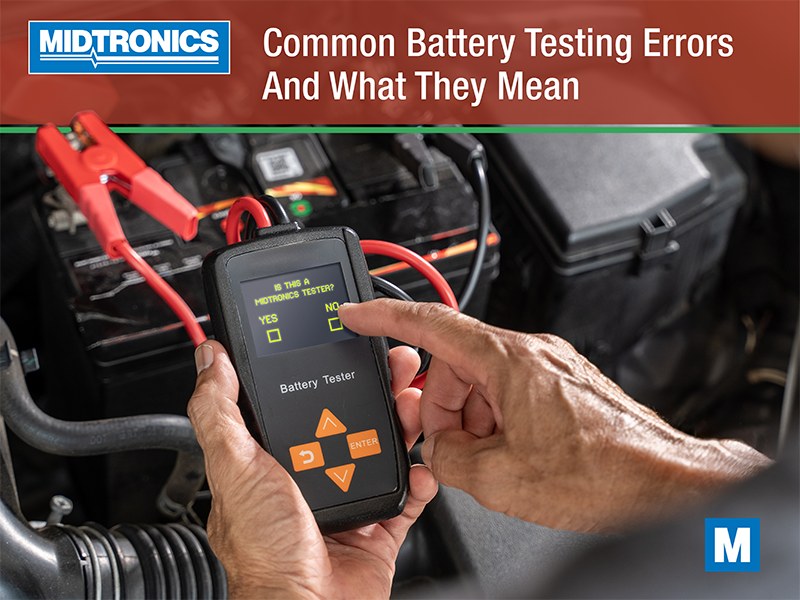
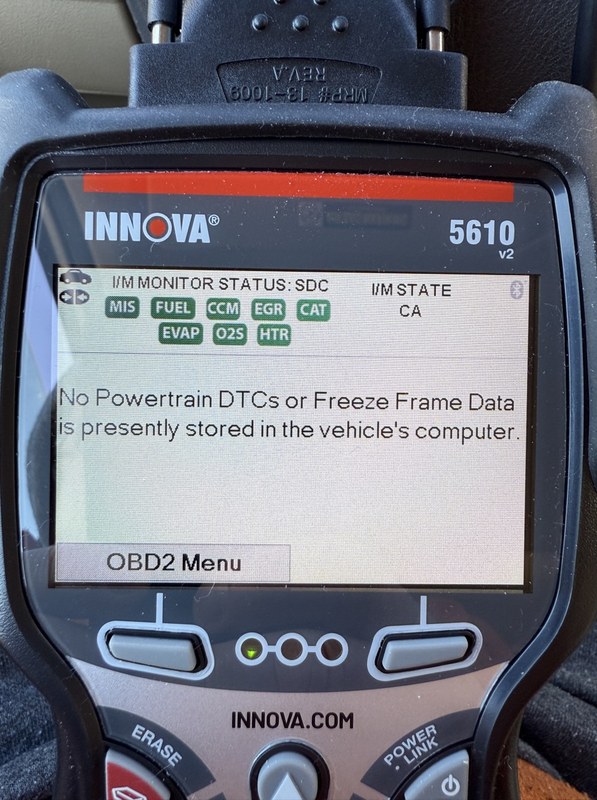
OBD2 tools can help, but they are not magic. They only see the data the vehicle shares, and some battery or charging issues will not show up as a simple code.
Model-year and protocol coverage: why some scanners miss older or newer vehicles
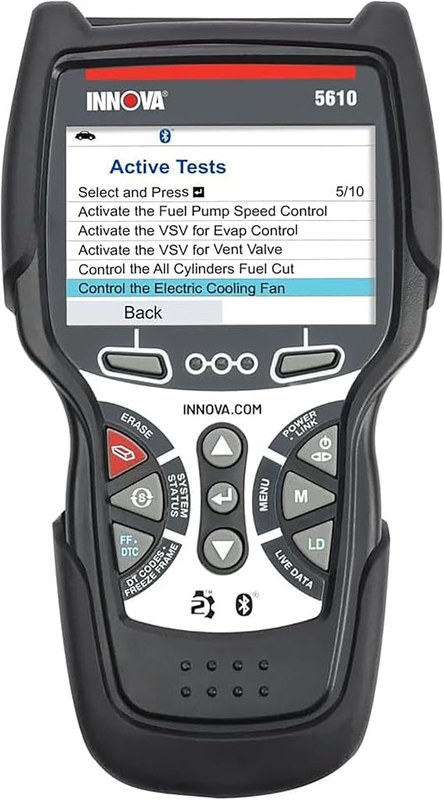
Scanner coverage is a common source of confusion. Some tools work well on many vehicles but still miss certain model years, protocols, or manufacturer-specific data. Before buying, check the supported vehicle list carefully, such as Foxwell NT301 vehicle compatibility or Innova 5610 vehicle coverage.
If a scanner does not support the vehicle correctly, the problem may be coverage, not the car.
Port location, ignition mode, and when the scan tool cannot communicate
A scan tool may seem broken when the real issue is simple setup. The OBD2 port may be hard to reach, the ignition may need to be in the correct mode, or the battery voltage may be too low for stable communication.
When a tool will not connect, check the basics before assuming a failed module. A weak battery can create communication problems that look like scanner failure.
Code reading vs. live data: what each can and cannot prove
Stored codes tell you what the vehicle noticed. Live data shows what it is seeing right now. Neither one alone proves the battery is bad.
For example, a charging-system code may point to an alternator issue, wiring fault, or sensor problem. Live data can help narrow the cause, but only if the tool can access the right parameters.
Emissions readiness, reset limitations, app permissions, and firmware issues
Some drivers clear codes too early and lose useful clues. Others rely on an app that cannot finish a readiness check or needs updated firmware. Connected tools can also require location, Bluetooth, or account permissions that affect how the app works.
When battery or charging diagnosis needs a professional
If the battery fails repeatedly, the charging voltage seems unstable, or the vehicle has multiple electrical faults, the issue may be beyond a basic DIY test. Some problems involve wiring, modules, or parasitic draw that need deeper diagnosis.
At that point, a professional test can save time and prevent parts swapping. That is especially true when the battery is buried under trim, the vehicle uses start-stop technology, or the charging system is tightly integrated with engine management.
Battery Tester Comparison: Clamp Testers, Conductance Tools, Multimeters, and Load Testers
Choosing the right tester helps avoid misreads. Each tool has a place, but each one can also be misused if the owner expects too much from it.
| Option | Best for | Owner consideration | Driver consideration |
|---|---|---|---|
| Multimeter | Quick voltage checks | Low cost, but limited by surface charge and load blindness | Fast and simple, yet easy to misread |
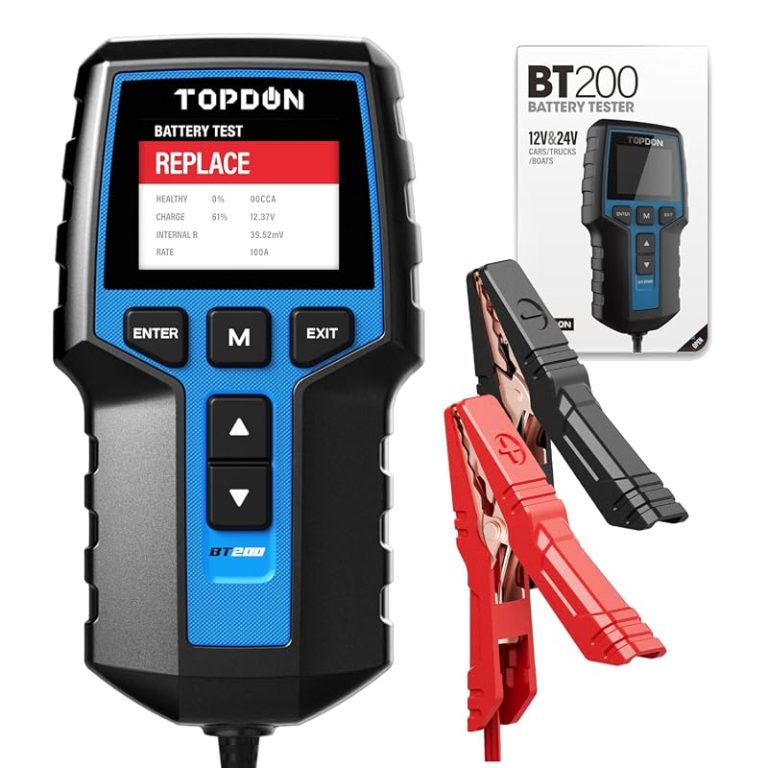
| Conductance tester | Battery health screening | More informative for starting batteries, but settings must match chemistry | Usually easier than a manual load test |
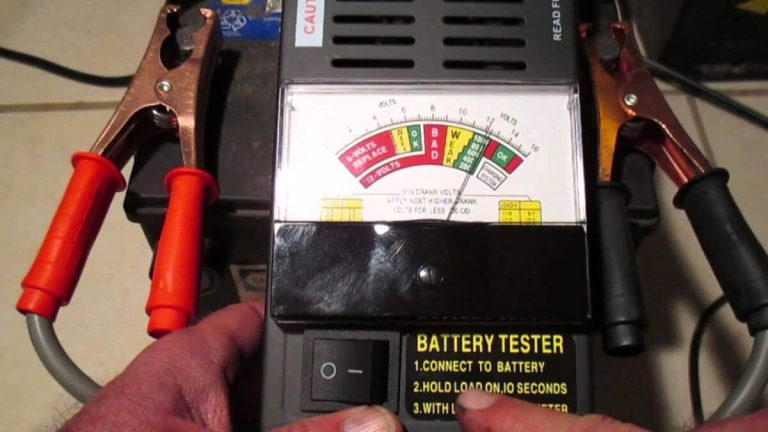
| Load tester | Cranking performance checks | Can expose weak batteries, but requires safe use and correct procedure | More hands-on and less convenient |
| Clamp-style tester | Fast in-vehicle checks | Convenient for repeat use, but connection quality still matters | Useful for quick diagnosis without removing the battery |
Side-by-side comparison by accuracy, ease of use, and vehicle fit
Multimeters are easy to carry and useful for basic checks, but they do not show battery strength under load. Conductance tools are often better for quick health screening, while load testers give a more direct look at cranking ability.
Vehicle fit matters too. A battery buried under a seat or in the trunk may be easier to test with an in-vehicle tool than with a bench-style setup.
Which tester suits daily drivers, DIY owners, fleets, and hybrid owners
Daily drivers usually need a simple, reliable tool that reduces guesswork. Fleet users may want repeatable screening and faster workflow. Hybrid owners should prioritize compatibility with the correct battery type and vehicle system.
For readers comparing scan tools as well as battery testers, it also helps to look at broader diagnostic coverage, like scanner alternatives to BlueDriver or bidirectional scan tool options, when electrical diagnosis goes beyond the battery itself.
Limitations, warranty/support, and ownership cost considerations
Ownership cost is not just the purchase price. Battery testers may need replacement leads, batteries, updates, or support if the display or clamps fail. Some connected tools also rely on app support or firmware updates over time.
Tire Pressure and TPMS Mistakes That Look Like Battery Problems
Not every “electrical” warning is really about the battery. Low tire pressure, a noisy compressor, or a TPMS issue can distract drivers and make them think the vehicle has a deeper power problem.
Door-jamb placard, cold pressure, and gauge accuracy
Always start with the tire pressure listed on the door-jamb placard, not the number molded into the tire sidewall. Check pressure when the tires are cold for the most accurate reading.
A bad gauge can mislead you just as easily as a bad battery test. If the gauge reads inconsistently, compare it with a known accurate tool before making changes.
Inflator duty cycle, compressor limits, and when to stop
Portable compressors can overheat if used too long. If you are inflating from very low pressure, watch the duty cycle and stop when the tool gets hot or the manual says to cool down.
For owners comparing compact inflators, this is also where tool quality matters. A unit that seems convenient may still be the wrong fit if it cannot handle the pressure recovery you need.
TPMS relearn limits, sensor issues, and model-year compatibility
TPMS problems can look like battery warnings when dashboard alerts stack up. Some vehicles need a relearn procedure after tire service, and some tools do not support every model-year or sensor type.
If the warning returns after proper inflation, the sensor, valve stem, or relearn process may need professional attention.
Puncture location, temporary-repair limits, and professional-repair thresholds
A plug kit or temporary fix is not always enough. Sidewall damage, shoulder punctures, or repeated air loss usually call for tire replacement or professional inspection.
When a tire issue forces repeated roadside stops, the distraction can lead owners to misdiagnose battery trouble. Fix the tire problem first if that is the real source of the warning or delay.
Roadside and Emergency Power Tool Mistakes: Jump Packs, Cables, and Storage
Jump packs and booster cables are useful, but they can also create trouble if stored poorly or used on a damaged battery. The goal is to get the vehicle moving safely, not to force a failing system to keep working.
Safe location, traffic visibility, and post-stop setup
Roadside work should start with visibility and traffic safety. Park as far from traffic as possible, use hazard lights if appropriate, and keep bystanders clear of the engine bay and moving lanes.
Cable or pack condition, current limits, and tool completeness
Inspect the cables, clamps, and pack before use. Cracked insulation, weak clamps, or an undercharged pack can create a false sense of readiness and may fail when you need them most.
Tool completeness matters too. Missing adapters or damaged leads can turn a simple jump-start into a delayed call for help.
Storage conditions, post-use inspection, and when not to reuse the tool
Store jump tools where temperature and moisture will not shorten their life. After use, check for heat, swelling, odor, or damage before putting them back in the vehicle.
If the pack was exposed to water, dropped hard, or behaves unusually, do not assume it is still safe. Follow the manufacturer’s storage and inspection guidance.
How to Test Safely, Avoid Misreads, and Decide When to Replace or Repair
The best battery test is the one that matches the problem. Start with the simplest checks, confirm the battery type, and only move deeper when the first result is unclear.
Step-by-step checks before testing, during testing, and after testing
- Confirm vehicle, tool, voltage, port, tire, or battery compatibility
- Follow the vehicle and tool instructions in the correct order
- Inspect, store, and maintain the tool after use
- Clear codes before recording useful diagnostic information
- Work near traffic, moving parts, heat, or damaged batteries without proper precautions
- Rely on an unverified specification or temporary repair as a permanent fix
Before testing, inspect terminals, confirm battery type, and let the battery rest if it was just charged or driven. During testing, make sure the clamps bite clean metal and the tool is set correctly. After testing, record the result so you can compare it later instead of guessing.
Maintenance habits that improve accuracy and battery life
Clean terminals, tight connections, and regular charging habits improve both test accuracy and battery life. So does keeping the battery secure in its tray, because vibration can shorten life and complicate diagnosis.
Costly mistakes to avoid and the next best action for each result
If the battery looks weak but the tester setting was wrong, retest with the correct chemistry. If voltage is fine but the battery fails a load or conductance check, replacement may be the next step. If the battery passes but the car still struggles, look at the charging system, wiring, or parasitic draw.
When the result is unclear, do not keep buying parts at random. A careful retest or a professional diagnosis is usually cheaper than replacing a good battery or ignoring a failing one.
- Best for: Drivers and DIY owners who want to avoid false battery readings and diagnose starting problems more accurately.
- Think twice if: You are dealing with a swollen battery, hybrid or EV high-voltage work, or a scanner that does not support your vehicle well.
- Next step: Match the tester to your battery type, check the terminals, and retest before replacing parts or clearing codes.
Frequently Asked Questions
A battery can show normal voltage and still have weak cranking ability. That often points to a load problem, bad connection, or another electrical issue.
It is better to wait if possible. Recent charging or driving can create surface charge and make the battery look stronger than it really is.
Yes. Corrosion and loose clamps can add resistance and distort the reading, especially during load testing.
No. Scanners can help with codes and live data, but they do not always prove battery health by themselves.
Check battery chemistry support, vehicle coverage, warranty, and whether the tool needs an app or firmware updates. Also make sure it fits the type of testing you plan to do.
Stop if the battery is swollen, leaking, hot, or damaged. Get help sooner if you are dealing with hybrid or EV high-voltage concerns.



4 Comments