Battery Tester Says Replace Battery but Car Still Starts
A battery tester says “replace” based on long-term health, not just today’s charge. If your car still starts, verify the reading with a full charge and retest before driving on a battery that could fail suddenly.
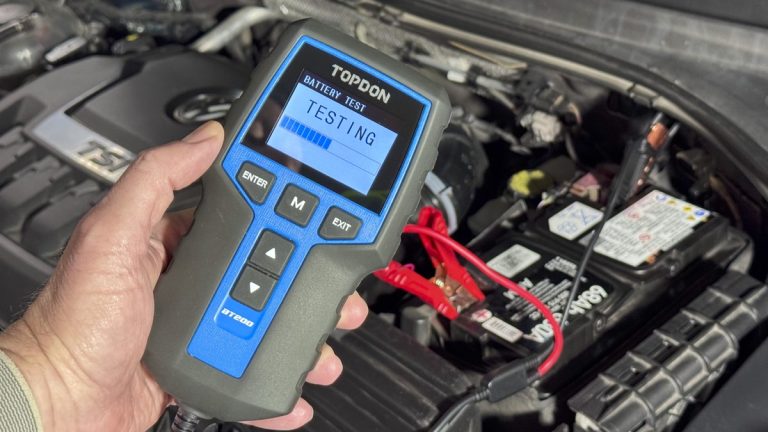
Your battery tester says replace battery but car still starts, and that contradiction can be genuinely confusing. The honest answer is that both observations can be true at the same time: the tester measures long-term battery health, while the starter motor only proves the battery has enough power for one more crank. This guide explains what that “replace” reading really means, how to double-check it in your driveway, and when you should replace the battery before it leaves you stranded.
- Health vs. charge: A tester judges long-term battery health, while the starter only proves today’s cranking power.
- Warm start illusion: Warm engines and surface charge can hide a weak battery until a cold morning.
- Verify first: Clean terminals, charge fully, wait 24 hours, and retest before buying a replacement.
- Safety first: Never test a swollen, cracked, or leaking battery, and never jump a hybrid or.
- Match the replacement: Confirm group size, CCA, and AGM or flooded chemistry before installing a new battery.
Why Does the Battery Tester Say “Replace Battery” When the Car Still Starts?
The Short Answer: Health vs. Charge
A car battery has two separate qualities: state of charge and state of health. State of charge tells you how full the battery is right now, like a fuel gauge. State of health tells you how much usable capacity remains compared to when the battery was new, like the overall condition of the engine.
When a tester says “replace battery,” it is usually judging health, not charge. A battery can be nearly full and still be physically worn out. It may start your car today, but it no longer has the reserve capacity or cranking power needed to be dependable.
If you want a deeper look at that number behind the warning, our guide on what low state of health means on a car battery tester explains it in plain language.
The “Warm Start” Illusion and Why It Misleads Drivers
Most “replace battery” surprises happen after a warm start. A warm engine turns over easily because the oil is thin and the engine is already running. The battery also carries a surface charge from the alternator. Together, those conditions hide weakness.
The real test comes on a cold morning. Cold temperatures slow the chemical reaction inside the battery and make the engine harder to turn. A battery that barely passed a warm start may fail completely when you need it most.
If your car only struggles to start after sitting overnight, that is a classic sign the tester’s verdict was correct.
State of Charge vs. Battery Health: What the Tester Is Really Measuring

Voltage, Chemistry, and Temperature: The Basics Every Driver Should Know
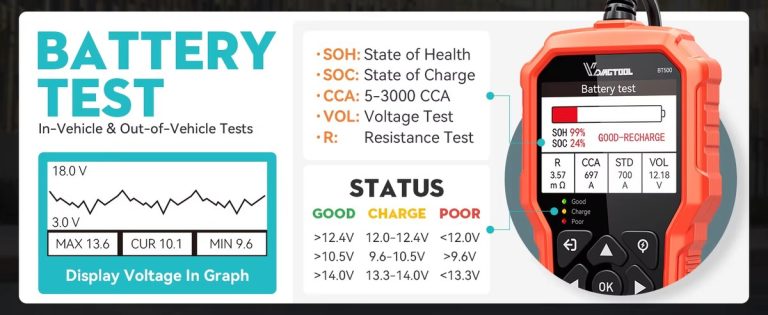
A fully charged 12-volt battery reads about 12.6 volts when resting. At 12.4 volts, it is roughly 75 percent charged. At 12.2 volts, it is closer to 50 percent. Voltage alone, however, does not tell you whether the battery is healthy.
Temperature matters too. Cold slows the chemical reaction inside the battery, which reduces the power it can deliver. That is why batteries fail more often in winter, even when they tested fine in summer.
Conductance and CCA: The Numbers That Actually Determine Battery Life
Most modern testers use conductance testing. The tester sends a small signal through the battery and measures how well the plates conduct electricity. Healthy plates conduct well. Worn or sulfated plates resist the signal.
Cold cranking amps, or CCA, is the rating that matters most. It tells you how many amps the battery can deliver at 0°F. As the battery ages, its actual CCA drops below the rating printed on the label. When the tester sees that drop, it says “replace.”
Common Causes Behind a False “Replace Battery” Reading
Surface Charge, Corroded Terminals, and Loose Grounds
Testers are not always right. A surface charge from recent driving can make a weak battery look stronger, or a bad connection can make a good battery look weak. Corroded terminals add resistance, and a loose ground cable can cause voltage drops that confuse the tester.
Before you trust a “replace” reading, clean the terminals, check the cable connections, and let the battery rest for a few hours. Then retest. If the reading changes, the problem may have been the connection, not the battery.
This is the opposite of another common puzzle: a battery that tests good but still dies. Our article on why a car battery tests good but still dies covers that situation in detail.
Alternator Output and Parasitic Drain Confusion
A weak alternator can make a healthy battery look bad. If the charging system cannot keep the battery full, the tester may read low voltage and blame the battery. A parasitic drain, such as a trunk light stuck on or a faulty module, can do the same thing.
Test the charging system separately. With the engine running, a healthy alternator should push voltage to about 13.8 to 14.4 volts. If it does not, the alternator may be the real problem.
How to Verify the Tester’s Verdict Without Leaving the Driveway
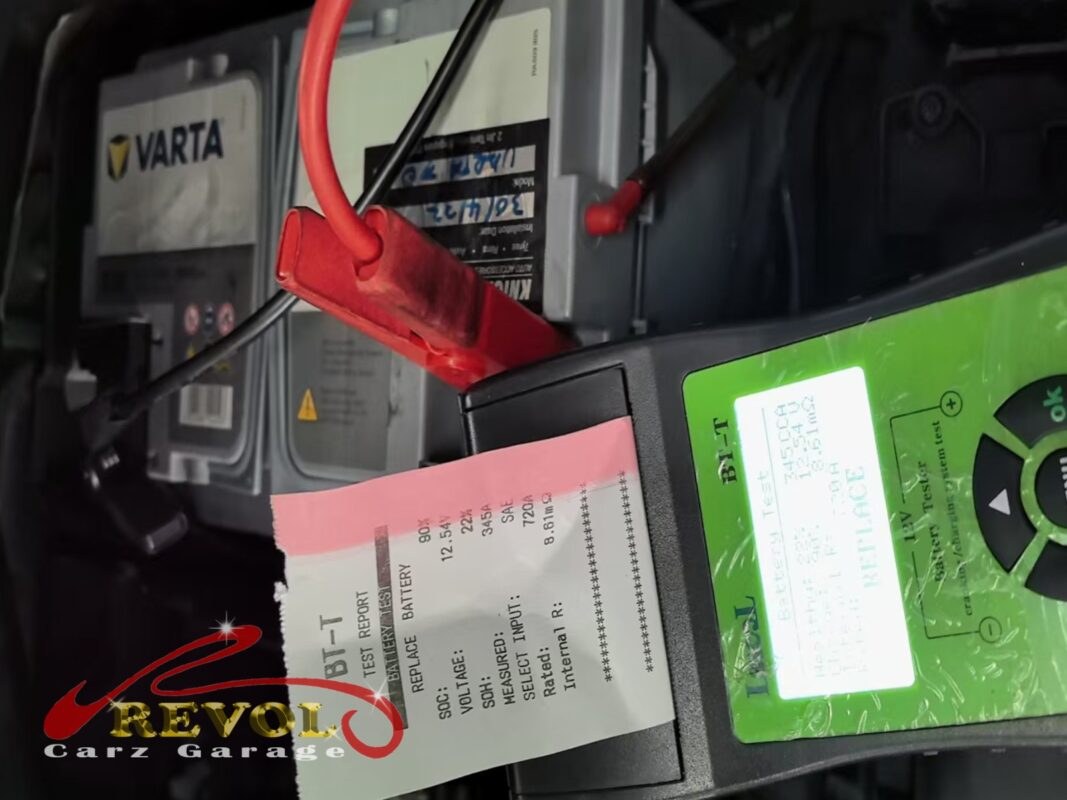
Multimeter Voltage Checks and Correct Connection Order
A multimeter is the cheapest way to double-check a tester’s verdict. Connect the red lead to the positive terminal and the black lead to the negative terminal. Always connect positive first and remove the negative lead first when you are done.
Check the resting voltage after the car has sat for at least 12 hours. Then check the cranking voltage while someone starts the engine. It should stay above 9.6 volts. If it drops below that, the battery is struggling under load.
For a full comparison of these two tools, see our breakdown of battery testers versus multimeters.
Load Testing vs. Conductance Testing: What Each One Proves
A load test applies a real electrical draw to the battery, usually for 10 to 15 seconds, and measures how well voltage holds. It proves whether the battery can deliver current under stress. A conductance test estimates health by measuring internal resistance. Both are useful, but they answer different questions.
Many auto parts stores offer free load testing. If a load test confirms the conductance tester’s verdict, the battery is likely done.
Damaged-Battery Stop Conditions: When to Stop Testing Immediately
Never test a battery that looks damaged. Stop immediately if you see a swollen or bulging case, cracks, leaking acid, or a strong rotten-egg sulfur smell. These signs mean the battery is failing in a dangerous way.
Battery Tester Types Compared: Which One Belongs in Your Garage?
Conductance Testers: Pros, Cons, and Ideal Users
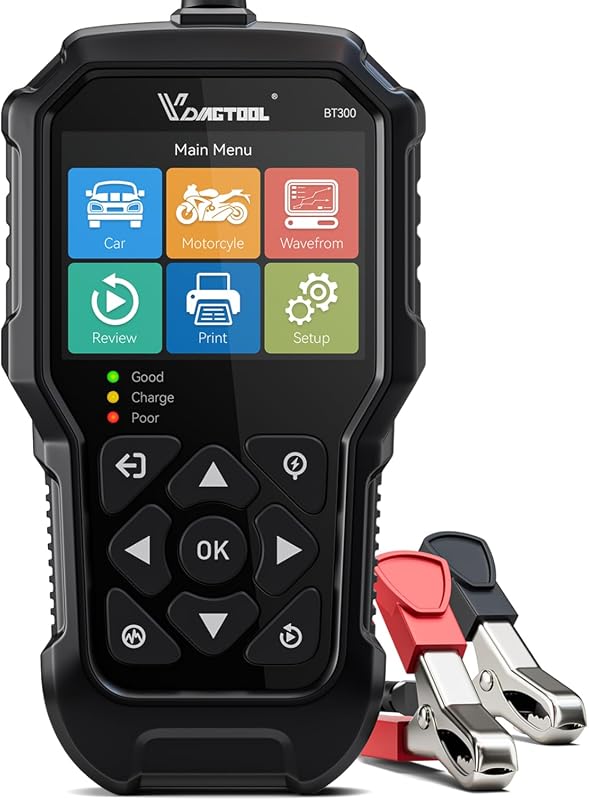
Conductance testers are the most common type for home use. They are fast, safe, and generate no heat, which makes them ideal for AGM batteries. They work well for drivers who want a quick health check without disconnecting the battery.
Their main weakness is that they estimate health rather than proving it. Temperature and connection quality can skew the reading. If you want to know how much trust to place in these numbers, our article on battery tester accuracy walks through the limits.
Carbon-Pile Load Testers and Multimeters: Alternatives Compared
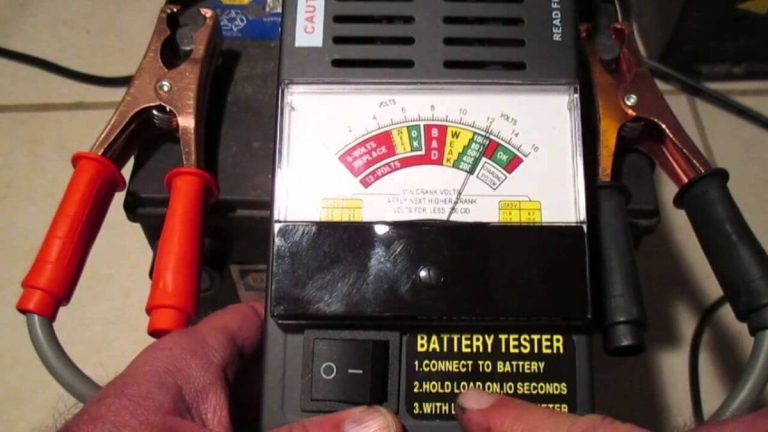
A carbon-pile load tester applies a real, adjustable load and measures the voltage drop. It is more accurate for proving a battery’s true cranking ability, but it generates heat and takes more skill to use correctly. Multimeters are the most affordable option, but they only measure voltage. They cannot judge battery health on their own.
Side-by-Side Comparison: Accuracy, Cost, Safety, and a Transparent Verdict
Here is how the three main options stack up for a typical US driver.
| Tester type | Best for | Owner consideration | Driver consideration |
|---|---|---|---|
| Conductance tester | Quick health checks at home | Fast and safe, but estimates health | Easy to use before a long trip |
| Carbon-pile load tester | Proving real cranking power | More accurate, but pricier and slower | Confirms the battery under real stress |
| Multimeter | Voltage and charging checks | Cheapest option, but limited to voltage | Good for spotting charging problems |
When the Tester Is Right: Hidden Risks of Driving on a Failing Battery
Sudden Failure, Electronics, and Safety Systems
Modern cars rely on steady voltage for computers, sensors, and safety systems. A failing battery can cause dashboard warnings, dim headlights, and erratic behavior from power windows, locks, or the infotainment system. In some cases, low voltage can interfere with ABS, traction control, or airbag systems.
Hybrid and EV Cautions: Don’t Jump a Lithium Pack
Hybrid and electric vehicles use high-voltage lithium battery packs. These are not the same as a 12-volt starter battery, and they require special service procedures. Never attempt to jump-start a lithium pack with a standard jump pack or jumper cables.
Jump Pack Preparedness: Storage, Current Limits, and Post-Use Inspection
If you drive an older battery, a jump pack is a smart backup. Store it in a cool place, keep it charged, and check its condition regularly. Match the jump pack’s current rating to your engine size, and inspect the cables and clamps for damage before each use.
OBD2 and BMS Registration: Why Your Car’s Computer May Disagree
Port Location, Ignition Mode, and Model-Year Protocol Coverage
Some modern cars track battery health through the battery management system, or BMS. The OBD2 port, usually under the dashboard on the driver’s side, can give you a window into that data. Some vehicles require the ignition to be in a specific mode before the scanner can read battery information.
Coverage varies by model year and protocol. An affordable OBD2 scanner may read engine codes but not battery data. Check your vehicle’s compatibility before relying on it for battery health.
Code and Live-Data Limits, Emissions Readiness, and Reset Limitations
OBD2 scanners can read live voltage and some BMS data, but they cannot replace a dedicated battery tester. Clearing a battery-related code does not fix the battery, and resetting the BMS without replacing the battery can confuse the charging system. Emissions readiness functions are separate from battery diagnostics.
App Permissions, Firmware Updates, and When to Call a Professional
Many OBD2 scanners pair with smartphone apps. Review the app’s permissions and data-sharing settings before you connect it to your car, and check whether advanced features require a subscription. Keep the app and scanner firmware updated, and understand that a code reader is a diagnostic tool, not a repair solution. If you are unsure about a battery or charging system issue, a professional diagnosis is worth the cost.
What to Do Next: Replace, Recharge, or Retest
Recharge and Retest First: The 24-Hour Rule
Before buying a new battery, charge the old one fully and let it rest for 24 hours. Then retest. If the tester still says “replace,” trust it. A full charge gives the battery its best chance to prove itself, and a healthy battery should hold a high state of health after a complete charge.
Choosing a Replacement: Group Size, CCA, Chemistry, and Compatibility
If replacement is the right call, match the battery to your vehicle. Check the group size, the CCA rating recommended in your owner’s manual, and the chemistry. Many modern vehicles with start-stop systems require AGM batteries, not standard flooded batteries. Using the wrong type can lead to poor performance and early failure.
Installation, Maintenance, Ownership Cost, and Proper Disposal
Installation is straightforward on many vehicles: remove the negative cable first, then the positive cable, and reverse the order when installing the new battery. Secure the hold-down bracket, clean the terminals, and apply a light coat of terminal grease.
Batteries are recyclable, and most auto parts stores accept old ones for free. Never throw a battery in the trash. With proper care, a quality battery can last three to five years, though extreme heat and short trips shorten that life.
- Clean terminals and check connections before retesting
- Charge the battery fully and wait 24 hours before a final verdict
- Match group size, CCA, and chemistry when replacing
- Ignore a swollen, cracked, or leaking battery
- Jump a hybrid or EV lithium pack with standard cables
- Clear diagnostic codes before recording what they say
- Best for: Drivers who want to understand why a battery tester says “replace” even though the car starts, and who want a safe, practical way to verify the reading.
- Think twice if: You plan to ignore the warning because the car still starts. A failing battery can leave you stranded or cause electrical problems in modern vehicles.
- Next step: Clean the terminals, fully charge the battery, wait 24 hours, and retest. If it still says “replace,” replace it before cold weather or your next long trip.
Frequently Asked Questions
A battery tester measures long-term health, not just current charge. Your car can start on a worn battery, but that battery may fail suddenly, especially in cold weather. The tester is warning you about future reliability.
Yes. Corroded terminals, loose connections, a surface charge from recent driving, or a weak alternator can all skew results. Clean the terminals, check connections, and retest before trusting the verdict.
Charge the battery fully, let it rest for about 24 hours, and retest. You can also check resting voltage with a multimeter and monitor cranking voltage while someone starts the engine.
A fully charged 12-volt battery should rest at about 12.6 volts. During cranking, voltage should stay above 9.6 volts. With the engine running, the alternator should produce about 13.8 to 14.4 volts.
There is no safe guarantee. A failing battery can die without warning, and low voltage can cause electrical problems in modern cars. Replace it as soon as possible, especially before cold weather or a long trip.
Many vehicles with start-stop systems require AGM batteries because they handle frequent cycling better than flooded batteries. Check your owner’s manual or the label on your current battery before choosing a replacement.