How to Check a Battery with TOPDON BT200: Quick Test Guide
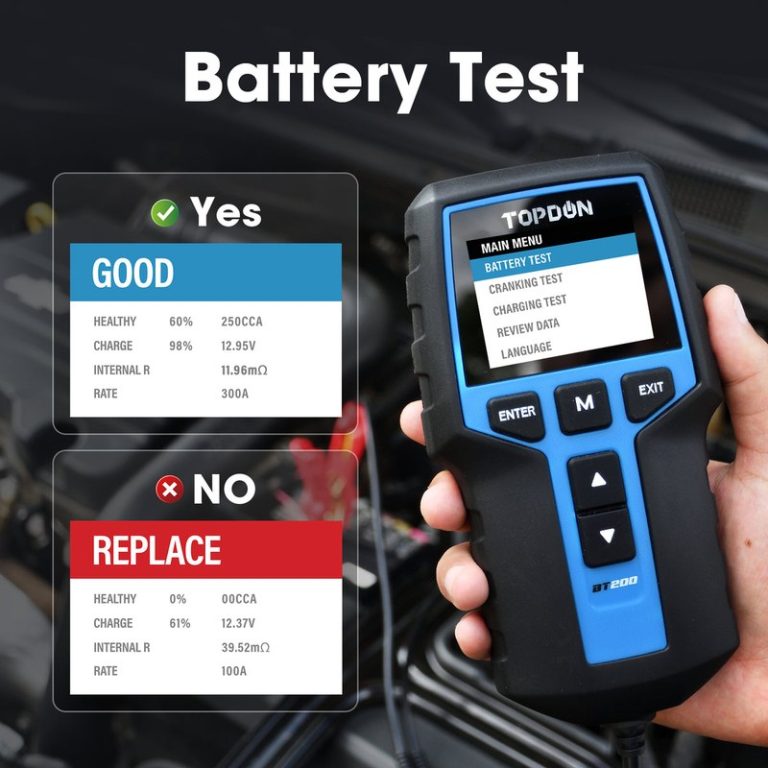
The TOPDON BT200 can help you check whether a 12V battery is weak, charged, or likely worn out. It is useful for a fast first diagnosis, but repeated battery failure usually means you need to inspect the charging system or starting circuit too.
How to Check a Battery With TOPDON BT200 starts with a simple idea: use the tool to confirm whether the battery is weak, the charging system is off, or the problem needs deeper diagnosis. For most US drivers, that means checking voltage first, then reading the tester’s battery and system results before you decide on a jump, recharge, or replacement.
- Check voltage first: Resting voltage helps show charge level, but it does not prove battery health by.
- Match the battery rating: Enter the correct battery type and CCA so the result is meaningful.
- Watch for other faults: Repeated dead batteries can point to alternator, starter, or parasitic draw issues.
- Use it safely: Test only in a parked, stable location and stop if the battery is damaged.
- Know the limit: The BT200 is a battery tester, not a full repair-level scan tool.
How to Check a Battery with TOPDON BT200: What It Does and What You’ll Learn
The TOPDON BT200 is a battery and electrical tester that helps you evaluate a 12V vehicle battery and related starting or charging issues. In plain terms, it can give you a fast snapshot of battery condition, but it is not a magic fix for every no-start problem.
In this guide, you’ll learn what the BT200 can tell you, what its results mean, how to use it safely, and when the reading points to a battery issue versus an alternator, starter, or wiring problem. If you are comparing battery testers, our guide to how a Topdon battery tester works is a useful companion.
Quick Answer: When the TOPDON BT200 Can Confirm Battery Trouble vs. When You Need More Diagnosis
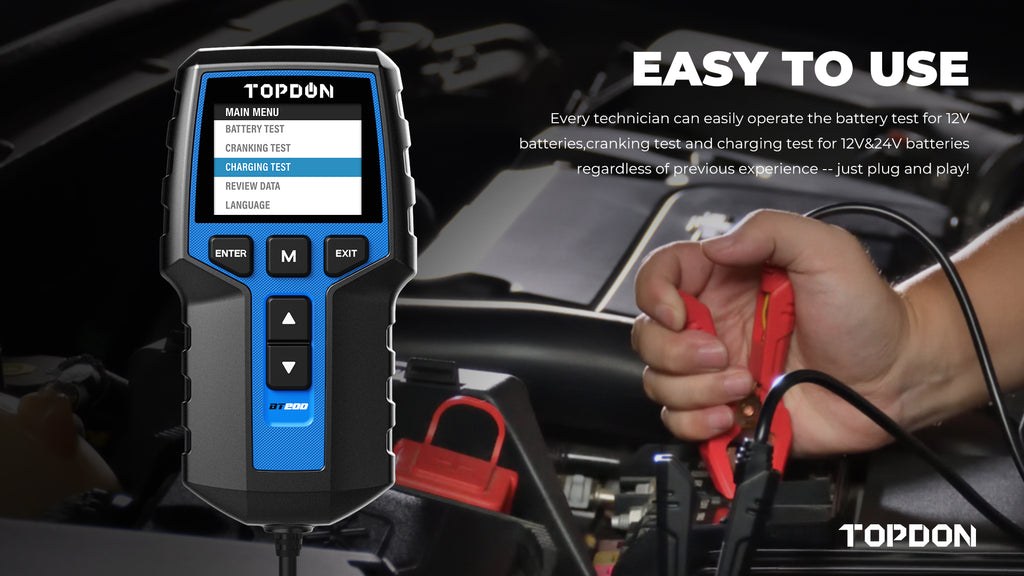
The BT200 can confirm a likely battery problem when the battery voltage is low, the state of charge is poor, and the test result lines up with slow cranking, dim lights, or repeated jump-starts. It is also helpful when you want a quick check before replacing a battery that may still be under warranty or still salvageable.
You need more diagnosis when the battery tests “okay” but the vehicle still will not start, keeps stalling, or shows charging warnings. That kind of symptom can point to the alternator, starter, battery cables, parasitic draw, or a vehicle control issue rather than the battery itself.
TOPDON BT200 Battery Test Basics: Voltage, State of Charge, and Battery Health
Battery testers usually help you separate three ideas: battery voltage, state of charge, and battery health. Those are related, but they are not the same thing.
Voltage tells you how much electrical pressure is present at the moment. State of charge is a rough estimate of how full the battery is. Battery health is a broader judgment about whether the battery can still hold and deliver power under load.
12V system voltage ranges and what they mean
For a typical 12V lead-acid vehicle battery, resting voltage near 12.6 volts is often considered fully charged, while lower readings suggest reduced charge. A reading near 12.2 volts usually means the battery is partly discharged, and a much lower reading can point to a weak battery or a battery that has sat unused too long.
These ranges are helpful, but they are not perfect. Surface charge, recent driving, temperature, and whether accessories were on can change the number you see.
State of charge vs. true battery health
A battery can show a decent state of charge and still be worn out. That happens when the battery has lost cranking strength, has damaged internal plates, or cannot hold voltage under load.
That is why a tester like the BT200 matters. It gives you more than a simple voltage reading, which is useful when the battery seems fine at rest but fails when the engine needs to start.
Battery chemistry, CCA ratings, and damaged-battery stop conditions
Battery testing depends on the battery type and the cold cranking amps, or CCA, rating printed on the battery label. CCA is a measure of how much starting current the battery is designed to provide in cold conditions.
Always match the tester input to the battery’s actual rating and chemistry when the tool asks for it. If the battery case is swollen, leaking, frozen, or physically cracked, stop and replace or inspect it professionally instead of continuing the test.
How to Use the TOPDON BT200 Safely and Correctly
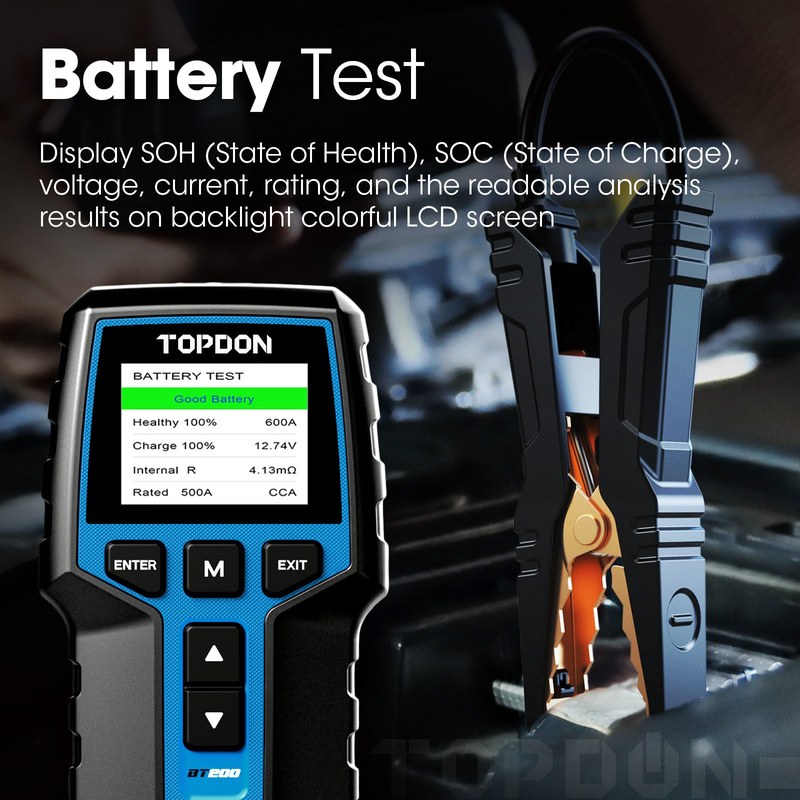
Safe use matters because battery compartments can be tight, metal tools can short terminals, and a bad connection can produce misleading results. The BT200 is meant for a parked, controlled check, not a rushed roadside guess.
Correct connection order and clamp placement
Connect the clamps to the correct battery terminals before starting the test. Positive goes to positive and negative goes to negative, with the clamps making solid contact on clean metal.
If the terminals are corroded, dirty, or loose, clean or tighten them first if you can do so safely. A poor connection can make a healthy battery look weak.
Safe location, traffic visibility, and post-use inspection
Test the battery in a safe, parked location with the transmission in park or neutral as appropriate and the parking brake set. If you are testing near a roadway, stay visible to other drivers and avoid standing in traffic lanes.
After the test, remove the clamps carefully and inspect the battery area for heat, corrosion, damaged insulation, or loose hardware. If the battery area smells strongly of acid or you see leakage, stop and seek service.
Storage conditions, cable/pack condition, and tool completeness
Store the BT200 in a dry place and keep the cable, clamps, and connector in good shape. Frayed wires, bent clamp jaws, or cracked insulation can affect reliability and safety.
Before you rely on the tool, make sure the package includes the parts you need for your vehicle and that the screen or app connection works as expected. Missing accessories can turn a simple battery check into a frustrating delay.
OBD2 and Diagnostic Limits: What the BT200 Can and Cannot Tell You
The BT200 belongs in the wider OBD2 and electrical diagnosis conversation because many starting complaints are not caused by the battery alone. If you want to compare it with a broader scanner workflow, our article on how to use Topdon TopScan explains the difference between battery checks and scan-tool features.
Model-year and protocol coverage for U.S. vehicles
OBD2 coverage in the United States varies by model year, fuel type, and vehicle protocol. Most gas vehicles sold for the U.S. market from 1996 onward use OBD2, but exact support still depends on the vehicle and the tool revision.
That matters because battery and charging complaints sometimes overlap with network or module issues. A tester may still read battery condition correctly even when a full scan tool would be needed for deeper system faults.
Port location, ignition mode, code reading, and live-data limits
OBD2 ports are usually under the dash near the steering column, but location varies by vehicle. Some checks require the ignition in accessory or on mode, while others work with the engine off.
Live data can help you see charging voltage trends or related system behavior, but the BT200 is not a full-featured bidirectional diagnostic platform. It will not replace a professional scanner for module coding, advanced live data, or actuation tests.
Emissions readiness, reset limitations, app permissions, and firmware updates
Battery testers and OBD2 tools may show emissions-related information, but they do not guarantee that a cleared code means the problem is fixed. If you clear codes, you may also reset readiness monitors and create a failed inspection later.
Connected tools can also request app permissions or account access. Review what the app can see, whether data is stored in the cloud, and whether firmware updates are available through the manufacturer’s current support path.
Connected diagnostic tools may handle vehicle IDs, trouble codes, and app data. Check the app’s permissions and privacy terms before linking an account, especially if you share the tool across multiple drivers or vehicles.
When battery symptoms require a professional diagnosis
If the battery tests weak every few days, the vehicle needs repeated jump-starts, or the charging warning keeps coming back, a simple battery test is not enough. That pattern can point to parasitic draw, alternator output problems, a failing starter, or bad grounds.
If you are unsure whether a code or warning is battery-related, a professional diagnosis can save money by preventing unnecessary battery replacement.
Battery, Starting, and Charging System Troubleshooting Guide
Use the BT200 as part of a step-by-step check, not as the only clue. Start with the battery, then look at the starter and charging system if the battery result does not fully explain the symptom.
Alternator, parasitic draw, and starter-related warning signs
If the engine starts with a jump but dies later, the alternator may not be charging properly. If the battery keeps going dead overnight, parasitic draw or a module staying awake may be draining it.
If you hear a single click or slow crank with a charged battery, the starter or its circuit may be the real issue. That is where a battery tester helps narrow the search instead of guessing.
Hybrid and EV cautions before connecting any tester
Hybrids and EVs can contain high-voltage systems that are not the same as a regular 12V battery check. Never assume a tester is safe for every orange-cable or high-voltage component in the vehicle.
Only connect to the 12V system if the vehicle manual allows it, and avoid any high-voltage service unless you are properly trained. When in doubt, stop and consult the manual or a qualified technician.
Ownership cost, maintenance habits, and when replacement makes more sense than testing
Testing can save money when it helps you avoid replacing a battery that still has useful life. It can also save time by showing that the real issue is elsewhere.
But if the battery is old, has been deeply discharged several times, or shows physical damage, replacement may make more sense than repeated testing. A tester is a decision tool, not a cure.
TOPDON BT200 vs. Other Options: Which Tester Fits Your Driver Profile?
Choosing the right tool depends on how often you work on vehicles and how much detail you need. The BT200 sits between a basic voltmeter and a professional shop scanner.
BT200 vs. basic voltmeter: accuracy, depth, and ease of use
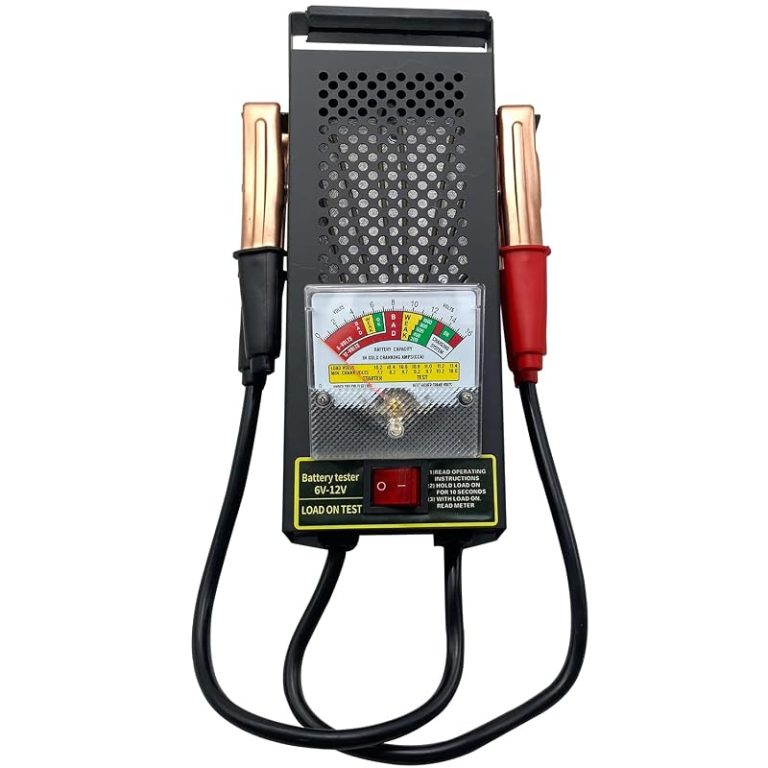
A basic voltmeter is cheap and simple, but it only shows voltage. The BT200 goes further by helping evaluate battery condition and starting or charging performance in a more structured way.
That extra depth is valuable for drivers who want a clearer answer without buying a full shop-grade diagnostic setup.
BT200 vs. professional shop diagnostics: capability, cost, and limitations
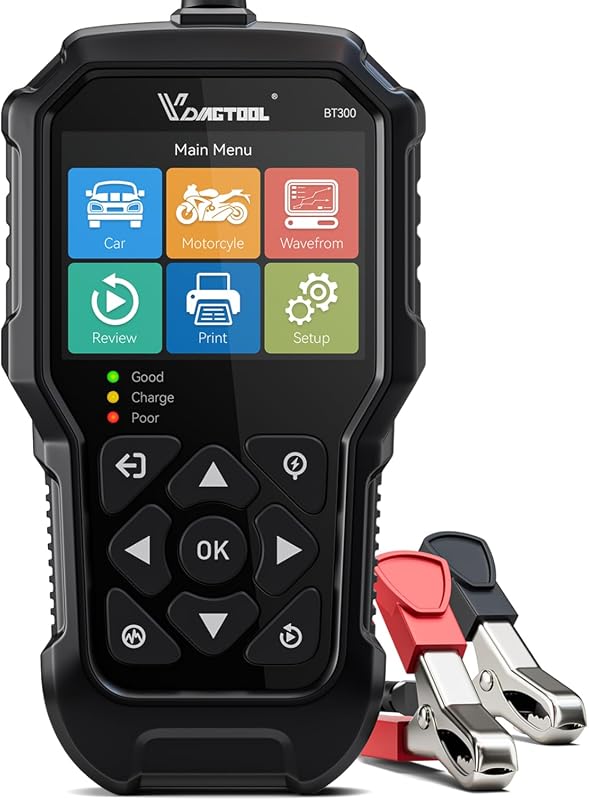
A professional shop scan tool can read more modules, run more tests, and help trace complex faults. The BT200 is more limited, but it is also easier to own and use for routine battery checks.
If your vehicle has repeated electrical faults, module communication issues, or charging-system warnings, a shop tool or technician may be the better next step.
Best fit for daily drivers, DIY owners, and fleet or used-car buyers
Daily drivers who want a quick battery check, DIY owners who maintain their own cars, and used-car buyers who want a fast electrical snapshot are the best fit. Fleet users may also value fast screening before a vehicle goes back on the road.
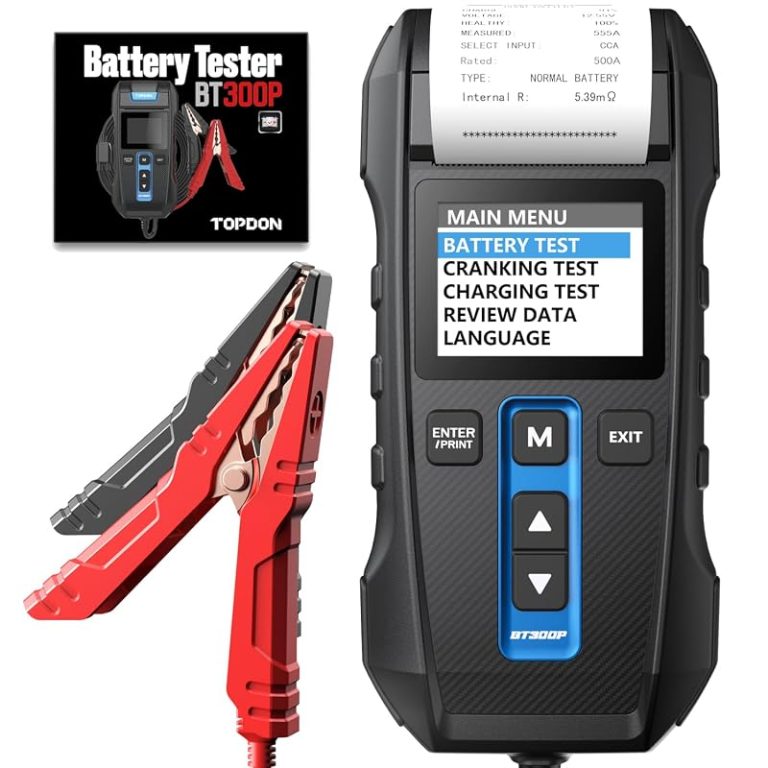
If you want a deeper comparison of Topdon options, see Topdon BT100 vs. BT200 battery tester and which Topdon battery tester is best.
- Gives more insight than a simple voltage check
- Helps separate battery trouble from charging or starting issues
- Useful for routine DIY and used-car checks
- Cannot replace full vehicle diagnostics
- May not solve intermittent or module-related faults
- Results depend on correct setup and battery condition
Tire, TPMS, and Roadside Use: What Else Drivers Should Check Before They Go
Battery trouble often shows up when you are already dealing with another roadside issue, so it helps to check the basics before you roll out. Tires, inflation, and TPMS warnings can affect whether the vehicle is safe to drive after a battery problem.
Door-jamb placard, cold pressure, and gauge accuracy
Use the tire pressure listed on the door-jamb placard, not the number molded into the tire sidewall. Check pressure when the tires are cold for the most accurate reading.
If your gauge disagrees with the vehicle’s TPMS warning, trust the placard and a known-good gauge first. Temperature changes can shift pressure enough to trigger a warning.
Inflator duty cycle, puncture location, and temporary-repair limits
If you also carry a portable inflator, follow its duty-cycle limits so the motor does not overheat. A small inflator is helpful for topping off pressure, but it is not a cure for a damaged tire.
Sidewall damage, large punctures, or a tire that will not hold air after inflation usually needs professional repair or replacement. Temporary fixes are not permanent solutions.
TPMS relearn limits and when a tire needs professional repair
Some vehicles need a TPMS relearn after tire service, while others update automatically. That process varies by make, model, and trim, so check the owner’s manual before assuming a warning will clear itself.
If the tire has repeated pressure loss, visible damage, or cords showing, get it repaired or replaced professionally. The safest roadside choice is the one that keeps the car stable and predictable.
Buying Guide Verdict for CarValleyNJ Readers: Compatibility, Warranty, Support, and Next Steps
For most drivers, the BT200 makes the most sense as a practical battery-check tool that helps answer one question fast: is the battery the problem, or is something else going on? That is especially useful if you manage multiple vehicles or want a reliable first step before paying for shop diagnosis.
- Confirm the vehicle is a 12V system the tool supports
- Review the app, firmware, and update process if the model uses connected features
- Check warranty, return policy, and customer support terms
- Make sure you understand the battery chemistry and CCA input requirements
- Decide whether you need a battery tester only or a broader OBD2 scan tool
Ideal user and vehicle match
The ideal user is a driver who wants a clear battery and charging-system check without stepping into professional shop pricing. It also fits owners who keep an eye on aging batteries before winter or before a road trip.
It is a better match for regular 12V passenger vehicles than for high-voltage service work or advanced module diagnosis.
Key drawbacks and evidence limits
The main drawback is scope. A battery tester can tell you a lot about the battery, but it cannot fully diagnose every electrical complaint.
Also remember that any product summary depends on the manufacturer’s published features and the vehicle’s condition. If your battery terminals are corroded, your wiring is weak, or your vehicle has hidden faults, the reading may only show part of the story.
Transparent verdict: who should buy the TOPDON BT200 in 2026
If you want a simple, useful way to check battery condition and get a better starting-system snapshot, the TOPDON BT200 is a sensible choice for many US drivers. If you need deep module access, advanced live data, or repair-level diagnostics, you should step up to a more capable scan tool or a shop visit.
- Best for: Daily drivers, DIY owners, and used-car buyers who want a practical 12V battery and charging check.
- Think twice if: You need advanced scan-tool functions, high-voltage hybrid/EV service, or full shop diagnosis.
- Next step: Verify your vehicle’s battery type, CCA rating, and 12V compatibility before you buy.
Frequently Asked Questions
No. It is meant for supported 12V vehicle battery checks, but exact fit depends on the vehicle and battery type. Always confirm your make, model, year, and battery chemistry before use.
Usually no. Many battery checks are done with the vehicle parked and the engine off, but some charging-system checks may use ignition or engine-on readings. Follow the tool and vehicle instructions for the exact test.
It can help point toward a charging problem, but it cannot replace full alternator diagnosis in every case. If the battery keeps going dead or the warning light returns, more testing is needed.
Only if you are checking the approved 12V system and the vehicle manual allows it. Do not touch high-voltage components unless you are trained and following the manufacturer’s service procedures.
That depends on the exact product version and features. Check the current manufacturer support page for app permissions, firmware updates, and any account or data-sharing requirements.
Confirm 12V compatibility, battery chemistry support, included cables or clamps, warranty terms, and whether you need a battery tester or a broader OBD2 scanner. That helps avoid paying for features you will not use.