Can the TOPDON BT200 Test Lithium Batteries? What to Know
No, the TOPDON BT200 is generally not the right choice for lithium battery testing. It is usually best for 12V lead-acid batteries, so lithium owners should verify chemistry support before buying.
Can the TOPDON BT200 Test Lithium Batteries? Not in the way most drivers mean it. The BT200 is built mainly for 12V lead-acid battery testing, so lithium battery owners should verify chemistry support before buying.
If you are trying to diagnose a car, truck, or SUV battery, this guide explains what the BT200 is made to handle, where it fits in real-world electrical troubleshooting, and when a different tester is the smarter choice. I’ll also cover OBD2 coverage, tire-care basics, roadside safety, and the ownership details that matter to U.S. drivers.
- Battery type matters: The BT200 is mainly for 12V lead-acid systems, not lithium packs.
- Check the manual: Exact chemistry support can vary by revision, firmware, or bundle.
- Use it for what it does best: It can still help with basic battery and charging-system checks on many cars.
- Watch app and OBD2 limits: Any scanner features may be basic, with privacy and coverage limits.
- Buy for your real use case: Lithium, RV, marine, and backup-power users may need a different tester.
Can the TOPDON BT200 Test Lithium Batteries? Quick Answer for CarValleyNJ Drivers
For most buyers, the short answer is no: the TOPDON BT200 is generally aimed at 12V lead-acid batteries, not lithium packs. If your vehicle, powersports machine, or backup system uses lithium iron phosphate or another lithium chemistry, you should confirm the exact supported battery types in the manual before relying on it.
That matters because a tester can only give useful results when it matches the battery chemistry and test method. A tool designed around lead-acid behavior may not report lithium state of health correctly, even if it powers on and shows voltage.
What the TOPDON BT200 Is Designed to Test: 12V Lead-Acid Basics, Not Lithium
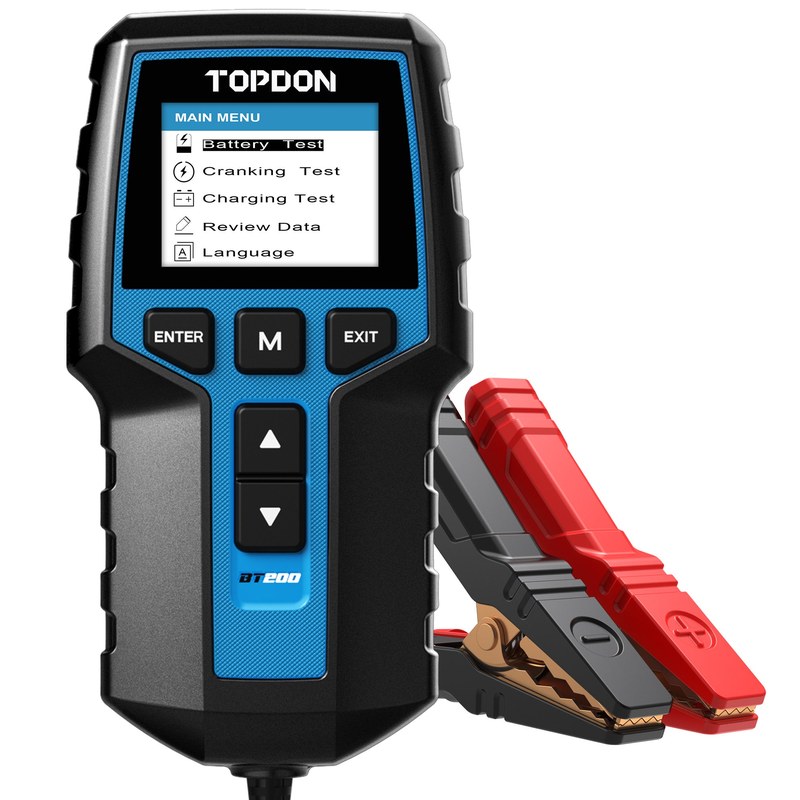
The BT200 is commonly positioned as a compact battery and charging-system tester for everyday 12V vehicles. That usually means flooded lead-acid, AGM, and sometimes EFB-style automotive batteries, depending on the exact product revision and manual language.
Battery chemistries the BT200 is commonly built for
In practical use, this type of tester is meant for standard starter batteries in passenger cars, light trucks, and many SUVs. It is also the kind of tool that can help with alternator checks, cranking-system diagnosis, and basic charging-system health on conventional 12V platforms.
If you are comparing Topdon options, it helps to separate chemistry support from scanner features. Our guide on whether the Topdon battery tester is any good gives more context on how these tools fit a garage or driveway workflow.
Why lithium battery testing needs different support
Lithium batteries behave differently from lead-acid batteries. Their voltage curve, charging profile, and internal management system can make a basic conductance-style reading less meaningful unless the tester is designed for that chemistry.
Some lithium batteries also include a built-in battery management system, or BMS, which can affect what a tester sees at the terminals. That is one reason a “battery tester” is not automatically a “lithium battery tester.”
How to Tell If Your Vehicle Uses a Battery Type the BT200 Can Handle
Before you buy, identify the battery type already in the vehicle or system. Many daily drivers still use lead-acid or AGM batteries, but some newer motorcycles, RV setups, marine systems, and aftermarket storage banks use lithium instead.
Check: Verify make, model, year, trim, voltage, ports, mounting space, and OEM requirements. Limitations: State verified exclusions.
Car, truck, SUV, powersports, marine, and backup-power use cases
Most gasoline passenger vehicles in the U.S. still use a 12V lead-acid family battery, so the BT200 is often a reasonable fit there. It may also fit some boats or powersports machines if they use a conventional 12V starter battery.
Lithium use cases are more common in accessory power banks, solar storage, RV house batteries, and some upgraded off-road or marine setups. In those cases, the tester must explicitly support the battery chemistry, not just the voltage.
Signs your system is 12V lead-acid versus lithium
Check the label on the battery first. Words like AGM, flooded, or lead-acid point toward a conventional starter battery, while LiFePO4, lithium-ion, or lithium iron phosphate usually means a different testing approach is needed.
If the battery is sealed inside an integrated power module or managed by a vehicle-specific system, read the owner’s manual before connecting any tester. For battery and scanner compatibility questions on other Topdon tools, see our comparison of the Topdon BT100 vs BT200 battery tester.
How the BT200 Fits Into Real-World Battery and Electrical Diagnosis
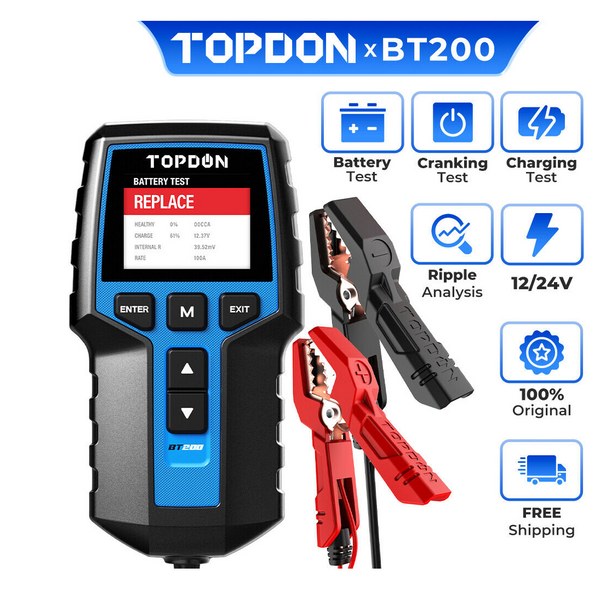
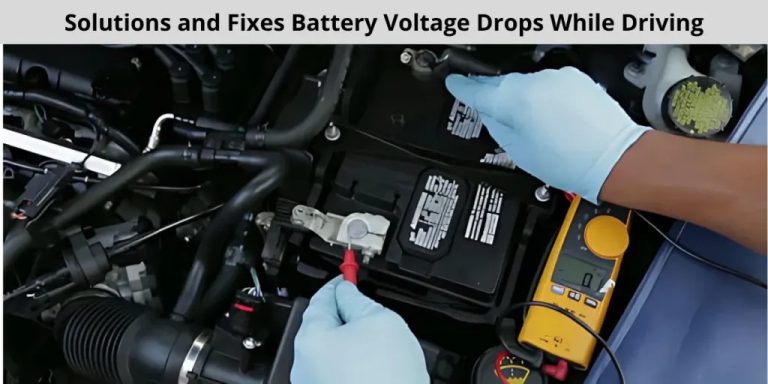
Even when a tester does not support lithium, it can still be useful for the systems it was designed for. The BT200’s main value is helping you separate a weak battery from a charging problem or a starting-system issue on a conventional 12V vehicle.
System voltage, state of charge, and battery health
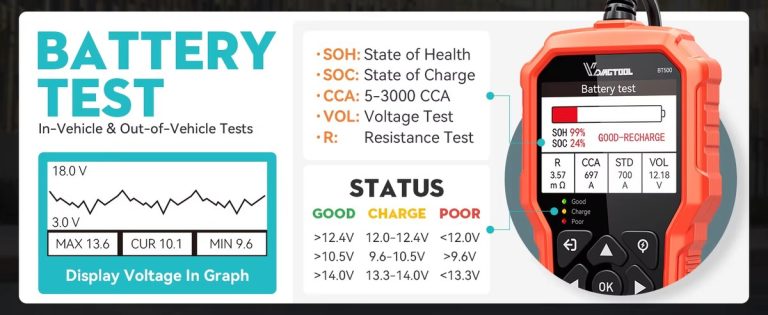
Battery testers often look at voltage, estimated state of charge, and estimated health. Those readings can help you decide whether the battery is simply discharged, nearing replacement, or being undercharged by the vehicle.
That is useful for drivers who do not want to guess whether a slow crank is caused by the battery, the alternator, or a bad connection. Still, the result should be treated as a diagnostic clue, not a final verdict on every vehicle.
Correct connection order, damaged-battery stop conditions, and safety limits
Follow the manual for clamp order, battery type selection, and test prompts. A tester is only as safe as the setup around it, especially if the battery case is cracked, swollen, leaking, or obviously overheated.
What the tester can and cannot tell you about alternators and charging systems
The BT200 can help flag charging-system problems on many 12V vehicles, but it cannot replace a full electrical diagnosis. A poor result may point to a weak alternator, belt issue, bad cable, or parasitic draw, yet it does not isolate every cause by itself.
That is why a battery tester is best used as part of a larger diagnostic process. If you are also comparing scanner features, our article on which Topdon scanner is best may help you decide whether you need a battery tester, a code reader, or both.
OBD2 and Diagnostic Coverage: What Drivers in the U.S. Should Expect in 2026
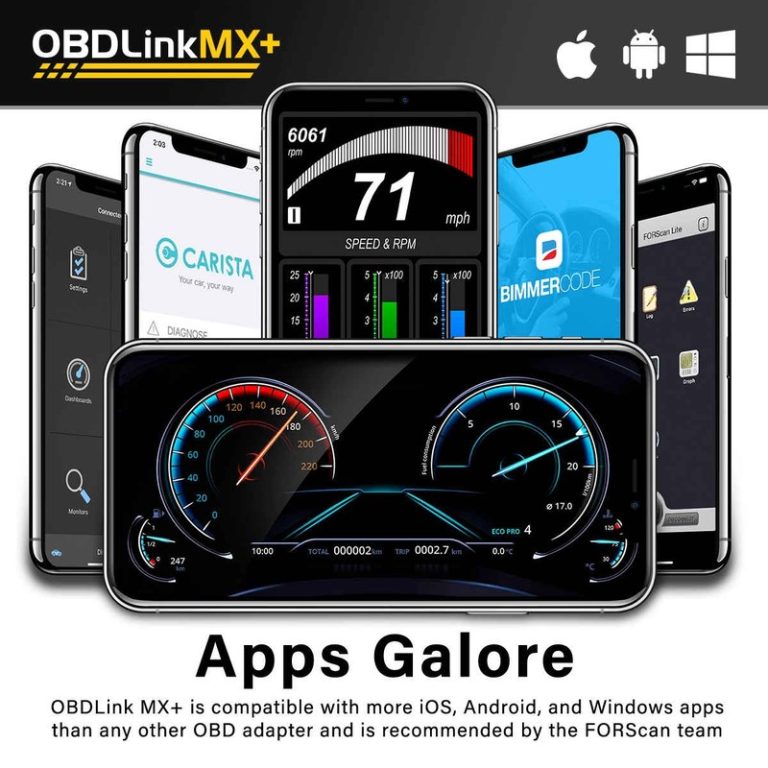
Some buyers shop the BT200 expecting full scan-tool behavior, but battery testers and OBD2 scanners are not the same thing. If your version includes OBD2 functions, check the supported vehicle years, protocols, and app requirements before you count on them.
Model-year and protocol coverage, port location, and ignition mode
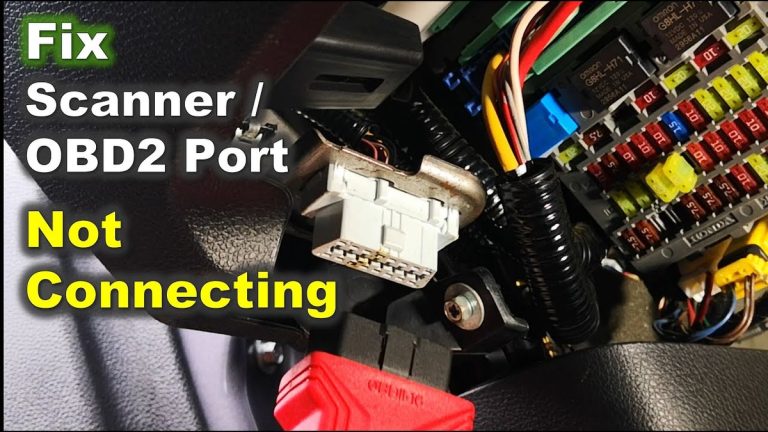
Most U.S. OBD2 vehicles use a standardized diagnostic port, but the exact location can vary by model. The tool also may require the ignition to be in a specific key or push-button mode to communicate correctly.
Coverage is never universal. Older OBD1 vehicles, some heavy-duty platforms, and certain specialty vehicles may not support the same functions you see on modern passenger cars.
Code reading, live-data limits, emissions readiness, and reset limitations
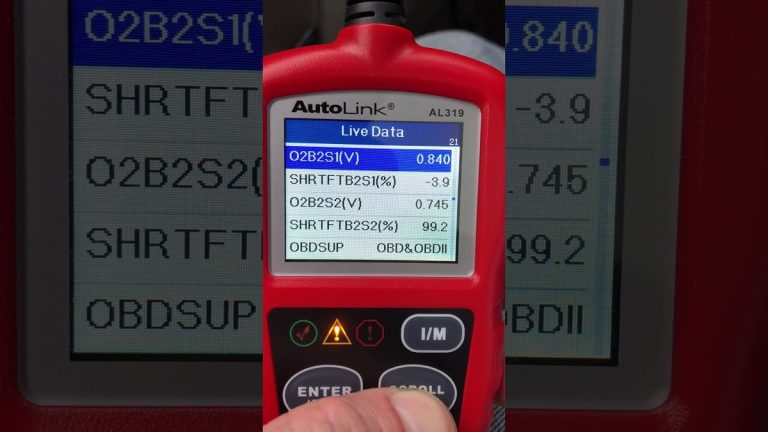
If the BT200 app or companion function reads codes, the most common expectation is basic trouble-code access, not advanced bi-directional control. Live data, readiness monitors, and reset functions may be limited by vehicle protocol and software design.
That means the tool can be helpful for a quick emissions check, but it may not replace a higher-end scanner for ABS, airbag, transmission, or service-function work. For broader scan-tool comparison, see our guide to the Innova 5610 OBD2 bidirectional scan vs Topdon bidirectional scan tool.
App permissions, firmware updates, and when a professional diagnosis is the better move
Connected diagnostic tools often ask for Bluetooth, location, account, and vehicle-data permissions. Read the privacy policy, update notes, and app-store permissions before pairing the tool to your phone.
If the vehicle has repeated warning lights, charging faults, or a possible battery-management issue on a hybrid, EV, or lithium system, a professional diagnosis is usually the better move. That is especially true when the issue could affect drivability or safety.
Tire Pressure and TPMS Context: What a Battery Tester Review Should Still Cover
A battery tester article may seem like the wrong place for tire advice, but roadside and electrical tools often live in the same glove box or cargo bin. If you are already building an emergency kit, tire-care basics still matter.
Door-jamb placard, cold pressure, and gauge accuracy basics
Use the door-jamb placard pressure for the vehicle, not the number molded on the tire sidewall. Check pressure when the tires are cold, and use a known decent gauge so you are not chasing a false warning.
That helps with fuel economy, tire wear, and TPMS troubleshooting. It also keeps you from confusing a tire-pressure issue with an electrical fault when dashboard lights start stacking up.
Inflator duty cycle, TPMS relearn limits, and puncture repair thresholds
If you carry an inflator, remember that small portable units have duty-cycle limits. They can help top off a tire or recover from a slow leak, but they are not a cure for a damaged bead, sidewall cut, or large puncture.
TPMS systems also have relearn and reset limits that vary by vehicle. If the warning light stays on after the pressure is corrected, the problem may be sensor-related or require a relearn procedure.
When tire damage or warning lights require professional service
Any sidewall damage, exposed cords, repeated pressure loss, or tire damage near the shoulder deserves prompt inspection. Temporary repairs are not a permanent fix, and some punctures are not repairable at all.
Roadside and Emergency Use: Safety, Storage, and Post-Use Inspection
Battery testers are often used in driveways, parking lots, and roadside stops. That makes safe placement, traffic awareness, and tool condition part of the buying decision, not an afterthought.
Safe location, traffic visibility, and tool completeness
Work as far from traffic as possible, with hazard lights on if the situation calls for it and local conditions allow. Keep the tool, leads, and phone in reach before you start so you are not leaving the vehicle repeatedly.
Cable or pack condition, storage conditions, and current limits
Inspect clamps, cable insulation, and connectors before each use. If a lead is frayed or a clamp is loose, the reading can suffer and the setup can become unsafe.
Store the tester according to the manual, away from moisture and extreme heat. If it uses a rechargeable battery or internal pack, keep an eye on storage charge and charging behavior over time.
Post-use inspection and when to stop using the tool
After use, wipe off grime, coil the cable gently, and check for cracked plastic or bent pins. A tool that only works when the cable is held at a certain angle is telling you it needs attention.
TOPDON BT200 Versus Higher-End Battery Testers: Which Driver Fits Which Tool?
The best tester is not always the one with the most features. It is the one that matches your battery type, vehicle count, and how much diagnosis you actually want to do.
| Option | Best for | Owner consideration | Driver consideration |
|---|---|---|---|
| TOPDON BT200 | 12V lead-acid battery checks and basic charging-system diagnosis | Usually lower cost and simpler ownership, but limited chemistry support | Quick roadside or garage checks with minimal setup |
| Higher-end battery tester | Broader battery chemistry support or deeper diagnostic functions | More expensive and may involve apps, updates, or subscriptions | Better fit if you need lithium support or more detailed reporting |
Side-by-side comparison by battery type, diagnostics, app features, and price
The BT200 usually makes sense when you want straightforward 12V lead-acid testing without paying for features you will not use. A higher-end tester becomes more attractive if you need lithium support, app-based reporting, or more advanced electrical coverage.
If you want a broader buying framework, our article on the best bidirectional scan tool for the money can help you separate “nice to have” features from the ones that actually solve problems.
Best fit for DIY owners, daily drivers, and shop-light users
DIY owners with one or two conventional vehicles often do well with a simpler tester. Daily drivers who just want to know whether a weak battery is worth replacing may also prefer the BT200’s simpler approach.
Shop-light users who see a mix of lead-acid and lithium systems should consider a tool with explicit chemistry support. That is especially true if you work on RVs, marine batteries, or upgraded overland electrical systems.
Warranty, support, ownership cost, and transparent limitations
Before buying, review the warranty term, return policy, and update support from the seller or manufacturer. Also check whether the app or firmware features depend on a login, registration, or future software support.
Final Verdict: Should You Buy the TOPDON BT200 If You Need Lithium Battery Testing?
The BT200 can be a useful 12V tester for conventional automotive batteries, but it is not the right pick if lithium battery testing is your main goal. If your vehicle or equipment uses lithium, buy a tester that explicitly lists that chemistry support in the current manual.
- Best for: Drivers who need a simple tester for 12V lead-acid batteries and basic charging-system checks.
- Think twice if: Your main need is lithium battery testing, RV house batteries, or broader scan-tool coverage.
- Next step: Check the current manual, confirm battery chemistry, and compare support for your exact vehicle or battery system before you buy.
Frequently Asked Questions
Usually not, unless the current manual explicitly lists lithium support. The BT200 is generally aimed at 12V lead-acid testing, so lithium results may be unreliable.
It is commonly used with 12V lead-acid batteries such as flooded, AGM, and sometimes EFB, depending on the exact revision. Always confirm the label and manual before testing.
It can help point to charging-system issues on many conventional vehicles, but it cannot isolate every cause. A weak reading may still come from cables, belts, parasitic draw, or the battery itself.
No. Even if it includes some OBD2 functions, it is still mainly a battery tester and may not cover advanced modules, bidirectional controls, or service resets.
Check battery chemistry support, vehicle compatibility, app permissions, warranty terms, and current manual details. Also confirm whether you need lithium support or only 12V lead-acid testing.
Yes. Connected tools may share VIN, codes, live data, and account information through the app, so review permissions and data settings before pairing the device.