Battery Tester Says Good Battery but Car Will Not Start – Here’s Why
The battery can be healthy while the starter, cables, fuel system, or security module is the real problem. Clean the terminals, check starter draw, and scan for codes before replacing anything.
When your battery tester says good battery but car will not start, the problem usually sits somewhere between the battery and the engine. A healthy battery reading is useful evidence, but it only tells part of the story. This guide walks through the most common causes and the safest ways to find the real fault.
- Battery health: A “good” reading only covers the battery, not the starter, fuel, or ignition system.
- Connections first: Corroded or loose terminals cause many no-starts with a healthy battery.
- Starter draw: Voltage drop and amp-draw tests find starter faults a battery tester misses.
- Codes help: OBD2 codes and live data can point to sensors, fuel, or security issues.
- Safety: Never test a damaged battery or touch orange high-voltage cables in a hybrid or.
Why a Battery Tester Says “Good” but Your Car Won’t Start
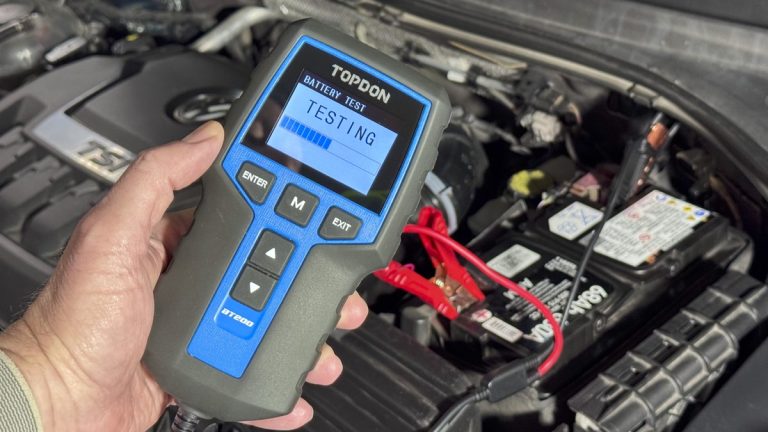
A battery tester measures the battery’s ability to hold voltage and deliver current. It does not check the starter, the fuel pump, the ignition system, or the security module. So a “good” reading can be completely accurate while the car still refuses to crank or fire.
Think of it this way: a full gas can in the trunk won’t make the engine run if the fuel line is blocked. The battery can be perfect, but if the power can’t reach the starter, or if the engine lacks fuel and spark, the car won’t start. This is why the phrase battery tester says good battery but car will not start leads so many drivers to the wrong conclusion: the battery must be the problem.
Common causes include corroded or loose battery terminals, a failing starter or solenoid, a bad ground strap, fuel delivery problems, ignition system faults, and an immobilizer or anti-theft issue. The rest of this guide covers each one in order, starting with the cheapest and easiest checks. If you’ve already dealt with a battery that tests fine but keeps causing trouble, our guide on why a car battery tests good but still dies covers that related situation in more depth.
What a Battery Tester Actually Measures: State of Charge vs. Battery Health
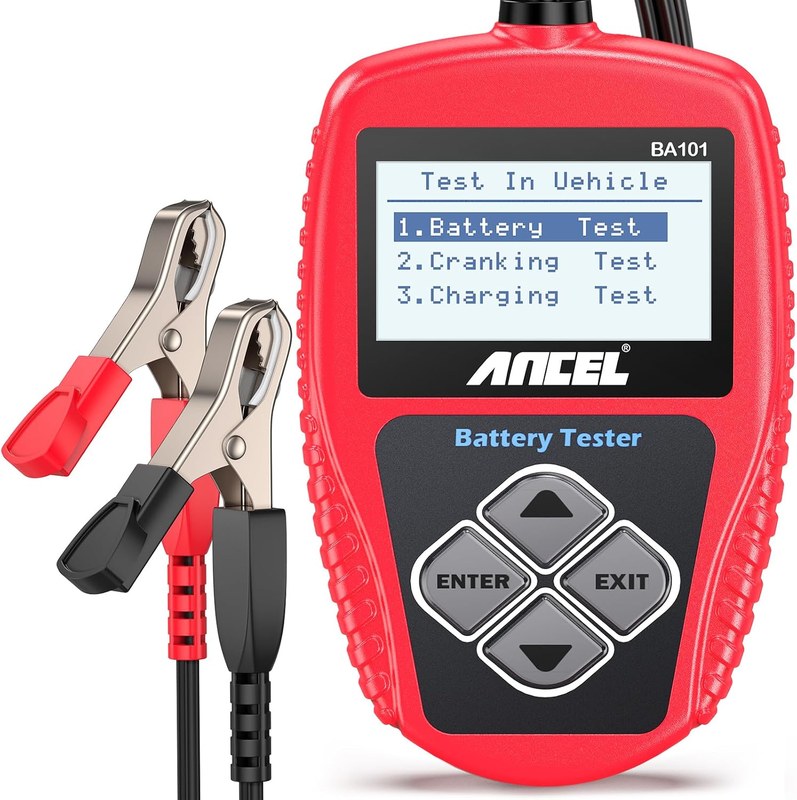
State of Charge vs. State of Health
State of charge (SOC) tells you how full the battery is. State of health (SOH) tells you how much usable capacity remains compared to when the battery was new. A battery can show a full charge and still have poor health.
Many handheld testers combine both readings. If you see “good” on the screen, the tester is saying the battery passed its tests under the conditions it measured. That doesn’t mean the battery can handle the heavy current draw of a cold engine starter on a freezing morning. For a deeper look at what those numbers mean, see our explanation of low state of health on a car battery tester.
System Voltage, CCA, and Internal Resistance
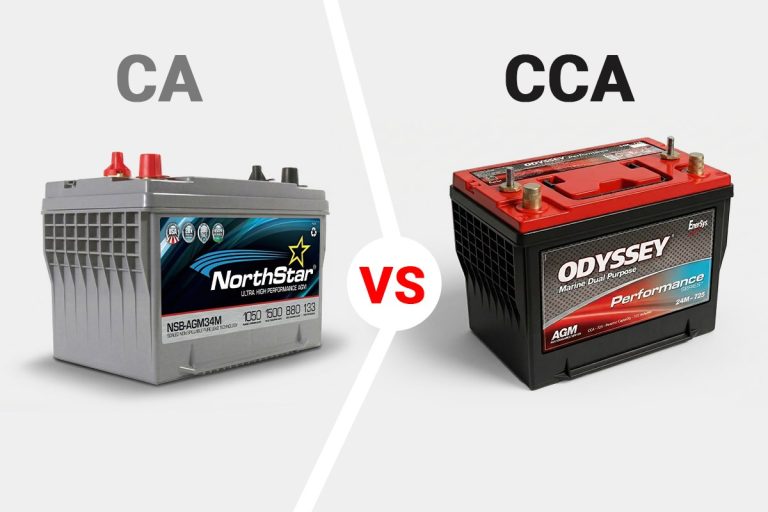
Most car batteries run on a 12-volt system. A resting voltage around 12.6 volts usually means a fully charged battery. Cold cranking amps (CCA) measures how much current the battery can deliver at 0°F for 30 seconds while staying above a minimum voltage.
Internal resistance is the hidden factor. As a battery ages, internal resistance rises, which limits how much current it can push. A tester that only reads voltage can miss high internal resistance. That’s why a battery can read “good” at rest but fail under the load of cranking.
Conductance Testers vs. Load Testers: What Each Can Miss
Conductance testers send a small AC signal through the battery and estimate its condition. They are fast and safe, and they don’t drain the battery. But they can miss a battery that fails only under a heavy, real-world load.
Load testers apply a physical load, often at half the CCA rating, and watch how voltage behaves. They are more realistic but require a charged battery and can take longer. Each type has blind spots. A conductance tester may call a weak cell “good” if the battery is fully charged, while a load tester can expose the problem quickly.
For home use, a good-quality conductance tester is usually enough. If you’re choosing between tools, our comparison of battery tester vs. multimeter can help you decide which fits your needs.
Inspect the Obvious First: Battery Terminals, Cables, and Ground Straps
Before blaming the starter or the fuel system, look at the battery connections. Corrosion, loose clamps, and cracked cables are among the most common causes of a no-start with a good battery reading. The tester connects to the terminals and may get a clean reading even when the cable connection behind the terminal is corroded.
How to Clean and Tighten Battery Connections
- Disconnect the negative terminal first, then the positive.
- Inspect the cable ends for white or blue-green corrosion.
- Clean the terminals and cable ends with a wire brush or terminal cleaner.
- Reconnect the positive terminal first, then the negative.
- Tighten the clamps snugly. Wiggle them by hand; they should not move.
If corrosion is heavy or the cable insulation is cracked or melted, replace the cable. This is a low-cost repair that solves many no-start problems.
Jump-Starting and Charging Safety: Connection Order, Cable Condition, Current Limits, and Post-Use Checks
If you need a jump start, follow the order in your vehicle owner’s manual. A common safe sequence is: connect the positive cable to the dead battery, then the positive to the good battery, then the negative to the good battery, and finally the negative to a metal ground on the dead car, away from the battery.
Check the cables for cracks or exposed wire before connecting. Never connect a jump pack to a damaged or leaking battery. After the car starts, remove the cables in reverse order. If the car dies again immediately, the battery or charging system still has a problem.
Damaged Battery Warning Signs: When to Stop
A swollen battery case means internal damage, often from overcharging or extreme heat. A cracked case can leak acid. A rotten-egg smell can mean the battery is venting gas. Any of these signs mean you should not test, charge, or jump the battery.
The Starter System: Why a Good Battery Can’t Fix a Bad Starter
The starter motor draws hundreds of amps when you turn the key. If the starter is worn, its internal windings can short, or its solenoid can fail. The battery may be perfectly fine, but the starter can’t use the power it receives.
Voltage Drop Testing 101
Voltage drop testing measures how much voltage is lost across a connection or cable while current flows. You connect a multimeter in parallel across the cable, crank the engine, and read the voltage difference. A drop above about 0.5 volts on the positive side or 0.1 volts on the ground side usually means resistance in that circuit.
This test finds corroded cables, loose connections, and bad ground straps that a battery tester can’t see. It requires a multimeter and a helper to crank the engine, but it’s a skill worth learning.
Starter Draw: How Many Amps Is Too Many?
Starter draw varies by engine size, temperature, and starter condition. A small four-cylinder might draw 100-150 amps, while a large V8 can draw 200-250 amps or more. If the draw is much higher than normal, the starter is failing.
A battery tester with a built-in amp clamp, or a separate clamp meter, can measure this. But the exact specification comes from the vehicle’s service manual, not from a general rule.
When a Clicking Sound Means Starter, Not Battery
A single loud click when you turn the key often points to the starter solenoid. Rapid clicking usually means the battery can’t deliver enough current, but it can also mean a bad connection. No click at all can mean a dead battery, a bad ignition switch, or a security system fault.
The key point: the sound gives you a clue, but it doesn’t give you the answer. Check the battery connections first, then move to the starter circuit.
OBD2 Scanners: What Codes Can and Can’t Tell You When the Car Won’t Start
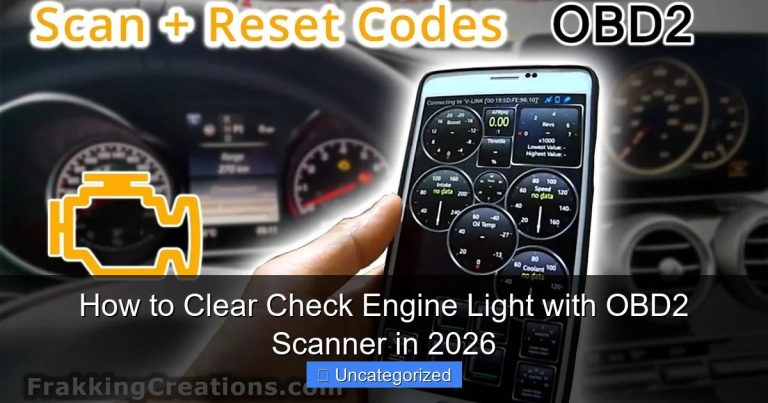
An OBD2 scanner can be a huge help in a no-start situation, but it has limits. It can read engine, transmission, and emissions codes. It cannot directly tell you whether the starter is broken or whether the fuel pump is dead.
Where to Plug In and Which Protocol Your Car Uses
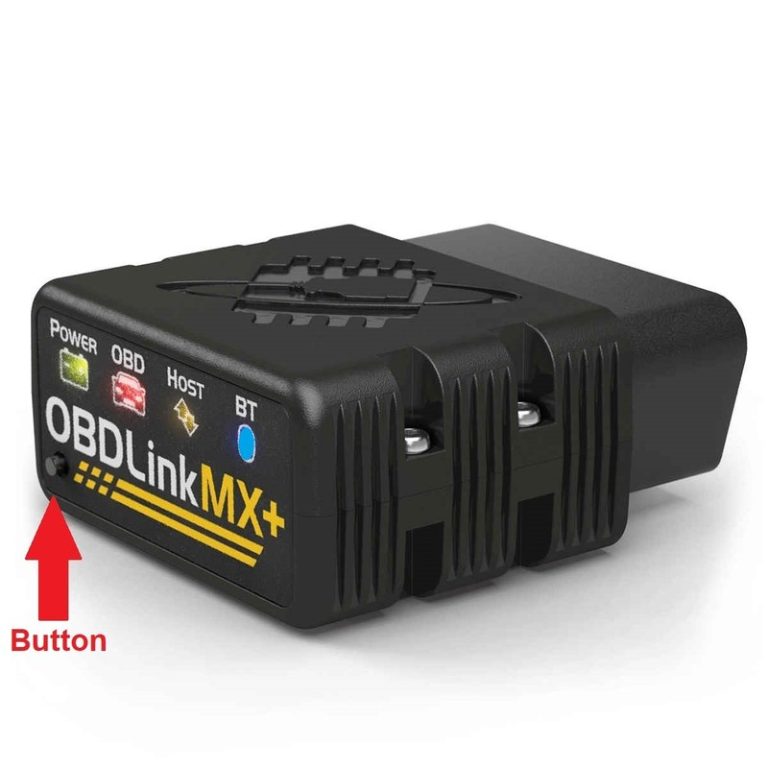
The OBD2 port is usually under the dashboard, near the driver’s left knee. Most cars built after 1996 use the same basic connector, but the communication protocol varies by manufacturer. If your scanner says “protocol not supported,” it may not be compatible with your vehicle’s protocol, which we explain in our guide on OBD2 scanner protocol not supported errors.
Reading Codes vs. Watching Live Data in No-Start Situations
Codes tell you what the computer noticed, not always what is broken. In a no-start, live data can be more useful. You can watch cranking RPM, fuel pressure readings, coolant temperature, and throttle position. For example, a crankshaft position sensor failure often produces a code, but watching RPM during cranking can confirm whether the engine computer sees the crank turning.
Emissions Readiness, Reset Limitations, App Permissions, and Firmware Updates
Clearing codes with a scanner can reset emissions readiness monitors, which can cause a failed inspection. Some scanners require an app with account permissions, location access, and firmware updates. A scanner that worked on your old car may not support the enhanced manufacturer codes on your new one. Check the scanner’s coverage before relying on it.
Immobilizer, Legal Considerations, and When to Call a Professional
Many modern cars have immobilizers that prevent starting without the correct key chip. A scanner may show a security-related code, but programming keys usually requires dealer-level or professional equipment. In some states, clearing emissions-related codes before an inspection can have legal consequences. If the scanner points to the immobilizer or a module you can’t program, call a professional.
Fuel, Ignition, and Security: The Other No-Start Culprits
If the battery, cables, and starter all check out, the problem may be in the engine’s ability to burn fuel.
Fuel Delivery: Pumps, Relays, and Pressure
A failing fuel pump can prevent the engine from getting fuel. You may hear a whine from the rear when you turn the key to the “on” position; if you don’t hear it, the pump or relay may be dead. A fuel pressure gauge is the proper tool to confirm. Low pressure can also come from a clogged fuel filter.
Ignition System: Spark, Coils, and Sensors
No spark means no combustion. Common causes include bad ignition coils, a failed crankshaft or camshaft position sensor, or a worn distributor on older cars. A spark tester can show whether the coil is producing spark. If the engine cranks but won’t fire, check spark and fuel together.
Security Systems: Immobilizers, Chips, and Anti-Theft
If the security light is flashing rapidly or staying on, the immobilizer may be preventing the starter or fuel system from working. Try a different key with a fresh battery. If the problem persists, the immobilizer module or key programming may need professional attention.
Parasitic Drain and Electrical Gremlins
A parasitic drain is a small electrical load that slowly kills the battery while the car is parked. If the battery tests good but the car won’t start after sitting overnight, a drain may be the real issue. We cover this in detail in our article on why a car battery dies after sitting overnight.
Hybrid and EV Cautions: Don’t Treat a High-Voltage Car Like a Gas Car
Hybrids and electric vehicles have a 12V battery for accessories and a high-voltage battery pack for propulsion. A “good” reading on the 12V battery does not mean the high-voltage system is healthy.
Why a 12V “Good” Reading Can Still Mean a Dead HV Battery
If the high-voltage battery is depleted or a safety interlock is tripped, the car may not start even with a perfect 12V battery. The 12V system runs the computer and relays, but the HV battery provides the actual drive power. A diagnostic scan at a dealership or a capable hybrid shop is often needed.
High-Voltage Safety Rules for DIY Diagnostics
The high-voltage cables in hybrids and EVs are orange. Touching them can cause severe injury or death. Never cut, probe, or disconnect orange cables. Do not perform voltage drop tests on the high-voltage system without proper training and equipment.
When a Hybrid/EV Needs a Professional
If the 12V battery tests good and the car still won’t start, stop guessing. Hybrid and EV diagnostics require dealer-level scan tools, battery health data, and safety procedures that most home mechanics don’t have. Call a qualified shop.
Step-by-Step: From Good Battery Reading to Engine Running
The 10-Minute No-Start Checklist: Tools, Location, and Traffic Visibility
Park on a flat surface, set the parking brake, and turn on hazard lights if you’re near traffic. Gather a battery tester, a multimeter, a wire brush, and a flashlight. Work through this order:
Re-test the battery and note the voltage, CCA, and state of health.
Look for corrosion, looseness, and damaged cables. Clean and tighten as needed.
Look for corroded or loose ground connections between the engine, frame, and battery.
Note whether you hear clicking, a whine, or nothing. Check dash lights and the security light.
Plug in an OBD2 scanner and record any codes before clearing anything.
Use a spark tester and fuel pressure gauge if the engine cranks but won’t fire.
How to Test for a Parasitic Drain
With everything off and the doors closed, connect a multimeter in series between the negative battery terminal and the negative cable. Start with the meter on the 10A setting. A reading above about 50 milliamps after the car’s computers go to sleep suggests a drain.
Wait 15-30 minutes for the modules to sleep before taking the final reading. Then pull fuses one at a time to find the circuit causing the drain. If you’re not comfortable with this, a shop can do it quickly.
Battery Replacement vs. Starter, Alternator, and Other Repairs
If the battery is old, weak on CCA, or low on state of health, replacement may be the right call. If the battery is healthy and the starter draw is high, the starter is the problem. If the car starts with a jump but dies while running, the alternator may not be charging.
The tester gives you evidence, but the diagnosis comes from connecting that evidence to the symptom. A battery that tests “good” at rest can still fail under load, which is why a load test or a professional second opinion matters.
When to Move From DIY to a Professional
If you’ve cleaned the terminals, tested the battery, checked the starter draw, scanned for codes, and the car still won’t start, it’s time to call a professional. Intermittent no-starts, immobilizer faults, and wiring issues can take hours to diagnose. A shop with a factory scan tool can often find the problem faster than a home mechanic guessing.
How to Choose a Better Battery Tester (And Avoid False “Good” Readings)
Not all battery testers are equal. A voltage-only tester can read “good” while missing high internal resistance. A quality conductance tester with CCA and state of health readings is more useful for home diagnosis.
What to Look for in a Battery Tester: Evaluation Criteria, Warranty, and Evidence Limits
Look for a tester that measures voltage, CCA, state of charge, and state of health. A built-in printer or app connectivity is convenient but not essential. Check the warranty and whether the company provides firmware updates. Remember that no handheld tester can diagnose the starter, fuel system, or security system.
Conductance vs. Load Testers: Side-by-Side Comparison and Ideal User
| Option | Best for | Owner consideration | Driver consideration |
|---|---|---|---|
| Conductance tester | Quick home checks without draining the battery | Fast, safe, and affordable; may miss load-related failures | Easy to store and use in a driveway or garage |
| Load tester | Confirming a battery under real cranking conditions | More accurate on weak batteries but needs a charged battery | Heavier and slower; some models create heat and sparks |
Battery Chemistry Compatibility: Flooded, AGM, EFB, and Li-Ion
Not all testers support all battery types. Flooded lead-acid, AGM, EFB, and lithium-ion batteries have different charging and testing profiles. A tester that only handles flooded batteries can give a wrong reading on an AGM battery. Check the tester’s compatibility list before buying.
Battery Maintenance and Ownership Costs: Avoiding False Readings
Keep battery terminals clean and tight, and test the battery when it’s fully charged. A tester reading a partially discharged battery can show “low” when the battery is actually fine. Similarly, a battery that is fully charged but has high internal resistance can show “good” when it’s actually near the end of its life.
Our Transparent Verdict: Testers Worth Considering in 2026
We can’t claim hands-on testing of every model, so our verdict is based on category strengths and owner-reported patterns. For most home users, a mid-range conductance tester with CCA, SOC, and SOH readings is the best balance of cost and usefulness. If you’re chasing intermittent no-starts, a tester with a built-in printer or app logging helps you track battery health over time.
For professional-grade diagnosis, load testing and voltage drop testing still beat any handheld tester. And for choosing between specific models, our buyer’s guides on the best car battery tester for home use and the best AGM battery tester for cars are a good starting point.
- Best for: Drivers who want to avoid unnecessary battery or starter replacements by checking terminals, cables, and codes first.
- Think twice if: The problem involves an immobilizer, hybrid high-voltage system, or intermittent wiring fault that needs a factory scan tool.
- Next step: Start with the 10-minute checklist: clean the terminals, re-test the battery, and scan for codes before spending money on parts.
Frequently Asked Questions
A battery tester only checks the battery’s voltage, charge, and health. It does not test the starter, fuel pump, ignition system, or security module. The problem is often a corroded terminal, a bad starter, or a fuel or spark issue.
Yes. The battery can be perfectly healthy while the starter motor or solenoid is failing. A worn starter draws too much current or fails to engage, so the engine won’t crank even with a good battery.
Test the battery first. If it reads good and the connections are clean and tight, measure the voltage drop across the starter circuit and check the starter draw with an amp clamp. A single loud click often means the starter solenoid, while rapid clicking usually points to a battery or connection problem.
Check the battery terminals for corrosion and looseness, then re-test the battery. Listen for clicking or whining sounds, check the dash lights and security light, and scan for OBD2 codes. Clean connections solve many no-start problems before any parts need replacing.
An OBD2 scanner can reveal engine, transmission, and emissions codes and show live data like cranking RPM and fuel pressure. It cannot directly test the starter or fuel pump, but it can point you toward the right system to inspect.
Call a professional if the problem involves an immobilizer, a hybrid or EV high-voltage system, an intermittent wiring fault, or if you’ve checked the battery, terminals, starter, fuel, and spark without finding the cause. Factory scan tools and safety training are often required.