Should You Charge a Car Battery Before Testing It? Read This First
Yes, charge the battery fully before a health test, but test first if you only need a quick state-of-charge reading. A full charge gives accurate CCA and internal-resistance results; testing a discharged battery can make a good battery look bad.
So, should you charge a car battery before testing it? The honest answer is: it depends on what you’re trying to learn. If you want to check the current state of charge, test it first. If you want to judge the battery’s overall health, charge it fully first. Testing a partly discharged battery for health can produce misleading results that make a good battery look bad. Here’s how to get accurate readings every time.
- Charge first for health: A full charge gives accurate CCA and internal-resistance readings.
- Test first for state of charge: A quick voltage reading shows if the battery is simply drained.
- Rest before testing: Let the battery sit several hours after charging to remove surface charge.
- Inspect before connecting: Never charge or test a cracked, swollen, or leaking battery.
- Match the tester settings: Select the correct battery type and CCA rating for accurate results.
The Short Answer: Charge the Battery First—Unless You’re Checking State of Charge
Most battery testers and professional shops recommend a full charge before a health test. A battery that sits at 50% charge will often fail a conductance test even when it has plenty of life left. That’s because the test measures how well the battery can deliver current, and a discharged battery simply can’t deliver full power.
One exception: if your car won’t start and you want to know whether the battery is simply drained, test the resting voltage first. A reading below 12.4 volts tells you the battery is undercharged.
Side-by-Side: Test Before Charge vs. Charge Before Test
| Approach | Best for | Owner consideration | Driver consideration |
|---|---|---|---|
| Test before charge | Quick state-of-charge check, no-start diagnosis | Takes minutes, no charger needed | Shows only current charge level, not true health |
| Charge before test | Battery health, warranty claims, replacement decisions | Requires charger and several hours | Gives accurate CCA and internal-resistance results |
Battery Testing Basics: Voltage, Chemistry, and State of Charge vs. Health

State of charge tells you how much energy is left in the battery right now. Battery health tells you how much energy the battery can store and deliver compared to when it was new. These are two different measurements that answer two different questions.
A battery can have a low state of charge but excellent health. That battery just needs a charge. A battery can also show a full state of charge but poor health. That battery may fail to start your car on a cold morning even though the voltage looks fine.
If you’re new to battery testing, our guide on what does a battery tester tell you breaks down the common readings in plain language.
System Voltage and How Battery Chemistry Affects Readings
Most cars, trucks, and SUVs use a 12-volt electrical system. A fully charged 12-volt lead-acid battery should rest at about 12.6 volts or higher. At 12.4 volts, it’s roughly 75% charged. At 12.2 volts, it’s around 50%. Below 12.0 volts, the battery is significantly discharged.
Battery chemistry matters too. Flooded lead-acid, AGM, and EFB batteries have slightly different voltage and charging requirements. A tester that supports your battery type gives more accurate results.
How to Test a Car Battery Correctly: Multimeter and Analyzer Steps
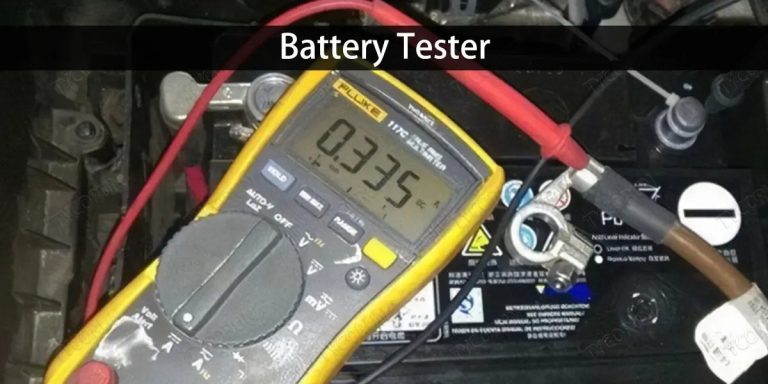
You have two main tool options: a multimeter or a dedicated battery analyzer. A multimeter measures voltage. A battery analyzer measures voltage, CCA, internal resistance, and state of health. Our comparison of battery tester vs multimeter explains which one fits different jobs.
Shut off the engine, lights, radio, and all accessories. Close the doors and wait a few minutes so the surface charge can settle.
Corrosion on the posts can block the connection and cause false readings. Wipe the terminals with a clean rag or a terminal brush.
Attach the red clamp to the positive terminal and the black clamp to the negative terminal. Confirm the clamps have solid metal contact.
Compare the voltage, CCA, and state of health against the tester’s built-in scale or the vehicle manual.
What the Numbers Mean: Voltage, CCA, and Internal Resistance
Voltage is the electrical pressure in the battery. CCA, or cold cranking amps, measures how much current the battery can deliver at 0°F for 30 seconds while keeping voltage above a minimum level. Internal resistance measures how easily current flows through the battery. Higher internal resistance usually means a weaker battery.
A battery analyzer compares the measured CCA against the rated CCA printed on the battery label. If the measured value drops below about 75% of the rating, most testers flag the battery as weak or replaceable.
When to Test Before Charging: Low-Readings and What They Tell You

Testing before charging makes sense in one main situation: a no-start or slow-crank problem. If the car won’t start, you need quick information. A voltage reading tells you whether the battery is drained or whether something else is wrong.
Here’s what a low reading tells you:
- 12.4V or lower: battery is undercharged. Charge it and retest.
- 10.5V under load: battery may have a dead cell.
- Voltage drops fast during cranking: battery may be weak or the starter may be drawing too much.
Testing a Weak Battery in Its Current State
A weak or discharged battery will often fail a conductance test. That failure doesn’t always mean the battery is dead. It means the battery couldn’t pass the test in its current condition. The correct next step is to fully charge the battery, let it rest, and test again.
If the battery fails again after a full charge, replacement is likely the right call.
When to Charge First: Full-Charge Health Testing Procedure
Charge first when you want a reliable health reading. This is the procedure used by most professional shops and battery retailers. A full charge removes the “undercharged” variable so the test measures the battery’s actual ability to store and deliver energy.
After charging, let the battery rest for several hours before testing. A freshly charged battery carries a surface charge that can inflate voltage readings. Resting allows the voltage to settle to a stable level.
Charger Selection, Current Limits, and Reinstallation Best Practices
Use a charger that matches your battery type. A basic 10-amp charger works for most standard flooded batteries. AGM batteries often require a charger with an AGM mode. Check the battery label and the charger manual before connecting.
Slow charging is generally safer than fast charging. A lower amp rate reduces heat buildup and gives the battery time to accept the charge fully. Avoid jump-starting as a substitute for charging; a jump start delivers a quick burst but does not restore a deeply discharged battery.
Safe Connection Order and Stop Conditions for Damaged Batteries
Connecting a charger or tester in the wrong order can cause sparks, which can ignite the hydrogen gas that batteries release. Always connect the positive clamp first, then the negative clamp. When disconnecting, remove the negative clamp first, then the positive.
Correct Connection Order and Why Polarity Mistakes Are Dangerous
Reversing the polarity can damage the battery, the charger, and the vehicle’s electrical system. Most modern chargers have reverse-polarity protection, but not all do. Double-check the + and − markings on the battery before clamping.
Damaged-Battery Stop Conditions: Cracks, Swelling, Leaks, and Odors
Never charge or test a battery that shows physical damage. Stop and replace the battery if you see any of these signs:
- Cracks or damage to the case
- Swelling or bulging sides
- Leaking fluid around the terminals or case
- A strong rotten-egg or sulfur smell
Hybrid and EV Battery Testing Cautions
Hybrid and electric vehicles use high-voltage battery packs that operate at 200 to 400 volts or more. These systems are not the same as a 12-volt starter battery, and they require specialized equipment and training to test safely.
Why High-Voltage Systems Need Specialized Equipment
Standard multimeters and battery testers are not designed for high-voltage traction batteries. The orange cables under a hybrid or EV are high-voltage lines. Touching them without proper training and insulated tools can cause serious injury or death.
If you own a hybrid or EV and suspect a battery problem, have the vehicle inspected by a dealer or a qualified EV technician. Do not attempt to test the high-voltage pack yourself.
When Testing Isn’t Enough: OBD2 Diagnostic Limits and Professional Thresholds
A battery test can tell you the battery is fine, but the car still won’t start. That’s when you need to look beyond the battery. A weak alternator, a parasitic drain, or a faulty starter can all cause starting problems that a battery tester cannot detect.
This is where an OBD2 scanner becomes useful. It can read diagnostic trouble codes and live data from the engine and charging system. But it has limits. If your battery tests good but the car still dies, our guide on why does my car battery test good but still dies walks through the likely causes.
OBD2 Diagnostics: Protocol Coverage, Port Location, Ignition Mode, and Live-Data Limits
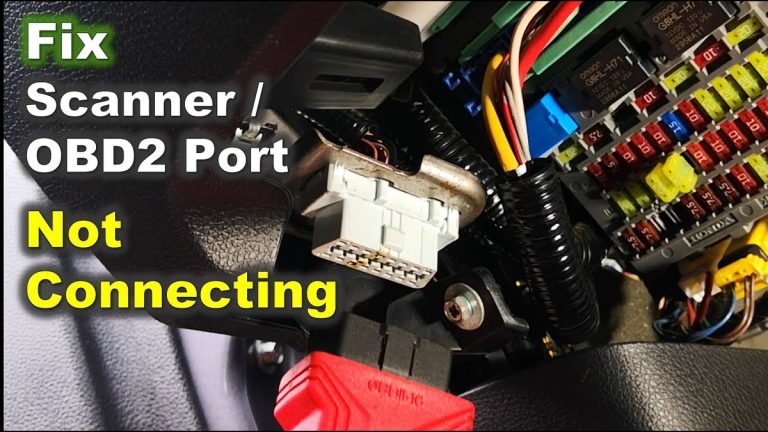
OBD2 scanners connect through a port usually located under the dashboard on the driver’s side. The scanner reads data from the vehicle’s computer using standard protocols. Most 1996 and newer gasoline vehicles in the US are OBD2-compliant, but protocol support varies by make, model, and year.
Some scanners require the ignition in the “on” position without the engine running. Others need the engine running to read live data like alternator output. Check the scanner manual for the correct mode.
Live data can show charging voltage while the engine runs, which helps spot a failing alternator. But an OBD2 scanner cannot measure battery CCA or internal resistance. That’s still the job of a battery tester.
Emissions Readiness, Reset Limitations, App Permissions, Firmware, and When to See a Pro
OBD2 scanners can also check emissions readiness monitors and clear diagnostic trouble codes. But clearing a code is not the same as fixing the problem. If the underlying issue remains, the code will come back.
Some scanners use a smartphone app that requires permissions, account creation, and firmware updates. Review the app’s privacy policy before connecting it to your vehicle. Your VIN and diagnostic data may be stored on the manufacturer’s servers.
If you’re not comfortable interpreting live data or if the problem involves airbags, ABS, or high-voltage systems, see a professional. A qualified technician has factory-level tools and training that consumer scanners cannot match.
Battery Maintenance Tips to Avoid False Readings and Extend Battery Life
Regular maintenance reduces the chance of false test results and extends battery life. Keep the terminals clean and tight. Check the battery case for damage. If your battery has removable caps, check the electrolyte level and top it off with distilled water when needed.
If your car sits for long periods, use a maintenance charger or battery maintainer. A maintainer keeps the battery at a safe charge level without overcharging. This is especially important for vehicles that are only driven on weekends.
Avoid testing a battery right after a drive. The alternator leaves a surface charge that can make voltage readings look higher than the true state of charge. Let the battery rest for at least a few hours, or better, overnight, before testing.
Disposal, Warranty, and Ownership-Cost Considerations
Car batteries contain lead and sulfuric acid, so they must be recycled. Most auto parts stores accept old batteries and many offer a small credit when you buy a replacement. Never throw a battery in the trash.
Battery warranties vary. Some are prorated, meaning the refund decreases with age. Others offer free replacement during the first year or two. Keep your receipt and note the purchase date. If a battery fails during the warranty period, the store will likely test it before honoring the claim. A full charge before that test gives you the best chance of a fair result.
Battery prices vary by type, brand, and CCA rating. A standard flooded battery is usually the least expensive option, while AGM batteries cost more but handle deep discharges better.
- Best for: Charging the battery fully before a health test gives the most accurate CCA and internal-resistance readings.
- Think twice if: You only need a quick state-of-charge check or you’re diagnosing a no-start condition.
- Next step: Charge the battery fully, let it rest overnight, then test it with a quality battery analyzer or multimeter.
Frequently Asked Questions
Yes, but only if you want to check the state of charge. A voltage reading on a discharged battery tells you how much charge is left. For a health test, charge the battery fully first, or the results will be misleading.
Charging time depends on the battery size, the charger’s amp output, and how discharged the battery is. A deeply discharged battery can take 8 to 12 hours on a 10-amp charger. After charging, let the battery rest for several hours before testing.
A fully charged 12-volt lead-acid battery should rest at about 12.6 volts or higher. If it reads below 12.4 volts after a full charge and rest period, the battery may not be holding a charge properly.
Yes. A discharged battery often fails a conductance test even when it is healthy. That is why a full charge and rest period are required before a reliable health test.
A multimeter measures voltage and is fine for a quick state-of-charge check. A battery analyzer measures CCA, internal resistance, and state of health, which makes it the better tool for deciding whether to replace a battery.
Charge the battery fully, let it rest, and test it again. If the tester shows low CCA or high internal resistance after a full charge, replacement is likely the right call. If the battery is cracked, swollen, or leaking, replace it immediately without testing.