Can a Battery Tester Test a Battery While It Is Connected
Yes, a conductance battery tester can safely check a battery while it stays connected to the vehicle. A traditional load tester usually requires disconnecting the battery first to get an accurate reading.
The short answer to “can a battery tester test a battery while it is connected” is yes, but only if you use the right type of tester. A conductance tester can safely check a battery while it stays hooked up to the vehicle, while a traditional carbon-pile load tester usually needs the battery disconnected first.
- Conductance testers work connected: They send a small signal through the battery and can read health without disconnecting.
- Load testers need isolation: Traditional carbon-pile load testers draw high current and require a disconnected battery for accurate.
- Clear surface charge first: Test after the car has sat for hours, or run the headlights briefly, to.
- Match the tester to the battery: Confirm your tester supports your battery’s chemistry, CCA rating, and system voltage before use.
- Never test damaged batteries: Swollen, leaking, or cracked batteries should be replaced, not tested.
The Short Answer: Yes, a Conductance Tester Can Test a Battery While Connected
Conductance testers work by sending a small, low-frequency signal through the battery and measuring how well the internal plates accept it. Because the signal is small, the vehicle’s electrical system doesn’t interfere with the reading. That’s why most modern handheld battery testers can test a battery while it remains connected.
Why Traditional Load Testers Usually Require a Disconnected Battery
A traditional load tester applies a heavy artificial load, often 100 amps or more, to see how much voltage the battery holds under strain. With the battery still connected, that current can flow into the vehicle’s computers, modules, and accessories instead of staying inside the battery. That makes the reading unreliable and can also stress sensitive electronics. Disconnecting the battery isolates it so the load test measures only the battery.
What a Connected Test Can and Cannot Tell You About Battery Health
A connected conductance test can tell you the battery’s state of health as a percentage, its remaining cold cranking amps, internal resistance, and state of charge. What it cannot tell you is whether a parasitic draw is draining the battery, whether the alternator is charging correctly, or whether the battery will survive a long period of storage. Those questions need different tools and different test conditions.
How Connected Testing Works: Voltage, Surface Charge, and True State of Charge
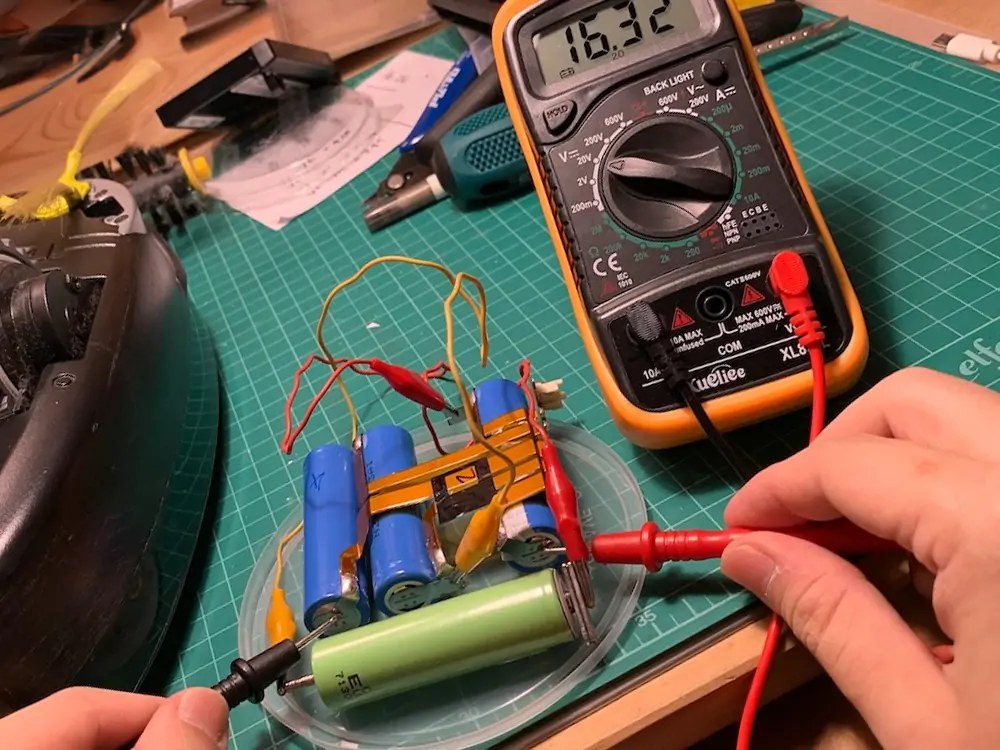
Conductance testing measures the battery’s ability to conduct current through its internal plates. A healthy battery conducts well; a sulfated or aging battery conducts poorly. The tester compares the measured conductance to a reference value for the battery’s rated CCA and reports a health percentage.
State of Charge vs. Battery Health: Two Different Numbers You Should Not Confuse
State of charge tells you how full the battery is, like a fuel gauge. State of health tells you how much usable capacity the battery has left compared to when it was new, like engine compression. A battery can be fully charged at 100% state of charge but still be nearly dead at 30% state of health because it can no longer hold that charge. Always look at both numbers before deciding to replace a battery.
Clearing Surface Charge Before You Test for Accurate Results
Surface charge is a thin layer of higher voltage that forms on the battery plates right after charging or driving. It can make a weak battery look healthier than it really is. To clear it, turn on the headlights for a few minutes or let the car sit for several hours before testing. If you’re testing right after a drive, the reading may be optimistic. This is also why you should check whether to charge a car battery before testing it, since charging right before a test can create the same false reading.
Stop Conditions: When a Damaged, Swollen, or Leaking Battery Should Never Be Tested
If the battery case is swollen, cracked, leaking, or smells like rotten eggs, stop. Do not connect a tester. A damaged battery can release hydrogen gas, sulfuric acid, or in rare cases, catch fire. Disconnect it carefully and replace it.
Connected vs. Disconnected Testing: Which Approach Fits Your Garage and Budget
The choice between connected and disconnected testing comes down to the tool you own and the job you’re doing. For a quick health check, a connected conductance test is fast and safe. For a full electrical system diagnosis, you’ll want to disconnect the battery and run additional tests.
Budget Conductance Testers vs. Professional Diagnostic Units: A Side-by-Side Comparison
| Option | Best for | Owner consideration | Driver consideration |
|---|---|---|---|
| Budget conductance tester | Quick battery health checks at home | Lower upfront cost, no subscription, simple controls | Gives a clear good, weak, or replace result in seconds |
| Professional diagnostic unit | Shops and serious DIYers who test many vehicles | Higher cost, more test modes, printer or app options | More detailed data for charging system and starter diagnosis |
Matching the Tester to Your Vehicle’s Battery Chemistry, CCA Rating, and System Voltage
Before you buy or use a tester, check three things. First, battery chemistry: flooded lead-acid, AGM, EFB, or lithium. Not every tester supports every type. Second, the CCA rating printed on the battery label. Enter the exact rating, not a guess. Third, system voltage: most cars use 12V, but some trucks and commercial vehicles use 24V. Hybrid and EV auxiliary batteries are usually 12V but have special cautions. If you’re comparing tools, a battery tester vs multimeter comparison can help you decide which tool belongs in your garage.
Real-World Tradeoffs: Speed, Accuracy, and Ownership Cost
A budget tester may cost less than a tank of gas and can pay for itself the first time it prevents an unnecessary tow. A professional unit adds more test modes, printer support, and app connectivity, but most home mechanics never need those features. Accuracy depends more on following the instructions than on the price of the tool.
Step-by-Step: How to Test a Battery While It Is Still Connected
Safety First: Correct Connection Order and Terminal Condition Checks
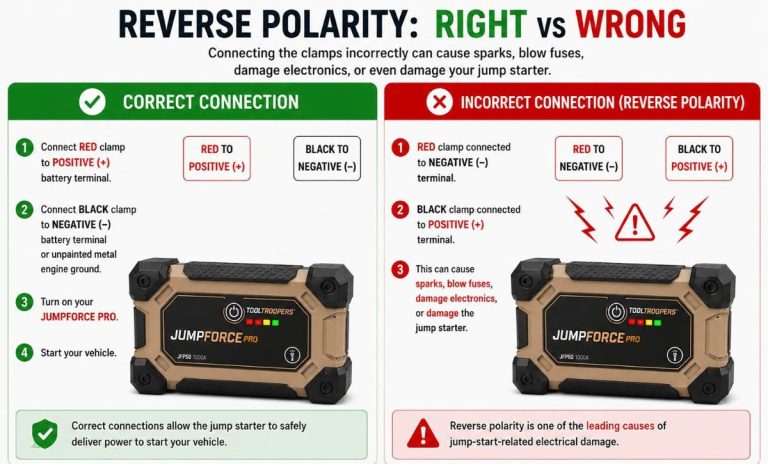
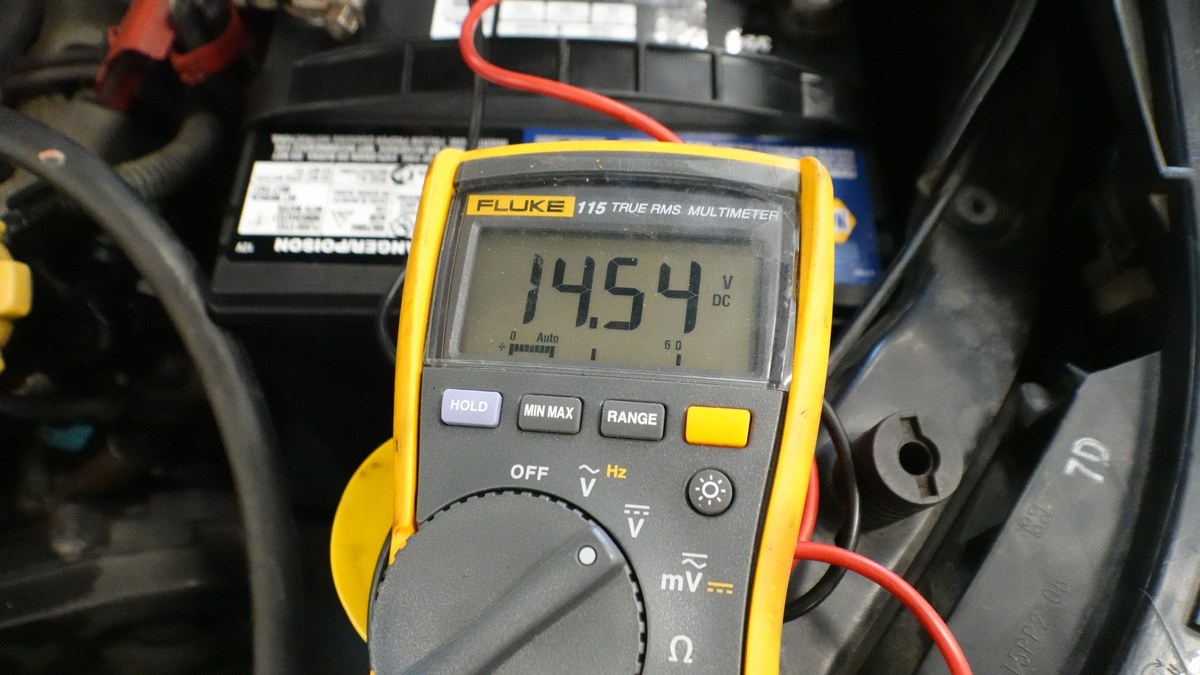
Park the car, turn off the engine, and remove the keys. Put on safety glasses and gloves. Inspect the terminals. If they’re corroded or loose, clean and tighten them first because a bad connection will ruin the reading. Connect the red clamp to the positive terminal, then the black clamp to the negative terminal. Make sure the clamps have solid metal-to-metal contact.
Setting Up the Tester: CCA Rating, Battery Chemistry, and Test Type
Once connected, the tester will ask for the battery type, the rating standard, and the CCA value. Choose flooded, AGM, EFB, or lithium if supported. Use the rating standard printed on the battery label, such as CCA, CA, MCA, or JIS. Enter the CCA number exactly as printed. For a deeper walkthrough, see how to test a battery with a battery tester.
Interpreting the Results: Good, Weak, or Replace — and What Each Means for Your Next Drive
A good result means the battery has enough cranking power for now, so keep testing twice a year. A weak result means the battery is below its rated CCA but may still start the car in warm weather, so plan a replacement soon. A replace result means the battery cannot reliably start the car, so replace it before you get stranded. A good reading doesn’t guarantee the battery will survive a week of extreme cold, but it does mean the internal health is solid. For a fuller explanation of what these results mean, check out what does a battery tester tell you.
When You Should Disconnect the Battery First
Parasitic Draw Testing and Charging System Diagnosis: Why Disconnecting Changes the Picture
A connected battery test measures the battery itself, not the vehicle’s electrical system. If you suspect a parasitic draw, you need to measure current flowing out of the battery with the car off. That requires a multimeter or amp clamp, and the battery usually stays connected so the draw is present. If you suspect the alternator is failing, you need to measure charging voltage with the engine running. A battery tester alone can’t do either job.
Damaged, Swollen, or Leaking Batteries: Stop, Disconnect, and Replace
If the battery is damaged, don’t test it. Disconnect it following the vehicle manual’s procedure, negative first then positive, and replace it. A damaged battery is a safety hazard, not a diagnostic puzzle.
Hybrid and EV 12V Auxiliary Batteries: Extra Cautions and High-Voltage Risks
Hybrid and electric vehicles have a high-voltage traction battery plus a 12V auxiliary battery. The 12V battery is what you can test, but the high-voltage system nearby requires caution. Never touch orange high-voltage cables. If you’re not sure which battery is which, consult the owner’s manual or a professional.
What Your Car’s Computer Adds to the Picture: OBD2 Scanners and Live Data
A battery tester tells you about the battery. An OBD2 scanner tells you about the car’s electrical system. Together, they give you the full picture.
Model-Year and Protocol Coverage: Will Your Scanner Connect to Your Vehicle?
OBD2 is required on all gasoline vehicles sold in the US since 1996. Most scanners cover that range, but some advanced features like bidirectional control or manufacturer-specific codes require a higher-end tool. Check the scanner’s coverage before you buy.
Port Location, Ignition Mode, and Live-Data Limits You Need to Know
The OBD2 port is usually under the driver’s side dash, near the steering column. Some vehicles require the ignition to be in the on position, not running, for the scanner to communicate. Live data like alternator voltage can help confirm a charging problem, but the scanner can only show what the car’s computer reports.
Emissions Readiness, Reset Limitations, and App Permissions: What a Scanner Can and Cannot Do
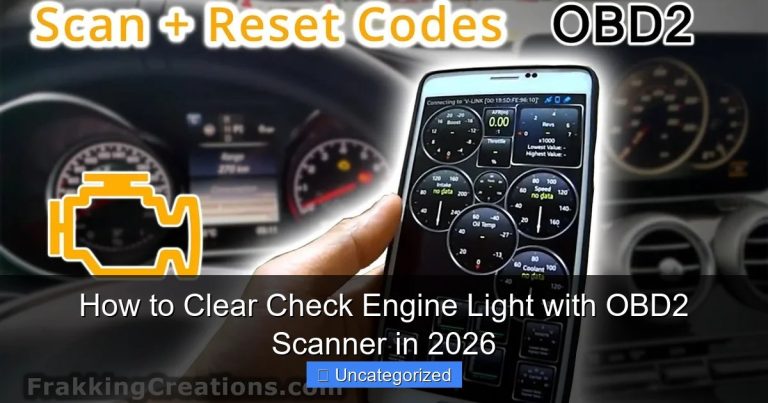
A scanner can read and clear diagnostic trouble codes, but clearing a code doesn’t fix the underlying problem. Some scanners can check emissions readiness monitors, which matters if you need to pass a state inspection. App-based scanners may require account creation, Bluetooth pairing, and location or data permissions. Review the app’s privacy policy before you connect it to your vehicle.
When a Diagnostic Code Means It’s Time to Call a Professional
If you see codes related to the charging system, such as low voltage or overvoltage codes, or if the battery tests good but the car still won’t start, it’s time for a professional diagnosis. A battery tester and scanner together can narrow the problem, but a charging system test with a load pro and a wiring inspection may be needed.
Common Mistakes That Ruin a Connected Battery Test
Testing a Cold Battery, Corroded Terminals, or Loose Clamps: Why Garbage In Means Garbage Out
A battery below about 50°F will read weaker than it is at room temperature. Corroded terminals add resistance that skews the reading. Loose clamps can cause intermittent contact. Fix all three before you trust the result.
Ignoring Firmware Updates and Calibration on Your Tester
Many modern testers receive firmware updates that improve accuracy or add battery types. Check the manufacturer’s website or app for updates. If the tester has a calibration function, follow the instructions. A tester that’s out of date can give you a false replace reading.
How Often to Test: A Simple Maintenance Schedule for Year-Round Reliability
Test your battery twice a year, once before winter and once before summer road-trip season. If you live in a hot climate, test more often because heat is hard on batteries. If the tester shows a declining health percentage between tests, start planning a replacement.
- Clean and tighten terminals before every test
- Clear surface charge before testing after a drive
- Enter the exact CCA rating from the battery label
- Test twice a year and track the health percentage
- Test a swollen, leaking, or cracked battery
- Trust a reading from a cold or recently charged battery
- Clear diagnostic codes before recording them
- Ignore a weak result and hope it lasts through winter
The Bottom Line: Trust the Test, Then Take the Right Next Step
What a Pass or Fail Really Means for Your Daily Driver
A pass means the battery has enough cranking power today. It doesn’t mean the battery is new, and it doesn’t guarantee performance in extreme cold. A fail means the battery is below the threshold for reliable starting. Trust the test, but understand its limits.
Your Next Steps: Recharge, Replace, or Schedule a Professional Diagnosis
If the state of charge is low but health is good, recharge the battery and retest. If health is weak or the tester says replace, replace the battery before you get stranded. If the battery tests good but the car still won’t start, schedule a professional charging system and starter diagnosis.
- Best for: Home mechanics who want a fast, safe battery health check without disconnecting the battery.
- Think twice if: You need to diagnose parasitic draws, alternator output, or starter problems, since a battery tester alone won’t cover those.
- Next step: Confirm your tester supports your battery’s chemistry and CCA rating, then test twice a year.
Frequently Asked Questions
Yes, a conductance tester can safely test a battery while it remains connected. Traditional load testers usually require disconnecting the battery first because they draw high current that can interfere with the vehicle’s electronics.
A conductance tester sends a small signal through the battery and measures internal resistance to estimate health. A load tester applies a heavy artificial load and measures how much voltage the battery holds under strain.
Only if you’re using a traditional load tester. Conductance testers are designed to work with the battery connected, which makes them faster and safer for home use.
No, a battery tester only measures the battery itself. To diagnose an alternator, you need a multimeter or a charging system test that measures voltage with the engine running.
Test at least twice a year, before winter and before summer road-trip season. If you live in a hot climate or have a battery older than three years, test more often.
A weak result means the battery is below its rated CCA but may still start the car in mild weather. It’s a warning to plan a replacement before the battery leaves you stranded.