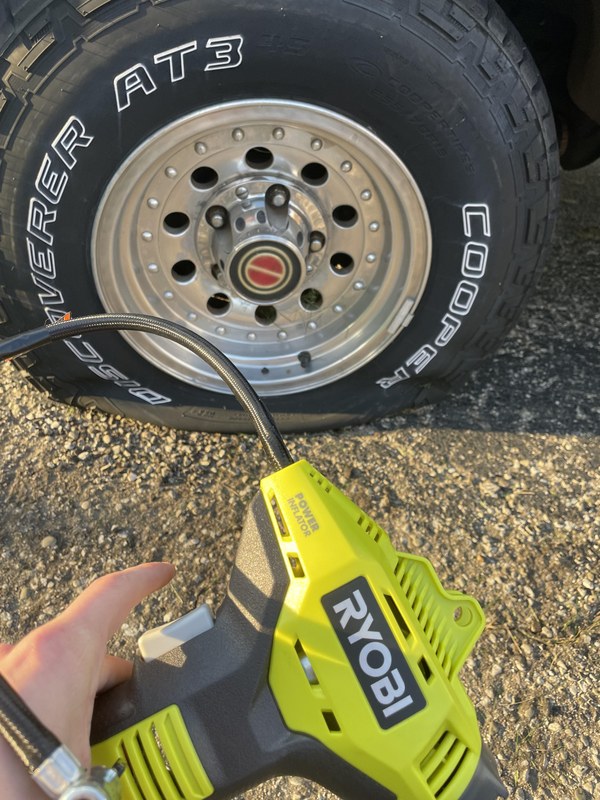
Can a Portable Tire Inflator Inflate Truck Tires? Yes, with Limits
Yes, a portable tire inflator can inflate most light-duty truck tires, but heavy-duty LT tires may exceed its pressure, airflow, or duty-cycle limits. Match the inflator to your door placard pressure and tire volume before relying on it.
The short answer to can a portable tire inflator inflate truck tires is yes — for many light-duty pickups and SUVs — but the limits matter as much as the answer. A small handheld pump can top off a half-ton truck’s tires, while a heavy-duty work truck with LT tires may need more pressure and airflow than a compact unit can deliver. The real question is whether the inflator you own, or plan to buy, matches your truck’s tire size, pressure needs, and how often you will use it.
- Cold pressure: Use the door-jamb placard, not the sidewall maximum, as your inflation target.
- Volume matters: LT tires take longer to fill than P-metric tires, even at the same pressure.
- Duty cycle: Long fills overheat small pumps; let them cool or they will shut off.
- Power type: 12V, cordless, and battery-clamp units fit different trucks and tire sizes.
- Safety first: Check cables, battery condition, and roadside visibility before inflating.
The Short Answer: Yes, with Limits
Most portable tire inflators can handle the tires on a half-ton pickup or a full-size SUV. These trucks often run P-metric tires at 35 to 45 psi, which sits inside the rated range of many portable pumps. The limits appear when you move to LT tires, larger wheels, or tires that have lost most of their air.
An inflator that tops off a car tire in two minutes may need five or ten minutes on a truck tire. That longer run time pushes the pump harder and exposes weak points in duty cycle, heat management, and power delivery. Knowing those limits before you need them on the roadside is the whole game.
What “Truck Tire” Means for a Portable Inflator
The phrase “truck tire” covers a wide range. A light-duty tire on a Ford F-150 or Ram 1500 is very different from an LT tire on a heavy-duty Silverado 2500 or a commercial work truck. Portable inflators are not all built to the same standard. Some are designed for occasional topping off, while others are built for continuous air delivery.
Your truck’s owner’s manual and the tire sidewall tell you the pressure range. The door-jamb placard tells you the correct cold pressure for normal use. Match the inflator to that number, not to the size of the truck.
What Truck Tires Demand From a Portable Inflator

Truck tires demand two things from an inflator: enough pressure to reach the target, and enough airflow to get there in a reasonable time. Pressure alone is not the whole story. A pump rated for high pressure can still be too slow if it moves very little air per minute.
Door-Jamb Placard vs. Sidewall Max Pressure: Cold Pressure Rules
Always use the cold pressure listed on the driver’s door-jamb placard, not the maximum pressure molded into the tire sidewall. The sidewall number is the tire’s structural limit, not your target. Cold means the truck has been sitting for at least a few hours or has been driven less than a mile.
Inflate to the placard number and recheck later when the tire is cold. A tire that reads correct when warm can be underinflated when cold. This matters more on trucks because the larger tire volume amplifies pressure swings from temperature changes.
LT vs. P-Metric Tires and the Volume Problem
P-metric tires are passenger-style tires often fitted to light trucks. They offer a softer ride and lower pressure requirements. LT tires are built for heavier loads, with thicker sidewalls and more internal volume. That extra volume is the problem.
A pump that fills a P-metric tire in two minutes may take two or three times longer on an LT tire because it has to move more air. This is why knowing how long a portable tire inflator takes to fill a tire matters before you rely on one for a truck. The difference between a quick top-off and a long, overheating fill is often just the tire size.
12V, Cordless, or Battery Clamps: Which Power Type Fits Your Truck?
Portable inflators come in three main power styles. Each one fits a different truck owner, and the right choice depends on your tires and your typical situation.
Side-by-Side Comparison: Same Criteria, Different Winners
| Power Type | Best For | Owner Consideration | Driver Consideration |
|---|---|---|---|
| 12V accessory outlet | Topping off light-truck tires | Limited by the outlet’s amperage and the truck’s wiring | No hood access needed; works from the cab |
| Cordless battery pack | Quick top-offs without cords | Battery runtime and replacement cost add up | Easy to store; may not finish a large LT tire on one charge |
| Battery clamp (direct) | Heavy-duty and LT tires | Delivers stronger power; needs hood access | Requires correct connection order and battery safety steps |
If you only top off a half-ton pickup, a 12V unit may be enough. If you run LT tires on a heavy-duty truck, a direct-connect or high-output cordless unit is a better match. Match the power type to the biggest tire you plan to fill, not the one you fill most often.
Duty Cycle and Heat: Why the Pump Burns Out Before the Tire Fills

Duty cycle is the ratio of running time to rest time. A 30 percent duty cycle usually means the pump can run for 3 minutes and then needs 7 minutes of rest. Truck tires can easily push a small pump past that window.
Understanding Duty Cycle and Real-World Fill Times
Filling a completely flat truck tire can take 10 minutes or more with a small portable unit. If the pump has a short duty cycle, it will shut off long before the tire reaches pressure. This is the same reason a portable tire inflator keeps shutting off during long fills.
Heat builds up inside the pump, and thermal protection kicks in to prevent damage. Repeatedly ignoring the duty cycle can shorten the pump’s life and leave you stranded. Let the pump cool, or it will fail when you need it most.
TPMS, Relearn, and When to Stop Inflating
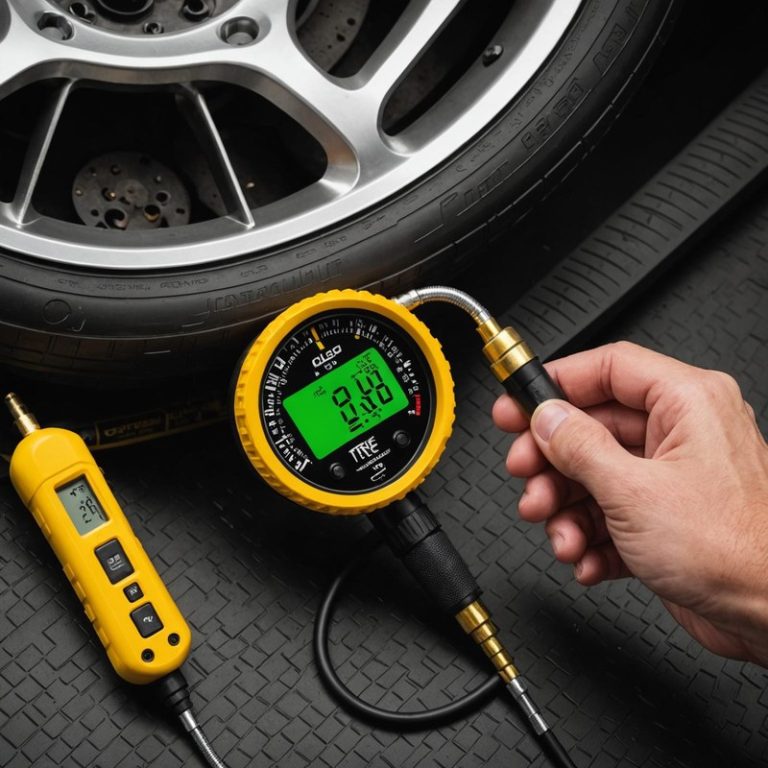
Most trucks built after 2007 have a tire pressure monitoring system, or TPMS. The system warns you when pressure drops, but it does not replace a good tire gauge. The inflator’s gauge and a handheld gauge together give you a more reliable reading.
TPMS Relearn Limits and Sensor Compatibility
When you inflate a tire, the sensor reads the new pressure. In many vehicles, the warning light turns off automatically once pressure is corrected. Some trucks require a TPMS relearn procedure after rotation or sensor replacement.
If the light stays on after you have set the correct cold pressure, check the owner’s manual for the relearn steps or see how to reset the TPMS light after a tire rotation. Overinflating to force the light off is not a fix. It stresses the sensor and makes the tire unsafe.
Puncture Location, Temporary-Repair Limits, and Professional Thresholds
A portable inflator is a temporary tool. It can get you to a shop, but it does not repair a puncture. The location of the damage matters. Sidewall punctures are generally not repairable, and driving on a plugged sidewall is unsafe.
If the tire is losing air faster than the inflator can keep up, stop and call for professional help. A tire that needs constant re-inflation has a problem no portable pump can solve. Know the difference between a slow leak you can manage and a failure you cannot.
Safe Roadside Inflation: Location, Visibility, and Equipment Checks
Using an inflator on the side of a highway is different from using it in a driveway. Your safety depends on location and visibility, not just the pump’s performance.
Safe Location and Traffic Visibility
Pull as far off the road as possible onto a flat, stable surface. Turn on your hazard lights. If you have flares or reflective triangles, place them well behind the truck. Never kneel or crouch in a lane of traffic.
If the low tire is on the traffic side, wait for help rather than risk your safety. A tow truck or roadside service call costs less than a hospital visit. Your life is worth more than the time you save.
Cable, Pack, and Connection Condition Checks
Before connecting anything, inspect the inflator’s hose, power cord, and clamps. Look for cracked insulation, frayed wires, or loose fittings. A damaged cord near a hot engine or a moving belt is a real hazard.
Check the battery clamps for corrosion and make sure the connections are tight before starting. A loose connection can cause arcing, which is dangerous near a battery. When in doubt, replace the damaged part or use a different power source.
Battery and Electrical Cautions for Truck Owners
Direct-connect inflators draw power from the truck’s battery. That creates a few electrical risks worth understanding before you clip on the clamps.
System Voltage, Battery Chemistry, and State of Charge vs. Health
Most trucks use a 12-volt electrical system, but some heavy-duty and hybrid trucks differ. Confirm the inflator’s voltage rating matches the vehicle before connecting. A battery with a low state of charge may not have enough power to run the inflator and start the truck afterward.
State of charge is how full the battery is right now. State of health is how much capacity it has lost over time. Both matter. A weak battery can fail mid-fill, leaving you with a flat tire and a truck that will not start.
Correct Connection Order, Damaged-Battery Stop Conditions, and Hybrid/EV Cautions
Connect the red clamp to the positive terminal first, then the black clamp to a clean metal ground away from the battery. Follow the reverse order when disconnecting. If the battery case is cracked, swollen, or leaking, stop immediately.
Do not connect to a damaged battery. Hybrid and electric trucks have high-voltage systems under the hood. Only touch the 12-volt battery area, and follow the vehicle manual’s warnings before you do anything else.
Best Portable Inflators for Trucks in 2026
Choosing the right inflator starts with honest evaluation criteria, not marketing claims. The best unit for your truck depends on tire size, pressure needs, and how you plan to use it.
Evaluation Criteria and Evidence Limits
We have not tested these products in our own garage. The guidance below is based on published manufacturer specifications, general owner feedback, and the physical demands of truck tires. Check the current product page before buying, because models and specifications change between revisions.
Look for four things: a maximum pressure rating above your truck’s placard pressure, a duty cycle long enough for your biggest tire, a gauge you can read, and a power source that fits your truck. Ignore inflated claims and focus on those numbers.
Top Picks for Light-Duty and Heavy-Duty Trucks
For light-duty trucks, look for a 12V or cordless inflator with a high maximum pressure rating, a digital gauge, and a duty cycle long enough to top off a tire. Compact units are fine for occasional use, but they will be slow on larger tires.
For heavy-duty trucks with LT tires, choose a larger unit with higher airflow and a metal pump cylinder. These units cost more and take up more space, but they finish the job before they overheat. If you want a focused list, see our guide to the best tire inflator for trucks.
Drawbacks, Alternatives, Warranty, and Transparent Verdict
Every portable inflator has a trade-off. Compact units are easy to store but slow. High-output units are faster but heavier and more expensive. Alternatives include a 12V air compressor with a small tank, a gas station air hose, or an onboard air system for serious off-road use.
Warranty terms vary by brand, so read the warranty card before you rely on it. A longer warranty often signals better build quality, but it does not guarantee performance. Compare the numbers, not just the brand name.
Ownership Cost and Next Steps
The price tag is only the beginning. A cheap inflator that fails on the roadside costs more than a reliable one, especially when you factor in a tow bill.
What You’ll Spend Over Time
A mid-range unit with a good duty cycle is often the better value for truck owners. It costs more upfront but avoids the frustration of a pump that cannot finish the job.
Your Next Steps Before Buying
- Confirm your truck’s cold tire pressure from the door placard
- Check the inflator’s rated maximum pressure and duty cycle
- Choose a power type that matches your truck and typical use
- Read the warranty and return policy before purchase
- Test the inflator at home before you need it on the road
Testing at home is the single best step you can take. Fill a tire, time the process, and feel how hot the unit gets. That one test tells you more than any spec sheet.
- Best for: Light-duty and some heavy-duty truck owners who need reliable top-offs and occasional flat-tire fills.
- Think twice if: You regularly air down and refill large LT tires or need to fill fully flat commercial tires.
- Next step: Check your door placard pressure, then compare inflator specs against that number before you buy.
Frequently Asked Questions
Yes, for many light-duty truck tires, but limits exist. The inflator must reach the truck’s recommended cold pressure and deliver enough airflow to fill the tire’s volume. Heavy-duty LT tires may require a higher-output unit.
Check the door-jamb placard for the correct cold pressure, usually between 35 and 80 psi for trucks. The sidewall maximum is a structural limit, not a target. Choose an inflator rated above your placard pressure so it does not struggle near the end of the fill.
The pump likely exceeded its duty cycle and triggered thermal protection. Truck tires take longer to fill, which builds heat quickly. Let the unit cool completely before continuing, or choose a model with a longer duty cycle.
Some can, but battery runtime is the main limit. LT tires have more internal volume and take longer to fill, which drains the battery faster. Check the runtime rating and carry a spare battery for large tires.
A portable inflator can get you to a shop, but it does not repair the puncture. Sidewall punctures are generally not repairable. If the tire loses air faster than the inflator can keep up, stop and call for professional help.
It depends on the tire size, the inflator’s airflow, and the target pressure. A small unit may take 10 minutes or more. A high-output unit can be faster, but duty cycle limits how long it can run without a break.