How Long Does It Take a Portable Tire Inflator to Fill a Tire
Most passenger tires take about 2–5 minutes to reach the door-placard pressure with a portable tire inflator. Fill time depends on flow rate, tire size, and the gap between your starting and target pressures.
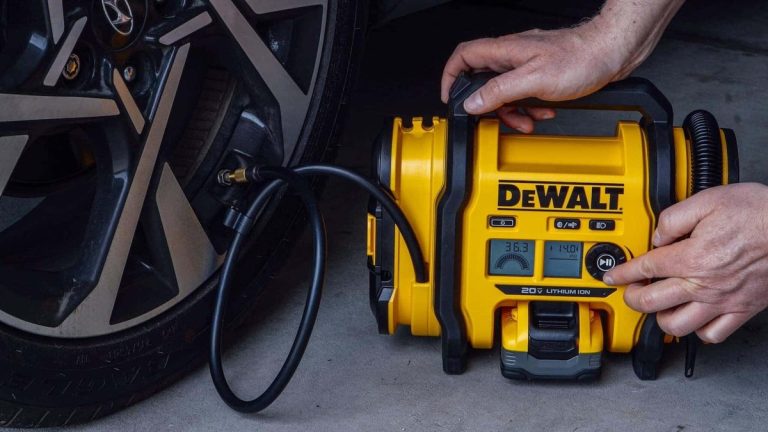
How long does it take a portable tire inflator to fill a tire? For most passenger cars, the honest answer is two to five minutes from a low tire up to the pressure listed on the driver’s door placard. The wait depends on airflow, tire size, and how much air the tire actually needs. This guide explains the specs that matter, compares inflator types, and covers the safe steps to top off a tire without guesswork.
- Typical fill time: Plan for 2–5 minutes for most passenger-car tires from low to placard pressure.
- Specs matter: Flow rate, tire volume, and the pressure gap set the real pace, not the.
- Type trade-offs: 12V, cordless, and direct-battery inflators differ in speed, battery limits, and connection steps.
- Safety first: Work away from traffic, avoid overinflation, and treat plug kits as temporary fixes only.
- Maintenance: Respect the duty cycle and inspect hoses, cables, and clamps before and after every.
The Short Answer: 2 to 5 Minutes for Most Passenger Tires
For a typical car or crossover tire, plan on two to five minutes to go from a noticeably low tire, around 20 psi or less, to about 32–35 psi. A compact spare can fill faster, while a larger SUV or light-truck tire can push past five minutes.
Three numbers control the total time: how fast the inflator moves air, how much air the tire holds, and the gap between your starting and target pressures.
What Determines Inflation Time: Flow Rate, Tire Volume, and Pressure Delta
Flow Rate and Pressure Ratings: What the Specs Really Mean
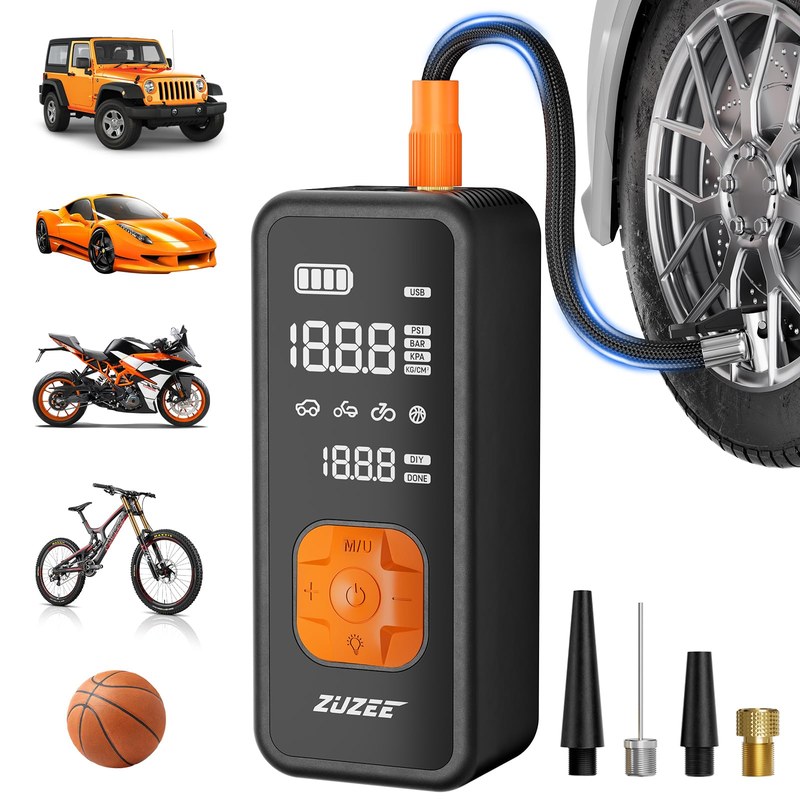
Portable inflators list airflow in liters per minute or cubic feet per minute. That number usually describes the pump with no backpressure, so real airflow drops as tire pressure climbs. A higher-rated model will typically fill faster, but the difference between two models is not always as large as the spec sheets suggest.
The pressure rating shows how much the pump can push against. Most portable inflators handle passenger-car pressures easily, and many claim they can reach truck pressures. If you air up heavy-duty tires often, look for the published flow at the pressure you actually need, not just the maximum figure.
Tire Size, Cold Pressure, and the Door-Jamb Placard
A sedan tire holds far less air than a 33-inch off-road tire, so the sedan fills faster on the same inflator. That is why “one minute per tire” needs a qualifier: which tire, starting pressure, and target pressure.
Your correct target pressure is printed on the placard inside the driver’s door frame, not on the tire sidewall. The sidewall number is the maximum, not the recommended setting. If you move up to larger tires, check whether a portable tire inflator can inflate truck tires before relying on one off-road.
Portable Inflator Types Compared: 12V, Cordless, and Direct-Battery
The power source also shapes fill time. The three main types have trade-offs in speed, battery drain, and connection steps.
12V Cigarette-Lighter Inflators: Convenient but Current-Limited
Most cars have a 12V socket, so this is the easiest type to keep in the trunk. The socket wiring and fuse limit how much current the compressor can draw, which often caps the real fill speed. Some models slow noticeably on larger tires or when the engine is off.
For occasional top-offs on passenger cars, a 12V inflator is a practical choice. For repeated heavy use, the limits become obvious.
Cordless Lithium-Ion Inflators: Battery Chemistry and State of Charge vs. Health
Cordless inflators run on an internal battery, so they reach all four tires without a power cord. Fill time depends on the battery’s charge, age, and the outdoor temperature. A cold battery delivers less current, which slows the pump and cuts the number of tires you can fill before a recharge.
Check the stated pressure range and run time before buying. A cordless unit that promises high flow may not finish two large tires when its battery is half charged.
Direct-Battery Clamp Inflators: Connection Order, System Voltage, and Hybrid/EV Cautions
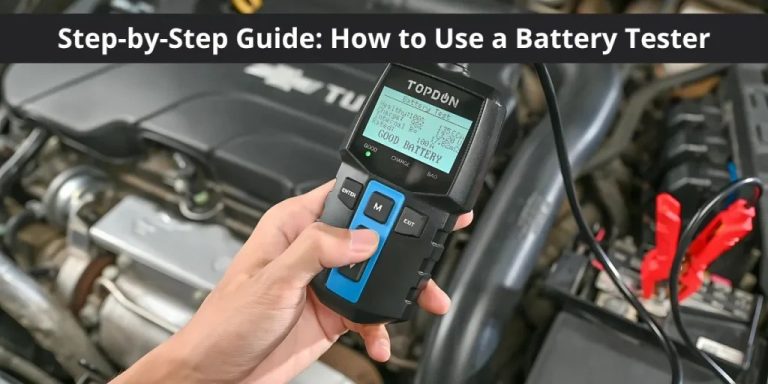
Direct-battery inflators clamp onto the 12V battery terminals and draw power straight from the electrical system. They often fill faster because they bypass the socket fuse limit. Connect the red clamp to the positive terminal and the black clamp to a clean ground or negative terminal, following the manual’s exact order.
| Type | Best for | Owner consideration | Driver consideration |
|---|---|---|---|
| 12V cigarette lighter | Occasional passenger-car top-offs | Socket fuse limits current and speed | Keep the engine running or check socket behavior when parked |
| Cordless lithium-ion | Road trips and top-offs away from car power | Battery charge, age, and cold weather reduce output | Recharge and store the pack before the next use |
| Direct-battery clamp | Faster fills and repeated use | Connection steps are safety-sensitive, especially on hybrids and EVs | Firm clamps and correct polarity reduce spark and voltage risk |
How to Fill a Tire Accurately Without Confusing the TPMS
Gauge Accuracy, Cold Pressure, and Overinflation Risks
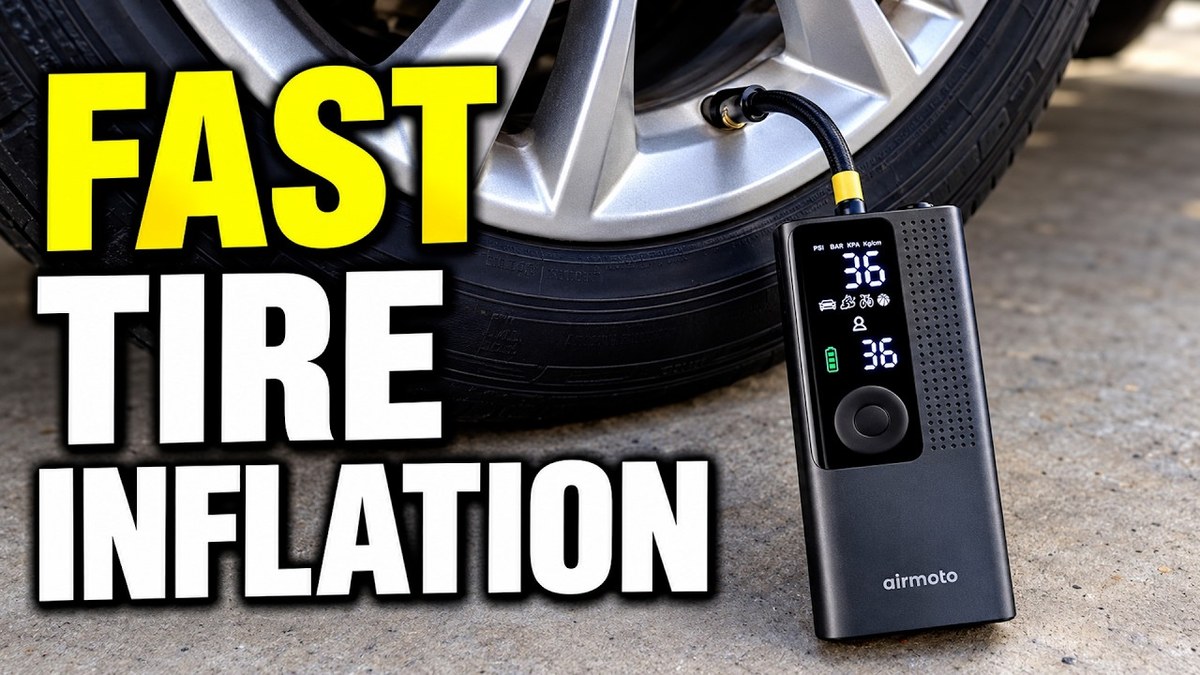
Filling a tire is only useful if the final number is right. Many built-in gauges are convenient but not laboratory-grade, so check the reading against a separate handheld gauge every few fills. That is also why it helps to know how accurate portable tire inflator gauges are.
Cold pressure matters too: the placard number applies when the tire has been sitting for a few hours, not right after a long drive. Overinflation stiffens the ride and puts extra wear on the tread center. If you overshoot, release air slowly and recheck.
TPMS Relearn Limits and When a Professional Is Required
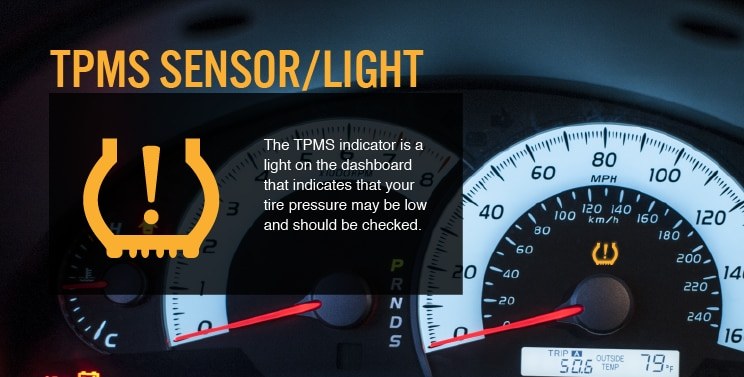
Simply adding air does not normally trigger a TPMS relearn. The light comes on when pressure drops below the threshold and usually turns off after you fill the tire correctly. A relearn is typically needed after rotating tires, replacing sensors, or swapping seasonal wheels.
Some newer vehicles need a specific relearn procedure that a basic tool cannot perform. If the TPMS light stays on after every tire is at the placard pressure, check the owner’s manual or have the system diagnosed — it may be a failing sensor battery rather than a fill problem.
Roadside Inflation: Safe Location, Visibility, and Repair Limits
Safe Location, Traffic Visibility, and Move-Over Laws
If you are filling a tire on the side of the road, your first job is to be seen. Pull as far off the pavement as possible, switch on the hazard lights, and set up on the passenger side when the road allows. A driver fixing a tire on the driver’s side of a highway shoulder is exposed to oncoming traffic.
Puncture Location, Temporary-Repair Limits, and Professional-Repair Thresholds
A minor leak in the tread can sometimes be patched, but a sidewall cut usually means replacement. Plug kits are temporary fixes, not permanent repairs, and a plug in the wrong location can fail at highway speed. If you are unsure how long you can drive with a nail in the tire, get the tire inspected before you trust it again.
Duty Cycle and Maintenance: Protecting Your Inflator
Understanding Duty Cycle and Overheating
Portable compressors run hot, and most have a duty cycle — a maximum continuous run time before they need to cool. Ignoring it can trip a thermal cutoff, which feels like a dead unit mid-fill. That is a common reason portable tire inflators keep shutting off before reaching the set pressure.
Plan your fill in stages: inflate one tire, disconnect, let the unit rest for the time the manual specifies, then move to the next tire.
Post-Use Inspection, Cable Condition, and Storage Requirements
After each use, inspect the hose for cracks, check the power cable for worn insulation, and confirm the connector fits snugly. A damaged cable on a 12V or clamp-style unit can overheat or spark. Store the inflator in a dry place where the hose can’t kink and the battery, if it has one, won’t drain to zero in freezing temperatures.
Buying Guide: What to Look For in a Portable Tire Inflator
Evaluation Criteria and Evidence Limits
Separate marketing numbers from testable reality. Look for the published flow rate at a real working pressure, the duty cycle, the pressure range, the power connection type, and the warranty. Also consider how the product stores in your trunk and whether replacement hoses or batteries are easy to find.
Smart Inflators: App Permissions and Firmware Updates
Some inflators connect to a phone app for digital pressure settings and leak checks. These can be helpful, but they add account setup, app permissions, and firmware updates. Before sharing your location or vehicle information, check the app’s privacy policy and see whether the inflator works normally without the app running.
Which Inflator Fits Your Driving Habits? Compatibility, Drawbacks, and Alternatives
Match the inflator to how you drive. A commuter who tops off a sedan twice a month will be fine with a simple 12V unit. A road-trip family with an SUV may want a cordless or direct-battery model. An off-road driver needs a compressor that handles large tires and long run times without overheating.
If you mainly chase slow leaks, a simple inflator plus a good handheld gauge is enough. For a broader look at models, start with our guide to the best portable tire inflators and compare the specs that apply to your vehicle.
Warranty, Support, and Ownership Cost
Portable inflators are not expensive to replace, but prices vary. Entry-level 12V units cost the least, cordless models cost more because of the battery, and premium direct-battery compressors sit at the top. Check the warranty term, the support contact, and whether the battery is replaceable or the whole unit must be swapped when it wears out.
The Verdict: How Long Should You Wait?
The honest answer holds: most passenger tires fill in two to five minutes with a properly functioning portable inflator. Give the unit a rest between tires, confirm the placard pressure with a reliable gauge, and don’t ignore an inflator that overheats or a tire that loses air quickly. The inflator is a tool, not a repair shop — know when to use it and when to call a professional.
- Best for: Most drivers with passenger cars, crossovers, and light SUVs will get a practical fill in 2–5 minutes from a quality portable inflator.
- Think twice if: You drive large trucks, off-road vehicles, or hybrids and EVs with unusual battery access — you need a higher-flow unit and extra connection caution.
- Next step: Check your door placard, confirm your inflator’s flow rate and duty cycle, and test the unit on a cold tire before you need it in an emergency.
Frequently Asked Questions
No. The range applies to typical passenger-car tires with a functioning inflator that has reasonable airflow. Smaller tires fill faster, while larger truck, SUV, or off-road tires can take several minutes longer.
Many can, but they run slower and may hit their duty-cycle limit before the tire reaches pressure. Check the inflator’s published flow rate and pressure range, and use a larger or direct-battery unit for heavy-duty tires you fill often.
The most common cause is internal heat tripping the thermal cutoff. Let the unit cool for the time the manual specifies, and check the 12V socket or battery connection for a poor contact that can cut power.
Use it as a guide, not a final answer. Built-in gauges vary in accuracy, so compare the reading with a separate handheld gauge and set the final pressure based on the placard value.
Usually no. Filling a low tire to the correct pressure normally turns the light off after a short drive. A relearn is typically needed after a rotation, sensor replacement, or wheel change, and some vehicles require a professional procedure.
Keep it in a dry place where the hose won’t kink, the cable won’t get pinched, and the battery won’t drain completely in cold weather. Inspect the hose, clamps, and cable for damage before every road trip.