Tire Inflator vs Air Compressor for Car Tires: Which Is Safer?
A tire inflator is usually the safer everyday choice for car tires because it is simpler, easier to store, and less likely to be misused. An air compressor makes more sense for frequent inflation, larger vehicles, or home garage use when you can manage heat, power, and setup carefully.
When comparing tire inflator vs air compressor for car tires, the safer choice is usually the one that matches your tire size, power source, and how often you need to add air. For most drivers, a compact inflator is safer for quick top-offs, while a larger compressor makes sense for home garages and frequent use if you follow the manual closely.
- Safer for most drivers: A compact tire inflator is easier to use correctly for quick top-offs.
- Best for frequent use: A compressor fits garage routines and larger tires better.
- Check first: Use the door-jamb placard and cold tire pressure, not the sidewall number.
- Watch the limits: Heat, hose leaks, weak batteries, and overinflation are the main risks.
- Stop if needed: Repeated pressure loss or tire damage needs professional inspection.
Tire Inflator vs Air Compressor for Car Tires: Which Is Safer and Which One Fits Your Car?
Quick answer: when a tire inflator is the safer everyday choice and when an air compressor makes sense
A tire inflator is often the safer everyday pick because it is smaller, simpler, and easier to stop at the right pressure. A shop-style or home air compressor can be safer for repeated use and larger tires only if it has the right output, hose quality, and pressure control for the job.
The real safety issue is not the name on the tool. It is whether the tool helps you fill to the placard pressure without overheating, overfilling, or creating electrical and hose problems. If you want a deeper look at tool life and durability, see our guide on portable air compressor lifespan.
Why this comparison matters for U.S. drivers in 2026
U.S. drivers rely on tire inflation for daily commuting, school runs, road trips, rideshare work, and winter cold-weather top-offs. Small pressure errors can affect handling, wear, fuel use, and TPMS warnings, so the tool you keep in the trunk or garage should be easy to use under stress.
It also matters because many drivers now buy cordless inflators, compact 12V units, or small compressors online without checking tire size, power draw, or duty cycle. That can turn a simple fix into a dead battery, a hot hose, or a tire filled beyond the recommended pressure.
How Tire Inflators and Air Compressors Work: Same Goal, Different Risk Profile
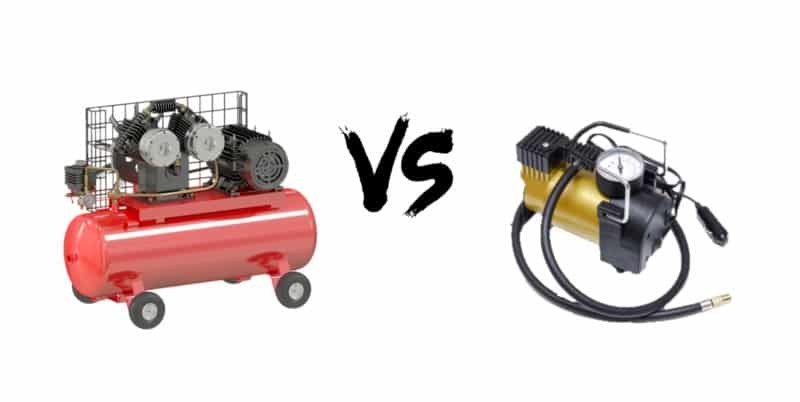
Portable 12V inflators, battery-powered inflators, and compact compressors explained
Most car tire inflators are designed for short jobs. They connect to a 12V outlet, clamp to the battery, or run on a rechargeable battery pack, then move enough air to raise tire pressure gradually.
Air compressors are broader tools. Some are small and portable, while others are garage units meant for longer run times, air tools, or repeated inflation. For car tires, they can do the same basic task, but they often bring more power, more noise, and more setup steps.
Pressure output, airflow, duty cycle, and heat buildup
Pressure output tells you how much force the unit can deliver. Airflow tells you how fast it can move air. Duty cycle matters because many small inflators are not meant to run nonstop for long periods, and heat buildup can damage the tool or make it shut down.
That is why a tool with a strong pressure rating is not automatically the best choice. If the hose, motor, or battery cannot handle continuous use, the unit may slow down, get hot, or stop before the tire reaches the correct pressure.
What “safer” means in real-world use: overinflation, overheating, and user error
Safer means fewer chances to make a mistake and fewer chances for the tool to fail in a way that creates a problem. For tire inflation, the main risks are overinflation, overheating, damaged cords or hoses, and poor gauge readings.
It also means the tool should be easy to use in low light, in traffic, or in a driveway without forcing the driver to guess. A simple tool with a clear gauge is often safer than a faster tool with confusing controls.
Safety Comparison Side by Side: Which Tool Is Better for Car Tires?
Speed, accuracy, and the chance of overfilling a tire
A tire inflator is usually safer for occasional top-offs because it is slower and easier to monitor. That slower pace gives the driver more time to stop at the correct PSI.
A compressor can be faster, but speed can work against accuracy if the gauge is hard to read or the hose connection leaks. If you want a simple buying framework, our best portable tire inflator guide explains the kinds of features that matter most for everyday use.
Noise, heat, hose quality, and electrical load
Smaller inflators are often noisy, but larger compressors can be louder and may create more vibration. Heat is another concern, especially when a unit runs near its duty-cycle limit.
Hose quality matters because weak fittings can leak air or pop off under pressure. Electrical load matters too, especially with 12V plug-in units that can stress a weak outlet, a tired battery, or a poor-quality extension cord.
Emergency use vs routine maintenance use
For roadside emergencies, a compact inflator is usually the safer and more practical choice. It is easier to store, easier to grab, and less likely to require extra setup when you are dealing with traffic or bad weather.
For routine garage maintenance, a compressor can be the better fit if you inflate multiple vehicles, trailers, or larger tires. It is also a better match when you want to handle repeated inflation without waiting for a small motor to cool down.
Which option is safer for compact cars, SUVs, trucks, and families
Compact cars usually do well with a basic inflator because their tires are smaller and easier to fill. SUVs and trucks may benefit from a stronger compressor or a higher-output inflator, especially if tire pressures are higher or tire volume is larger.
For families, the safer choice is often the one that is simplest for any adult to use under stress. That usually means clear controls, a visible gauge, and enough hose length to reach all four tires without awkward cable routing.
| Option | Best for | Owner consideration | Driver consideration |
|---|---|---|---|
| Portable tire inflator | Emergency top-offs and small-to-mid-size passenger vehicles | Lower storage burden and simpler maintenance | Usually easier to use quickly with less setup |
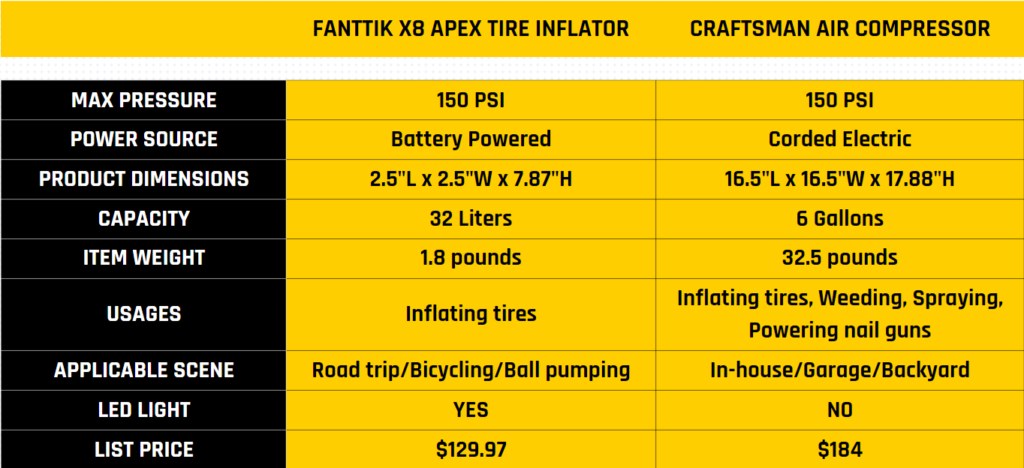
| Air compressor | Home garage use, frequent inflation, and larger tires | More output, but more upkeep and space needed | Can be faster, but may be louder and less portable |
How to Choose the Right Tool for Your Vehicle and Driving Habits
Checking the door-jamb placard and cold tire pressure before filling
Start with the door-jamb placard, not the number molded into the tire sidewall. The placard lists the vehicle maker’s recommended cold pressure for your exact trim and load setup.
Cold pressure means the tires have sat long enough that driving heat has not raised the reading. That matters because a warm tire can look underinflated or overinflated compared with its true cold pressure.
Matching the tool to tire size, PSI range, and inflation frequency
If you only need to add a few PSI a few times a year, a compact inflator is usually enough. If you are correcting low pressure often, filling larger tires, or topping off multiple vehicles, a stronger compressor may save time and reduce frustration.
Also check the tool’s stated pressure range and whether it can realistically reach your tire’s target PSI without running continuously. A tool that works fine on a sedan may struggle with a heavy SUV or pickup.
When a driver should choose a portable inflator, a shop compressor, or both
Choose a portable inflator if you want something for the trunk, emergency kit, or travel bag. Choose a shop compressor if you have a garage, a stable power setup, and regular inflation needs.
Many households benefit from both. A portable unit handles the road, while a compressor handles home maintenance, seasonal pressure checks, and larger jobs.
Ownership cost, replacement parts, and long-term value
Cost is not only the purchase price. You should also think about replacement hoses, batteries, adapters, seals, and storage space. Some units are cheap upfront but become annoying if the hose cracks or the battery ages quickly.
If you are comparing value over time, look at repairability and support too. A tool with available parts and a clear manual is often a better long-term buy than a slightly cheaper unit with no service path.
Battery, Electrical, and Power Considerations Before You Inflate
12V system voltage, battery chemistry, and state of charge vs battery health
Many portable inflators run from a vehicle’s 12V system or from a rechargeable battery pack. That does not mean every vehicle battery is equally ready for the job, especially if the car has been sitting, the battery is weak, or the engine is off.
State of charge is not the same as battery health. A battery may show enough power for lights but still struggle under a higher load from an inflator, especially in cold weather.
Correct connection order and why damaged-battery stop conditions matter
Follow the tool’s instructions for connection order. Some units want the hose attached first, while others want the power lead or battery pack connected before the valve chuck is seated.
If the vehicle battery is visibly damaged, leaking, swollen, or unusually hot, stop and follow the vehicle manual or a qualified technician’s advice. That kind of issue is not a normal inflation task.
Hybrid and EV cautions, inverter limits, and when not to use a portable unit
Hybrid and EV owners should be extra careful about where they connect power and how they route cords. The vehicle manual should always take priority, especially around high-voltage systems and service points.
If you plan to use an inverter, confirm its output limits and whether the inflator’s startup load is acceptable. If the setup seems unclear, it is safer to use a purpose-built portable unit or inflation equipment recommended by the manufacturer.
Cable length, fuse protection, and signs of unsafe electrical gear
Short cables, weak clips, undersized wire, and poor fuse protection can all make a simple inflator unsafe or unreliable. Signs of trouble include warm connectors, melting insulation, intermittent power, or a plug that fits loosely.
For more on common failure patterns, our article on air compressor failure causes covers the kinds of wear that often show up in real ownership.
Installation and Use Guide: Safe Setup for Roadside and Home Inflation
Safe location, traffic visibility, and working on the shoulder or driveway
Use inflation tools in a safe, visible location whenever possible. On the roadside, stay as far from traffic as you can and follow local emergency-safety guidance. In a driveway or garage, keep the area clear of children, pets, and loose cords.
A driver should never get so focused on the gauge that they lose awareness of traffic or moving vehicles nearby. If the setup feels rushed or unsafe, wait for a better location.
Tool completeness: hose, adapters, gauge, power lead, and storage case
Before you buy, confirm the tool includes the parts you actually need. That may include a hose, valve chuck, power lead, battery pack, adapters for sports gear, and a storage case that keeps the parts together.
If any of those pieces are missing, the tool may be less safe in practice because you will be improvising with loose fittings or extra adapters. For more buying context, see our guide on where to buy a tire inflator.
How to verify gauge accuracy and avoid relying on a single reading
Do not trust one reading from one tool forever. Compare the inflator’s gauge with a separate tire gauge if possible, especially if the reading seems odd or the tool has been dropped.
Even a decent gauge can drift over time. A quick cross-check is one of the simplest ways to avoid overfilling or underfilling a tire.
Post-use inspection: heat, leaks, worn fittings, and damaged cords
After use, let the tool cool and inspect the hose, chuck, cord, and plug. Look for air leaks, cracked plastic, bent connectors, or cord damage before you store it.
If the unit smells hot, feels abnormally warm, or cuts out early, that is a sign to pause and inspect it before the next use. Regular inspection is part of safe ownership, not an optional extra.
TPMS, Tire Damage, and Repair Limits You Should Not Ignore
How TPMS helps and where it can mislead drivers
TPMS can warn you when pressure drops, but it does not replace a manual check with a gauge. Some systems alert only after pressure is already low, and they may not show the exact problem tire right away.
That means TPMS is a useful warning tool, not a complete pressure-management system. It helps you notice trouble, but it does not tell you whether the tire is safe to keep driving on.
TPMS relearn limits after inflation, rotation, or wheel changes
After tire rotation, wheel replacement, or some inflation-related service, the TPMS may need a relearn or reset step. The exact process varies by vehicle, trim, and sensor system.
If the warning light stays on after you inflate correctly, check the owner’s manual before assuming the inflator failed. The issue may be a relearn step, a sensor problem, or a separate leak.
Puncture location, temporary-repair limits, and when inflation is not enough
Inflation can only solve a pressure problem. It cannot safely fix a puncture in the sidewall, a damaged bead, or a tire that loses air too quickly to hold pressure.
If the tire was repaired temporarily with sealant or a plug, follow the repair product’s limits and the tire maker’s guidance. Some damage needs replacement, not more air.
Professional-repair thresholds for sidewall damage, bead leaks, and repeated pressure loss
Repeated pressure loss is a sign to stop topping off and get the tire inspected. Sidewall damage, bead leaks, and punctures in unsafe areas are not good candidates for a simple roadside fill.
When in doubt, a tire professional can tell you whether the tire is repairable, replaceable, or unsafe to keep using. That is often the safer path than guessing.
OBD2 and Diagnostic Features: Helpful Extras or Overhyped Add-Ons?
Model-year and protocol coverage for U.S. vehicles
Some inflators and compressors now bundle OBD2 functions, but diagnostic coverage varies by model year, vehicle make, and communication protocol. A scanner feature is only useful if it supports your car.
If you want a broader comparison of scan-tool behavior, our Bluedriver vs FIXD guide shows how app-based tools differ from simpler code readers.
Port location, ignition mode, and basic connection steps
OBD2 ports are usually under the dash, but the exact location varies. The ignition mode may need to be on without starting the engine, and some vehicles require a stable battery voltage before communication works well.
That is why a diagnostic add-on can be handy, but it should never distract you from the tire job itself. The inflation task comes first.
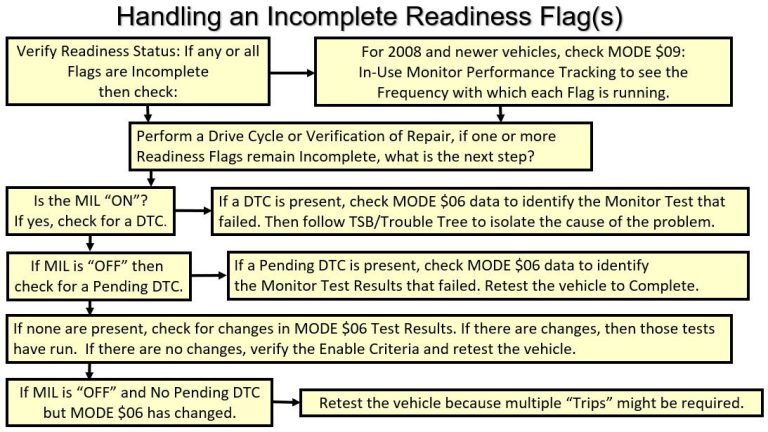
Code reading, live-data limits, emissions readiness, and reset limitations
Basic scanners may read and clear codes, but they do not always show full live data or advanced system information. They also do not fix the cause of a warning light.
Emissions readiness and reset functions can be helpful, but they have limits and may affect inspection timing. If the problem is tire pressure, wheel speed data, or a charging issue, a simple code clear is not a real repair.
App permissions, firmware updates, privacy concerns, and data sharing
Connected tools often ask for app permissions, accounts, Bluetooth access, or firmware updates. Read the privacy policy and understand what data the app collects, stores, or shares before pairing it with your phone.
When tire or charging problems require a professional diagnosis instead of a scanner
If the tire keeps losing pressure, the compressor keeps shutting down, or the vehicle battery cannot support the tool, a scanner will not solve the root cause. In those cases, the safer move is a tire shop, battery test, or electrical diagnosis.
For battery-related troubleshooting, a dedicated tester is often more useful than a scanner. Our battery tester guide explains why battery health and charging checks matter before blaming the inflator.
Best-Fit Recommendations, Limitations, and Final Verdict for CarValleyNJ Readers
Best choice for daily drivers, roadside kits, and budget-conscious owners
For most daily drivers, the safer and more practical pick is a compact tire inflator. It stores easily, is simpler to use, and usually gives you enough control for monthly checks and emergency top-offs.
Budget-conscious owners often get the best value from a basic inflator with a clear gauge, a decent hose, and a dependable power connection. If you want help narrowing the options, our portable compressor value guide can help you decide whether the extra capability is worth it.
Best choice for larger vehicles, frequent inflation needs, and home garage use
A larger compressor makes more sense if you own an SUV, truck, trailer, or multiple vehicles and inflate tires often. It is also the better fit when you have a garage setup and want faster repeat fills with less waiting.
The trade-off is that compressors can be louder, bulkier, and more demanding on power and maintenance. If you do not need that extra output, the added complexity may not be worth it.
Transparent verdict: which tool is safer overall and why
Overall, a tire inflator is usually safer for the average car owner because it is easier to store, easier to use correctly, and less likely to create setup mistakes. An air compressor can be safe too, but it asks more from the user in terms of power, space, heat management, and attention.
That does not make compressors bad. It just means they are better matched to frequent use and home-garage routines, while inflators are better matched to everyday roadside needs.
Next steps: what to buy, what to check monthly, and when to visit a tire professional
Before buying, verify your placard PSI, tire size, power source, hose length, and gauge style. Then check tire pressure monthly, especially before long trips or cold-weather driving.
If pressure keeps dropping, the tire needs more than air. At that point, visit a tire professional and stop treating the inflator or compressor as a permanent fix.
- Best for: Most U.S. drivers who want a safer, simpler tool for routine top-offs and roadside emergencies.
- Think twice if: You need fast repeated inflation for larger vehicles or want garage-level output and do not want extra setup.
- Next step: Check your door-jamb placard, confirm power compatibility, and choose the tool that matches your tire size and use frequency.
Frequently Asked Questions
Usually yes for everyday use. A compact inflator is simpler, easier to stop at the right PSI, and less likely to create setup mistakes.
Check the door-jamb placard for cold tire pressure, then match the tool to tire size, PSI range, and how often you inflate. Larger tires and frequent use may favor a compressor.
It can, especially if the battery is weak or the engine is off. Follow the tool instructions and stop if the vehicle battery is damaged, hot, or low.
Yes, it is smart to compare the built-in gauge with a separate tire gauge from time to time. That helps reduce the chance of overinflation or underinflation.
Sometimes, but only if the scanner supports your vehicle and you are comfortable with app permissions and updates. For tire problems, a scanner will not fix leaks or damaged tires.
Stop if the tire keeps losing pressure, the sidewall is damaged, or the bead appears to be leaking. Those problems usually need professional inspection or replacement.
Related CarValleyNJ Guides
Continue with these related guides in the same topic cluster:






3 Comments