Are Portable Air Compressors Worth It? Pros, Cons, and Buying Tips
Portable air compressors power tools, inflate tires, and handle other tasks without requiring a fixed workshop setup. Their smaller size makes them easier to carry and store than stationary models, while cordless and compact designs offer added flexibility for home projects, roadside repairs, and light job-site work.
Portable air compressors are worth it when their tank size, airflow, power source, and weight match the tasks you plan to do. Before buying, we look closely at the compressor’s cubic feet per minute (CFM), maximum pressure, noise level, run time, and included fittings. These details determine whether a model can run tools steadily or only handle short inflation jobs.
We compared portable compressors across common uses to identify which models offer useful power, practical portability, and dependable controls.
Best Portable Air Compressors
We tested portable air compressors for power, portability, ease of use, and useful features. Our list includes the best options for inflating tires, powering tools, and handling common home and vehicle tasks.
AstroAI L7 Portable Air Compressor
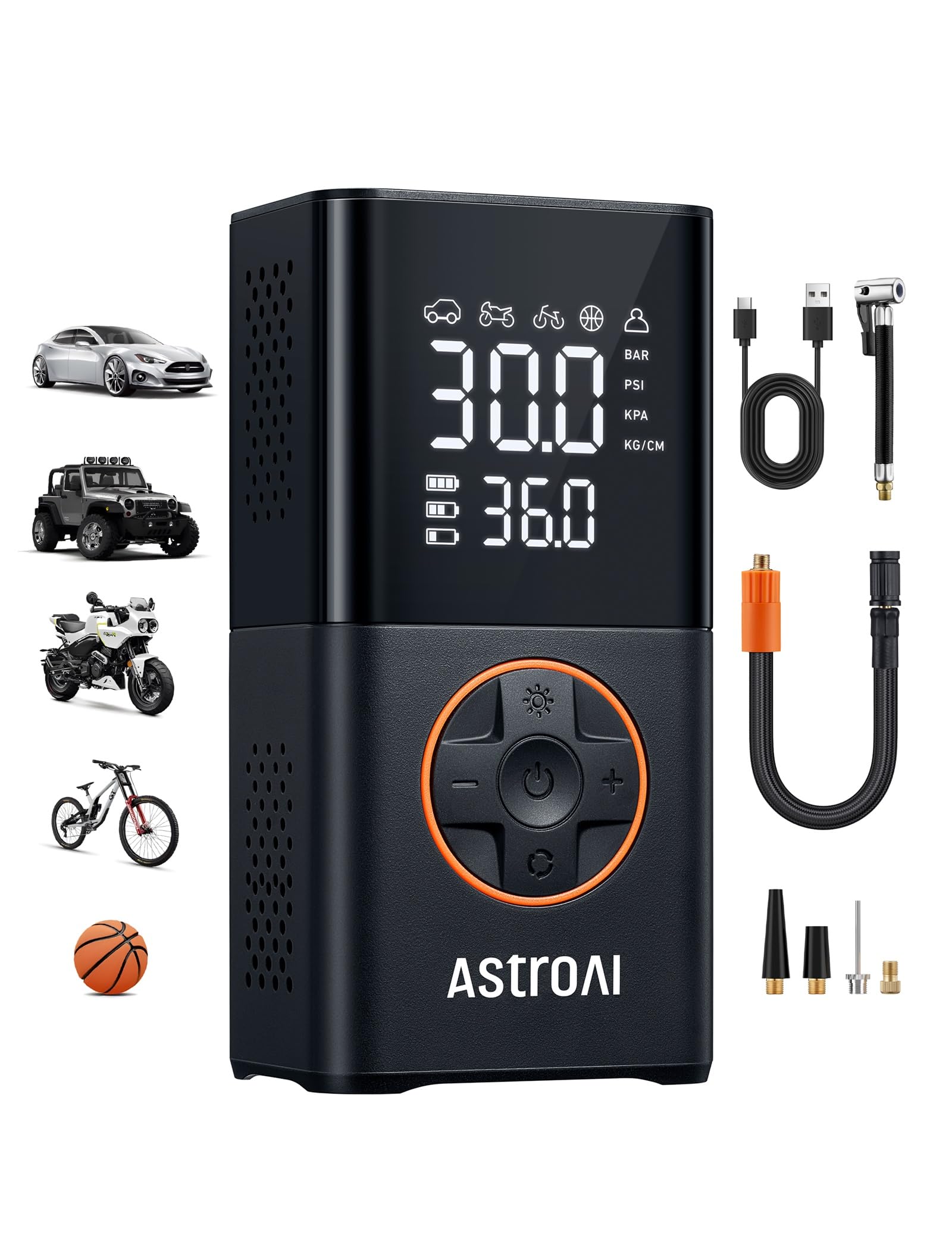
We recommend the AstroAI L7 for drivers who want a small cordless inflator for routine tire pressure checks and roadside top-ups.
Pros
- Compact enough for a glove box or backpack
- Preset pressure and automatic shut-off simplify use
- Works with car tires, bikes, motorcycles, and sports balls
Cons
- Loud during operation
- Not designed for heavy-duty tires
- Charging can take several hours
We found the L7 easy to carry and simple to operate. The digital display let us set a target pressure, and the pump stopped when it reached that level. The snap-on connector also made setup quicker than threaded fittings.
For normal car-tire adjustments, the compressor provided useful speed. It can add several pounds of pressure without needing a gas-station pump, though larger or badly deflated tires take longer. The compact motor also gets warm during extended use, so we would use it for short jobs rather than repeated inflation.
The built-in light helps at night, while the USB ports provide a handy backup charging option. Its battery offers enough power for several small top-ups, but we would charge it before a long trip instead of relying on it after months in storage.
At 80 dB, the L7 is noticeably loud. The plastic body feels lightweight, too, so we would store it carefully. For everyday vehicles, bicycles, and balls, this portable air compressor is worth considering; owners of trucks or heavy-duty tires should choose a larger corded model.
ROCGORLD R8 Tire Inflator

We think this compressor is worth buying for quick roadside tire top-offs because it is compact, simple to use, and includes automatic shutoff.
Pros
- Inflates car tires quickly
- Clear display with preset pressure
- Compact case and useful accessories
Cons
- Requires a 12V vehicle outlet
- Runs loudly
- Not suitable for direct AC power
We connected the R8 to a vehicle tire and found the controls easy to understand. We set the target pressure, started the unit, and let it stop automatically. The display showed the current and selected pressure, which made the process easier to monitor.
The long power cord helped us reach all four tires without moving the car. Its small case also made storage simple, and the included adapters worked for bikes and sports balls. The built-in light may help during nighttime roadside use.
The compressor runs at a noticeable volume, so we would not call it quiet. It also needs a 12V DC outlet and cannot run from a wall socket without additional equipment. We would use it for maintenance and emergencies, not for repeated heavy-duty work.
Overall, the ROCGORLD R8 offers useful speed and easy controls in a small package. Its two-year warranty adds value, especially for drivers who want a dependable inflator in the trunk.
DEWALT 20V MAX Tire Inflator
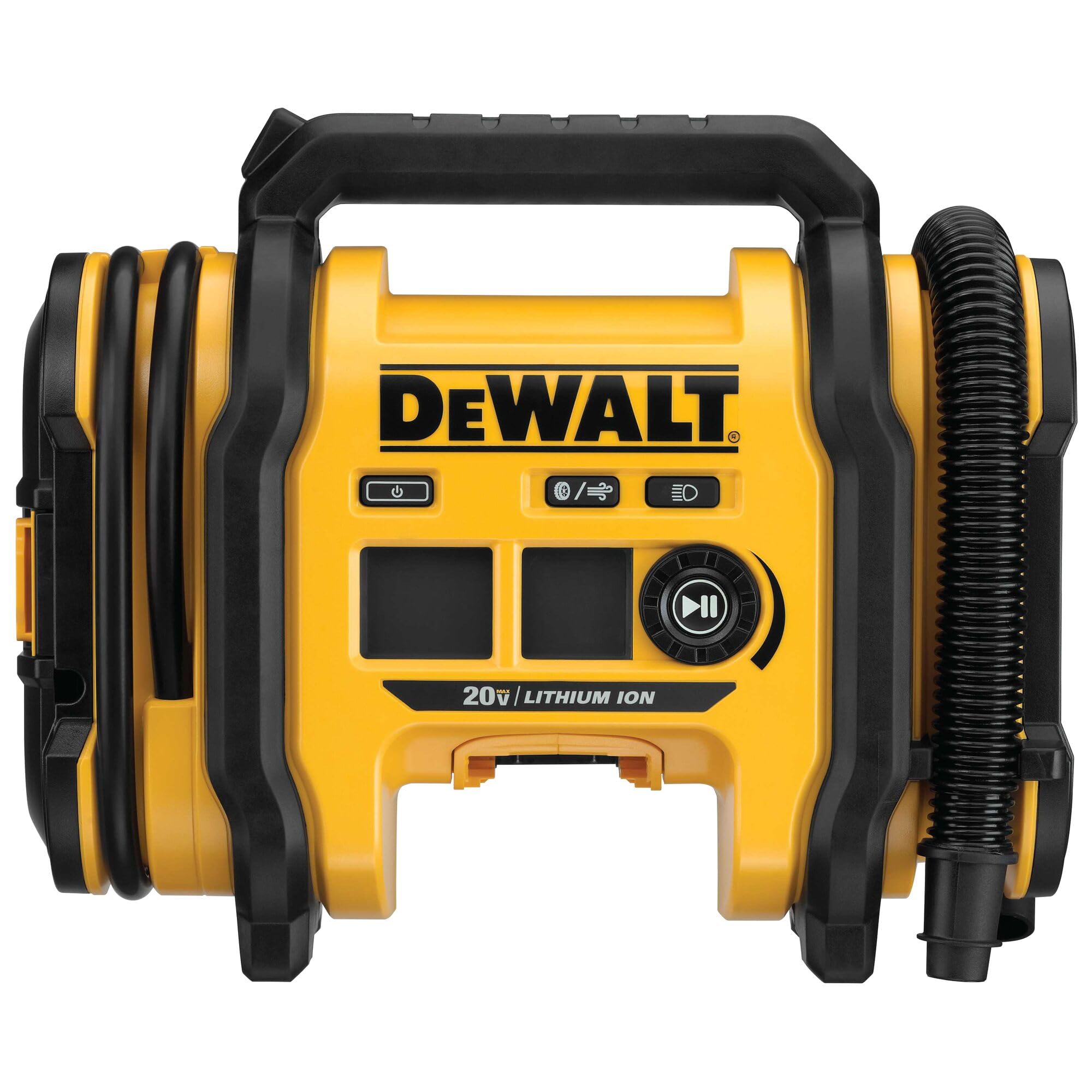
We recommend this inflator for drivers who want fast, accurate tire inflation and already own DEWALT 20V batteries.
Pros
- Works with a 20V battery, 12V car outlet, or 110V AC power
- Stops automatically at the selected pressure
- Handles tires and larger inflatables with separate hoses
Cons
- Battery, charger, and AC adapter cost extra
- Bulkier than basic emergency inflators
- Not designed for running air tools
We found the DEWALT DCC020IB easy to use on car, truck, motorcycle, bike, and mower tires. The threaded chuck holds firmly to the valve, while the digital gauge lets us set the target pressure before starting. It shuts off when the tire reaches that setting, which reduces guesswork.
Its three power options make it useful in different places. We can use a DEWALT 20V battery away from the car, connect it to a 12V outlet, or use household power with the proper adapter. The 12V cord may require the vehicle to run, depending on the car’s outlet.
For larger items, the high-volume hose inflates mattresses and rafts faster than the high-pressure hose. We can also move it to the deflation port when packing those items away. Onboard storage keeps the needle and valve adapters from getting lost.
The unit feels sturdy and stays fairly stable on its rubber feet. It weighs more than small plug-in inflators, and the tool-only package adds cost if we do not already own compatible batteries. Still, its reliable shutoff, strong build, and flexible power choices make it worth considering for regular vehicle and household use.
Buying Guide
We should match the compressor to our tools, tasks, and work location. Start by checking each tool’s required PSI and CFM, then choose a compressor that meets or exceeds those figures. For tools used continuously, allow extra CFM capacity to reduce strain and frequent cycling.
| Feature | What we should look for |
|---|---|
| Tank size | Smaller tanks suit short tasks; larger tanks support longer use |
| Power source | Electric models suit outlets; battery or gas models support remote work |
| Portability | Check weight, handles, wheels, and overall size |
| Noise level | Lower decibel ratings improve comfort in enclosed areas |
| Duty cycle | A higher rating supports longer operating periods |
| Oil type | Oil-free units need less maintenance; oil-lubricated units may run more smoothly |
We should also check the compressor’s voltage, outlet type, hose connection, and available accessories. Confirm that our workspace can provide enough power, airflow, and ventilation.
For outdoor or remote work, portability and power access may matter more than tank size. For home repairs, tire inflation, and light fastening, a compact unit may meet our needs. For spray painting, sanding, or other high-demand tasks, we should prioritize steady CFM and a suitable tank capacity.
Before buying, we should review the warranty, maintenance requirements, safety features, and replacement-part availability. A pressure regulator, thermal overload protection, and a clear pressure gauge can make daily use easier and safer.
Editor’s picks
We choose portable air compressors based on tank size, power source, noise, weight, and intended use. The best option depends on whether we need a compact tool for occasional tasks or stronger equipment for demanding work.
| Best for | What we look for | Why it stands out |
|---|---|---|
| Home repairs | 1–6 gallon tank, low weight | Easy to store and move |
| Car maintenance | 6–10 gallon tank, higher airflow | Handles tire inflation and air tools |
| Job sites | 10+ gallon tank, durable frame | Supports longer, heavier use |
| Quiet indoor use | Low-noise motor | Better for garages and workshops |
For light tasks, we favor a small electric model with an oil-free pump. It can inflate tires, operate brad nailers, and handle basic cleaning without taking up much space.
For frequent air-tool use, we look for a larger tank and a higher CFM rating. A larger tank supplies air more steadily, while a higher CFM rating helps tools run with fewer pauses.
We also check the compressor’s power requirements before buying. Electric models suit garages with reliable outlets, while battery-powered and gas models offer more flexibility when no outlet is nearby.
Frequently asked questions
Are portable air compressors worth buying?
We find them worthwhile for users who need compressed air at different locations. They can power tools, inflate tires, and handle small repair tasks without a fixed air system.
What can a portable air compressor run?
We can use smaller models for nail guns, brad nailers, tire inflators, and air blowguns. Larger models may run impact wrenches or grinders, but we must match the compressor’s airflow rating to the tool’s needs.
How much maintenance do they need?
We should drain the tank after use, check the air filter, and inspect hoses and fittings. Oil-lubricated models also need regular oil checks and changes.
Are electric or gas models better?
Electric models suit garages and areas with reliable power. Gas models offer more freedom outdoors, but they produce fumes, make more noise, and need fuel and engine maintenance.
What size compressor should we choose?
| Task | Typical useful size |
|---|---|
| Tire inflation | 1–3 gallons |
| Nail guns | 2–6 gallons |
| Light air tools | 6–20 gallons |
| Heavy continuous use | 20+ gallons |
We should check the tool’s required CFM and choose a compressor that meets or exceeds that rating. Tank size affects how often the motor runs, while CFM affects how long the tool can operate.
Conclusion
Portable air compressors are worth it when we need compressed air at different locations, for tasks such as inflating tires, using air tools, or completing small repairs. Their compact size makes storage and transport easier than with many larger models.
We should match the compressor to our main tasks. A small unit may handle tires and light tools, while demanding equipment may require higher airflow, a larger tank, or a stronger power source.
Before buying, we should compare:
- Airflow: Measured in CFM, it shows how much air the compressor delivers.
- Pressure: Measured in PSI, it shows whether the unit can run our tools.
- Power source: Electric, battery, and gas models suit different work settings.
- Noise and weight: These affect comfort, transport, and storage.
The right portable compressor gives us useful performance without taking up much space. If we only need occasional inflation, a basic model may be enough. For regular tool use, we should choose a model with enough airflow and duty capacity for the job.