How to Choose a Jump Starter for Your Car: Avoid Weak Picks
Choose a jump starter by matching it to your vehicle’s voltage, engine type, and climate, then verify safety features and clamp quality. The best pick is usually the simplest one that fits your car and can stay charged, stored, and ready when you need it.
how to choose a jump starter for your car starts with matching the tool to your vehicle, not the biggest number on the box. The right pack should fit your engine, battery type, and roadside needs without adding avoidable risk or bulk.
- Match the vehicle first: Most passenger cars use 12V, while some trucks and specialty vehicles need different support.
- Ignore flashy peak-amp claims: Real use depends on cable quality, clamp grip, and protection features.
- Think about climate and storage: Cold weather, heat, and poor charging habits can reduce reliability fast.
- Choose features you will use: Flashlight, USB ports, and an inflator are helpful only if they fit your routine.
- Verify hybrid, EV, and diesel rules: Some vehicles need special procedures or should not be jumped the usual way.
How to Choose a Jump Starter for Your Car: The Fast Answer for 2026 Buyers
If you want the short version, buy a jump starter that matches your vehicle’s voltage, has enough real starting power for your engine size, and includes solid clamps plus reverse-polarity protection. For most passenger cars and crossovers, a quality 12V lithium pack is the practical choice, while larger trucks, diesel engines, and work vehicles may need a higher-output model or a different emergency setup.
Do not shop by peak amps alone. Look at compatibility first, then safety features, cable quality, storage conditions, and whether you also want a flashlight, USB charging, or an air compressor.
Start With Your Vehicle: Voltage, Engine Size, Battery Type, and Hybrid/EV Cautions
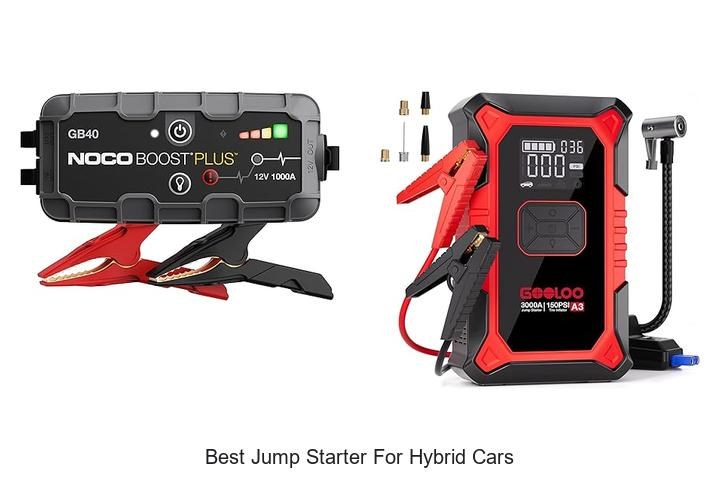
The best jump starter is the one that fits the vehicle you actually drive. A compact sedan, a full-size pickup, and a hybrid all have different needs, and the wrong choice can waste money or create a safety problem.
12V vs. 24V systems and why most passenger cars need 12V support
Most cars, SUVs, minivans, and light-duty pickups in the U.S. use a 12V electrical system, so a 12V jump starter is the standard choice. Some commercial trucks, heavy equipment, and specialty vehicles use 24V systems, which require a unit built for that voltage.
Check: Verify make, model, year, trim, voltage, ports, mounting space, and OEM requirements. Limitations: A 12V jump starter is not a substitute for a 24V system, and some vehicles have manufacturer-specific jump points or procedures.
Gas vs. diesel starting needs, cold-weather loads, and reserve capacity
Gas engines usually need less starting power than diesel engines of similar size. Diesel engines often need more current because of higher compression, and cold weather makes both types harder to start.
If you live where winter is harsh, leave a margin above the minimum rating. A pack that barely works on paper may struggle when temperature drops and the battery is weak.
Battery chemistry matters: lead-acid, AGM, EFB, lithium, and when not to jump
Many jump starters use lithium batteries because they are compact and hold charge well in a glove box or trunk. Traditional lead-acid jump packs are bulkier but can still be useful in some heavy-duty or shop settings.
Your car battery may be flooded lead-acid, AGM, or EFB, and the jump starter should be able to support the vehicle’s starting voltage and current needs. If the battery is swollen, leaking, frozen, or visibly damaged, stop and follow the vehicle manual instead of forcing a jump.
Hybrid and EV warnings: when a jump pack is appropriate and when it is not
Some hybrids and electric vehicles still use a 12V auxiliary battery for accessories and control systems, and that battery may be jump-startable. But high-voltage traction systems are a different matter entirely and should never be treated like a normal 12V battery.
Before you buy, confirm whether your vehicle’s 12V battery can be jumped and where the approved connection points are. If the manual says not to jump the vehicle, follow that instruction.
Power Specs That Actually Matter: Peak Amps, Cranking Amps, Cable Quality, and Safety Features
Packaging often focuses on huge amp numbers, but those numbers do not tell the whole story. Real-world usefulness depends on how the pack delivers power, how long the cables are, and whether the clamps stay secure.
How to read peak current claims without getting fooled by marketing
Peak amps are the maximum burst a pack may claim for a very short moment. That is not the same as the sustained output you need to start an engine.
When comparing models, treat peak amps as one clue, not the deciding factor. Look for clear compatibility guidance from the manufacturer, especially for engine size, diesel support, and cold-weather starting.
Why cable gauge, clamp quality, and reverse-polarity protection affect real-world use
Thicker cables and well-made clamps help reduce voltage drop and improve grip on battery terminals or jump points. Weak clamps can slip, overheat, or make a poor connection when you need the tool most.
Reverse-polarity protection matters because connecting the clamps backward can damage the pack, the vehicle, or both. This is one of the most important safety features for everyday drivers.
Temperature performance, low-voltage detection, and damaged-battery stop conditions
Good packs usually include low-voltage detection, which helps them recognize a battery that is too low to start safely. Some also stop charging or jumping if they detect a fault, which can prevent misuse.
Cold-weather performance is especially important in northern states and mountain areas. If a manufacturer gives temperature limits, read them closely and store the pack where it will not freeze or overheat.
Choosing a pack for small cars, trucks, SUVs, and work vehicles
Small cars and compact SUVs often do well with a lighter lithium pack that is easy to store. Larger SUVs, trucks, and work vehicles usually benefit from more reserve power, heavier clamps, and a more durable case.
If you tow, carry tools, or idle in tough conditions, choose for durability as much as output. The pack should be easy to grab, easy to read, and easy to connect in the dark.
Comparison Guide: Jump Starter vs. Battery Charger vs. Portable Power Station
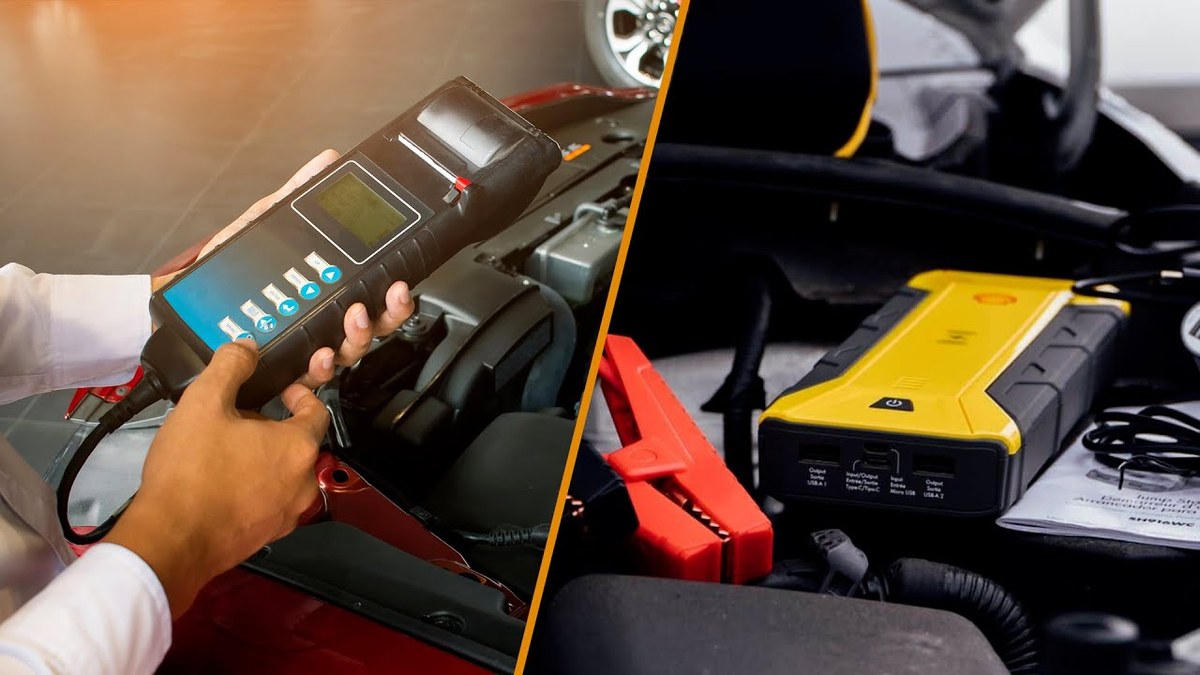
These tools solve different problems. A jump starter is for emergency starts, a battery charger is for restoring or maintaining battery charge, and a portable power station is for running devices or small appliances.
Which option is best for emergency starts, maintenance charging, and multi-device power
Choose a jump starter if you need a fast roadside restart. Choose a battery charger if your battery is weak but still recoverable and you have time to plug in at home or in the garage.
Choose a portable power station if you want more than starting power, such as USB charging, AC outlets, or campsite use. It is usually less convenient than a dedicated jump pack for quick under-hood work.
Side-by-side comparison of speed, portability, cost, and limitations
| Option | Best for | Owner consideration | Driver consideration |
|---|---|---|---|
| Jump starter | Emergency starts | Needs periodic charging and cable inspection | Fast to use, but safety and clamp placement matter |
| Battery charger | Maintenance charging | Slower and usually less portable | Not a roadside quick-fix tool |
| Portable power station | Multi-device power | Heavier and often more expensive | Useful in outages, but not always ideal for engine starts |
Which drivers should buy a compact pack, a heavy-duty pack, or a larger power station
Daily commuters and city drivers usually want a compact jump starter that is easy to store. Families and road-trippers may prefer a mid-size pack with a flashlight and USB ports.
Truck owners, contractors, and drivers with diesel engines should look at heavy-duty jump starters first. If your main need is backup power for phones, laptops, or camping gear, a larger power station may be the smarter buy.
OBD2 and Diagnostics: What a Jump Starter Can Help With—and What It Cannot Fix
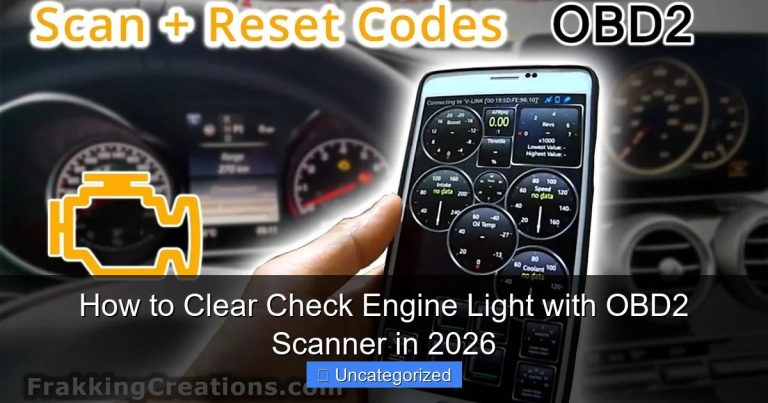
Some modern jump starters include OBD2 features or pair with a diagnostic app. That can be useful, but it does not turn the tool into a repair solution.
Model-year and protocol coverage: OBD2 basics, CAN support, and older-vehicle limits
OBD2 applies to most U.S. gasoline vehicles from the mid-1990s onward, with diesel coverage and exact protocol support varying by vehicle. Older vehicles may not communicate the same way, and some connected tools need app support or firmware updates to work well.
If you want diagnostic features, confirm that the tool supports your model year and protocol before buying. For scanner basics, see OBD2 scanner coverage for cars.
Port location, ignition mode, and safe connection timing before scanning
OBD2 ports are usually under the dash, but location varies. Always connect with the vehicle parked safely, and follow the tool’s instructions for ignition on, accessory mode, or engine off before scanning.
Do not reach under the dash while the vehicle is moving or while your attention is split with traffic. The scan tool should help you work more safely, not distract you.
Code reading, live-data access, emissions readiness, and reset limitations
Many tools can read and clear codes, show live data, and check emissions readiness. That does not mean they can fix the problem that set the code in the first place.
Clearing a code before diagnosing the cause can erase useful clues. If you want a better battery-health workflow, compare the jump starter’s companion features with our guide on how to test a battery with a battery tester.
App permissions, firmware updates, privacy concerns, and when diagnosis needs a professional
Connected tools may ask for Bluetooth, location, account access, or cloud storage. Review permissions before pairing, and check whether the app stores VIN, trouble codes, or live data online.
If the vehicle has a serious drivability issue, a warning light that returns immediately, or a hybrid/EV fault, professional diagnosis is the safer next step.
Tire and TPMS Considerations: Picking a Pack That Can Also Handle Inflation Tasks
Many jump starters now include an air compressor. That can be handy, but inflation is only useful if the unit is accurate enough and the hose setup makes sense for your vehicle.
Door-jamb placard pressure, cold pressure checks, and gauge accuracy
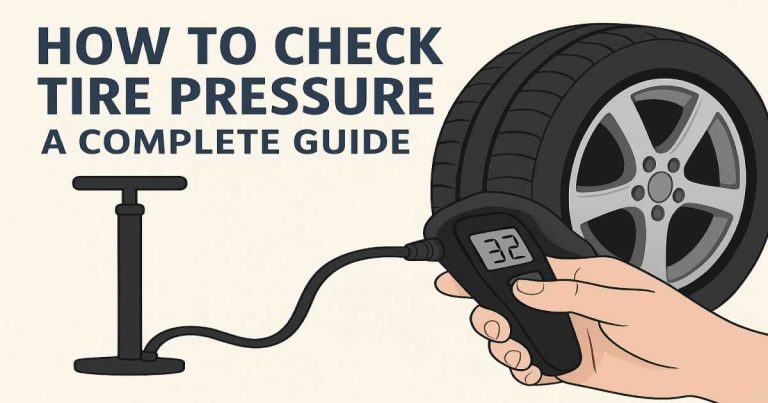
Use the tire pressure listed on the door-jamb placard, not the number molded into the tire sidewall. Check pressure when the tires are cold, because driving warms the air and raises the reading.
If the compressor has a built-in gauge, treat it as a convenience tool, not a perfect lab instrument. For tire inflator basics, our guide on how to use a portable tire inflator covers the safe order of steps.
Inflator duty cycle, hose length, and how fast a compact unit can really fill a tire
Compact inflators often need breaks to avoid overheating. Duty cycle, hose length, and ambient temperature all affect how practical the compressor is on the roadside.
A short hose can make valve access awkward on some wheels, especially if the valve stem points inward. If you want inflation as a serious backup feature, compare those details carefully.
TPMS relearn limits, puncture location, and temporary-repair boundaries
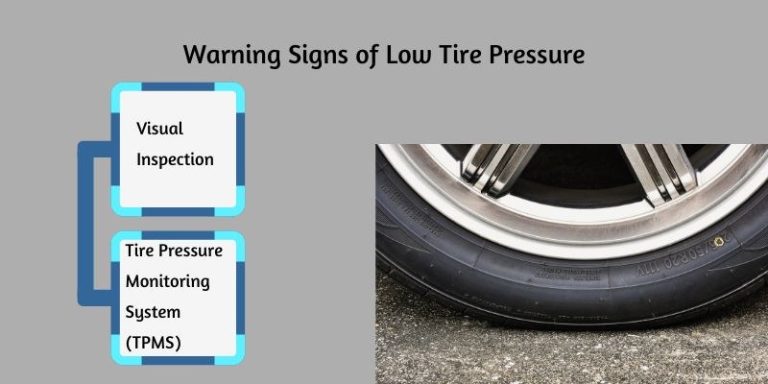
A jump starter with an inflator may help after a slow leak or minor pressure loss, but it will not repair a puncture. TPMS warnings may stay on until the tire is fixed and, in some vehicles, relearned.
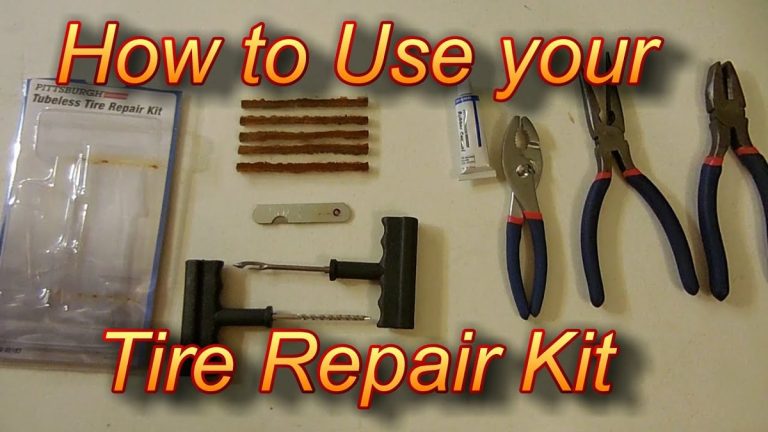
Temporary sealants and roadside inflation are only short-term measures. If the puncture is in the sidewall, the tread damage is large, or the tire keeps losing air, replacement or shop repair is the safer move.
When a tire problem is roadside-fixable and when it needs shop repair
Small tread punctures sometimes can be repaired by a tire shop, but sidewall damage usually cannot. If air loss is rapid, the wheel is damaged, or the tire is visibly shredded, do not keep driving on it.
For drivers who want more than a jump pack, the inflation feature should be viewed as a convenience backup, not a substitute for real tire service.
Roadside Safety, Storage, and Ownership Cost: What Smart Buyers Overlook
The best jump starter is useless if it is buried under cargo, left uncharged, or too awkward to use in traffic. Ownership details matter almost as much as power specs.
Safe location, traffic visibility, and using the pack without creating a hazard
If you need a jump on the roadside, move to a safe location when possible, turn on hazard lights, and stay aware of traffic. Only open the hood and work when you can do so without stepping into a dangerous lane.
Storage conditions, charge retention, cable condition, and post-use inspection
Store the pack in a place that matches the manufacturer’s temperature guidance. Extreme heat and deep cold can shorten battery life or reduce starting performance when you need it.
After each use, inspect the clamps, cable insulation, case, and ports. A damaged cable or swollen battery case is a reason to stop using the unit and review the warranty or replacement policy.
Charge the pack on a regular schedule, inspect clamps and cables, and keep ports clean and dry. If the unit has firmware or app updates, install them from the manufacturer only.
Tool completeness: flashlight, USB ports, air compressor, case, and emergency extras
Extra features can add real value if you will actually use them. A flashlight helps at night, USB ports help with phones, and a fitted case protects the unit in the trunk.
At the same time, more features can mean more cost and more things to maintain. Decide whether you need a simple emergency tool or a multi-use roadside kit.
Ownership cost, warranty/support, replacement batteries, and long-term value
Long-term value depends on support, warranty terms, and how easy it is to replace accessories. A cheaper pack that fails early can cost more than a better-built unit with stronger support.
If you are comparing products, also consider whether the manufacturer documents support well and keeps replacement parts available. That can matter more than a flashy feature list.
How to Use and Maintain a Jump Starter So It Works When You Need It
Even a good jump starter can fail if it is used incorrectly or stored poorly. A simple routine helps it stay ready for real emergencies.
Correct connection order, start attempt timing, and disconnection sequence
Follow the product manual, but the usual order is positive clamp first, then negative or ground connection as directed. Make sure the clamps are secure before trying to start the engine.
Do not crank for too long in one attempt. If the vehicle does not start after a few tries, stop and look for a battery problem, fuel issue, or another fault instead of overheating the pack.
Maintenance charging habits, seasonal checks, and storage temperature guidance
Recharge the pack after use and check its charge every few months, especially before winter travel. A pack left in the trunk for a year may not be ready when you need it.
Seasonal checks are especially helpful for commuters, parents, and rideshare drivers who depend on the vehicle every day. If the pack has a battery indicator, verify that it still holds a usable charge.
Signs the pack is failing, when to stop using it, and replacement timing
If the pack will not hold charge, the case swells, the cables overheat, or the clamps look damaged, stop using it. A unit that gives inconsistent results is not reliable enough for emergency use.
Replace the pack before it becomes a roadside gamble. For more battery-health context, our guide on how to test a battery with a Topdon scanner can help you separate battery trouble from jump-starter trouble.
Best-Fit Buyer Profiles: Which Jump Starter Type Fits Your Driving Life
The right pick depends on how, where, and when you drive. A good match for one driver may be the wrong tool for another.
Daily commuter, suburban family, winter driver, truck owner, and DIY roadside user
Daily commuters usually want compact size, quick access, and simple controls. Suburban families often benefit from a mid-size pack with strong safety features and a flashlight.
Winter drivers should prioritize cold-weather performance and a little extra output. Truck owners and diesel drivers should look for heavier-duty support, while DIY roadside users may want a pack with both jump and inflation features.
What to prioritize if you want the best balance of size, power, and reliability
Start with compatibility, then move to safety features, then storage and convenience. If two models are close, choose the one with better clamps, clearer instructions, and stronger warranty support.
Do not overbuy just because a spec sheet looks impressive. The best jump starter is the one you can store, understand, and trust in bad weather.
Final buying criteria checklist for choosing a weak-pick-free jump starter
- Confirm your vehicle’s voltage, engine type, and jump-start procedure
- Check real-world safety features like reverse-polarity protection and clamp quality
- Review cold-weather guidance, storage limits, and charge retention
- Decide whether you need USB charging, a flashlight, or an inflator
- Compare warranty, support, accessory replacement, and long-term value
- Best for: Drivers who want a reliable emergency tool matched to their vehicle, climate, and storage space.
- Think twice if: You are choosing only by peak amps, or your vehicle has hybrid, EV, diesel, or 24V requirements that need extra verification.
- Next step: Confirm voltage, battery type, and jump procedure in the owner’s manual before you buy.
Frequently Asked Questions
Start with your vehicle voltage and engine type. Most passenger cars need a 12V jump starter, while larger trucks and diesel engines often need more output.
It can if you use it wrong or connect it to a damaged battery. Follow the owner’s manual and stop if the battery is swollen, leaking, or frozen.
Only if you want one tool for both starting and tire top-offs. A built-in compressor is convenient, but it is usually slower than a dedicated inflator.
They can help if you want battery info or extra controls. Check app permissions, firmware support, and privacy settings before you buy.
Check it every few months and recharge after each use. Storage temperature matters, so keep it within the manufacturer’s guidance.
Confirm voltage, engine compatibility, safety features, warranty, and included accessories. Also make sure it fits your vehicle type, climate, and storage space.