Digital vs Analog Tire Pressure Gauge: Which Is More Accurate?
A quality digital gauge is usually easier to read and less likely to cause user error, so it is the better pick for most drivers. A quality analog gauge still makes sense if you want a simple, battery-free backup that is easy to store in the car.
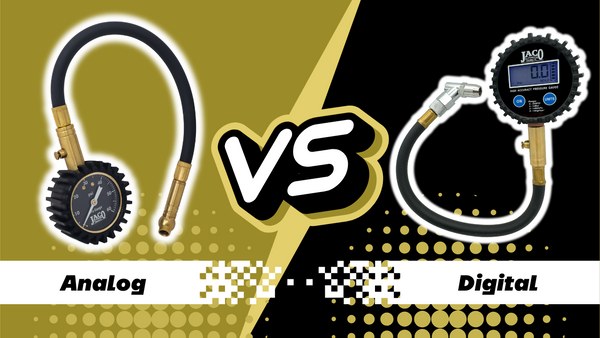
If you are comparing a digital vs analog tire pressure gauge, the better choice depends on how you drive, how often you check tires, and how much you value speed versus simplicity. In most cases, both can be accurate enough for normal tire care when used correctly, but a digital gauge is usually easier to read while a good analog gauge can be more dependable when you want no batteries and fewer failure points.
- Accuracy: Build quality and seal matter more than gauge type alone.
- Best use: Digital is easier to read; analog is better for battery-free simplicity.
- Safety: Check cold tires against the door-jamb placard, not the sidewall.
- TPMS: A gauge measures pressure, but it cannot reset warning lights.
- Maintenance: Verify readings, inspect the chuck, and replace damaged tools.
Digital vs Analog Tire Pressure Gauge: Quick Answer for Drivers in 2026
Which gauge is more accurate, and why the real answer depends on use case
For most drivers, a quality digital gauge is easier to read and less prone to user error because the display is clear and the number is usually shown directly. A quality analog gauge can still be very accurate, but small markings, a bent needle, or a poor seal at the valve stem can make the reading harder to trust.
The real answer is not “digital always wins.” Accuracy depends on the gauge’s build quality, how well it seals, whether it is calibrated, and whether you use it on cold tires. A cheap digital gauge can be worse than a well-made analog one, and the reverse is also true.
How this guide helps CarValleyNJ readers choose the right tool
This guide focuses on what matters in real ownership: readability, battery dependence, storage, maintenance, and how each gauge fits daily drivers, SUVs, work trucks, trailers, and emergency kits. It also explains how to use either type correctly so you can get a repeatable reading instead of guessing.
How Tire Pressure Accuracy Affects Safety, Fuel Economy, and Tire Life
Why cold pressure matters more than hot readings
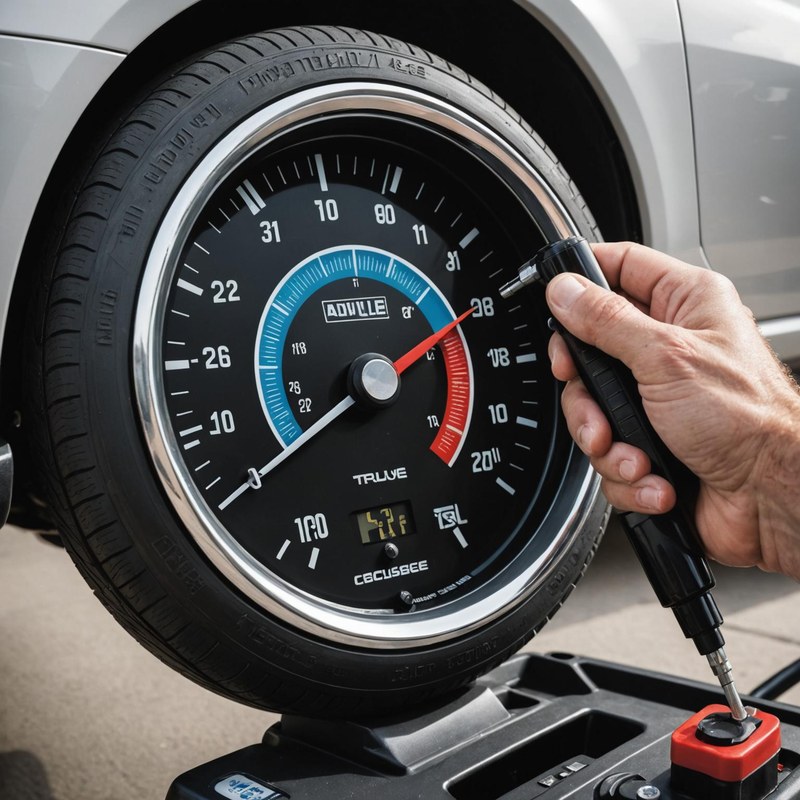
Tire pressure changes as tires heat up while driving. That means a reading taken after a commute can be higher than the same tire measured first thing in the morning. For the most useful baseline, check pressure when the tires are cold or have been parked long enough to cool down.
That matters because the number on the door-jamb placard is based on the vehicle maker’s recommended cold pressure. If you compare a hot tire reading to that placard, you may think the tire is overinflated when it is not.
How underinflation and overinflation change handling, wear, and braking
Underinflated tires can flex more, build heat, wear faster on the edges, and reduce fuel economy. They can also make steering feel vague and can increase stopping distance in some conditions. Overinflated tires can feel firmer, reduce ride comfort, and wear faster in the center of the tread.
The goal is not to hit a random round number. It is to stay close to the vehicle’s recommended cold pressure so the tire contact patch, wear pattern, and handling stay predictable.
Why the door-jamb placard should be your baseline, not the sidewall
The sidewall lists the tire’s maximum pressure or load information, not the vehicle’s recommended operating pressure. That is one of the most common tire-care mistakes. Use the placard on the driver-side door jamb or the owner’s manual as your baseline unless the vehicle maker gives a different approved setting for towing, loading, or special tires.
Digital vs Analog Tire Pressure Gauge: Side-by-Side Comparison
Accuracy, readability, durability, and calibration stability
Digital gauges usually win on readability because the number is easy to see, especially in low light or for drivers who do not want to interpret a small dial. Many also offer fine resolution, which can help when you want very close matching between tires.
Analog gauges often have a simpler internal design and no display to go dark, but the needle and scale must be easy to read. If the dial is crowded or the pointer is hard to see at an angle, the practical accuracy can suffer even if the tool itself is mechanically sound.
| Option | Best for | Owner consideration | Driver consideration |
|---|---|---|---|
| Digital gauge | Easy reading, quick checks, low-light use | Needs batteries and screen care | Less strain and fewer reading mistakes |
| Analog gauge | No-battery backup, simple ownership | Needs a clear dial and solid sealing | Can be slower to read in dim light |
Battery dependence, pressure-retention behavior, and temperature sensitivity
Digital gauges depend on battery power, so a dead or weak battery can create inconvenience at the worst time. Some models also have auto-off behavior that saves power but can be annoying if you pause between tires. Analog gauges do not need batteries, which makes them appealing for glove-box storage or roadside kits.
Temperature can affect both types, but digital electronics may feel more sensitive to storage conditions, moisture, or very cold mornings. Analog gauges are not immune to temperature effects either, especially if the internal mechanism is low quality or worn.
Cost, ownership value, and which drivers benefit most from each type
Digital gauges often cost more up front, but many drivers feel the added convenience is worth it. They are a strong fit for commuters, parents, rideshare drivers, and anyone who wants a fast, easy reading without squinting at a dial.
Analog gauges usually appeal to drivers who want a simple tool with no batteries, fewer parts, and easy storage. They can be a smart value choice for backup use, provided the dial is easy to read and the chuck seals well.
How to Read and Use Each Gauge Correctly
Step-by-step tire-check workflow for cold tires
Check pressure before driving, or after the vehicle has sat long enough for the tires to return to ambient temperature.
Use the driver-side door-jamb label or owner’s manual as the target for normal cold inflation.
Press the chuck firmly and squarely onto the valve stem so air does not leak while you read the number.
Add or release air in small amounts, then recheck until the reading matches the target.
How to avoid leaks, angled readings, and valve-stem errors
A poor seal is one of the biggest causes of bad readings. If you hear air escaping while the gauge is attached, press more firmly or reposition the chuck. A tilted gauge can also make it hard to get a clean reading, especially with some analog styles.
Valve stems should be inspected for damage, cracking, or loose caps. A damaged stem can cause slow air loss that no gauge can fix. If the stem looks worn or the gauge will not seal consistently, the tire should be checked by a professional.
When to recheck after inflation or after a long drive
After adding air, recheck the tire right away to confirm the final pressure. If you checked a hot tire after driving, recheck it later when cold if you need to compare it to the placard target. That is the best way to avoid overfilling based on heat-expanded air.
Compatibility with Modern Vehicles, TPMS, and Emergency Tire Tools
How gauges work with TPMS-equipped cars, trucks, SUVs, and trailers
A tire pressure gauge works on almost any vehicle with a standard Schrader valve, including many cars, trucks, SUVs, trailers, and spare tires. That makes it useful even when the vehicle has a tire pressure monitoring system, because TPMS does not replace manual checks.
TPMS gives you a warning when pressure drops enough to trigger the system, but it does not tell you whether each tire is exactly at the recommended setting. A gauge still matters for routine maintenance and for matching tires side to side.
TPMS relearn limits, warning lights, and when a gauge cannot reset anything
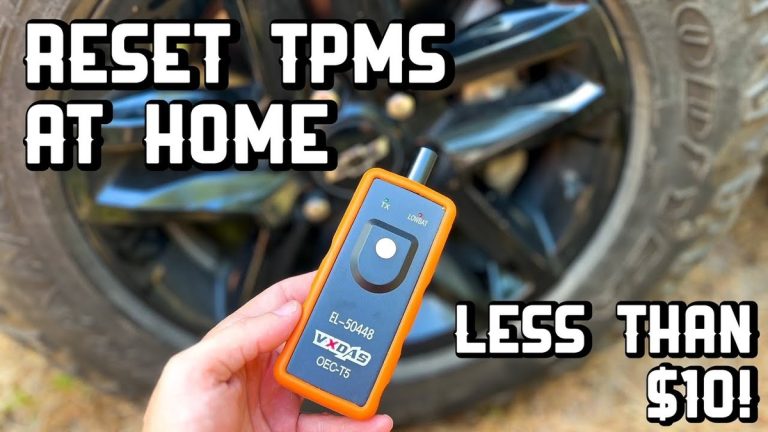
A gauge can measure pressure, but it cannot reset a TPMS warning light or relearn sensors. Those functions depend on the vehicle’s system, tool support, and the manufacturer’s procedure. If a warning light stays on after you correct pressure, follow the owner’s manual or a verified service procedure.
Temporary-repair limits, puncture location checks, and when professional repair is required
If a tire is losing air, a gauge can confirm the pressure drop, but it cannot tell you whether the tire is safely repairable. If the puncture is in the sidewall, the tire has visible damage, or air loss is rapid, stop and get professional help. Temporary sealants and inflator kits have limits and may not be appropriate for every puncture or every tire.
Buying Guide: What to Look for in a Digital or Analog Tire Pressure Gauge
Measurement range, resolution, chuck style, and bleed valve features
Look for a pressure range that covers your vehicle needs, especially if you drive a truck, trailer, or RV. Resolution matters too, but only if the gauge is readable and repeatable. A fine display does not help if the chuck leaks or the numbers are hard to trust.
A bleed valve can be useful because it lets you release a small amount of air without removing the gauge. That is handy when you accidentally overinflate by a little and want to fine-tune the final number.
Build quality, warranty/support, and replacement-part availability
For a tool you will use for years, build quality matters as much as the display type. Look for a sturdy chuck, clear markings, a protected screen on digital models, and a body that can handle being stored in a car. Warranty terms and support also matter because a gauge that cannot be serviced may become disposable faster than expected.
If you want a deeper look at how ownership costs and feature sets differ across tool types, our cheap vs expensive scanner comparison shows the same basic buying logic: the lowest price is not always the best long-term value. For inflation gear, the same idea applies to sealing, durability, and support.
Which gauge type fits daily drivers, performance cars, work trucks, and RVs
Daily drivers usually benefit most from a digital gauge because the reading is fast and easy to understand. Performance car owners may also prefer digital for precise matching, especially when tire pressure changes are part of handling setup.
Work trucks and RVs may need a gauge with a broader pressure range and a more durable chuck, so the best choice depends on the vehicle’s actual tire pressures. If you are also comparing inflators for higher-demand use, our best portable tire inflator guide can help you think through range, power, and storage together.
- Confirm the pressure range matches your vehicle, trailer, or spare tire needs
- Check whether the chuck seals well on your valve stems
- Review battery type, screen visibility, or dial readability
- Look for warranty, support, and replacement-part availability
- Make sure the gauge is easy to store and quick to access
Battery, Power, and Maintenance Considerations for Digital Gauges
Battery type, storage conditions, and low-battery accuracy risks
Digital gauges can be very convenient, but battery life matters. If the battery is weak, the screen may dim, readings may become unreliable, or the tool may not power on when you need it. That is why it is smart to keep a spare battery if the model uses a common type.
Extreme heat inside a vehicle can also shorten battery life over time. If you store a digital gauge in the glove box or center console, check it periodically so you are not surprised by a dead unit during a roadside stop.
How to inspect seals, screens, and buttons before and after use
Before use, make sure the screen is clear, the buttons respond normally, and the chuck or hose does not look cracked. After use, wipe off dirt and moisture so the seal and display stay in good condition. Small issues caught early are easier to fix than a gauge that fails when you need it most.
If you want a related example of how feature differences affect ownership, our Viair 88P vs 90P comparison shows how hose length, power setup, and use-case fit can matter as much as raw output.
When a digital gauge should be recalibrated or replaced
Most consumer gauges do not offer easy user calibration. If a digital gauge begins giving inconsistent readings, shows obvious drift, or fails to match a known good reference, replacement may be the safer choice. The same is true for analog gauges with sticking needles or damaged internals.
For most owners, a periodic cross-check against a known reliable gauge is the simplest way to spot problems early.
Roadside and Emergency Use: What Matters Most in Real-World Conditions
Safe location, traffic visibility, and quick-access storage in the vehicle
A tire gauge is only useful if you can reach it quickly and use it safely. Store it where it is easy to grab without digging through cargo, and check tires in a safe location away from traffic whenever possible. Visibility matters because a roadside stop should be as short and controlled as you can make it.
Tool completeness, hose/chuck condition, and post-use inspection
Before a trip, make sure the gauge is complete and ready to use. On digital models, that means a working battery and a readable screen. On analog models, it means a clear dial, a healthy chuck, and no bent parts.
After use, inspect the chuck and valve contact point for wear. If the tool starts leaking air or giving inconsistent readings, it should not be trusted for precise inflation.
Why analog gauges can be useful when power or batteries are unavailable
Analog gauges still have a place because they do not depend on batteries. That makes them a good backup in a glove box, roadside kit, or work vehicle where simplicity matters. If you want a no-power option that can sit unused for long periods, analog is still a practical choice.
Keeping a simple backup gauge in the vehicle can save time when a digital tool is dead, missing, or stored somewhere inconvenient.
Final Verdict: Which Tire Pressure Gauge Is More Accurate for Most Drivers?
Best choice for accuracy-focused owners
If you want the easiest path to a clean, repeatable reading, a quality digital gauge is usually the better choice. It helps reduce reading mistakes, especially for drivers who check tires early in the morning, in dim garages, or in a hurry.
Best choice for budget, simplicity, and no-battery reliability
If you value a tool that can live in the car for years without battery worries, a well-made analog gauge is still a solid option. It is especially useful as a backup or for drivers who prefer simple tools with fewer parts.
Next steps: how to choose, verify, and maintain your gauge over time
Choose the gauge that fits your routine, then verify it against a known reliable reading and keep it clean and stored safely. If you want to compare inflator tools that pair well with a gauge, CarValleyNJ also covers how to use a portable tire inflator and a wider tire inflators category for more options.
- Best for: Drivers who want the most readable, low-error tire checks usually should pick digital; drivers who want a simple backup with no battery dependence may prefer analog.
- Think twice if: You need a gauge for frequent roadside use, very high tire pressures, or poor lighting and you are considering a model with a weak chuck or hard-to-read display.
- Next step: Match the gauge to your vehicle’s placard pressure, then keep a known-good reference and check your tool periodically for leaks, battery issues, or drift.
Frequently Asked Questions
Usually, a quality digital gauge is easier to read and can reduce user error. But accuracy depends more on build quality, seal, and calibration than on the gauge type alone.
Yes. Cold pressure is the baseline used on the vehicle placard, and hot tires can read higher after driving. For the best comparison, check them before driving or after they have cooled.
No. A gauge only measures pressure. If the TPMS light stays on after correcting pressure, follow the owner’s manual or a proper relearn procedure.
Check the pressure range, readability, chuck seal, and whether the gauge needs batteries. Warranty, storage, and how easy it is to use in low light also matter.
There is no universal schedule, but you should verify it if readings seem inconsistent or if the gauge has been dropped, damaged, or exposed to moisture. A known good reference is useful for spot checks.
For many drivers, yes, because they are easier to read and quicker to use. If you want no-battery simplicity and a backup tool, a good analog gauge can still be a strong value.