How Long Should You Wait to Check Tire Pressure After Driving? Cold
Wait at least 3 hours after driving before checking tire pressure for a true cold reading. If you’re in a hurry, use the 1-hour rule and add 4 PSI to your target.
Wondering how long should you wait to check tire pressure after driving? The safe answer is at least 3 hours, so your tires cool down to a true “cold” state before you compare them to the manufacturer’s recommended PSI. Checking sooner gives you a falsely high reading that can hide a slow leak or lead to under-inflated tires.
- Wait 3 hours: Parked tires give the true cold reading your vehicle’s placard requires.
- Driving adds heat: Highway driving can raise PSI by 4-6 pounds, hiding low tires.
- Use the placard: The door-jamb sticker shows correct PSI, not the sidewall max.
- TPMS has limits: The warning light triggers at about 25% low, not at precise PSI.
- Monthly habit: Cold checks catch slow leaks and save fuel and tire wear.
The Short Answer: Wait at Least 3 Hours for a True Cold Reading
Most vehicle manufacturers define a “cold” tire as one that has been parked for at least 3 hours. If you drive less than 1 mile at a gentle speed before checking, most tire experts still count that as a cold reading.
The pressure number on your door-jamb placard is the cold inflation pressure. That means the reading you compare against should come from tires that are close to outside air temperature, not heated up from a drive.
Why “Cold” Means 3 Hours Parked or Under 1 Mile of Driving
When a car sits, tires cool down to match the surrounding air temperature. Three hours is enough time for the heat from driving to fully dissipate in most conditions. A short 1-mile trip at low speed creates very little heat, so the reading stays close to true cold pressure.
Longer drives, heavy loads, or hot pavement can keep tires warm for longer. If you have any doubt, wait the full 3 hours.
Why Driving Skews Your Tire Pressure Reading

Driving does more than move your car. It flexes the tire sidewalls, creates friction with the road, and builds heat inside the tire. That heat raises the air temperature inside the tire, which makes the pressure read higher than it really is at rest.
This is normal and expected. The problem comes when you use that warm reading to decide whether to add or remove air.
The Physics: Friction, Heat, and the 1 PSI Per 10°F Rule
Air follows a simple rule: as temperature goes up, pressure goes up. For every 10°F change in air temperature, tire pressure changes by about 1 PSI. A tire that reads 35 PSI cold at 70°F will read about 33 PSI at 50°F and about 37 PSI at 90°F.
How Much Can Highway Driving Inflate Your PSI?
Highway driving can raise tire pressure by 4 to 6 PSI above the cold reading. On a hot summer day with sustained speeds, some drivers report seeing even higher numbers. That’s why a tire that reads 38 PSI warm might actually be at the correct 32 PSI cold.
Adding air to a warm tire because it “looks low” can leave you with an over-inflated tire once it cools. Always use cold readings as your baseline.
How to Check Cold Tire Pressure Correctly
Checking tire pressure takes less than 5 minutes once you get into the habit. Park on a level surface, remove the valve stem cap, press your gauge firmly onto the valve, and read the number. Repeat for all four tires, including the spare if your vehicle carries one.
- Check tires when they are cold, ideally after 3 hours parked
- Use the PSI number from the door-jamb placard or owner’s manual
- Press the gauge straight onto the valve stem for a firm seal
- Check all four tires, not just the one that looks low
- Check pressure right after a long or highway drive
- Use the maximum pressure number printed on the tire sidewall
- Add air based on a warm reading without letting tires cool first
- Ignore a tire that loses pressure repeatedly
Find the Correct PSI on the Door-Jamb Placard, Not the Sidewall
Open the driver’s door and look at the sticker on the door jamb. That placard lists the recommended cold tire pressure for your specific vehicle, including front and rear tires, and sometimes a separate number for heavy loads. The sidewall number is the maximum pressure the tire can handle, not what your car needs.
If you’re new to this routine, our guide on how to check tire pressure at home walks through the full process step by step.
Gauge Accuracy: Digital vs. Analog and Their Real-World Limits
Digital gauges are generally easier to read and more consistent than analog pencil-style gauges. Analog gauges can drift out of calibration if dropped or left in a hot car. A quality digital gauge reads within about 1 PSI of the true value, which is enough for everyday use.
If you want to compare the two styles, our breakdown of digital vs analog tire pressure gauges covers accuracy, cost, and durability in plain terms.
Can’t Wait 3 Hours? Use the 1-Hour Rule and Add 4 PSI
Sometimes you need to top off a tire before a trip and don’t have 3 hours to spare. A common rule of thumb: wait at least 1 hour after driving, then add 4 PSI to the cold target before comparing. For example, if your placard says 32 PSI cold, aim for 36 PSI on a tire that has rested for 1 hour.
When the +4 PSI Adjustment Is Acceptable and When It Isn’t
The +4 PSI adjustment works best as a rough estimate. It’s acceptable for topping off a tire that’s clearly low so you can reach a service station or complete a short trip. It is not a substitute for a proper cold reading.
If you’re setting pressure for a long trip, carrying a heavy load, or dealing with a tire that keeps losing air, wait the full 3 hours. A wrong guess on a loaded vehicle can cause overheating or poor handling.
TPMS: What the Warning Light Actually Tells You
The Tire Pressure Monitoring System (TPMS) is a warning system, not a precision gauge. It alerts you when a tire drops roughly 25% below the recommended pressure. It won’t tell you the exact PSI, and it can’t tell you if all four tires are evenly low.
TPMS Relearn Limits, Sensor Battery Life, and Model-Year Coverage
TPMS sensors run on internal batteries that typically last 5 to 10 years. When a sensor dies, the light may flash or stay on, and the sensor usually needs replacement. After rotating tires or replacing sensors, many vehicles require a relearn procedure so the system knows which sensor is at which wheel.
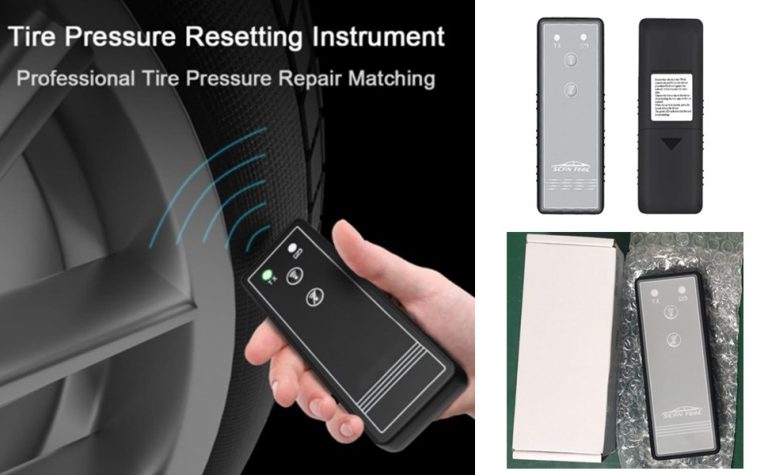
Relearn steps vary by make and model. Some cars do it automatically, while others need a TPMS reset tool. If your light stays on after a rotation, see our guide on how to reset the TPMS light after tire rotation for model-specific tips.
Seasonal and Altitude Effects on Cold Tire Pressure
Tire pressure changes with the seasons. A cold snap can drop your pressure by 2 to 3 PSI overnight, which is often enough to trigger the TPMS light. Summer heat does the opposite, pushing pressures higher.
Adjusting for Winter Drops, Summer Heat, and Mountain Drives
In winter, check cold pressure more often and add air to match the placard. In summer, don’t bleed air from a hot tire just because it reads high; wait for a cold reading first. At higher altitudes, the outside air pressure drops, which makes your tire pressure read slightly higher. That’s normal and usually not a reason to let air out.
| Condition | Typical change | Best action |
|---|---|---|
| Winter cold snap | Drop of 1-2 PSI per 10°F | Check cold and add air to placard spec |
| Summer heat wave | Rise of 1-2 PSI per 10°F | Check cold and bleed only if above spec |
| Mountain altitude | Gain of 1-3 PSI at elevation | Leave as is unless the TPMS light comes on |
Common Tire Pressure Mistakes and When to See a Professional
The most common mistakes are checking pressure after driving, using the sidewall number, and ignoring the TPMS light for weeks. Another mistake is topping off a tire that has a slow leak without ever finding the cause. If a tire loses more than 1 or 2 PSI per week, something is wrong.
Puncture Location: Where a Temporary Plug Is Allowed and Where It Isn’t
A temporary plug can be a stopgap for a small puncture in the center tread area, but it is not a permanent fix. Punctures in the sidewall, shoulder, or near the edge of the tread are not safe to plug. Those areas flex constantly and a plug can work loose.
For a detailed comparison of repair methods, read our guide on tire plug vs patch safety.
Temporary Repair Limits vs. Professional Patch-and-Plug Thresholds
Industry guidelines generally allow a permanent patch-and-plug repair only for punctures in the tread that are roughly 1/4 inch or smaller. A professional patch-and-plug seals the tire from the inside and is much more reliable than a string plug. If the puncture is larger, or the tire has been driven flat, replacement is the safer call.
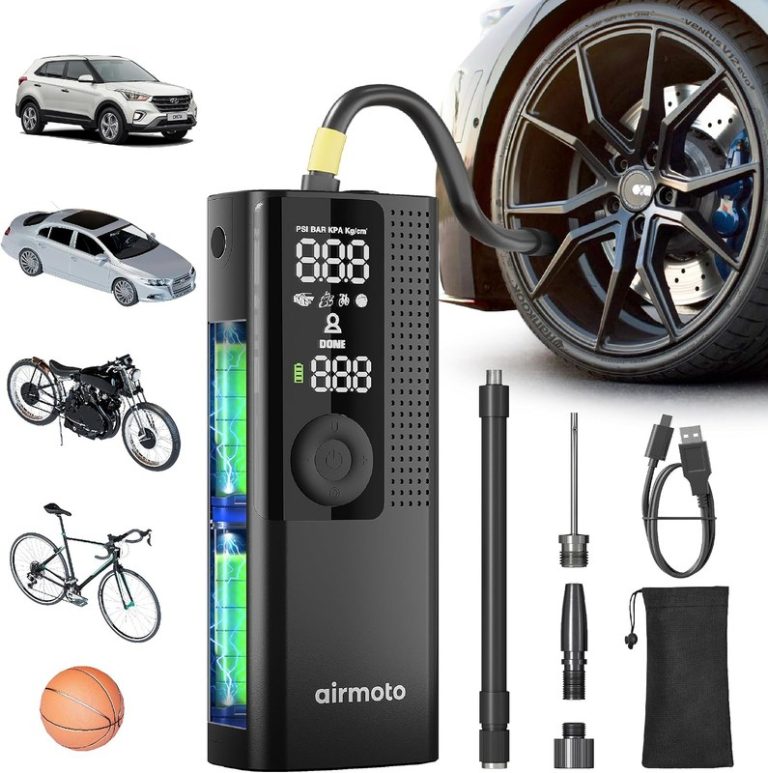
Inflator Duty Cycle: Using a Portable Compressor Without Overheating It
Portable tire inflators have a duty cycle, which tells you how long the unit can run before it needs to cool down. A typical inflator might run for 10 minutes and then need 20 to 30 minutes of rest. Ignoring the duty cycle can overheat the motor and shorten the tool’s life.
Understanding Duty Cycle Ratings and Mid-Inflation Pressure Checks
Check your inflator’s manual for its specific on and off times. During a long inflation, stop halfway and check the pressure with a separate gauge. This prevents over-inflation and gives the tool a break. If the inflator feels hot to the touch or slows down, let it cool before continuing.
Next Steps: Build a Monthly Cold-Pressure Habit
Make tire pressure checks part of your monthly routine, just like checking oil or washer fluid. Pick a day, wait for the tires to cool, and spend 5 minutes checking all four tires. This simple habit catches slow leaks before they become roadside emergencies.
Fuel Economy, Tire Lifespan, and Ownership Cost Impact of Consistent Checks
Under-inflated tires create more rolling resistance, which means your engine works harder and burns more fuel. Properly inflated tires also wear more evenly, so they last longer and need replacement less often. Over the life of a set of tires, consistent pressure checks can save you real money in fuel and premature tire wear.
Consistent checks also protect your TPMS sensors by catching problems early. And when it comes time to sell or trade your vehicle, a record of regular tire care shows the car was maintained.
- Best for: Drivers who want accurate readings and longer tire life by waiting 3 hours for a true cold check.
- Think twice if: You’re in a hurry and tempted to rely on a warm reading or the TPMS light alone.
- Next step: Find your door-jamb placard, note the cold PSI for front and rear, and schedule a monthly cold-pressure check.
Frequently Asked Questions
Wait at least 3 hours after driving for a true cold tire pressure reading. If you drive less than 1 mile at low speed before checking, most tire experts still count that as a cold reading.
Yes. A short 1-mile trip at gentle speed creates very little heat, so the reading stays close to true cold pressure. For longer drives, wait the full 3 hours.
Highway driving can raise tire pressure by 4 to 6 PSI above the cold reading. Heat from friction and tire flexing causes the air inside to expand.
TPMS sensors trigger when pressure drops roughly 25% below the recommended level, which may not be visible by eye. Temperature drops, slow leaks, or a failing sensor battery can also cause the light.
Always use the door-jamb placard. The sidewall number is the maximum pressure the tire can handle, not the recommended pressure for your vehicle.
Check tire pressure at least once a month and before long trips. Seasonal temperature changes can shift pressure by 1-2 PSI per 10°F, so check more often during cold snaps.



One Comment