Can You Use a Tire Inflator with the Car Running? Avoid These Risks
Yes, you can use a tire inflator with the car running, but only when the battery is healthy and you follow the inflator’s duty cycle. Turn the engine off if the battery is weak, the alternator is failing, or you smell burning wires.
Can you use a tire inflator with the car running? Yes, in most cases, but the safe answer depends on your battery’s health, the inflator’s power draw, and where you park. This guide explains the electrical details, compares your three power options, and shows you how to avoid the mistakes that kill batteries and overheat tools.
- Engine running: Keeps the alternator charging the battery during high-draw inflator use.
- Battery health: A weak battery can still drop below safe voltage even with the engine on.
- Duty cycle: Most 12V inflators need rest periods to avoid overheating and tripping thermal cutoffs.
- TPMS: The warning light may not reset until you drive and the system completes a.
- Roadside safety: Park away from traffic, use hazard lights, and follow state move-over laws.
Quick Answer: Yes, But Only If You Follow These Rules
Most drivers can use a 12V tire inflator with the engine running, and in many cases it’s the safer choice. The alternator keeps the battery topped up while the inflator draws power, which reduces the risk of draining the battery to the point where the car won’t restart.
When the Engine Should Stay Running
Keep the engine running when your battery is healthy and you’re inflating one or more tires from a 12V outlet. The alternator supplies steady power, and the battery acts as a buffer against voltage dips. This matters most for high-draw inflators that pull 10 amps or more.
Running the engine also helps if you’re inflating several tires, like after a cold snap or before a road trip. The alternator can keep up with the load, so the battery doesn’t carry the whole job.
When You Should Turn It Off Immediately
Turn the engine off and stop inflating if you see the battery warning light, hear the engine struggle, smell burning plastic, or notice the inflator slowing down. These are signs of a weak battery, a failing alternator, or an inflator drawing more current than the circuit can handle.
Also stop if the inflator’s body gets too hot to touch. Most portable inflators have a duty cycle, and running past it can melt internal parts or blow the fuse.
How Your Car’s Electrical System Handles a Tire Inflator
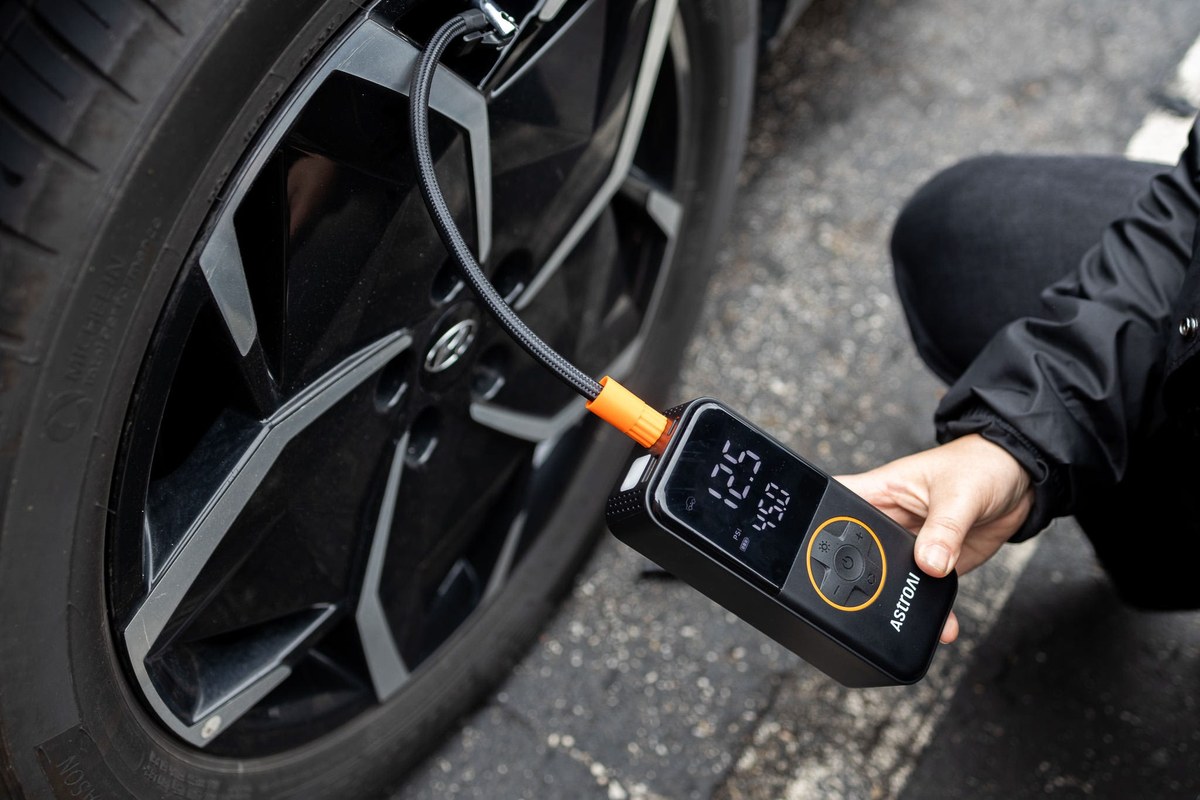
Your car’s 12V system is a simple loop: the battery stores power, the alternator generates power while the engine runs, and the cigarette lighter socket delivers that power to your inflator. Understanding this loop helps you decide whether to keep the engine on.
System Voltage and the 12V Cigarette Lighter Circuit
Most portable tire inflators draw between 8 and 15 amps at 12 volts. The cigarette lighter circuit in most cars is fused at 10 to 20 amps, so a high-draw inflator can push the circuit close to its limit. With the engine running, the alternator supplies most of the current, and the battery smooths out the voltage.
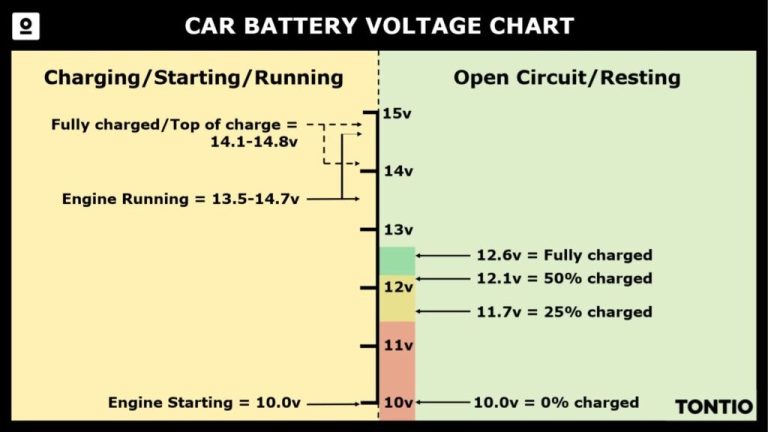
If the engine is off, the battery alone carries the load. A healthy battery can handle a few minutes of inflation, but a weak or old battery may drop below 10 volts, which can make the inflator run slowly or stop entirely.
State of Charge vs. Battery Health: Why It Matters
State of charge tells you how full the battery is. Battery health tells you how well it can hold and deliver that charge. A battery can show a good state of charge in the morning and still fail under load because its internal capacity has degraded.
That’s why “the engine is running, so the battery is fine” isn’t always true. If the battery has a dead cell or high internal resistance, the alternator can’t fully compensate, and the inflator may still struggle.
Hybrid and EV Cautions: High-Voltage Systems Are Not the Issue
Hybrids and EVs still use a 12V battery for accessories, lights, and the infotainment system. The high-voltage traction battery does not power your tire inflator directly, so the same 12V rules apply.
One difference: some hybrids won’t run the gasoline engine just because you plugged in an accessory. If the 12V battery is low, the car may keep the engine off, and your inflator could drain the 12V battery. Check your owner’s manual for accessory-use guidance.
Three Ways to Power a Tire Inflator: Side-by-Side Comparison
Your inflator can be powered three ways, and each has different rules for running the engine.
12V Cigarette Lighter Plug
The most common option. It’s convenient, but the circuit’s fuse rating limits how much current the inflator can draw. With the engine running, this is usually fine for topping off passenger-car tires. Without the engine, keep the session short.
Direct Battery Clamps
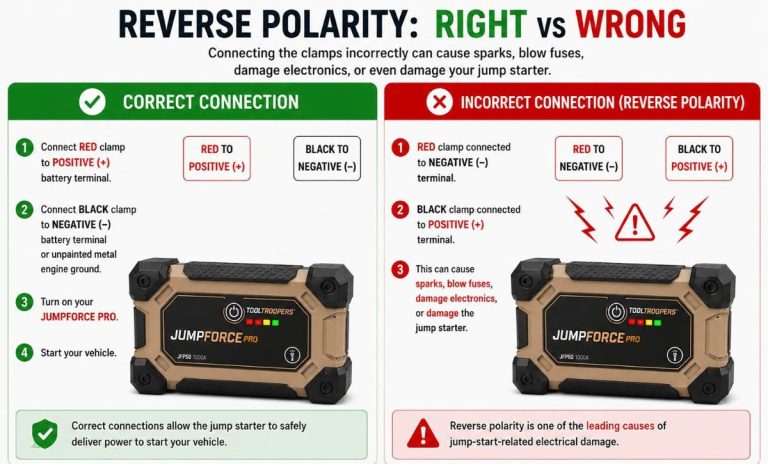
Some inflators come with clamps that connect straight to the battery. This bypasses the cigarette lighter fuse and delivers full current. With the engine running, the alternator handles the load easily. Connect the positive clamp first, then the negative, and remove in reverse order.
Standalone Portable Power Pack
A rechargeable power pack or jump-starter with a built-in inflator doesn’t touch your car’s electrical system at all. You don’t need the engine running, and you can’t drain your car battery. The trade-off is that the pack’s own battery limits how many tires you can fill before recharging.
| Option | Best for | Owner consideration | Driver consideration |
|---|---|---|---|
| 12V plug | Quick top-ups on healthy batteries | Check the fuse rating; most cars use 10-20A | Keep the cord away from pedals and gearshift |
| Battery clamps | High-draw inflators on larger tires | Clamps need clean, tight connections | Connect positive first, then negative |
| Power pack | Roadside emergencies without the car | Recharge the pack every few months | Store it where it won’t get crushed |
Tire Pressure Basics to Get Right Before You Inflate
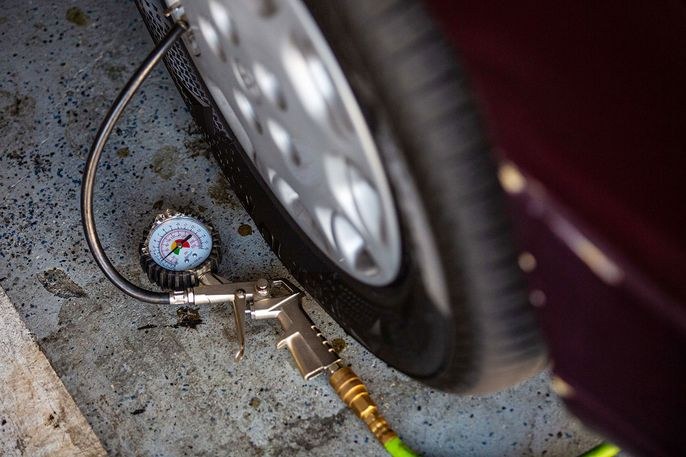
Before you plug anything in, you need the right pressure target. Getting this wrong can cause uneven wear, poor fuel economy, or a blowout.
Door-Jamb Placard vs. Sidewall Numbers: Which One to Trust
Trust the placard on the driver’s door jamb, not the number molded into the tire sidewall. The placard lists the pressure recommended by the vehicle manufacturer for your specific tire size and load. The sidewall number is the maximum pressure the tire can hold, not the pressure you should use.
If you’re carrying a heavy load or towing, the placard may list a higher pressure for rear tires. Use that number when the vehicle is loaded.
Cold Pressure, Gauge Accuracy, and Seasonal Temperature Swings
Tire pressure should be checked when tires are cold, meaning the car hasn’t been driven for at least three hours. Driving heats the tires and raises pressure, so a hot reading can be 4 to 6 psi higher than the cold pressure. If you’re unsure about timing, our guide on how long to wait before checking tire pressure after driving covers the details.
Seasonal swings matter too. For every 10°F drop in air temperature, tire pressure drops about 1 psi. That’s why the low-tire light often appears on the first cold morning of the season. If you see that light, check the placard pressure and inflate to that number, not the sidewall maximum.
Inflator Duty Cycle: Why You Need to Let It Rest
Most portable inflators are not designed to run continuously. A typical duty cycle is 10 minutes on, then 10 to 15 minutes off, but it varies by model. Check your manual. Running past the duty cycle can overheat the motor, melt the housing, or trip the thermal cutoff.
If your inflator stops before reaching the set pressure, it may be hitting that thermal limit. That’s a common issue we explain in our guide on why tire inflators stop before reaching the set pressure.
TPMS Relearn, Sensor Limits, and When the Light Won’t Turn Off
After you inflate, the tire pressure monitoring system may not turn off the warning light right away. That’s normal, but there are limits.
TPMS Relearn Limits and Diagnostic Tool Coverage
Most TPMS systems need the car to be driven above a certain speed for a few minutes before the light resets. The system compares wheel speeds and pressure readings, then clears the warning. If the light stays on after a full drive, the sensor may be dead, or the system may need a relearn procedure.
Some vehicles require a TPMS reset tool or a diagnostic scanner to complete the relearn. If you have a bad sensor, the light won’t turn off no matter how much air you add. Our guide on driving with a bad TPMS sensor explains what happens in that situation.
Puncture Location, Temporary-Repair Limits, and Professional-Repair Thresholds
Inflating a tire that’s losing air is a temporary fix, not a repair. If the puncture is in the tread’s repairable zone and smaller than about 1/4 inch, a shop may be able to patch it. Punctures in the sidewall or shoulder are not safely repairable, and the tire should be replaced.
If you’ve already plugged a tire, remember that plugs are a temporary repair. Repeated plugs in the same tire can weaken the structure. When in doubt, have a professional inspect the tire before you trust it at highway speed.
Roadside Safety: Where and How to Inflate Without Risk
Where you park matters as much as how you inflate. A tire failure on the highway is dangerous, and so is standing next to traffic while you work.
Safe Location, Traffic Visibility, and State Move-Over Laws
Pull as far off the roadway as possible, onto a flat, stable surface. Turn on your hazard lights. If you have reflective triangles or flares, place them behind the vehicle. Wear a reflective vest if you have one.
Many states have move-over laws that require drivers to change lanes or slow down when approaching a stopped vehicle with hazard lights on. These laws vary by state, so check your local rules. Even with legal protection, assume drivers won’t see you and stay alert.
Tool Completeness, Cable Condition, and Post-Use Inspection
Before you start, check that the inflator’s hose isn’t cracked, the power cord isn’t frayed, and the nozzle fits your valve stem. A damaged cord can short-circuit and blow a fuse. After use, let the inflator cool, wrap the cord loosely, and store it where it won’t get crushed.
Common Mistakes That Damage Your Battery, Tires, or Inflator
Most inflation problems come from a handful of avoidable mistakes.
Wrong Connection Order and Damaged-Battery Stop Conditions
If your inflator uses battery clamps, always connect the positive (red) clamp first, then the negative (black) clamp. When you’re done, remove the negative first, then the positive. This reduces the risk of sparks near the battery.
Never connect clamps to a battery that’s swollen, cracked, or leaking. Stop immediately if you see sparks, smoke, or hear hissing.
Overinflating a Hot Tire and Ignoring the Placard
Filling a hot tire to the placard pressure means it will be underinflated once it cools. Filling it above the placard because “it’ll drop when it cools” risks overinflation if you misjudge. Use the cold pressure as your target and recheck in the morning.
Using an Undersized Inflator Beyond Its Current Limits
A small inflator designed for passenger cars will struggle with truck or SUV tires. It will run longer, get hotter, and may trip its thermal cutoff. Check the inflator’s rated duty cycle and maximum pressure before using it on larger tires.
- Check the placard pressure before inflating
- Keep the engine running for high-draw inflators on healthy batteries
- Let the inflator cool between uses
- Inspect the hose and cord before each use
- Run the engine in an enclosed space
- Connect clamps to a damaged battery
- Inflate a hot tire to the placard without accounting for temperature
- Use a passenger-car inflator on truck tires beyond its limits
When to Stop and Call a Professional
Some situations are beyond what a portable inflator can fix.
Professional-Repair Thresholds for Tires and TPMS
If a tire won’t hold air, if you see cords or bulges in the sidewall, or if the puncture is in the shoulder, stop inflating and have the tire inspected. A shop can tell you whether a patch is safe or the tire needs replacement. The same applies to TPMS: if the light stays on after a proper relearn, a shop with a TPMS tool can diagnose the sensor.
Battery Health Checks and What a Shop Can Diagnose That You Can’t
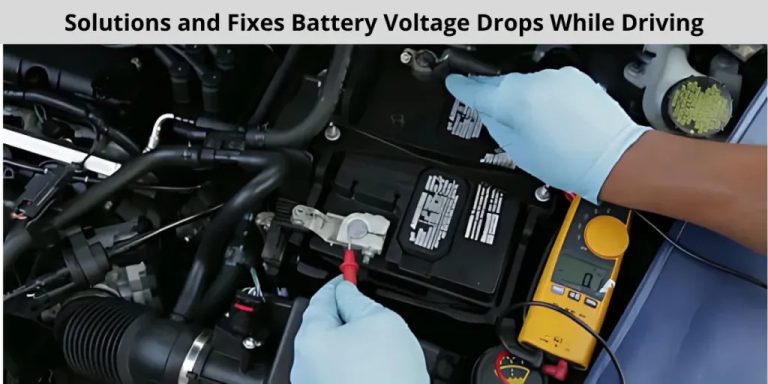
If your battery struggles to restart the car after a short inflation session, it’s time for a load test. A shop can measure cold cranking amps, state of health, and charging system output. A simple voltage reading at home won’t tell you whether the battery can handle a real load. Our guide on what a battery tester tells you explains the difference.
- Best for: Drivers with a healthy battery who need to top off tires quickly and safely.
- Think twice if: Your battery is old, the inflator draws more than the circuit’s fuse rating, or you’re working in an enclosed space.
- Next step: Check your owner’s manual for the 12V outlet fuse rating and your tire placard pressure before your next inflation.
Frequently Asked Questions
Yes, it’s safe in most cases when the battery is healthy and the car is parked outside. The alternator keeps the battery charged while the inflator draws power. Turn the engine off if you notice the battery warning light, a burning smell, or the inflator slowing down.
Yes, it can. A typical 12V inflator draws 8 to 15 amps, and a weak battery may drop below the voltage needed to run the inflator and restart the car. Keep inflation sessions short when the engine is off, or use a standalone power pack.
The most common reasons are the inflator’s thermal cutoff, a duty cycle limit, or a weak 12V outlet connection. Check the manual for the duty cycle and let the inflator cool before trying again. If it still stops early, the gauge or pressure sensor may need calibration.
No, you don’t need the engine running on most hybrids and EVs because the 12V battery powers the accessory outlet. However, some hybrids won’t run the engine just for accessory loads, so a low 12V battery can still be drained. Check your owner’s manual for guidance.
Most portable inflators have a duty cycle of about 10 minutes on, then 10 to 15 minutes off, but it varies by model. Running past the duty cycle can overheat the motor and melt internal parts. Check the manual for your specific inflator.
Check tire pressure when the tires are cold, meaning the car hasn’t been driven for at least three hours. Hot tires can read 4 to 6 psi higher than cold tires, which leads to underinflation if you fill to the placard while hot.