Why Does My Tire Inflator Get Hot? Normal Heat vs. Overheating
A tire inflator gets warm because compressing air creates heat, and that is normal. If it gets too hot to hold, shuts off, or smells like burning, stop and let it cool.
The short answer to why does my tire inflator get hot is that compressing air always creates heat, and a warm case is completely normal. The real concern starts when the tool becomes too hot to hold, shuts itself off, or smells like burning plastic.
- Normal heat: A warm housing is fine; a housing you cannot hold is not.
- Duty cycle: Most inflators need 10 minutes on, 30 minutes off.
- 12V socket: A weak connection makes the motor draw more current and run hotter.
- Stop conditions: Smoke, burning smell, or repeated shutdowns mean stop immediately.
- Right PSI: Always use the placard pressure on cold tires, not the sidewall max.
The Short Answer: Your Inflator Should Get Warm, Not Scorching Hot
Think of your inflator like a phone that warms up during fast charging. Some heat is expected. Too much heat is a warning.
A healthy inflator will feel warm after topping off one or two tires. You should still be able to hold it comfortably. If the housing becomes painful to touch, the motor is working harder than it was designed to.
Normal Operating Temperature vs. Overheat Warning Signs
Normal signs include a warm housing, a warm hose near the pump head, and a fan that runs while the unit is on. A slight motor smell during the first few uses is also common as manufacturing oils burn off.
Overheat warning signs are different. Do you pull your hand away fast? Do you smell burning plastic, see smoke, or watch the unit lose power suddenly? Stop using it immediately. A housing that stays hot long after the unit is off also points to a problem.
The Physics of Heat: Why Compressing Air Heats Up Your Inflator

Air gets hotter when it is compressed. That is basic physics. The pump inside your inflator squeezes air into a smaller space, which raises the air temperature. That heat transfers to the cylinder, the motor, and the housing around them.
The motor also creates its own heat. Electric motors are not perfectly efficient. Some electrical energy becomes motion, but the rest becomes heat. Run the motor long enough, and that heat builds up faster than the small cooling fan can remove it.
Duty Cycle 101: The “10 Minutes On, 30 Minutes Off” Rule
Most portable inflators are not built to run continuously. Their duty cycle tells you how long they can run before they need a rest. A common rating is 10 minutes on, 30 minutes off. After 10 minutes of pumping, the unit needs a half-hour cooldown.
Ignore the duty cycle and heat builds up inside the motor. Over time, that heat can weaken plastic gears, melt wire insulation, or trip the thermal cutoff. If your inflator keeps shutting off, the duty cycle is often the reason. Our guide on why your portable tire inflator keeps shutting off covers this in more detail.
6 Common Reasons Your Tire Inflator Overheats (And How to Fix Them)
Here are the most common causes of inflator overheating, in the order you should check them.
1. Running past the duty cycle. The number one cause. Fix: time your fills and let the unit cool between tires.
2. Weak or corroded 12V socket. A poor connection drops voltage and raises current. Fix: clean the socket and check the plug fit.
3. Low battery voltage. Inflating with the engine off drains the battery and makes the motor work harder. Fix: run the engine while inflating.
4. Kinked hose or clogged valve chuck. Restricted airflow makes the pump strain. Fix: straighten the hose and clean the chuck.
5. Hot ambient temperatures. A trunk in summer can get extremely hot. Fix: move to shade and let the unit cool before use.
6. Undersized inflator for the job. A small unit pumping up a large SUV tire runs far too long. Fix: use a higher-CFM unit for big tires.
How to Check Your Inflator’s Duty Cycle Rating
Look at the manual or the product page. The duty cycle is usually listed as minutes on and minutes off. Some brands print it on the housing near the power switch.
If you cannot find the rating, assume the conservative 10-on, 30-off rule. Also check the max PSI rating. A unit rated for 150 PSI can handle most passenger tires. A 60 PSI unit may struggle with a large SUV tire. Fill time matters too, so see how long a portable tire inflator takes to fill a tire to set realistic expectations.
Why a Weak 12V Socket Makes the Motor Run Hotter
The 12V socket in your car should deliver around 12 volts with the engine running. Corroded contacts, a loose plug, or a long extension cable can drop that voltage. When voltage drops, the motor draws more current to keep spinning. More current means more heat.
A poor connection also creates resistance heat right at the plug. If the plug feels hot when you unplug it, the socket or the plug is the problem.
Is It Safe to Keep Using a Hot Inflator? Know the Damage Thresholds

No. Once an inflator reaches the point where you cannot hold it, continuing to run it risks permanent damage. Motor windings have an insulation rating. Exceed that temperature and the insulation breaks down, which can lead to a short circuit, melted housing, or in rare cases a fire.
Most inflators have a thermal cutoff. That small switch opens the circuit when the motor gets too hot. It protects the tool, but it also means you cannot finish the job until the unit cools.
The Touch Test, Thermal Cutoff, and Damaged-Battery Stop Conditions
Use the touch test: if you can keep your palm on the housing for five seconds, the temperature is probably acceptable. If you pull away, stop and let it cool.
If the inflator shuts off by itself, let it cool completely before trying again. If it shuts off quickly again, the unit is too small for the job or the cooling system is failing.
For cordless inflators, a hot battery is a separate stop condition. Lithium batteries should not be charged or discharged when they are very hot. Let the battery cool before recharging.
12V Socket vs. Cordless vs. Jump-Pack Inflators: Which Runs Coolest?
Each power type has a different heat profile.
12V socket inflators depend on socket quality and whether the engine is running. With the engine on, the alternator supplies steady power, so the motor runs cooler and the job finishes faster.
Cordless inflators produce heat from both the motor and the battery. The battery adds its own warmth and limits runtime. Jump-pack inflators work the same way, with an added battery that is also used for jump-starting.
Generally, a 12V unit running with the engine on handles longer jobs best. Cordless units are more portable, but their batteries add heat and limit runtime.
Hybrid and EV Cautions: Don’t Tap the Traction Battery
Hybrid and electric vehicles have a high-voltage traction battery under the floor. You cannot use that battery to power a 12V inflator directly. The 12V accessory battery is a separate system.
Never connect an inflator or any accessory to the orange high-voltage cables. If you are unsure which battery is which, check the owner’s manual or have a professional help you.
Cable Condition, Connection Order, and Current Limits
Check the inflator cable for cracks, bare wire, or melted spots before each use. A damaged cable can drop voltage and create heat.
Plug the inflator into the socket firmly. If the plug wiggles, the connection is poor. Replace the plug or the inflator.
Know the socket’s current limit. Many car 12V sockets are fused at 10 or 15 amps. A high-draw inflator can blow the fuse, which is safer than melting the wiring but still leaves you stranded.
Inflating to the Right Cold PSI: Placard, Gauge Accuracy, and TPMS Relearn
The pressure number on the tire sidewall is the maximum pressure, not the recommended pressure. The correct pressure is on the placard inside the driver’s door frame or in the owner’s manual. That placard value is for cold tires, meaning the car has not been driven for at least three hours.
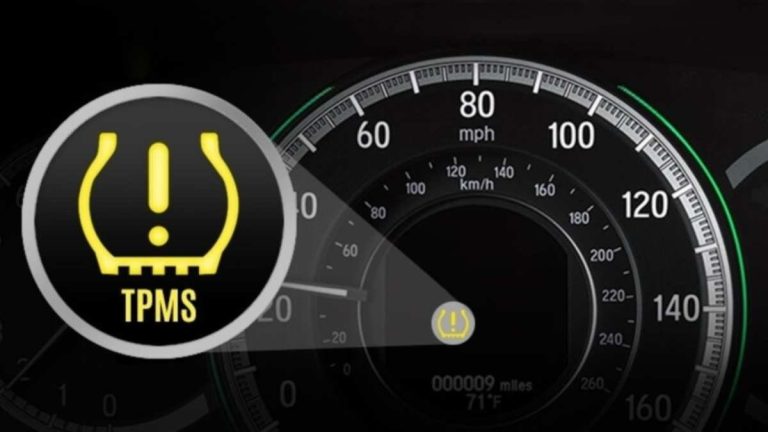
If your vehicle has a TPMS, the system compares tire pressure to a threshold and warns you when pressure drops. After inflating, the warning light may take a few minutes to go out. Some vehicles need a relearn procedure after pressure changes or tire rotation. Check your owner’s manual for the exact steps, especially if your TPMS light flashes then stays on.
Why Hot Air Makes You Under-Inflate (and Over-Inflate) Without Realizing
Driving heats up the air inside the tire. Hot air expands, so a tire that reads 35 PSI after a highway drive might actually be at 31 PSI when cold. If you inflate to 35 PSI on a hot tire, you will be under-inflated the next morning.
The reverse is also true. If you inflate a cold tire to placard pressure on a hot summer day and then drive, the pressure will rise. That is normal. Do not let air out of a hot tire to match the placard. Check and adjust pressures when the tires are cold.
When a Hot Inflator Is a Symptom of a Bigger Tire Problem
Sometimes the inflator is not the problem. A tire that needs constant refilling, or that takes an unusually long time to reach pressure, may have a slow leak, a damaged bead, or a puncture. The inflator runs longer, heats up, and shuts off. The real issue is the tire.
Puncture Location, Temporary Repair Limits, and Professional Thresholds
Small punctures in the tread center can often be repaired with a plug or patch. Punctures in the sidewall, near the shoulder, or larger than about a quarter-inch are not safely repairable. A tire professional should make that call.
A portable inflator is a temporary tool. It gets you to a shop. It is not a permanent fix for a damaged tire. If you are wondering how long you can drive with a nail in your tire, the safe answer is: just far enough to reach a professional.
Inflate Safely: Pick the Right Spot Before You Start
Move the car to a flat, stable surface away from traffic. Set the parking brake. Work in daylight or under good lighting. If you are on the roadside, use hazard lights and stay behind the guardrail if possible.
Do not stand directly behind the tire while inflating. A damaged tire can fail suddenly. If the tire looks bulged, cracked, or is losing air faster than the inflator can add it, stop and call for professional help.
Buying a Replacement Inflator That Won’t Overheat: What to Compare
If your current inflator overheats regularly, choose the next one with heat in mind. Compare the specs below before you buy.
Key Specs to Compare: Duty Cycle, CFM, Max PSI, and Gauge Quality
Duty cycle: Look for the longest “on” time you can find. A 20-minute duty cycle is much better than a 5-minute one for larger tires.
CFM (cubic feet per minute): Higher CFM means faster filling. Faster filling means less running time, which means less heat. Check the CFM rating at 0 PSI and at a working pressure like 30 PSI.
Max PSI: Make sure the unit can reach at least 20-30 PSI above your vehicle’s placard pressure.
Gauge quality: A digital gauge is easier to read but needs occasional calibration. An analog gauge is simpler but can drift. Check accuracy against a separate gauge now and then.
Before you choose, it helps to understand the difference between a tire inflator and an air compressor for car tires.
Which Inflator Fits Your Vehicle and Driving Style?
Commuter with a sedan: a compact 12V unit with a 10-minute duty cycle is probably enough.
SUV or truck owner: look for a higher-CFM unit, a longer duty cycle, and a sturdier hose. Large tires take longer to fill.
Rideshare driver: a cordless or jump-pack inflator keeps you mobile without relying on a nearby outlet. Carry a spare battery if your unit supports it.
Road-trip family: a unit with a built-in light, a long hose, and a digital gauge with auto-shutoff saves time and stress.
Warranty, Support, and a Transparent Verdict
Check the warranty length and what it covers. Some brands cover the motor for two years but exclude the hose and accessories. Read the return policy too.
Here is the transparent verdict: the best inflator for you is the one that matches your tires, your power source, and your patience. A cheap unit that overheats every time you use it is not a bargain. A mid-range unit with a good duty cycle and a real warranty is usually the smarter buy.
- Confirm the duty cycle matches the time it takes to fill your largest tire
- Check the max PSI against your vehicle’s placard pressure
- Verify the power source: 12V plug, battery platform, or jump-pack
- Review the warranty, return policy, and replacement parts availability
- Measure the storage space in your trunk or under-seat compartment
Maintenance and Next Steps: Keep Your Inflator Cool for Years
Maintenance is simple but easy to skip. A clean, well-stored inflator runs cooler and lasts longer.
Post-Use Inspection and Storage Conditions
After each use, let the inflator cool before storing it. Wipe the housing with a dry cloth. Check the hose for kinks, cracks, or debris. Inspect the valve chuck for dirt or damage.
Store the inflator in a cool, dry place. Extreme heat in a trunk during summer can weaken plastic and seals over time. Keep it out of direct sunlight when possible.
Check the power cord for damage every few months. If you own a cordless model, follow the battery manufacturer’s storage and charging instructions.
- Best for: Drivers who inflate tires regularly and want a tool that finishes the job without shutting off.
- Think twice if: You only need a one-time emergency top-off; a basic 12V unit may be enough.
- Next step: Check your current inflator’s duty cycle and your vehicle’s placard pressure before your next fill.
Frequently Asked Questions
A warm housing you can hold comfortably is normal. If you cannot keep your palm on it for five seconds, it is too hot and needs to cool down.
Most inflators have a thermal cutoff that shuts the motor off to prevent damage. Let the unit cool completely, then check the duty cycle and the condition of your 12V socket.
You can, but it drains the battery and may deliver lower voltage, which makes the motor run hotter. Running the engine while inflating is safer for both the battery and the inflator.
Follow the manufacturer’s duty cycle rating. If it is not listed, use the 10 minutes on, 30 minutes off rule as a safe baseline.
You can add air to a hot tire, but do not use the hot reading as your target. The placard pressure is for cold tires, so adjust pressure when the tires have cooled for at least three hours.
Stop using it immediately, unplug it, and move it away from the vehicle. A burning smell can mean melted insulation or a failing motor. Have it inspected or replace it.