Tire Inflator vs Air Compressor for Car Tires: Which Is Faster?
A tank-style air compressor fills car tires faster because it stores air and delivers it in a steady burst. A portable tire inflator is slower but easier to store and ideal for daily top-offs and roadside use.
When you compare a tire inflator vs air compressor for car tires, you’re really choosing between speed and convenience. Each tool can fill a tire, but they work differently, fit different lifestyles, and cost different amounts. This guide breaks down the trade-offs so you can pick the right one the first time.
- Speed winner: Tank-style air compressors fill tires fastest because they release stored air in a burst.
- Daily use winner: Portable inflators suit monthly top-offs and trunk storage despite slower fill times.
- Duty cycle matters: Small inflator pumps need cool-down breaks; follow the manual’s run-time limit.
- Accuracy first: Set your target from the door-jamb placard and confirm with a separate gauge.
- Safety rule: Never reinflate a visibly damaged tire; treat inflators as emergency tools, not repairs.
The Short Answer: Which Fills a Car Tire Faster?
A tank-style air compressor wins the pure speed test. It stores compressed air in a tank and releases it through the hose in a steady burst. A portable tire inflator has no tank, so its small pump runs the entire time. You feel that difference on the first tire and again on the fourth.
Why a Tank Compressor Wins the Speed Test
The tank is the reason. The compressor pump fills the tank to a set pressure, then the tank delivers that air to the tire instantly. For a completely flat tire, the initial burst does most of the work. The pump then kicks in to refill the tank while you move to the next tire.
Two specs matter most on a compressor: tank size in gallons and pump output in CFM at a stated pressure. More gallons mean more reserve air. Higher CFM means faster recovery between tires. Both add cost and weight, so choose only what your vehicle lineup needs.
When a Tire Inflator Is Still the Smarter Daily Choice
Speed is not everything. A monthly top-off adds only one or two PSI to each tire, and that job takes about two minutes with a compact inflator. Preset shutoff lets you set the target, press the button, and walk away. No heavy compressor to drag out, no extension cord, and no tank to drain.
If you wonder how long a portable tire inflator takes to fill a tire, the answer depends on pump output and tire size. For occasional top-offs, the extra minute per tire rarely matters.
Tire Inflator vs Air Compressor: Defining the Two Tools
Compact Tire Inflators: Preset Shutoff and Duty-Cycle Limits
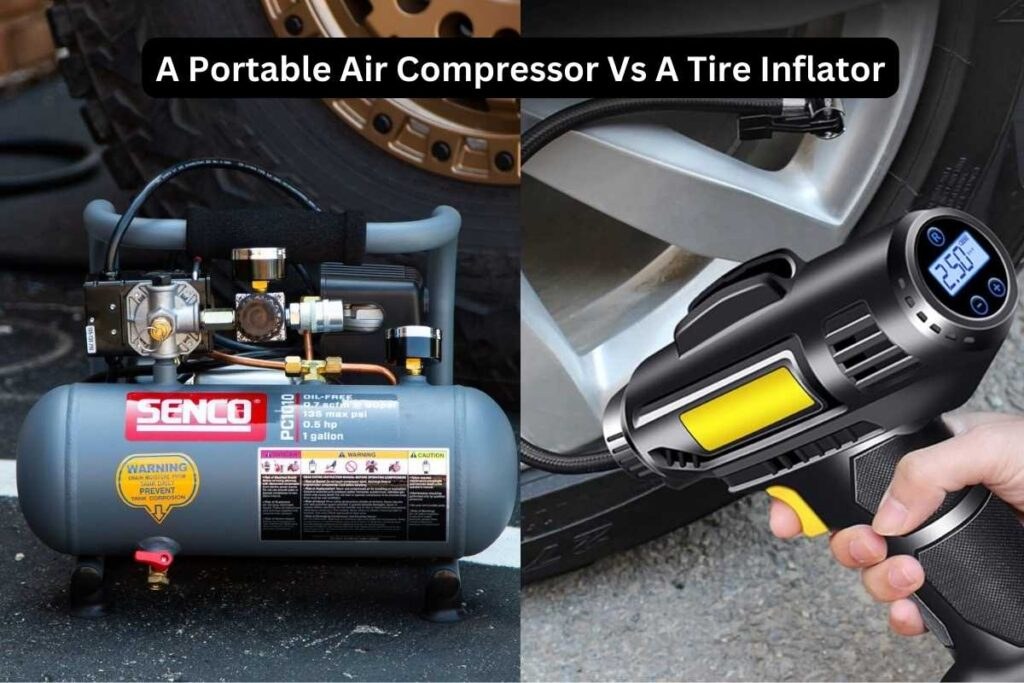
A portable tire inflator is a small pump with a built-in gauge. Most run from the car’s 12V socket or a rechargeable lithium battery. Many models include a digital readout and preset shutoff, so the pump stops automatically at your chosen PSI. That feature prevents the guesswork that causes over-inflation.
The main limit is duty cycle. Most inflator pumps can run only a short time before needing to cool down. Push past that limit and thermal protection may stop the pump mid-fill. This is a common reason owners wonder why their portable inflator keeps shutting off. Let the pump cool, then finish the top-off.
Air Compressors: Tank Capacity, CFM, and Multi-Use Versatility
An air compressor uses a pressure switch to keep a tank filled. Garage units plug into a standard 120V outlet and come in pancake, horizontal, or vertical designs. The tank stores air, and the pump refills it whenever pressure drops below a set point.
Beyond tires, a compressor can run blow guns, air tools, and nailers. That multi-use value is why many households buy one even when their main job is just tires.
Head-to-Head Comparison: Speed, Power, and Portability
| Option | Best for | Owner consideration | Driver consideration |
|---|---|---|---|
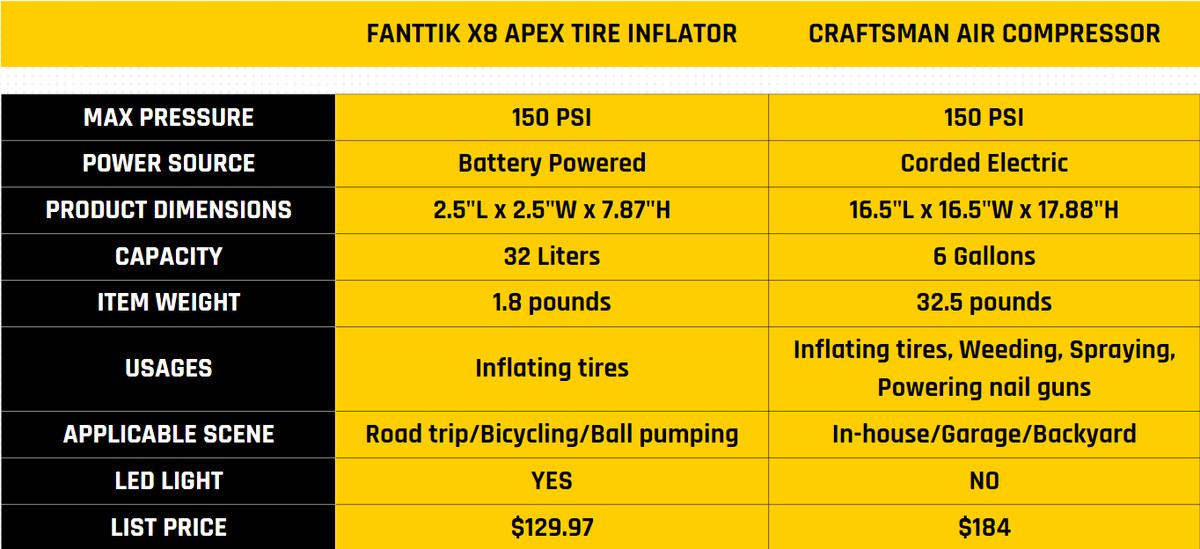
| Compact tire inflator | Daily commuting, top-offs, trunk storage | Lower upfront cost; battery or 12V lifespan limits | Preset shutoff is easy to use; slower on large tires and needs cool-down breaks |
| Tank-style air compressor | Home garage, trucks, off-road, multi-vehicle households | Higher cost, requires garage floor space and routine tank draining | Fast steady fills; needs AC power or a long extension cord |
Fill Speed and Duty Cycle: CFM Ratings vs Tank Refill Time
Think about both the fill time and the wait between fills. A tank compressor fills the first tire fast, then refills the tank while you check the second tire. A portable inflator is always at the tire but works slower. If you fill four tires after a long trip, the compressor’s rhythm wins.
Duty cycle is the hidden variable for inflators. Small pumps need rest to avoid overheating. Check the manual for the rated run time and follow it. For one flat tire this is rarely a problem. For a busy weekend of off-road driving, it can be the deciding factor.
Power Sources: 12V Cigarette Lighter, Cordless Lithium, or 120V AC
12V inflators plug into the accessory socket, and that socket’s fuse rating varies by vehicle. Check the owner’s manual before connecting a high-draw compressor. A small inflator usually works fine, but a large portable compressor may blow the fuse.
Cordless lithium inflators remove cables entirely. The trade-off is runtime: a single battery charge may handle one or two full fills before it needs a recharge. A 120V AC garage compressor offers the most output and steadiness, but only where an outlet and extension cord reach.
Cable condition matters as much as the pump. A cracked 12V plug or worn cord can lose connection mid-fill. Inspect those parts before you trust the tool at the roadside.
Portability and Storage: Trunk Fit, Weight, and Cable Condition
An inflator fits in the spare-tire well, a trunk organizer, or under a seat. That convenience is why daily drivers buy them and keep them in the car. A tank compressor is too heavy for that role and lives in the garage or workshop.
Long air hoses on garage compressors reach all four corners of a vehicle without moving the machine. Inflator hoses are short, so you may need to reposition the tool or the vehicle. Measure the distance from your accessory socket to the rear tires before you rely on it in an emergency.
Pressure Accuracy and TPMS: Setting the Right PSI Safely
Reading the Door-Jamb Placard and Using Cold Tire Pressure
Your vehicle’s recommended pressure is printed on the driver’s side door jamb or inside the fuel door. The number molded into the tire sidewall is the maximum pressure, not the target. Always use the door-jamb number for normal driving.
Check pressure on cold tires. That means the vehicle has been parked for at least three hours or driven less than a mile. Tires gain a few PSI as they heat up on the road, which is normal. If you adjust pressure while tires are hot, you will be underinflated after they cool.
Gauge Accuracy: Built-In vs Digital vs Separate Tire Gauge
The built-in gauge on an inflator is convenient, but it is not always precise. Dials can stick after years of use, and digital readouts can drift. Set your inflator a couple of PSI above the target, then confirm with a separate digital tire gauge for best accuracy. If you want to know more, read about how accurate portable tire inflator gauges are.
TPMS Relearn Limits and When You Need a Scan Tool
After tire rotation or sensor replacement, some vehicles need a TPMS relearn so the system knows which sensor sits at each corner. Some procedures use a simple magnet sequence; others need an OBD2 scan tool. Your owner’s manual is the correct starting point before you buy any extra tool.
Emergency Use: Puncture Limits, Temporary Repairs, and Professional Thresholds
Puncture Location and the Limits of a Temporary Inflation
An inflator is a get-you-to-the-shop tool, not a repair. A small nail hole in the tread area can usually be patched or plugged by a professional. Damage in the sidewall or shoulder means the tire should be replaced. If a tire loses pressure again within minutes of filling, stop and call for help.
When to Stop and Visit a Professional Tire Shop
Do not keep reinflating a tire that has a visible bulge, a bent wheel, or separated tread. Reinflating a damaged tire can cause it to fail suddenly. Use a spare tire or call a tow instead. A tire shop will inspect the inside of the tire and tell you whether a patch, plug, or replacement is safer. For a closer look at repair safety, check our guide comparing tire plugs versus patches.
Roadside Safety: Safe Location, Visibility, and Post-Use Inspection
After filling, remove the hose and listen for air escaping around the valve stem. Screw the cap back on snugly and drive slowly to the nearest shop. If the tire looks or feels wrong, do not continue.
Which Tool Fits Your Driving Style? A Side-by-Side Buyer Guide
Best for Commuters and Daily Drivers: Cordless or 12V Inflator
Look for preset shutoff, a clear gauge, an LED light, and a compact body. Store it in the trunk or under a seat so it is always with the car. For most daily drivers, this is the smarter purchase than a garage compressor.
Best for Trucks, Off-Road, and Trailering: High-CFM Compressor
Trucks, SUVs, and trailers have bigger tires that need more air volume. If you air down for off-road driving, you will want a tool that can refill all four tires without long waits. A compact inflator will work, but it may hit its duty-cycle limit. A higher-output compressor is worth the extra money here. For a deeper answer, read our explainer on whether a portable tire inflator can handle truck tires.
Best for Home Garage Use: Pancake Compressor vs Premium Inflator
A pancake compressor is a proven garage fixture if you also use air tools or nailers. It fills tires fast and does much more. The downsides are noise, cost, and tank maintenance. If your only job is tires, a premium inflator is quieter and cheaper to run. Pick based on what else you want the air for.
Maintenance, Ownership Cost, and Longevity
Inflator Care: Battery Chemistry, Storage Conditions, and Cable Checks
Rechargeable inflators store best at about a 50 percent charge in a temperature-controlled space. Extreme heat and cold shorten lithium battery life. Before every roadside use, inspect the hose, 12V plug, and cable for cracks or loose connections. A small repair now beats a failure at the roadside.
Compressor Care: Draining the Tank, Checking Valves, and Filter Maintenance
Compressor hoses and fittings also age. Give them a quick glance each time you use the unit. Keeping the connections tight and dry prevents leaks that waste time and electricity.
Hybrid and EV Cautions: Protecting the 12V System While Inflating
Hybrid and EV drivers should know that accessory power comes from the 12V battery, not the high-voltage drive battery. Running a 12V inflator with the car off can drain that 12V battery and leave you unable to start. Check the owner’s manual for the correct ready mode before using an inflator. If the pump slows down, stop and let the system recover.
Our Verdict and Next Steps Before You Buy
Speed vs Convenience: The Bottom Line for 2026 Drivers
For 2026 drivers, the trade-off is clearer than ever. Battery inflators keep getting lighter, quieter, and easier to use. Tank compressors remain the fastest way to fill multiple tires and double as a garage multitool. Choose based on how you actually use air, not on the spec sheet alone.
- Decide your real use: monthly top-offs, roadside emergencies, off-road refills, or garage multitasking
- Check the accessory socket location and fuse rating in your owner’s manual
- Compare preset shutoff, gauge accuracy, CFM output, and duty cycle
- Measure the storage space in your trunk or garage
- Confirm the tool can handle your largest tire, especially on trucks or trailers
Check Your Placard, Test Your Gauge, and Choose Based on Your Real Use
Start by reading your door-jamb placard and writing down the cold pressures for front and rear tires. Then test your current inflator’s gauge against a separate tire gauge. Finally, match the tool to a typical month: one-tire top-offs mean a compact inflator is enough; multiple vehicles or trailering point to a compressor.
- Best for: Compact inflators suit daily commuters and family cars. Tank compressors suit truck owners, off-road drivers, and home garages with air tools.
- Think twice if: A budget inflator lacks preset shutoff or a workable duty cycle. A heavy compressor will frustrate you if you only want quick monthly top-offs.
- Next step: Check your placard pressure, confirm the accessory socket works with the tool you choose, and buy for the vehicle you actually drive most.
Frequently Asked Questions
It depends on the inflator and the tire size. Most portable inflators can fill a flat passenger tire in a few minutes, but the pump may need a cool-down break. A tank compressor does the same job faster because it releases stored air. Never drive on a tire that will not hold pressure.
The socket fuse has a current limit that varies by vehicle, so check the owner’s manual before using a high-output compressor. A small inflator usually works fine, but a large portable compressor can trip the fuse. If power cuts out during inflation, inspect the fuse and consider a direct-to-battery connection.
The manual’s duty-cycle rating tells you how long the pump can run before cooling down. Small inflators often need a rest period after extended running, and exceeding the limit can trigger thermal protection. Let the pump cool completely before you continue filling tires.
The sensor may not have re-read the pressure yet, or the tire was low for too long. In many vehicles the light turns off only after the tire reaches the placard pressure during a short drive. If it stays on, the sensor may be failing or the system may need a relearn.
Extreme heat shortens lithium battery life, and a hot trunk makes storage worse. Carry the inflator inside during heat waves or choose a 12V model that does not rely on a battery. Check the charge every few months and store at about 50 percent battery.
Truck and trailer tires need more air volume than passenger tires. A compact inflator can work, but it takes longer and may hit its duty-cycle limit. A higher-CFM portable compressor or a tank-style garage compressor is usually the better choice if you regularly fill large tires.