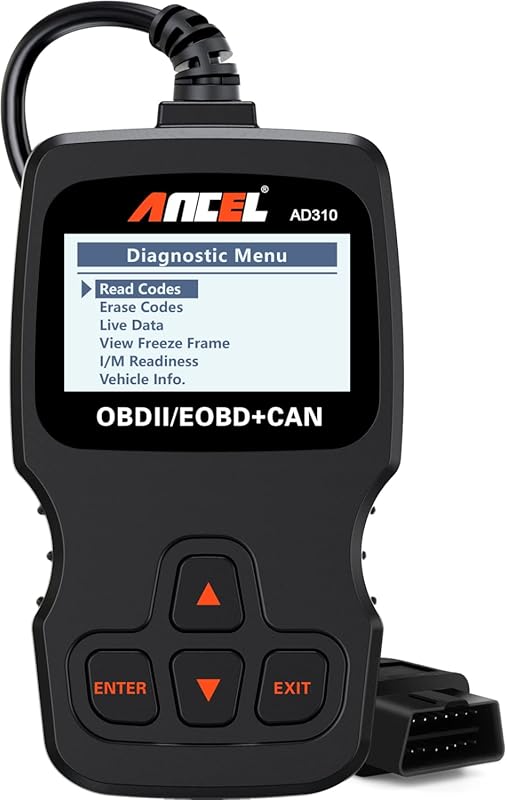
What Is a BT200 Battery Test? Battery Health Check Guide
A BT200 battery test is a quick way to check battery health, charging voltage, and starting power in a 12-volt vehicle system. It is useful for daily drivers and DIY owners, but it cannot replace a full diagnosis when electrical problems keep coming back.
What Is a BT200 Battery Test? In simple terms, it is a battery and charging-system check that helps you understand whether a 12-volt vehicle battery still has usable strength, whether the alternator is charging correctly, and whether starting power looks healthy enough for daily driving.
For most drivers, that means less guesswork before a no-start problem leaves you stranded. It also helps DIY owners decide when to recharge, replace, or send the vehicle for a deeper diagnosis.
- Battery health: Voltage alone does not prove a battery is good under load.
- Best use: Quick screening for weak batteries, charging issues, and slow starts.
- Compatibility: Vehicle year, battery type, app support, and OBD2 access can change results.
- Safety: Stop if the battery is swollen, leaking, hot, or otherwise damaged.
- Value: Good for owners who want fast answers before visiting a shop.
What Is a BT200 Battery Test? Quick Answer for Drivers
A BT200 battery test is typically used to evaluate battery condition, system voltage, and cranking performance in a vehicle electrical system. The exact screens and test names can vary by product revision and app version, but the goal is the same: give you a fast snapshot of battery health and charging behavior.
That makes it useful for commuters, family vehicles, work trucks, and older cars that may be showing slow starts, dim lights, or warning messages. It is not a magic fix, though. It can point you toward a weak battery, but it cannot repair one.
How the BT200 Checks Battery Health, Voltage, and Starting Power

Most BT200-style testers work by reading battery voltage and estimating how the battery behaves under load or during the starting event. Some versions also use app-based guidance to help interpret the result in plain language.
The important part is that battery testing is not just about voltage. A battery can show decent voltage at rest and still struggle when the starter motor asks for a heavy burst of current.
State of charge vs. true battery health
State of charge tells you how full the battery is right now. A battery that was driven recently may look fine even if it is worn out internally.
True battery health is about how well the battery can still deliver power and recover after use. That is why a test can show “charged” but still suggest replacement if the battery cannot support cranking or fails under load.
System voltage, cranking performance, and charging-system basics
A BT200 battery test is also useful for spotting basic charging-system problems. If the battery is weak, the alternator may have to work harder. If the alternator is undercharging, the battery may keep draining even after normal driving.
That is why a good test looks at the whole picture: resting voltage, engine-start behavior, and charging voltage after the engine is running. If the numbers are inconsistent, you may need a professional diagnosis of the battery, starter, alternator, or wiring.
Who Should Use a BT200 in 2026: Daily Drivers, DIYers, and Shops
This kind of tester is best for drivers who want a quick answer before the battery leaves them stuck. It is also helpful for people who maintain more than one vehicle, especially if one sits for long periods or sees short trips only.
Shops and advanced DIY users may like it for fast screening, while casual owners may value the simple app guidance more than deep diagnostic detail.
Best-fit vehicles and use cases
BT200 battery tests make the most sense on standard 12-volt vehicles such as gas cars, light trucks, SUVs, and many older hybrids that still use a low-voltage accessory battery. They are especially useful before winter, after a long storage period, or when a car has repeated slow starts.
They can also help if you are comparing a weak battery against a charging issue. For broader scan-tool guidance, see our bidirectional scan tool guide and our Topdon battery tester comparison.
When a professional diagnosis is the better next step
If the vehicle has intermittent electrical faults, repeated jump-start needs, parasitic drain, or warning lights that return after clearing, a simple battery test may not be enough. The same is true if the battery is part of a complex start-stop system or if the vehicle uses multiple batteries.
In those cases, a shop can test the battery under load, inspect charging output, and check for current draw or wiring faults that a basic consumer tool may miss.
Compatibility Guide: Model Years, OBD2 Protocols, and Vehicle Limits
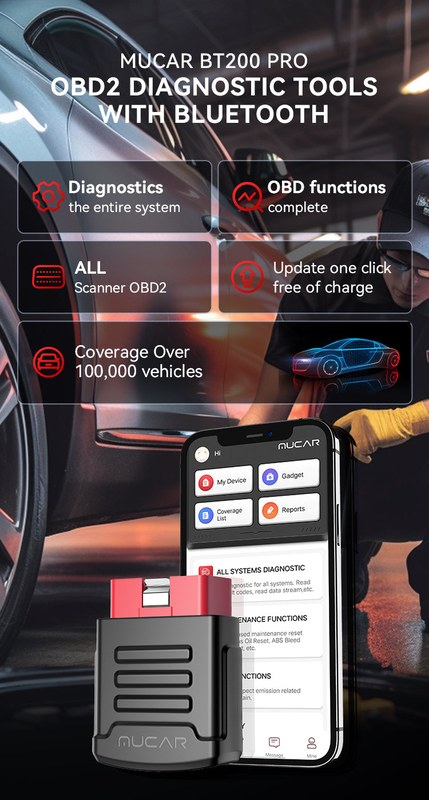
Compatibility matters because not every BT200-related feature works on every vehicle. Some functions depend on the battery type, the vehicle’s electrical architecture, and whether the tool needs OBD2 access or only battery clamp access.
Check: Verify make, model, year, trim, voltage, ports, mounting space, and OEM requirements. Limitations: State verified exclusions.
OBD2 port location, ignition mode, and connection basics
If the BT200 uses an OBD2 connection for scan functions, the port is usually under the dash on the driver side, but location varies by vehicle. Some vehicles require ignition on, accessory mode, or engine off during pairing.
Always follow the product instructions for the correct connection order. If the app asks for Bluetooth, location, or nearby-device permissions, that is normal for many connected diagnostic tools, but you should review what data is shared before you pair.
Model-year coverage, protocol support, and emissions-readiness limits
OBD2 coverage in the U.S. generally applies to most gasoline vehicles from 1996 and newer, but battery-test features and app functions can still vary. Protocol support also differs by vehicle make and model, so do not assume every menu item will work the same way.
Emissions-readiness checks, code reading, and live data are separate from battery testing. A tool may read basic codes but still have limited bi-directional control or reset functions.
Code reading, live data, reset limitations, and hybrid/EV cautions
Some BT200-class tools can read and clear certain diagnostic trouble codes, but clearing codes does not fix the cause. If the battery warning returns, the vehicle still has a fault that needs proper diagnosis.
Hybrid and EV owners should be especially careful. High-voltage systems are not the same as a 12-volt battery test, and any service near orange cables or high-voltage components should follow the OEM manual or a qualified technician’s instructions.
How to Use a BT200 Safely: Connection Order, App Permissions, and Firmware
Safe use starts before the tool connects. Park the vehicle, set the brake, keep the area ventilated, and make sure you can reach the battery or OBD2 port without leaning into moving parts.
If the battery is damaged or the engine bay is crowded, take extra care with cables and clamps. A rushed setup can create a short, a bad reading, or a pinched wire.
Correct connection order and safe battery-clamp handling
For battery testing, connect only as directed by the product manual. In many cases that means attaching the positive clamp first and the negative clamp second, but you should confirm the exact order for your model and vehicle.
Keep metal jewelry, loose sleeves, and tools away from battery terminals. Never let the clamps touch each other or bridge across terminals.
- Confirm vehicle, tool, voltage, port, tire, or battery compatibility
- Follow the vehicle and tool instructions in the correct order
- Inspect, store, and maintain the tool after use
- Clear codes before recording useful diagnostic information
- Work near traffic, moving parts, heat, or damaged batteries without proper precautions
- Rely on an unverified specification or temporary repair as a permanent fix
App permissions, pairing, updates, and firmware support
Because many BT200-style tools use an app, pairing and firmware support matter as much as the hardware. Updates can improve vehicle coverage, fix bugs, or change menu behavior.
Before buying, check whether the app is current, whether firmware updates are still supported, and whether the tool needs a login or subscription for full features. That can affect long-term ownership value more than the initial price.
Damaged-battery stop conditions and post-test inspection
Stop testing if the battery is hot, leaking, swollen, or physically damaged. Also stop if the clamps spark heavily, the display behaves erratically, or the vehicle shows signs of electrical instability.
After the test, remove the clamps carefully, inspect the terminals for corrosion, and confirm that all covers and caps are reinstalled. If corrosion is heavy, cleaning may help the connection, but a failing battery may still need replacement.
BT200 Battery Test vs. Other Testers: What It Does Better and Where It Stops
The BT200 is usually best understood as a practical middle-ground tool. It can be faster and easier than a shop-only diagnostic setup, but it may not offer the depth of a professional battery analyzer or full scan tool.
That makes it a strong fit for owners who want useful information without a steep learning curve.
Comparison by accuracy, speed, cost, and ease of use
Compared with a basic multimeter, a BT200-style tester is easier to interpret because it can combine voltage with battery-health guidance. Compared with a high-end shop analyzer, it may be simpler and cheaper, but less detailed.
Compared with a full OBD2 scan tool, it focuses more on battery and charging basics than on deep module diagnostics. If you want to compare platform coverage, our Topdon scanner guide and mechanic scanner overview can help.
Which option fits budget DIYers, advanced owners, and shop users
Budget DIYers often want the simplest tool that can tell them whether the battery is weak or the charging system is questionable. Advanced owners may want a tester that also supports more scan functions, app history, or clearer reports.
Shop users usually care most about speed, repeatability, and support. For them, a BT200 can be useful as a quick screening tool, but it may not replace a dedicated professional analyzer in every job.
Ownership cost, warranty/support, and long-term value
Ownership cost is not just the sticker price. You should also consider app support, firmware updates, replacement cables or clamps, and warranty coverage if the tool fails outside the return window.
Long-term value is strongest if you plan to test multiple vehicles over time. If you only need one quick check every few years, a simpler tool may be enough.
Tire, TPMS, and Roadside Use: What the BT200 Can and Cannot Help With
Some drivers search for battery testers while also dealing with tire pressure or roadside emergencies. Those are related in the sense that they both affect whether a car is safe to drive, but they are still separate jobs.
A BT200 battery test does not replace a tire gauge, inflator, or repair kit. It should be part of a complete roadside plan, not the whole plan.
Door-jamb placard pressure, cold pressure, and gauge accuracy
Tire pressure should be checked against the vehicle door-jamb placard, not a generic number on the tire sidewall. The reading should be taken when the tires are cold for the most accurate result.
If you are also carrying a portable inflator, remember that gauge accuracy can vary. A separate quality gauge is still useful for confirming pressure before you drive.
Inflator duty cycle, TPMS relearn limits, and puncture repair thresholds
If your roadside kit includes an inflator, duty cycle matters because some compact compressors need cooldown time. That is separate from battery testing, but it affects whether you can safely get back on the road.
TPMS warnings may not clear just because you add air. Some vehicles need a relearn procedure, and punctures near the sidewall or larger damage usually need professional tire service or replacement instead of a temporary fix.
Safe roadside location, traffic visibility, storage conditions, and tool completeness
If you use a BT200 or any other diagnostic tool on the shoulder, choose the safest possible location first. Park away from traffic when you can, use hazard lights as allowed, and keep children and passengers out of active traffic zones.
Store the tester in a dry place inside the vehicle or garage, but not where heat can damage the battery or screen. Before leaving home, make sure the kit has the clamps, cables, adapters, and phone connection method you actually need.
Maintenance, Troubleshooting, and Limitations Every Owner Should Know
Battery testers are simple tools, but they still need care. Dirty clamps, weak phone batteries, outdated firmware, and poor connections can all create confusing results.
Understanding the limits of the test is just as important as reading the result.
Battery chemistry differences and seasonal maintenance
Most BT200 battery tests are aimed at common 12-volt lead-acid systems, including flooded, AGM, and sometimes EFB batteries, but the exact support depends on the product. Always check the manual before assuming a result applies to every battery type.
Cold weather can reduce available cranking power, while heat can speed up battery wear. That is why seasonal checks are useful even when the car seems fine.
When results are inconclusive or misleading
Results can be unclear if the battery was just charged, if the vehicle has surface charge on the terminals, or if a parasitic draw is draining power after shutdown. A weak connection at the clamps can also lead to a bad reading.
If the tool says the battery is “good” but the car still struggles to start, do not ignore the symptom. The starter, alternator, cables, grounds, or vehicle software may still be at fault.
- Fast way to screen battery and charging health
- Helpful for DIY owners who want plain-language results
- Can support routine maintenance before a no-start event
- May not diagnose deeper electrical faults
- Feature depth can vary by vehicle and app version
- Not a substitute for professional testing on complex systems
Privacy, data handling, and what the app may collect
Connected tools often need app permissions, and that can include Bluetooth, location, and account access. Some apps also store diagnostic history or vehicle profiles in the cloud.
Before you connect, review the privacy policy, turn off permissions you do not need, and use a strong password if the app requires an account. That matters more if you plan to test customer vehicles, fleet vehicles, or shared family cars.
Final Verdict: Is the BT200 the Right Battery Test Tool for Your Vehicle?
For most everyday drivers, a BT200 battery test is a practical way to check whether the battery and charging system are still doing their job. It is especially useful if you want fast answers without jumping straight to a shop visit.
Its biggest strength is convenience. Its biggest limitation is that it can point to a problem without always identifying the exact failing part.
- Best for: Daily drivers, DIY owners, and small shops that want a quick battery and charging-system check.
- Think twice if: Your vehicle has hybrid/EV high-voltage systems, repeated electrical faults, or symptoms that need deeper diagnosis.
- Next step: Confirm vehicle compatibility, app support, and battery chemistry before you buy or use the tester.
Frequently Asked Questions
No. Compatibility can vary by vehicle year, battery type, app version, and whether the tool needs OBD2 access or only battery clamps. Always check the manual before you buy or connect it.
Usually yes, if the battery is not damaged and you follow the instructions. Stop right away if the battery is swollen, leaking, hot, or smells like sulfur.
It can help spot charging-system problems, but it may not prove the alternator is the only issue. A deeper diagnosis may still be needed if the car has repeated electrical faults.
Some versions use an app for pairing, reports, or firmware updates, while others are more limited. Check whether any paid features, login requirements, or update policies apply before buying.
Recheck the clamp connection, battery condition, and whether the battery was recently charged. If the vehicle still has starting problems, a professional test may be the better next step.
It can help with battery checks, but it does not replace a full roadside kit. You may still need a tire gauge, inflator, jumper pack, warning triangle, and a safe place to work.