How to Check Coolant Temperature with an OBD2 Scanner at Home
You can check coolant temperature with any OBD2 scanner that supports live data. Plug it in, open the live data menu, and read the Engine Coolant Temperature PID in real time.
Learning how to check coolant temperature with an OBD2 scanner at home gives you a precise digital reading instead of relying on a vague dashboard gauge. A basic OBD2 scanner with live data can show your engine coolant temperature in real time, helping you spot an overheating engine, a stuck thermostat, or a failing sensor before the repair bill grows.
- Compatibility: Most 1996 and newer gasoline vehicles have the standard OBD2 port your scanner needs.
- Live data: Look for the ECT or Coolant Temperature PID inside the scanner’s live data menu.
- Normal range: Most warmed-up engines run between roughly 195°F and 220°F.
- Trouble codes: P0115-P0118 point to sensor circuit faults, but the sensor itself is not always the.
- Safety: Stop driving if the temperature reading climbs above 230°F or keeps rising.
What Is Coolant Temperature and Why It Matters for Your Engine
Coolant temperature is the temperature of the liquid that circulates through your engine block and radiator. The engine coolant temperature (ECT) sensor measures this temperature and sends a voltage signal to the engine control module (ECM).
The ECM uses that signal to adjust the fuel mixture, ignition timing, and cooling fan operation. When the engine is cold, the ECM enriches the fuel mixture. Once the engine reaches operating temperature, the ECM switches to normal closed-loop operation for better fuel economy and lower emissions.
Coolant temperature matters because it affects how your engine runs, how much fuel it burns, and how long it lasts. An engine that runs too cool wastes fuel and may fail an emissions test. An engine that runs too hot can warp the cylinder head, blow a head gasket, or seize completely.
The factory dashboard gauge only shows a narrow range, usually with cold, middle, and hot marks. The needle often sits in the middle even when the real temperature changes by twenty degrees or more. An OBD2 scanner removes that guesswork by displaying an exact number.
Before You Start: OBD2 Compatibility, Port Location, and Ignition Mode
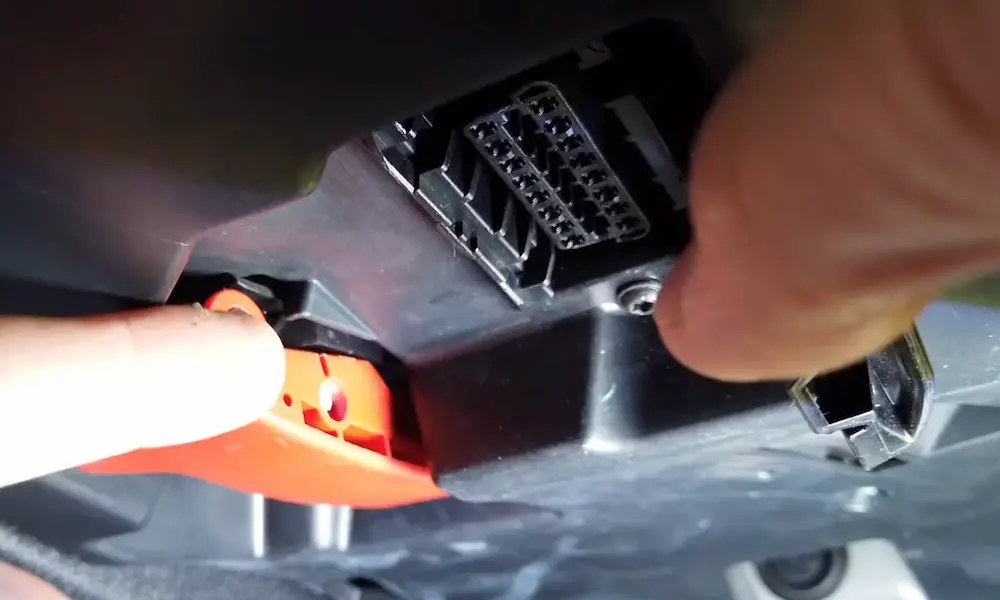
Before you plug anything in, confirm that your vehicle has a standard OBD2 port and that your scanner supports the communication protocol your vehicle uses.
Model-Year and Protocol Coverage: Will Your Scanner Work?
All gasoline vehicles sold in the United States have used the standard 16-pin OBD2 connector since 1996. Most diesel vehicles followed in later model years. If your car is a 1996 or newer gasoline model, it almost certainly has an OBD2 port.
OBD2 communication uses several protocols, including J1850 PWM, J1850 VPW, ISO 9141-2, KWP2000, and CAN. CAN became mandatory for all new vehicles in 2008. Most modern scanners support all of these protocols, but older or very basic scanners may not.
If your scanner fails to connect, the protocol may be the issue. Some scanners show a “Vehicle Not Supported” message when they cannot communicate. Check the scanner’s box or manual for protocol support before you buy. If you already own a scanner and it connects to your car, you are ready to proceed.
Finding the OBD2 Port and Setting the Correct Ignition Mode
The OBD2 port is usually under the dashboard on the driver’s side, near the steering column or hood release. Some vehicles hide it behind a small cover or place it near the center console. Your owner’s manual will show the exact location.
Ignition mode matters. Most scanners power on when you turn the key to the ON position without starting the engine. To read live coolant temperature while driving, the engine must be running. Some vehicles need the engine started before the scanner will communicate at all. If you are unsure, check our guide on whether you need the engine running to use an OBD2 scanner.
Check: Confirm your vehicle is OBD2-equipped (1996 or newer for most gasoline cars), locate the 16-pin port under the dash, and verify your scanner supports the vehicle’s protocol. Limitations: Very old vehicles, some heavy-duty trucks, and certain hybrid or EV systems may use different diagnostic ports or require enhanced adapters.
Step-by-Step: How to Read Coolant Temperature with an OBD2 Scanner
The exact menu names vary by scanner brand and app, but the general process is the same across most devices.
Connect the Scanner and Pair the Mobile App
Plug the scanner into the OBD2 port. If you are using a handheld scanner, it should power on when the ignition is in the ON position. If you are using a Bluetooth or Wi-Fi scanner, open the companion app and pair the device.
Bluetooth pairing usually requires the ignition in the ON position. Some apps ask for a pairing code, commonly 0000 or 1234. Check the scanner manual if the app cannot find the device. If the scanner keeps dropping the connection, the port pins or the scanner connector may need attention.
Locate the Coolant Temperature PID in Live Data
Once connected, look for a “Live Data” or “Data Stream” menu. Inside that menu, you will see a list of PIDs, or Parameter Identification channels. Each PID is one data value the ECM reports.
Scroll through the list to find one of these labels:
- Coolant Temperature
- Engine Coolant Temp
- ECT
- Coolant Temp (°F or °C)
The exact label depends on the scanner or app. Some apps let you add the coolant temperature PID to a custom dashboard so you can watch it while driving. If you are new to live data, our guide on how to find live data on an OBD2 scanner walks through the menu structure in more detail.
Warm Up the Engine and Watch the Readings
Start the engine and let it idle. The coolant temperature reading should start near the outside air temperature and climb steadily as the engine warms up.
Watch the number climb. When the thermostat opens, you may see the temperature dip slightly before it stabilizes. This is normal.
Normal Coolant Temperature Range: What Your Gauge Should Show
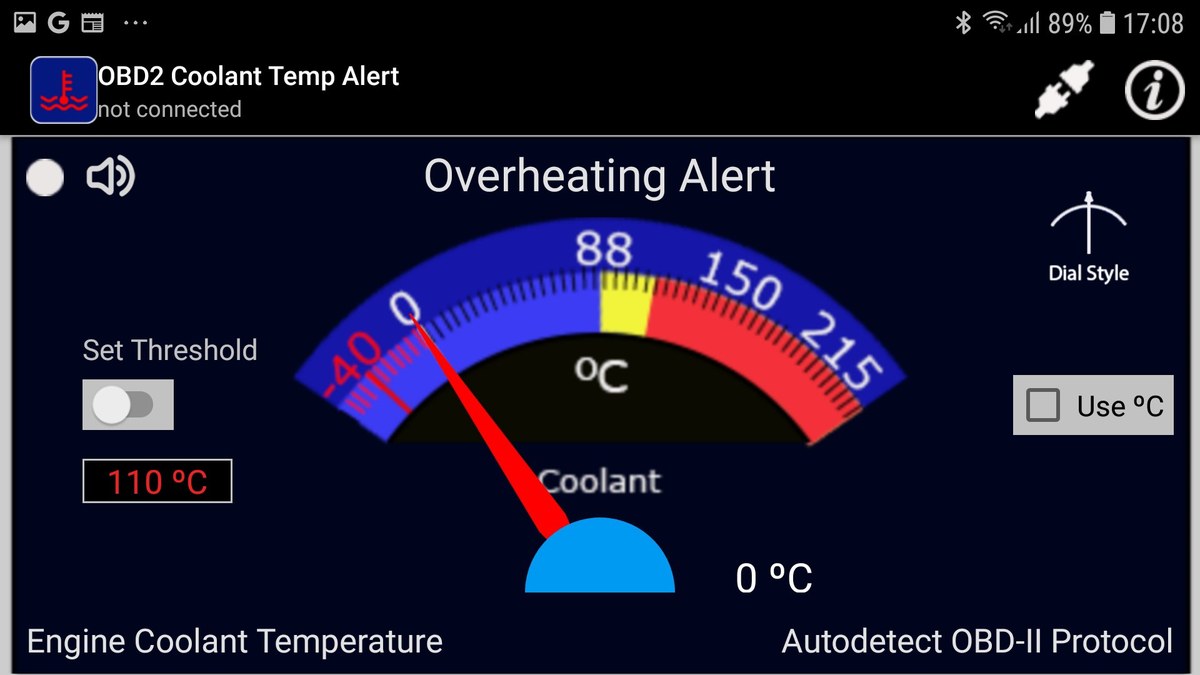
Most modern gasoline engines operate between roughly 195°F and 220°F (about 90°C to 105°C) once fully warmed up. The exact number varies by vehicle design, thermostat rating, and driving conditions.
Typical Operating Temperatures and Thermostat Behavior
The thermostat is a valve that keeps coolant inside the engine until it reaches a set temperature. On most vehicles, the thermostat opens between 180°F and 195°F. Once open, coolant flows to the radiator, where it releases heat.
At steady highway speeds, the temperature usually sits near the thermostat rating. In stop-and-go traffic, the temperature may rise slightly because airflow through the radiator is reduced. The electric cooling fan should bring it back down.
What High, Low, or Erratic Readings Actually Mean
A reading that stays well below normal, such as 160°F on a warm day, may indicate a stuck-open thermostat. The engine never reaches full operating temperature, which hurts fuel economy and may cause weak heater output.
A reading that climbs above 230°F or keeps climbing after the fan turns on may point to low coolant, a stuck-closed thermostat, a failing water pump, a clogged radiator, a faulty cooling fan, or a bad ECT sensor.
Erratic readings that jump around without a clear pattern often point to a faulty sensor, a poor electrical connection, or damaged wiring. The ECM may also store a trouble code when the signal falls outside the expected range.
Coolant Temperature Trouble Codes: P0115–P0118 Explained
If the ECT sensor or its circuit fails, the ECM stores a diagnostic trouble code. The four most common coolant temperature codes are:
P0115: Engine Coolant Temperature Sensor Circuit Malfunction. The ECM sees a voltage signal that does not make sense, such as a value outside the normal range.
P0116: Engine Coolant Temperature Sensor Circuit Range/Performance Problem. The signal is within the circuit’s limits, but the reading does not match expected conditions, such as a cold reading on a fully warmed engine.
P0117: Engine Coolant Temperature Sensor Circuit Low Input. The sensor voltage is too low, which the ECM reads as an extremely high temperature. This often points to a short to ground.
P0118: Engine Coolant Temperature Sensor Circuit High Input. The sensor voltage is too high, which the ECM reads as an extremely low temperature. This often points to an open circuit or a bad sensor connection.
A coolant temperature code does not always mean the sensor itself is bad. Wiring, connectors, the thermostat, and low coolant can all cause these codes. Live data helps you compare the sensor reading to the actual engine condition. For example, if the sensor reads -40°F on a warm engine, the circuit likely has an open connection.
OBD2 Scanner Limitations: When Live Data Isn’t Enough
An OBD2 scanner is a useful diagnostic tool, but it has limits. Knowing those limits keeps you from chasing the wrong problem.
Code and Live-Data Limits, Emissions Readiness, and Reset Limitations
A basic OBD2 scanner reads generic powertrain codes and live data. It usually cannot read ABS, airbag, or transmission codes unless it has enhanced coverage. It also cannot perform bidirectional tests, such as commanding the cooling fan to turn on, unless it is a higher-end scan tool.
Clearing codes can cause new problems. If you clear a coolant temperature code before recording the live data, you lose the freeze-frame information that helps diagnose the issue. Clearing codes also resets the emissions readiness monitors, which can make your vehicle fail an emissions test immediately.
App Permissions, Firmware, and Sensor Accuracy
Bluetooth OBD2 scanners rely on a smartphone app. The app needs certain permissions to function, such as location access on some Android versions for Bluetooth scanning. Review the app’s privacy policy to understand what data it collects and how it is stored.
The scanner reports the same sensor signal the ECM receives, so accuracy depends on the vehicle’s sensor, not the scanner. A scanner cannot fix a faulty sensor or correct a bad ground. It can only display what the ECM sees.
Firmware updates matter too. Some scanners receive updates that add vehicle coverage or fix connection bugs. Check the manufacturer’s website for update instructions and release notes.
Choosing the Right OBD2 Scanner for Coolant Monitoring
You do not need an expensive professional scan tool to read coolant temperature. A basic OBD2 scanner that supports live data will do the job. The key feature to look for is a live data or data stream mode.
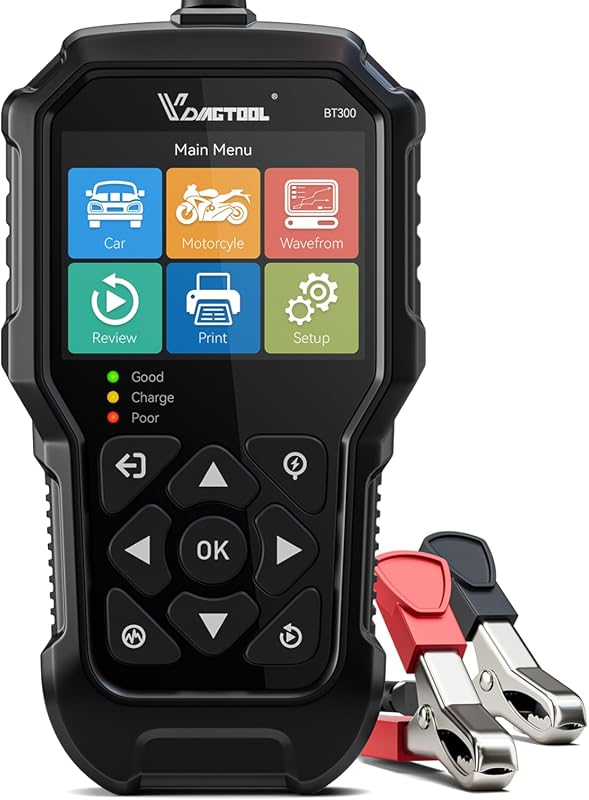
Bluetooth scanners with a smartphone app are popular because they display large, easy-to-read gauges and can record data over time. Handheld scanners are simpler and do not require a phone. Some budget scanners only read and clear codes, so check the product description for live data support before buying. Our guide to the best OBD2 scanner for a home mechanic can help you compare options.
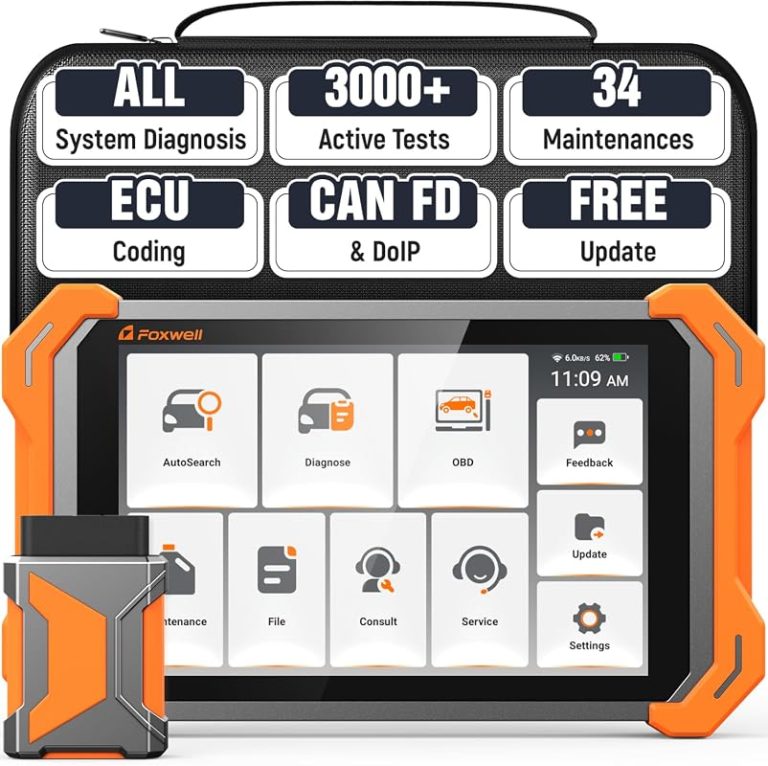
If you plan to diagnose cooling system problems regularly, consider a scanner with live data graphing, freeze-frame data, enhanced cooling system codes, and bidirectional control for commanding fans or testing actuators.
- Record the live coolant temperature reading before clearing any codes
- Compare the scanner reading to the factory gauge to confirm the sensor is accurate
- Check the coolant level only when the engine is completely cool
- Clear codes before saving freeze-frame data and live readings
- Open the radiator cap while the engine is hot
- Ignore a high temperature reading hoping the problem will go away
Next Steps: When to Stop Diagnosing and Call a Professional
A coolant temperature reading gives you useful information, but it does not tell you everything. If the engine is overheating, stop driving immediately. Continuing to drive an overheating engine can cause permanent damage.
See a professional if:
- The temperature reading exceeds 230°F or climbs rapidly
- You see steam or coolant leaking from the engine bay
- The coolant level drops repeatedly
- The engine runs rough or misfires along with the temperature problem
- You are not comfortable working around hot engine components
Cooling system repairs often involve draining and refilling coolant, which must be disposed of properly. Many states regulate coolant disposal because it contains ethylene glycol, a hazardous material. If you are unsure about the repair, a qualified technician can diagnose the system safely.
- Best for: Any car owner who wants a precise, real-time coolant temperature reading without trusting a vague dashboard gauge.
- Think twice if: You only need to read and clear codes, because a basic code reader without live data cannot display coolant temperature.
- Next step: Confirm your OBD2 scanner has a live data mode, then practice reading the ECT PID on a cold engine before you need it in an emergency.
Frequently Asked Questions
Most modern gasoline engines run between roughly 195°F and 220°F once fully warmed up. The exact number depends on your vehicle, thermostat rating, and driving conditions.
No. The scanner must support live data or data stream mode. Basic code readers that only display diagnostic trouble codes cannot show coolant temperature.
Yes, to see a meaningful reading. The ignition must be in the ON position for the scanner to power up, but the engine needs to run and warm up before the coolant temperature reaches its normal operating range.
P0117 means the ECT sensor circuit is sending a low voltage signal, which the ECM reads as an extremely high temperature. It often points to a short to ground, a faulty sensor, or damaged wiring.
No. If the temperature climbs above 230°F or keeps rising, stop driving and let the engine cool down. Continuing to drive an overheating engine can cause permanent damage.
Prices vary widely by brand, features, and retailer. Basic Bluetooth scanners with live data are usually affordable, while handheld scanners with enhanced cooling system coverage cost more. Check current prices before buying.