Can an OBD2 Scanner Detect a Vacuum Leak? Yes, Via Fuel Trim Data
Yes, an OBD2 scanner can detect a vacuum leak by reading fuel trim data. High positive fuel trim at idle that drops at higher RPM points to unmetered air entering the engine.
Can an OBD2 scanner detect a vacuum leak? Yes — but it does not point a camera at your intake hoses. Instead, it reads fuel trim data from your engine computer, and those numbers tell a clear story about unmetered air sneaking into the engine.
- Fuel trim basics: STFT and LTFT above +10% at idle suggest a vacuum leak.
- Idle vs. RPM: Readings that drop toward zero at 2,500 RPM point to a leak.
- Scanner choice: Code-only readers can’t show fuel trim; you need live data.
- Inspection tip: Clear codes only after fixing the leak, or NJ emissions monitors may not be.
Yes — an OBD2 Scanner Can Detect a Vacuum Leak via Fuel Trim Data
A vacuum leak happens when outside air enters the engine through a cracked hose, loose gasket, or failed seal after the mass airflow sensor has already measured the incoming air. That extra air is unmetered, so the engine computer sees a lean condition — too much air, not enough fuel.
To correct the lean mixture, the computer adds more fuel. That correction appears in live data as fuel trim. A scanner with live-data capability shows this correction in real time, which is how you can detect the leak without removing a single part.
What a Vacuum Leak Does to Engine Performance, Power, and Safety
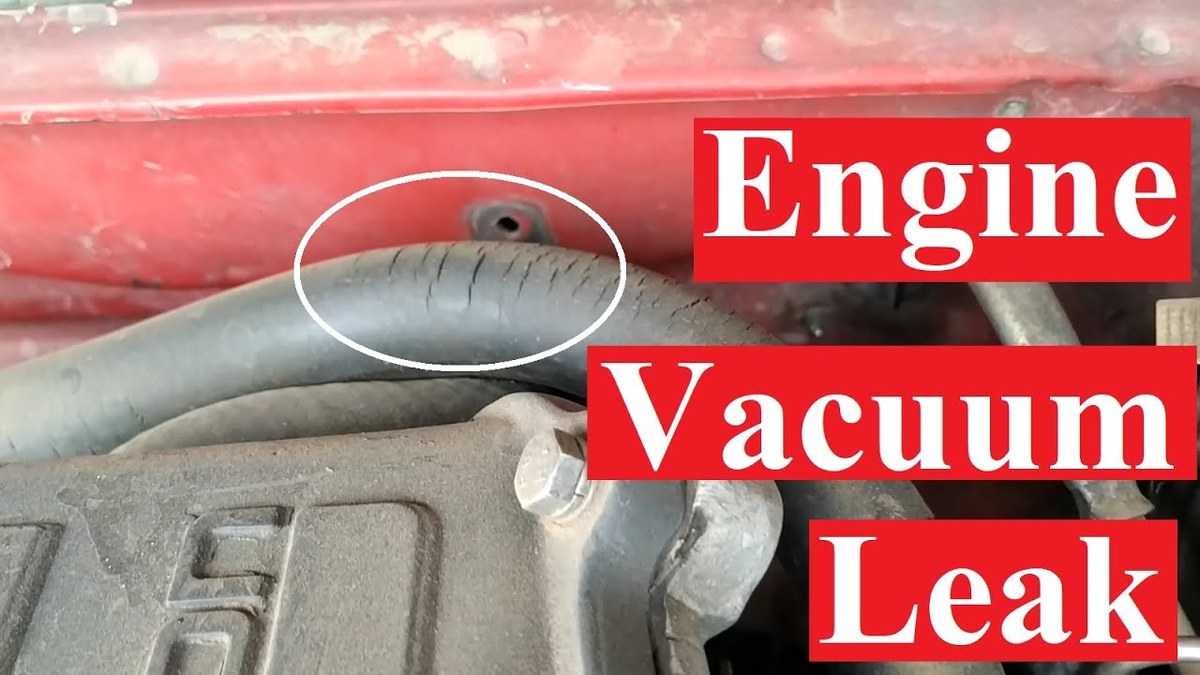
A vacuum leak can make a vehicle feel broken. Common symptoms include a rough or bouncing idle, stalling at stoplights, hesitation when accelerating, and a check engine light that appears after the leak has been present for a while.
Fuel economy drops because the computer keeps adding fuel. The engine may also run hotter because the lean mixture burns differently, which can stress oxygen sensors and eventually damage the catalytic converter.
Small leaks may only cause a rough idle. Large leaks, such as a torn intake boot or a failed brake booster diaphragm, can cause a serious lean condition and noticeable power loss.
Fuel Trim 101: Reading STFT and LTFT Like a Mechanic
Fuel trim appears in two forms: short-term fuel trim (STFT) and long-term fuel trim (LTFT). Both are shown as percentages and tell you how much the computer is adjusting fuel delivery from its baseline.
Short-term fuel trim reacts quickly to changing driving conditions. Long-term fuel trim is the computer’s learned correction over time. A healthy engine usually shows fuel trim values near zero, though small variations are normal.
When a vacuum leak is present, the computer adds fuel constantly, showing up as positive fuel trim on both STFT and LTFT. To read these values, you need a scanner with live-data capability. If you are new to live data, our guide on how to find live data on an OBD2 scanner walks through the basics.
Positive Fuel Trim: What the Numbers Tell You
Positive fuel trim means the computer is adding fuel. A reading of +10 percent means the computer is delivering 10 percent more fuel than its standard calibration to keep the mixture balanced.
Many technicians consider fuel trim values above +10 percent worth investigating. Readings between +15 and +25 percent at idle strongly suggest a vacuum leak, especially when the numbers drop closer to normal at higher engine speed.
Other faults can also cause positive fuel trim. A weak fuel pump, a clogged fuel filter, a dirty mass airflow sensor, or a failing oxygen sensor can produce similar numbers. Fuel trim is a clue, not a final verdict.
Why Idle and Low-Speed Readings Matter Most
Vacuum is highest at idle, so a leak pulls in a larger percentage of unmetered air when the throttle is closed. At higher RPM, the engine draws far more total air, so the same leak becomes a smaller fraction of the mixture.
That is why the comparison matters. If fuel trim is high at idle but drops toward normal at 2,500 RPM, a vacuum leak is a leading suspect. If fuel trim stays high at all engine speeds, the problem may be fuel delivery or a sensor issue instead.
Common Vacuum-Leak Trouble Codes: P0171, P0174, P0300, and More
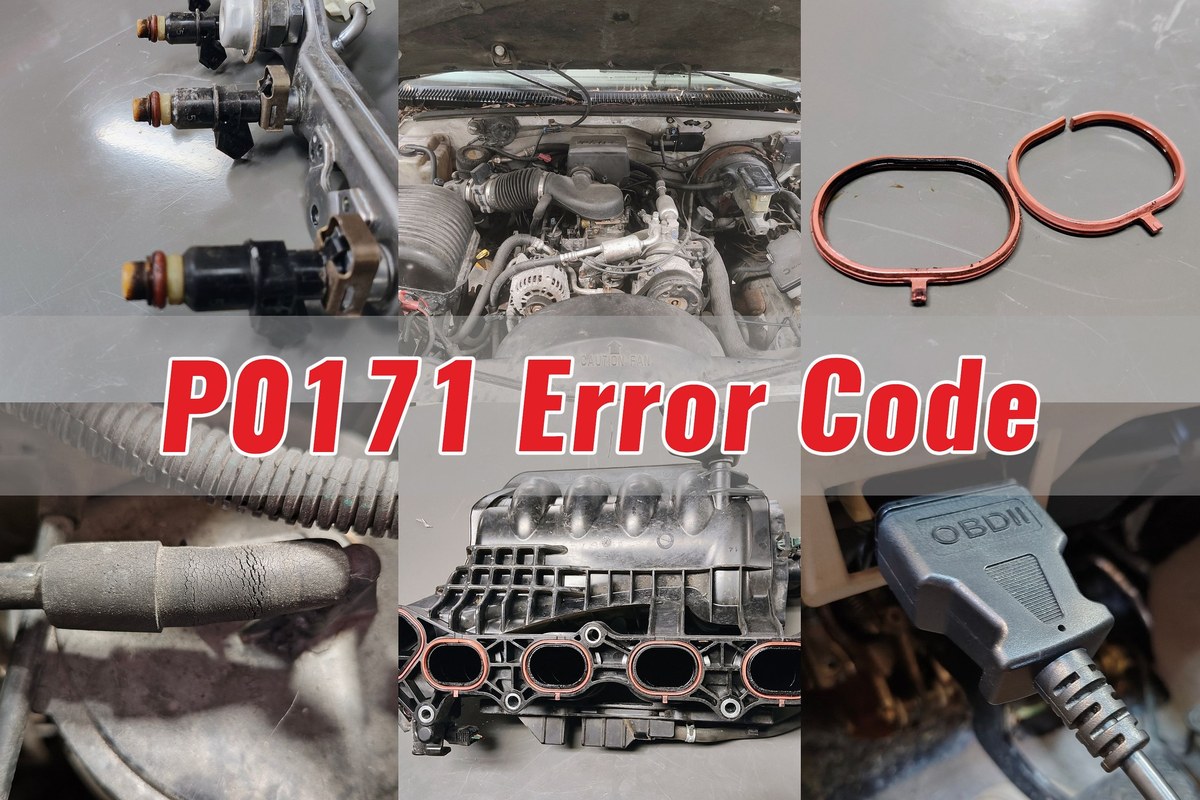
Vacuum leaks often trigger specific trouble codes. The most common are P0171 (System Too Lean, Bank 1) and P0174 (System Too Lean, Bank 2). On V6 and V8 engines, both codes together often point to a leak that affects both banks, such as a cracked intake boot or faulty PCV hose.
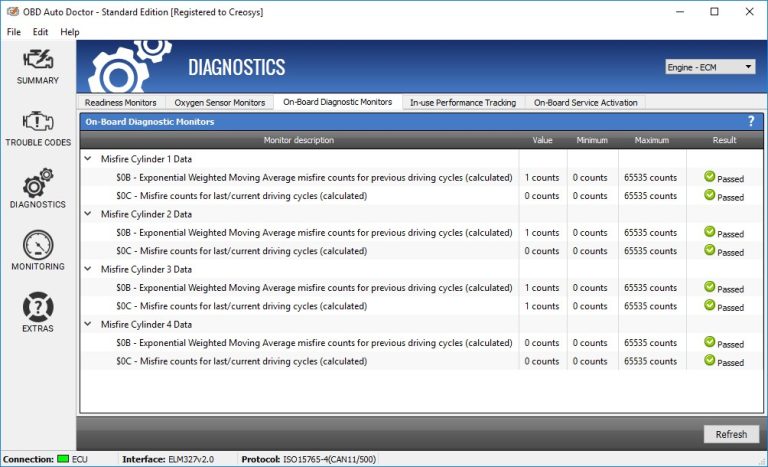
Misfire codes can also appear. P0300 indicates random misfires, while P0301 through P0308 identify a specific cylinder. A lean mixture from a vacuum leak can cause misfires because the air-fuel ratio becomes too unstable to ignite reliably.
If you see lean codes plus misfire codes, fuel trim data will help you confirm the root cause. Understanding how scanners handle oxygen sensor diagnosis can also help you avoid replacing the wrong part.
Scanner Limitations: OBD2 Protocols, Live-Data Limits, and What a Scan Tool Can’t See
An OBD2 scanner cannot see the physical leak. It cannot show you a cracked hose or a loose gasket. It can only show you the engine computer’s reaction to the leak. That distinction matters because fuel trim alone does not prove a vacuum leak exists.
Other faults produce similar patterns. A restricted fuel filter, a failing fuel pump, a contaminated mass airflow sensor, or an exhaust leak before the oxygen sensor can all push fuel trim positive. A professional diagnosis often combines fuel trim data with a smoke test or visual inspection.
Scanners also vary in how much data they can display. Some entry-level models show only codes and freeze-frame data. Others display live sensor values but update slowly. Advanced scan tools can graph fuel trim over time, which makes the idle-versus-RPM comparison easier to see.
Model-Year and Protocol Coverage: From OBD2 to CAN
All gasoline vehicles sold in the US since 1996 include an OBD2 port. A basic scanner will connect to nearly any car or light truck from that year forward, but the data available depends on the vehicle’s communication protocol.
Check: Confirm your scanner supports your vehicle’s protocol, especially for 2008 and newer models that use CAN (Controller Area Network). Limitations: Some budget scanners read codes but cannot display live fuel trim data on every make and model.
Most modern vehicles use CAN, which is faster and carries more data. Older vehicles may use other protocols, and some scanners handle those poorly. If you own an older car or a European brand, check the scanner’s compatibility list first.
Battery Voltage, Firmware, and Other Variables That Skew Fuel Trim
Fuel trim readings are only useful when the vehicle is in good condition. A weak battery or failing alternator can cause voltage fluctuations that affect sensor readings. Low fuel pressure from a clogged filter or weak pump can also produce positive fuel trim that looks like a leak.
Scanner firmware matters too. Older firmware may not interpret live data correctly on newer vehicles. Before you trust a fuel trim reading, make sure the scanner’s firmware is current.
Choosing the Right OBD2 Scanner for Fuel Trim Diagnosis
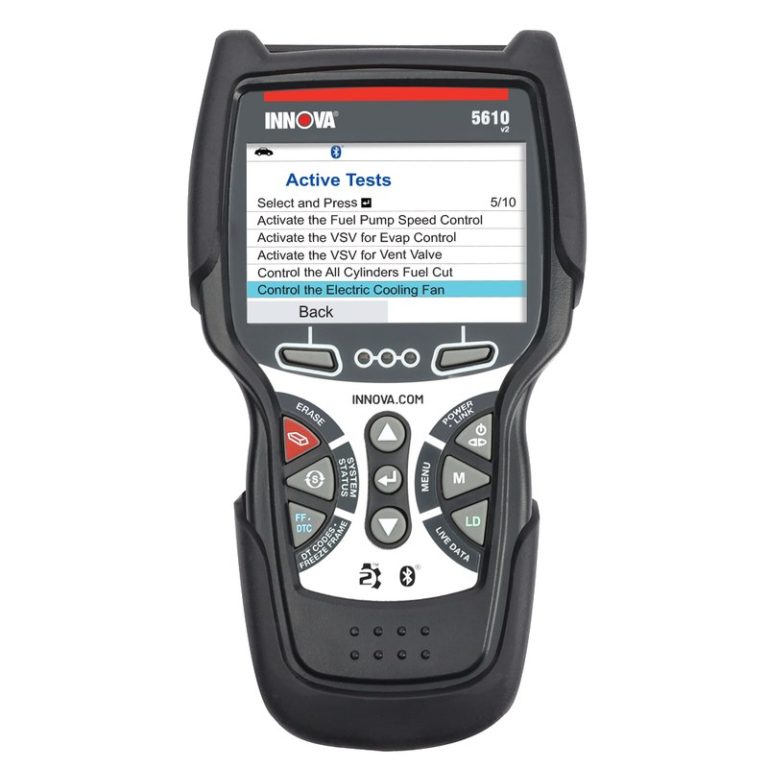
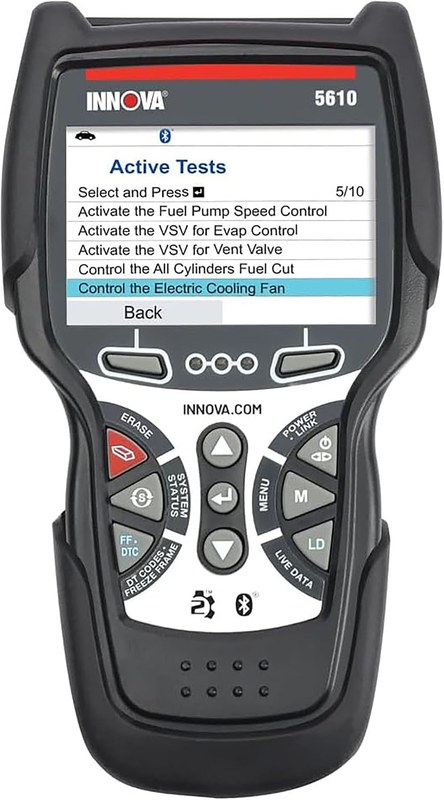
Not every scanner can help you detect a vacuum leak. The key feature to look for is live data. If a scanner only reads and clears codes, it will show you P0171 but not the fuel trim percentages that confirm the leak.
Code-Only Readers vs. Live-Data Scanners: A Side-by-Side Comparison
| Option | Best for | Owner consideration | Driver consideration |
|---|---|---|---|
| Code-only reader | Quick check of stored codes | Lowest upfront cost, but no live data | Cannot confirm a vacuum leak through fuel trim |
| Live-data scanner | Fuel trim, sensor readings, and misfire analysis | Higher cost, but far more diagnostic value | Helps you confirm the cause before replacing parts |
| Professional-grade scan tool | Bidirectional testing and graphing | Highest cost, usually overkill for home use | Best for shops or serious DIY owners |
For vacuum leak diagnosis, a live-data scanner is the minimum useful tool. It does not need to be expensive. Many affordable Bluetooth scanners display fuel trim on a phone app, though data quality varies by brand. If you are shopping on a budget, our roundup of the best OBD2 scanners for the money compares price and live-data capability.
App-Based Scanners: Permissions, Firmware, and Data Privacy to Consider
Bluetooth and Wi-Fi OBD2 scanners are popular because they are inexpensive and use your phone as the display. They can show fuel trim and graph data over time, but they depend on a third-party app, and app quality varies widely.
Some apps require account creation, location access, or permission to collect vehicle data. Before installing one, review the app’s privacy policy. You should also check whether the app supports your specific vehicle and whether updates are included or sold separately.
Step-by-Step: Verifying a Vacuum Leak With Your OBD2 Scanner
You can verify a suspected vacuum leak with a scanner in about fifteen minutes. The process is safe when the vehicle is parked, the parking brake is set, and the transmission is in Park or Neutral.
Start the engine and let it reach normal operating temperature. Fuel trim readings are most reliable on a warm engine.
Plug the scanner into the OBD2 port, usually under the dashboard on the driver’s side. Turn the ignition on and pair the scanner with the app if needed.
Open the live data screen and find STFT and LTFT for both banks. Record the values with the engine at idle and all accessories off.
Hold the engine at about 2,500 RPM for 30 seconds and watch the fuel trim values. If they drop toward zero, a vacuum leak is likely.
Scan for stored or pending codes. Freeze-frame data records the engine conditions when the code was set.
If fuel trim is high at idle and normal at higher RPM, a vacuum leak is the most likely cause. A visual inspection of vacuum hoses, the intake boot, and the PCV system can locate many leaks. A smoke test, performed by a shop, is the most reliable way to find small ones.
Emissions Readiness, Reset Limits, and New Jersey Inspection Realities
New Jersey requires periodic emissions inspections for most gasoline vehicles. During the inspection, the state checks the OBD2 system for stored codes and verifies that the emissions monitors are ready. A vacuum leak that triggers a check engine light will cause the vehicle to fail inspection.
Clearing the codes with a scanner does not fix the leak. It also resets the emissions monitors, which can cause the vehicle to fail inspection if the monitors have not completed their drive cycles. In New Jersey, a vehicle with a recently cleared check engine light may be rejected until the monitors are ready.
The right approach is to fix the leak first, then clear the codes, then complete the required drive cycle so the monitors reset. A scanner with an emissions readiness screen helps you confirm the monitors are ready before the inspection station. If you want to understand how scanners handle stored codes, our explanation of permanent codes versus stored codes is worth a read.
Repair Costs, Professional Diagnosis Thresholds, and Your Next Steps
Vacuum leak repair costs vary widely depending on the source. A cracked vacuum hose may cost only a few dollars in parts and can be replaced at home in minutes. A failed intake manifold gasket or a damaged brake booster can cost several hundred dollars in parts and labor.
If fuel trim points to a leak but you cannot find it visually, a professional smoke test is the next step. Most shops can locate the leak in under an hour. That cost is often worth it compared to replacing parts at random.
Your next step depends on the fuel trim data. If readings are positive at idle and normal at higher RPM, inspect the most common leak points. If the numbers stay positive at all engine speeds, broaden the diagnosis to fuel pressure, the mass airflow sensor, and the oxygen sensors.
- Best for: Owners who want to confirm a vacuum leak before spending money on parts or a shop visit.
- Think twice if: You only have a code-only reader, which cannot display fuel trim data.
- Next step: Confirm your scanner supports live data, then record STFT and LTFT at idle and 2,500 RPM on a warm engine.
Frequently Asked Questions
Fuel trim values above +10 percent are worth investigating. Readings between +15 and +25 percent at idle, especially when they drop toward normal at higher RPM, strongly suggest a vacuum leak.
Only if it displays live data. A code-only reader will show a lean code like P0171, but it cannot show the fuel trim percentages that confirm a vacuum leak. Look for a scanner with live-data capability.
Yes. Fuel trim values are only meaningful while the engine is running and warmed up to normal operating temperature. The engine computer must be actively adjusting the air-fuel mixture.
Yes. A vacuum leak usually triggers a lean condition code such as P0171 or P0174, and it can also cause misfire codes like P0300. The check engine light may take a few drive cycles to appear.
The cost varies by the source. A cracked vacuum hose may cost only a few dollars in parts. A failed intake manifold gasket or brake booster can cost several hundred dollars in parts and labor.
No. Clearing codes does not fix the leak, and it resets the emissions readiness monitors. In New Jersey, a vehicle with recently cleared codes may be rejected until the monitors complete their drive cycles.