Where Can You Buy a Tire Inflator: Best Places to Shop
You can buy a tire inflator at major retailers, automotive stores, hardware stores, and online marketplaces. Walmart, Amazon, Lowe’s, Home Depot, Best Buy, and Target offer many models, while local auto service shops may also sell or recommend suitable options.
You can find a tire inflator online or at stores that sell automotive, hardware, and home improvement products. Compare power options, pressure limits, gauge accuracy, inflation speed, and included adapters to match your vehicle and other needs.
Key Takeaways
- Buy from retailers, automotive stores, or online marketplaces.
- Compare features, power sources, and prices before purchasing.
- Choose a model that fits your vehicle and intended use.
Retail Stores And Automotive Chains
You can buy tire inflators at auto parts retailers, big-box stores, and warehouse clubs. Compare power source, pressure range, gauge type, cord length, and return policies before choosing a model.
Auto Parts Retailers
Auto parts stores often carry portable inflators from brands such as Slime, AstroAI, and Fix-a-Flat. You may find 12-volt models that plug into your vehicle’s power outlet, along with cordless units that use rechargeable batteries.
Ask whether the inflator suits your tire size and intended use. A digital gauge and automatic shutoff can help you set the correct pressure without constant checking. A longer power cord also makes it easier to reach all four tires.
You can usually inspect the package in person and ask staff about adapters for bikes, sports equipment, or motorcycles. Some stores may also offer online ordering with in-store pickup, which lets you confirm stock before visiting.
Big-Box Stores
Big-box retailers such as Walmart and Target commonly sell tire inflators in automotive, emergency-preparedness, or seasonal sections. Their selection may include basic 12-volt pumps, high-pressure models, and kits with inflation needles or valve adapters.
Check the product label for important details:
- Maximum PSI: Make sure it exceeds your vehicle’s recommended tire pressure.
- Power source: Choose a 12-volt plug-in, battery-powered, or dual-power model.
- Automatic shutoff: This feature stops inflation at your selected pressure.
- Display: A digital gauge may be easier to read than an analog dial.
Before buying, review the warranty and return policy. Online listings can offer more choices, while store pickup helps you avoid shipping delays.
Warehouse Clubs
Warehouse clubs may sell tire inflators as seasonal automotive products or through their online stores. You might find multipacks, higher-priced cordless models, or kits that include pressure gauges and storage cases.
Membership pricing can reduce the purchase cost, but compare the final price with auto parts stores and other retailers. Check whether the model includes a battery, charger, power cord, and storage bag. Some cordless inflators require a separate battery system, which can raise the total cost.
Read the specifications carefully before buying. Confirm the maximum pressure, inflation speed, duty cycle, and connector type. A model designed for car tires may not work well for large truck tires or high-pressure recreational equipment.
Online Shopping Options
You can buy tire inflators from large marketplaces, brand websites, and automotive retailers. Compare power sources, maximum pressure, inflation speed, included adapters, warranty terms, and customer reviews before you choose a model.
Major Marketplaces
Amazon, Walmart, eBay, and Target offer many tire inflators in different price ranges. You can find cordless rechargeable pumps, 12-volt models that plug into a vehicle outlet, and heavy-duty compressors for larger tires.
Use product filters to narrow results by pressure rating, power source, and customer rating. Read recent reviews for details about battery life, noise, heat, and real-world inflation time. Product listings may show similar models from different sellers, so check the seller’s rating, return policy, shipping time, and warranty.
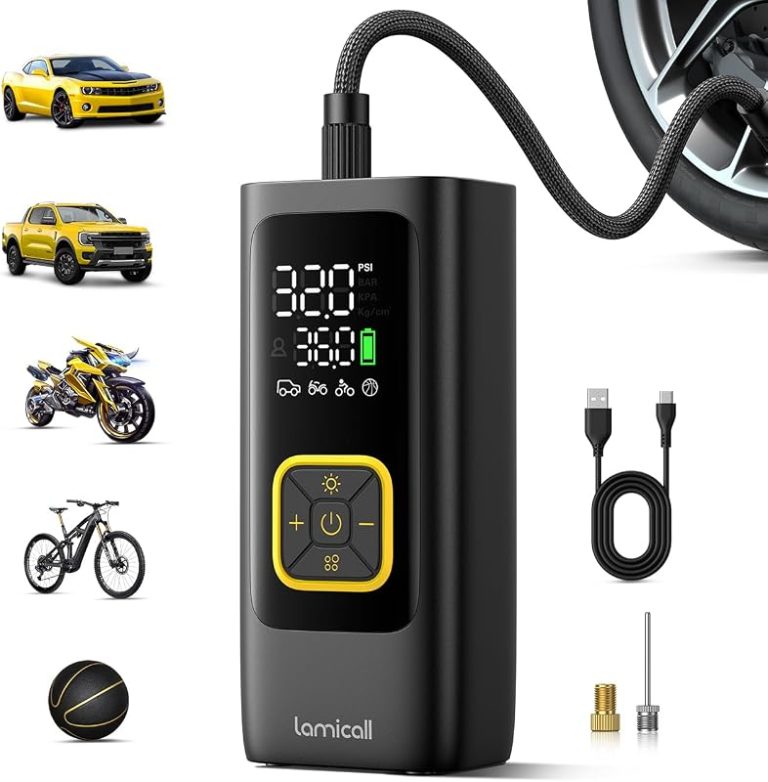
Look closely at what comes in the box. Useful features include a digital pressure gauge, automatic shut-off, an LED light, and adapters for bicycle tires or sports balls. A high PSI number does not always mean faster inflation, so check whether the product suits your vehicle and tire size.
Manufacturer Websites
Buying directly from a manufacturer can help you confirm specifications and receive brand-specific support. Brand websites often provide detailed information about battery capacity, hose length, charging methods, duty cycles, and recommended uses.
Check whether the inflator includes a battery or requires a separate battery pack. Some cordless tools use the same battery system as other products from that brand. If you already own compatible batteries, a tool-only model may cost less.
Manufacturer websites may also list replacement hoses, chargers, batteries, and accessories. Review the warranty length, return rules, and repair process before ordering. Compare the manufacturer’s price with major retailers, because discounts, bundles, and shipping costs can vary.
Specialty Automotive Retailers
Auto parts stores and automotive retailers, including eBay automotive sellers and dedicated tire-equipment shops, often provide more focused product information. You can find compact inflators for emergency kits, 12-volt compressors for routine top-offs, and larger units designed for trucks or recreational vehicles.
These retailers may organize products by vehicle type or intended use. Check the required power connection, cable length, pressure range, and recommended duty cycle. A model that works well for car tires may not suit truck tires or repeated inflation tasks.
Before buying, confirm the return policy and availability of replacement parts. Local stores may let you pick up an inflator quickly and ask staff about fit and operation. Some also offer online ordering with in-store pickup.
Local Service Providers
You can buy a tire inflator from businesses that serve drivers every day. Tire shops, gas stations, convenience stores, and auto repair shops may sell portable models, provide air service, or help you choose the right equipment.
Tire Shops
Tire shops often sell 12-volt, cordless, and heavy-duty inflators. Staff can help you choose a model based on your vehicle, tire size, and the pressure range you need. Some shops also stock pressure gauges, valve caps, hoses, and adapter kits.
Ask whether the inflator includes an automatic shut-off and a digital pressure display. These features help you set the correct PSI and avoid overinflating your tires. You can also ask the shop to check your tire pressure before buying.
Availability varies by location, so call first if you need a specific brand or cordless model. A tire shop may also inflate your tires for a fee or as part of a tire service.
Gas Stations And Convenience Stores
Many gas stations provide air pumps near the fuel pumps. Some offer free air, while others require payment by card, coins, or a mobile payment system. These machines usually work well for adding air during a trip but may not suit regular home use.
Some convenience stores sell small tire inflators, tire sealants, and emergency tire kits. Check the package for the power source, maximum PSI, hose length, and included adapters. A 12-volt model usually plugs into your vehicle’s accessory outlet, while a cordless model needs a charged battery.
Before using a station pump, compare its pressure reading with your vehicle’s recommended PSI. Find that number on the driver’s doorjamb label or in the owner’s manual.
Auto Repair Shops
Auto repair shops may sell compact inflators, compressors, and roadside emergency kits. They can recommend equipment that fits your vehicle and explain how to use it safely. This option helps when you want advice from someone familiar with cars and tire systems.
Ask about the inflator’s duty cycle, which indicates how long it can run before it needs to cool. A small unit may handle one car tire at a time, while a larger compressor may work better for trucks, trailers, or frequent use.
You can also ask the shop to inspect a tire that repeatedly loses pressure. An inflator adds air, but it does not repair punctures, damaged valves, or worn tires.
Choosing The Right Inflator
Choose an inflator based on where you will use it, your vehicle’s tire size, and how often you need it. Check its power source, maximum pressure, inflation speed, gauge accuracy, and return terms before you buy.
Portable Versus Corded Models
Cordless inflators run on rechargeable batteries and work well for roadside use. They do not need a wall outlet or a 12-volt socket, so you can reach all four tires easily. Check whether the battery and charger come with the unit. Some brands sell them separately.
12-volt corded models plug into your vehicle’s power socket. They usually cost less and can run as long as your car battery supports them. Their cables may limit reach, especially on larger vehicles. Choose a cord of at least 10 feet if you want easier access to rear tires.
Look for a built-in light, an automatic shutoff, and a clear digital gauge. A compact model suits emergency use, while a heavier unit may inflate tires faster but takes up more storage space.
Power Source And Pressure Requirements
Match the inflator’s power source to your normal use. A rechargeable model suits drivers who want quick roadside access, while a 12-volt unit works well when you keep it in your vehicle. For frequent garage use, a household-powered compressor may offer better convenience.
Check your vehicle manual or the label inside the driver’s door for the correct tire pressure. Do not choose a model based only on its advertised maximum pressure. Instead, check its airflow and tested inflation time, especially if you drive an SUV, van, or truck.
Useful features include:
- Automatic shutoff at your selected pressure
- A readable digital gauge
- A long hose and power cable
- Storage for adapters and cords
- Overheating protection
Let the unit cool as directed when the manual sets a duty-cycle limit.
Warranty And Return Policies
Review the warranty before you buy, especially for a cordless model with a separate battery. A longer warranty can help if the motor, gauge, charger, or battery fails during normal use. Confirm which parts the warranty covers and whether you must register the product.
Check the retailer’s return period and condition rules. Some stores accept returns only for unused items, while others allow testing within a stated period. Keep the receipt, packaging, charger, and accessories until you confirm that the inflator works correctly.
Buy from a retailer or manufacturer that lists clear contact details and support terms. Avoid relying on vague claims such as “professional grade” unless the product page provides specific information about pressure, airflow, operating time, and included parts.
Availability, Pricing, And Purchase Tips
You can buy tire inflators from online retailers, auto parts stores, home improvement stores, department stores, and some warehouse clubs. Prices, stock, included accessories, and return policies can differ, so check the full product listing before you buy.
Comparing Prices
Compare the total purchase cost, not only the listed price. Include shipping, taxes, batteries, and needed adapters. Some cordless inflators cost more because they include a battery and charger, while corded models may cost less but need a 12-volt outlet or wall power.
| Feature | What to check |
|---|---|
| Power source | Battery, 12-volt plug, or household outlet |
| Pressure display | Digital gauge and selectable pressure |
| Air hose | Length and connection type |
| Accessories | Valve adapters, storage case, and charger |
| Warranty | Coverage period and return terms |
Online stores make it easy to compare several models at once. Auto parts and home improvement stores let you inspect the controls and ask about compatibility. Choose a model that fits your vehicle, rather than paying extra for a higher maximum PSI you will not use.
Checking Stock Before Visiting
Check the store’s website or app before driving to a location. Search the exact model number, then select your preferred store to see whether the item is available for pickup. Stock listings can change quickly, so confirm the order or call the store if the product is important for a trip.
Ask whether the inflator sits in the store, at a pickup counter, or in a nearby warehouse. Also confirm that the listing includes the battery, charger, power cord, and valve attachments shown in the product description.
If local stores have no stock, online retailers often offer shipping or pickup from another location. Read the estimated delivery date carefully, especially when you need the inflator for travel or seasonal maintenance.
Seasonal Sales And Promotions
Retailers often reduce prices during major shopping periods, holiday promotions, and seasonal automotive events. Check sales around Memorial Day, July 4, Labor Day, Black Friday, and winter holiday events. Stores may also discount tire equipment before winter, when drivers prepare for cold weather and road travel.
Compare the sale price with recent prices when possible. A discount may apply only to a specific color, package, or older model. Review the return policy before buying a clearance item, and check whether the promotion requires a store membership, coupon, or minimum purchase.
Manufacturer rebates and retailer bundles can add value. A package that includes a battery, charger, and case may cost less than buying those items separately.
Frequently asked questions
Where can you buy a tire inflator?
You can buy one from online retailers, auto parts stores, hardware stores, and large retail chains. Compare prices, reviews, warranty terms, and shipping costs before choosing a seller.
Should you buy a cordless or 12-volt model?
A cordless inflator offers more freedom and works well for routine pressure checks. A 12-volt model plugs into your vehicle and does not depend on a charged battery, but you need access to the power socket.
What features should you look for?
Choose a model with a clear pressure display, an automatic shutoff, and a hose long enough to reach each tire. Check the maximum pressure rating, battery size, charging method, and included adapters.
Can a portable inflator fill a completely flat tire?
Many consumer models can inflate a flat passenger-car tire, but the process may take several minutes. Some inflators work best for adding air rather than repeatedly filling fully deflated tires.
Does a higher PSI rating mean a better inflator?
Not necessarily. Your vehicle’s tire size, required pressure, inflation speed, duty cycle, and power source matter more than the maximum PSI number alone.
What should you check before buying online?
Read recent customer reviews and confirm that the product fits your vehicle. Check return policies, included accessories, delivery dates, and whether the seller provides a valid warranty.
Conclusion
You can buy a tire inflator from online retailers, auto parts stores, and big-box stores. Online marketplaces offer the widest selection, while local stores let you compare models in person and take one home immediately.
Choose a model based on your vehicle, power access, and intended use. For occasional emergencies, a compact 12-volt inflator may meet your needs. A cordless model can offer more flexibility, but you should check battery life, charging time, and replacement battery costs.
Before buying, compare these key features:
- Maximum pressure: Confirm that it exceeds your tire’s recommended pressure.
- Power source: Choose 12-volt, cordless, or dual-power operation.
- Automatic shutoff: This helps prevent overinflation.
- Digital gauge: Look for clear, easy-to-read pressure readings.
- Hose and cord length: Longer leads make it easier to reach each tire.
- Warranty and reviews: Check return terms and feedback from verified buyers.
Use your vehicle owner’s manual or the label inside the driver’s door to find the correct tire pressure. Avoid using the maximum pressure printed on the tire sidewall as your target.





One Comment