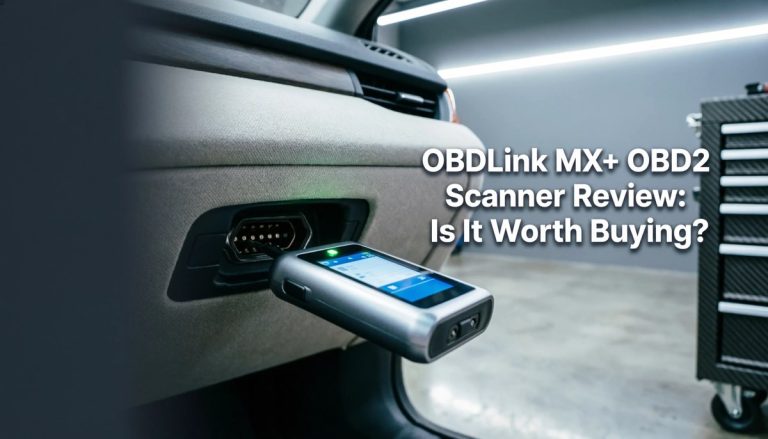
Can a Cheap OBD2 Scanner Clear Check Engine Light or Just Hide It
A cheap OBD2 scanner can erase a stored code and turn the check engine light off, but it cannot repair the fault that caused it. The light often returns after the next drive cycle, and clearing codes can leave emissions readiness monitors incomplete for an inspection.
Can a cheap OBD2 scanner clear check engine light? Yes, it can — but clearing is not fixing. A budget tool can erase the code and turn the light off in seconds, yet the same fault usually comes back a few drive cycles later. This guide explains what a cheap scanner really does, where it can mislead you, and when to stop DIY and call a professional.
- Clearing ≠ fixing: Erasing a code turns off the light but does not repair the underlying fault.
- Emissions trap: Clearing sets readiness monitors to “not ready,” which can fail a state inspection even.
- Budget limits: A $20 scanner reads generic powertrain codes but typically lacks ABS, airbag, live-data, and.
- Record first: Always save the code, freeze-frame data, and pending codes before pressing erase.
- Privacy matters: Many cheap Bluetooth scanners rely on apps that can collect your VIN, codes, location.
Does a Cheap OBD2 Scanner Clear the Check Engine Light? Yes, and That’s the Problem
When you plug a budget OBD2 scanner into the diagnostic port and press the erase function, the tool sends a command to the vehicle’s Powertrain Control Module (PCM). The PCM deletes the stored diagnostic trouble codes (DTCs), turns off the check engine light, and resets the status of every emissions readiness monitor. All of that can happen in under a minute, even with a $20 scanner.
What “Clearing” Actually Does Inside the Powertrain Control Module
The PCM is the engine’s main computer. It records a code whenever one of its self-tests fails. Clearing tells the PCM to forget those records and switch the light off. Think of it like deleting an error message on your phone: the message disappears, but the problem underneath is still there.
Clearing vs. Fixing vs. Hiding: Why the Light Almost Always Comes Back
If the fault is real — a misfire, a failed oxygen sensor, or even a loose gas cap — the PCM will run the test again and store the code once more. That is why a cleared light tends to return within a few trips. Clearing without repairing is temporary. Our guide on why the check engine light comes back after clearing codes explains this cycle in more detail.
Pending Codes and Drive Cycles: The Real Reason a Reset Fails
A pending code is a fault the PCM has seen once but has not yet confirmed. Clearing wipes pending codes too. The catch is that the PCM only runs certain tests during specific drive cycles — cold starts, highway cruising, extended idling, and more. If you clear the codes and park the car, nothing gets re-tested. The light stays off because the computer has no record, not because the car is healthy. You can read more about what pending codes mean on an OBD2 scanner.
What a $20 Scanner Can and Cannot Do
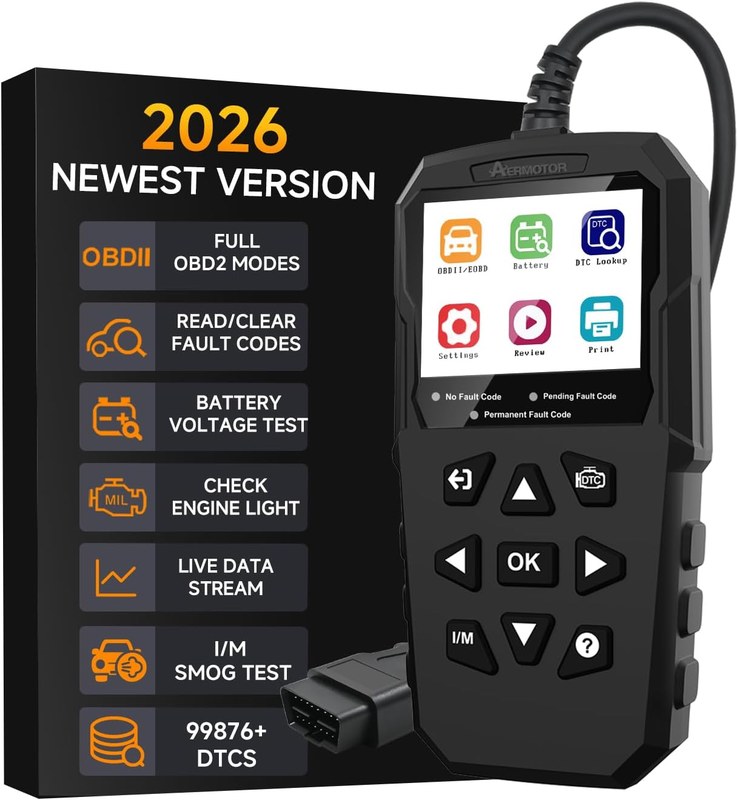
Model-Year Coverage and OBD2 Protocol Limits (1996 and Newer)
All 1996 and newer light-duty gasoline vehicles sold in the US must use the OBD2 system. A cheap scanner can talk to that system through standard protocols, so it works on most older cars and many newer ones. What it usually cannot do is read manufacturer-specific codes. Those enhanced codes — for features like variable valve timing or cylinder deactivation — need a factory-level or professional tool.
Port Location and Ignition Mode: How to Power the Scanner Up
The OBD2 port is usually under the driver’s side dash, near the steering column. Most budget scanners power up as soon as you plug them in, and some need the ignition in the “on” position with the engine off before they will communicate. Check your owner’s manual for the exact port location. See our guide on whether the engine needs to be running to use an OBD2 scanner for more on ignition modes.
Code Reading vs. Live Data vs. Emissions Readiness: What Budget Units Restrict
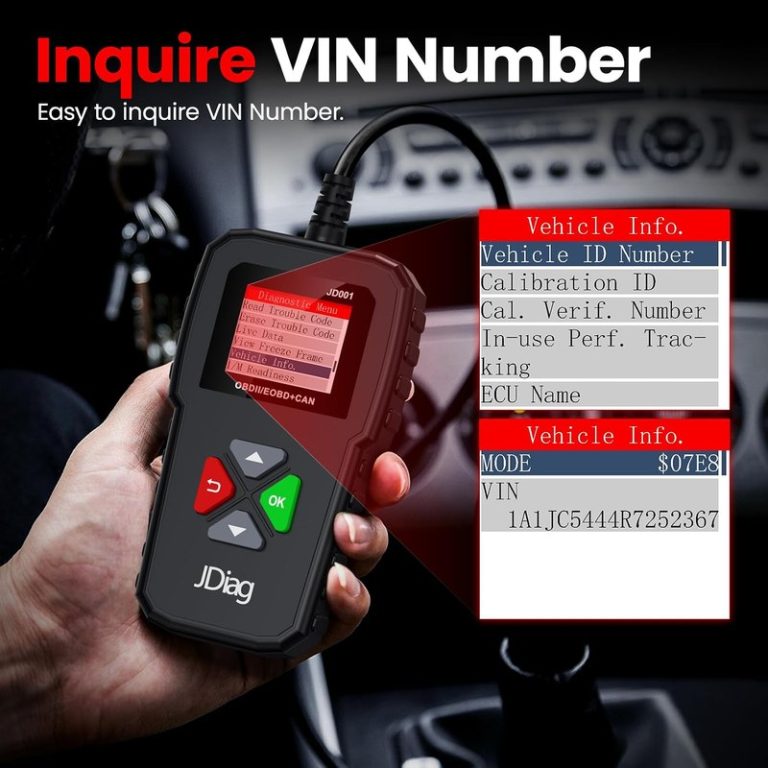
A $20 scanner typically reads and clears generic powertrain codes, displays freeze-frame data, and may show basic live data like engine RPM, coolant temperature, and oxygen sensor voltage. Few budget units display full emissions readiness status or support Mode 6 data. Bi-directional controls — such as commanding a fuel pump relay on or forcing a regeneration cycle — are almost always reserved for professional-grade tools.
The Emissions Readiness Trap: Clearing a Code Can Fail Your Inspection
How Readiness Monitors Reset and Why a Fresh Clear Turns the Light Off but Not the Monitor
When you clear a code, every readiness monitor that was “complete” changes to “incomplete” or “not ready.” The check engine light may be off, but emissions inspection computers check monitor status — not just the bulb. If too many monitors are not ready, the vehicle fails the test.
Some vehicles also store permanent codes. A permanent code stays in the PCM even after a generic clear command, and many cheap scanners cannot remove it. This means a fresh reset can fail an inspection even though the dashboard looks clean. Understanding the difference between permanent and stored codes can save you a failed test.
State-by-State Legal Variation: When Clearing Before an Inspection Backfires
Emissions testing rules vary by state, county, and model year. Some areas use the OBD2 plug-in test; others use a tailpipe sniffer. In many states, a vehicle with too many “not ready” monitors automatically fails. In others, you must complete a specific drive cycle after clearing before the vehicle can pass.
Clearing codes to hide a known fault before selling a car or passing an inspection can also create legal trouble. A buyer who discovers the hidden problem may have grounds for a claim, and some states treat this as fraud. Verify your state’s rules before you rely on a reset to get through a test.
Cheap Scanner vs. Professional Scanner: A Side-by-Side Comparison
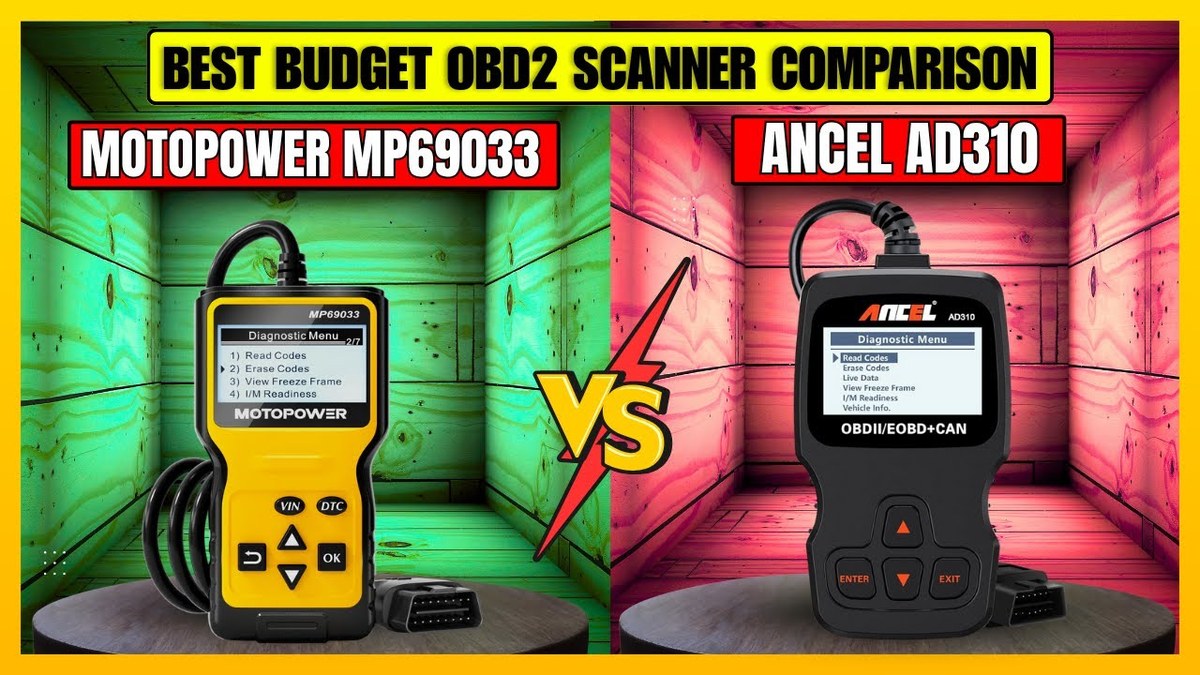
Same Criteria, Two Tools: Price, Code Depth, Live Data, Bi-Directional Control, and Firmware Updates
Comparing a $20 scanner with a $500 professional tool is only useful if you compare the same criteria. Price matters, but so does code depth, live data, control functions, and updates. The table below shows what each class typically delivers. Individual models vary, so treat these as general categories, not guarantees.
| Criteria | Budget Scanner (~$20) | Professional Scanner |
|---|---|---|
| Price | Usually $15–$40 | Usually $150–$1,000+ |
| Code depth | Generic powertrain codes only | Enhanced manufacturer codes for ABS, SRS, transmission, and more |
| Live data | Basic RPM, coolant temp, oxygen sensor readings | Full sensor list with graphing and recording |
| Bi-directional control | Rare or absent | Common on mid-range and high-end units |
| Firmware updates | Rare | Regular updates that add new vehicle coverage |
Who Should Buy a $20 Scanner vs. Who Should Upgrade to a Professional Unit
A $20 scanner makes sense if you own one older or simpler vehicle, want to check why the light is on, and can look up a code online. It also works well for confirming a loose gas cap before spending money at a shop.
Upgrade if you work on multiple vehicle brands, need ABS or airbag diagnostics, or want to perform maintenance resets like oil life or brake service. If you only need to know “why is the light on,” a cheap scanner is often enough — but a professional tool pays for itself with regular use. Our cheap vs. expensive OBD2 scanner guide covers these trade-offs in more depth.
How to Use a Budget OBD2 Scanner Safely: Installation, Connection Order, and Power
Step-by-Step: Reading, Recording, and Clearing Codes Without Making Things Worse
Using a budget scanner is simple, but order matters. Follow these steps to avoid losing evidence and to protect the vehicle’s computer.
Set the parking brake and turn the ignition to the “on” position only when the scanner instructions require it.
It is usually under the driver’s dash. Push the connector in until it clicks.
Write down or photograph every code, freeze-frame value, pending code, and monitor status.
If you are testing a repair or checking for a return, press erase. Then unplug the scanner.
Give the PCM time to re-run its tests. If the light returns, the fault is still present.
Battery System Voltage, Connection Order, and Damaged-Battery Stop Conditions
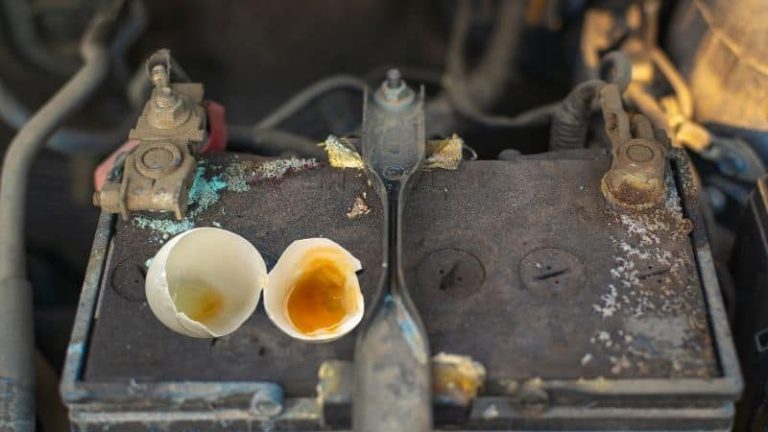
Do not unplug the scanner while the ignition is on. The erase command can be interrupted, which may leave the PCM in an incomplete state. Avoid clearing codes when battery voltage is low — a weak battery can fail mid-command. If the battery is swollen, leaking, corroded, or damaged in any way, stop and address that before plugging in any diagnostic tool.
Hybrid and EV Cautions: High-Voltage Systems and Scanner Limitations
Never open or touch high-voltage components on a hybrid or EV. A cheap OBD2 scanner connects only to the low-voltage diagnostic port, so it cannot interact directly with the high-voltage battery pack. That said, clearing codes on a hybrid can still disable readiness monitors and may require a manufacturer-level tool to restore certain services. Read the EV or hybrid owner’s manual before clearing anything.
When the Scanner Misleads You: Battery, TPMS, and Roadside Realities
State of Charge vs. Battery Health: Why a Voltage Reading Can Lie About Battery Chemistry
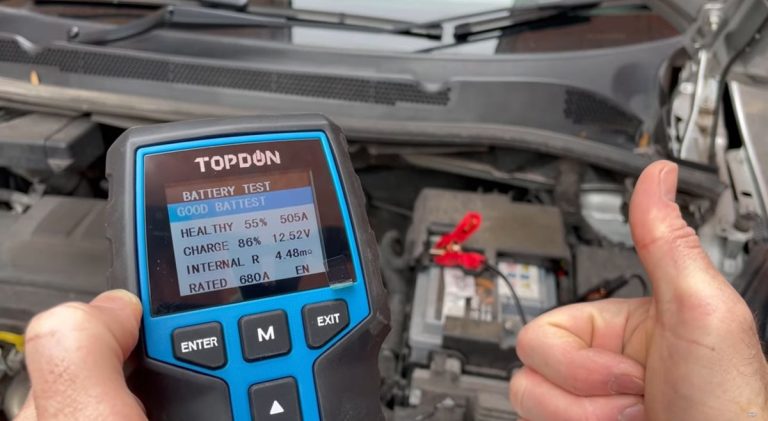
Some scanners display battery voltage, but voltage is only a snapshot of surface charge. A battery can read 12.4 volts and still have almost no cold cranking amps. Voltage does not measure internal chemistry, plate condition, or capacity. Use a real battery tester or have the battery load-tested before you trust a voltage reading.
TPMS Codes, Door-Jamb Placards, Cold Pressure, and the Limits of a DIY Relearn
A tire pressure monitoring system warning usually will not clear with a generic OBD2 scanner. TPMS codes often require a dedicated TPMS tool or a relearn procedure that only some scan tools support. Always set pressures to the number on the driver’s door-jamb placard, not the maximum printed on the tire sidewall, and check them when the tires are cold. If the TPMS light stays on after you adjust pressure, you may need a professional relearn.
Temporary-Repair Limits, Inflator Duty Cycles, and When a Tire Needs a Professional
Tire sealants are a temporary fix meant to get you to a shop. A plug is not a safe permanent repair for every puncture: sidewall damage, large holes, and damage to the belt area normally require tire replacement. Portable inflators have duty cycles — most need to cool down after several minutes of continuous running. If a tire is losing air quickly, do not drive on it to “test” the repair. Have the tire inspected by a professional.
Roadside Storage, Cable and Pack Condition, Traffic Visibility, and Post-Use Inspection
Store the scanner in the glovebox or center console, away from heat, moisture, and direct sun. Before each use, inspect the cable for cuts, the connector for bent pins, and the case for cracks. If you are working on the roadside, park as far from traffic as possible, turn on hazard lights, and never sit in the travel lane while reading codes. After you finish, wipe the connector clean and coil the cable loosely so it does not kink.
Ownership Costs, App Permissions, and Privacy Risks of Cheap Bluetooth Scanners
App Permissions and Data Collection: Who Sees Your Driving and Your Codes
Many cheap Bluetooth OBD2 scanners are just adapters. The real brain is a phone app. Some of those apps request location, contacts, and storage permissions that have nothing to do with reading engine codes. Before you install one, look at the permission list and the app’s privacy policy. Some free apps rely on selling aggregated driving data, and a few have been known to share diagnostic trouble codes and vehicle identification numbers with third parties.
Firmware Update Limits and When a Budget Scanner Becomes Obsolete
A $20 scanner rarely receives firmware updates. Automakers add new protocols and enhanced codes over time, and an old budget scanner can stop communicating with newer models entirely. Most cheap Bluetooth adapters use a generic chipset, and the app does most of the work. When the app stops being supported or disappears from the app store, the adapter loses its function. Budget scanners are consumable tools, not lifetime investments.
When to Stop DIY and Call a Professional
Safety-Critical Codes: Misfires, Airbag Systems, and Transmission Faults That Need a Pro
A flashing check engine light signals a severe misfire that is dumping raw fuel into the exhaust. Driving in that condition can destroy the catalytic converter quickly. Airbag (SRS) codes will not clear with a generic powertrain scanner, and they indicate a safety system that may not deploy. Transmission codes often require internal pressure tests and fluid temperature data. Any of these should send you to a qualified shop.
Next Steps After You Clear the Light: Documentation, Rechecks, and Professional Diagnostics
If you do clear a code, keep a record: the code, the date, the odometer reading, and the freeze-frame data. Recheck the vehicle after a few drive cycles across different conditions. If the same code returns, you now have reproducible evidence to hand a mechanic. If it never returns after a few hundred miles, the fault may have been an intermittent event — but keep the record anyway. It can save diagnostic time later.
Final Verdict: Is a Cheap OBD2 Scanner Worth It?
Ideal User and Vehicle Fit: Where a Budget Scanner Delivers Owner Value
A budget scanner is worth it for drivers who want basic answers: why is the light on, did my gas cap fix it, and did the code come back. Owners of older, simpler vehicles get the most value because their cars use fewer manufacturer-specific systems. For those drivers, a $20 tool can prevent a $100 trip to a shop just to read a code.
Alternatives, Warranty and Support Considerations, and a Transparent Bottom Line
The next step up — a $50 to $100 enhanced scanner — adds ABS and airbag code reading, manufacturer-specific codes, and better live data. That is the right move if you own a newer car or work on multiple vehicles. Check the warranty and return policy before you buy; many budget scanners offer little or no support. The transparent bottom line: a cheap OBD2 scanner can clear a check engine light, but it cannot hide a real fault forever — and clearing the wrong thing can fail your inspection.
- Best for: Drivers who need a low-cost way to read basic engine codes, confirm a simple fix, and track whether a fault returns.
- Think twice if: Your vehicle needs emissions readiness monitoring, ABS or airbag diagnostics, bi-directional controls, or supported firmware updates.
- Next step: Record your codes and freeze-frame data before clearing anything, and check your state’s emissions rules before using a reset to pass an inspection.
Frequently Asked Questions
Yes. A cheap OBD2 scanner can erase stored diagnostic trouble codes and turn off the check engine light in seconds. Clearing is not a repair, and the code usually returns once the vehicle’s computer re-runs its tests.
Often, yes, because the fault that triggered the code is still there. The Powertrain Control Module will detect the problem again during its next drive cycle and store the code once more. If the code never returns after a few hundred miles, the fault may have been a temporary event.
Yes. Clearing codes resets the emissions readiness monitors to “not ready,” and most states use monitor status — not just the light — to decide if a vehicle passes. A fresh reset can also leave permanent codes that a cheap scanner cannot erase.
Usually not. Most OBD2 scanners only need the ignition in the “on” position with the engine off to read and clear codes. Some functions like live data graphing may require the engine to run, so check the scanner’s instructions.
Usually not. A generic budget scanner reads powertrain codes only, and ABS and airbag (SRS) codes live in separate control modules that need enhanced or manufacturer-specific software. To read those, you need a scanner with ABS and SRS coverage.
They can be. The adapter itself is simple, but the companion app may request location, contacts, and storage permissions and can collect your VIN, codes, and driving data. Review the app permissions and privacy policy before connecting.