Do Tire Repair Kits Really Work for Sidewall Punctures?
Tire repair kits work only for small punctures in the tread area. Sidewall punctures are never safe to repair with a kit — call a professional instead.
Few roadside questions cause more stress than “do tire repair kits really work” when you’re parked on the shoulder with a flat tire. The honest answer: they work for small tread punctures, but they are not a fix for sidewall damage. Knowing the difference can save you time, money, and a dangerous blowout.
- Sidewall rule: Never repair sidewall or shoulder punctures with a kit; the tire must be replaced.
- Tread limit: Kits handle only small tread punctures up to about 1/4 inch.
- Temporary only: Most kits are rated for under 100 miles and below 50 mph.
- TPMS risk: Liquid sealants can contaminate wheel sensors and trigger warning lights.
- Professional fix: A patch-plug from a tire shop is the only durable repair.
The Short Answer: No, Tire Repair Kits Won’t Fix Sidewall Punctures
Tire repair kits are designed for one job: sealing small punctures in the tread area. A sidewall puncture is a completely different problem. No plug, sealant, or patch kit sold for roadside use can safely repair a damaged sidewall.
Why the Sidewall Is Structurally Off-Limits for Any Temporary Repair
The sidewall is the most flexible part of a tire. It flexes on every rotation, carries vehicle weight, and absorbs impacts from potholes and curbs. A repair in this zone can’t flex with the tire, so it will eventually leak, weaken, or fail entirely. A blowout at highway speed is a serious crash risk.
What Tire Repair Kits Are Actually Rated to Handle
Most kits are rated for small punctures in the tread crown — the part of the tire that touches the road. That means nails, screws, and similar objects up to about 1/4 inch in diameter. Anything larger, or anything located near the shoulder, is outside the safe range for a temporary repair. If you’re unsure whether a puncture is repairable, read our guide on whether a tire plug kit can fix a sidewall puncture before you reach for the kit.
How Tire Repair Kits Work: Sealants, Plugs, and Compressors Explained
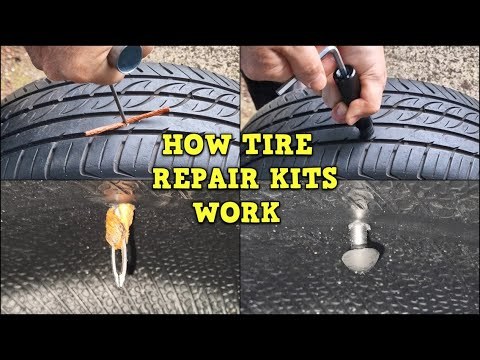
There are two main types of repair kits. Each uses a different method to seal a puncture, and each has limits you need to understand.
Sealant-and-Compressor Kits: How They Seal From the Inside
These kits inject a liquid sealant through the valve stem. The built-in compressor then inflates the tire. As the wheel turns, the sealant spreads across the inside of the tire and coats the puncture, plugging it from within. Many new cars come with a sealant kit instead of a spare tire.
Plug-and-Reamer Kits: How They Seal From the Outside
Plug kits work from the outside. A reamer cleans and roughens the puncture hole, then a sticky rubber plug is pushed in with a special tool. The plug swells and forms a seal. These kits are popular with off-road drivers because they’re compact and don’t need electricity.
Inflator Duty Cycle and Power Limits: What a 12V Compressor Can Really Do
The compressor in a sealant kit is not a full-size air compressor. Most 12V units have a duty cycle — typically 10 minutes of running, then a cool-down period. They can top off a partially flat tire, but they may struggle with a completely deflated tire or a large truck tire. Overheating is a common reason these compressors stop working mid-task.
Puncture Location Rules: Tread vs. Sidewall vs. Shoulder
Repair rules come down to one question: where is the damage? The tire industry follows guidelines published by the Rubber Manufacturers Association (RMA), and most professional shops use them as the standard.
Where Repairs Are Allowed: The Tread Crown and RMA Guidelines
RMA guidelines say a puncture is repairable only if it’s in the tread crown area — the center portion of the tire that contacts the road. The puncture must be no larger than 1/4 inch (6 millimeters) in diameter, and it must be at least 1 inch from the shoulder edge. There must also be no damage to the inner liner, and the tire needs enough tread depth to remain safe.
Where Repairs Are Never Allowed: Sidewall and Shoulder Damage
Sidewall punctures are never repairable, and neither is damage in the shoulder — the curved area where the tread meets the sidewall. Damage from driving on a flat tire, visible cuts, bulges, or exposed cords also means the tire must be replaced. No kit changes that.
Professional Repair Thresholds: When a Patch-Plug Is the Only Safe Fix
Even a repairable tread puncture needs the right repair method. A professional patch-plug combines a patch on the inside of the tire with a plug filling the hole. The tire is removed from the wheel, inspected internally, and repaired from both sides. That’s the only method tire shops and RMA guidelines consider durable. Learn more about the difference between a tire plug and a patch and why the patch-plug is safer.
Door-Jamb Placard, Cold Pressure, and TPMS: Read This Before You Use Any Kit
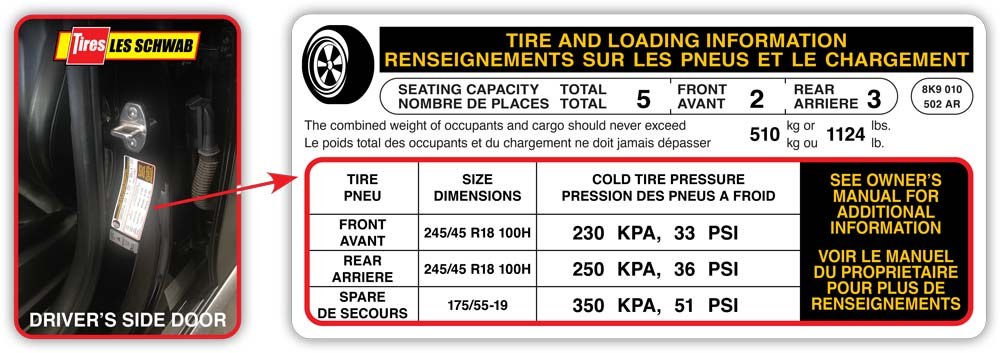
Before you inflate a repaired tire, you need to know the correct pressure. Guessing can be just as dangerous as the puncture itself.
Finding and Reading the Placard for Correct Cold Tire Pressure
The correct pressure for your vehicle is printed on a placard, usually on the driver’s side door jamb. It lists the front and rear pressures in PSI. “Cold” means the tire hasn’t been driven for at least three hours or has been driven less than a mile. Always use the placard number, not the number molded into the tire sidewall.
Gauge Accuracy: Why Cheap Inflator Gauges Can Leave You Underinflated
The gauge built into a basic inflator can be off by several PSI. An underinflated tire runs hot, wears unevenly, and can fail. A separate digital or analog gauge is a cheap way to double-check the reading. For more detail, see our breakdown of how accurate portable tire inflator gauges really are.
TPMS Relearn Limits and Sealant Contamination of Wheel Sensors
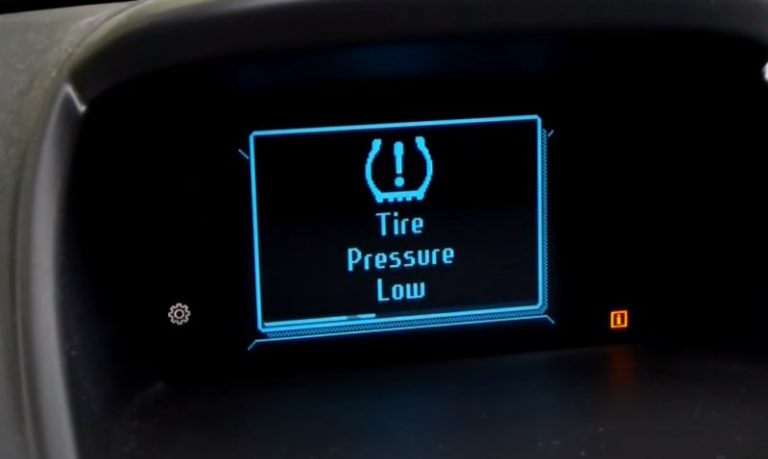
Your tire pressure monitoring system (TPMS) can also be affected by a repair kit. Liquid sealants can coat the sensor mounted inside the wheel, and some sealants can damage it over time. After a sealant repair, the TPMS light may stay on even at the correct pressure. Some vehicles need a relearn procedure after a sensor is cleaned or replaced. Our guide on resetting the TPMS light explains the process.
Step-by-Step: How to Use a Tire Repair Kit Safely (If the Puncture Is Repairable)
If the puncture is in the tread crown and within the kit’s rated size, follow these steps. If you’re not sure, skip the kit and call a professional.
Step 1: Pull Over to a Safe Location With Maximum Traffic Visibility
Move the vehicle as far off the road as possible. Turn on hazard lights, set the parking brake, and place reflective triangles or flares behind the vehicle if you have them. Never attempt a repair on a curve, a hill, or a narrow shoulder. Your safety matters more than the tire.
Step 2: Inspect the Puncture, Tire Condition, and Remaining Tread Depth
Locate the object and check whether it’s in the repairable tread area. Look for cracks, bulges, cuts, or signs that you drove on the tire while flat. Check tread depth with a gauge — below 2/32 inch means the tire needs replacement, not repair.
Step 3: Apply the Repair, Inflate to Placard Pressure, and Monitor the Gauge
Follow the kit’s instructions exactly. For sealant kits, inject the sealant, then inflate to the placard pressure. For plug kits, clean the hole, insert the plug, and trim the excess. Watch the gauge as the compressor runs, and stop at the correct PSI. Drive slowly to a tire shop — a temporary repair is not a permanent fix.
The Hidden Costs of Temporary Repairs: What the Kit Box Doesn’t Tell You
A basic repair kit can seem like a bargain compared to a tow truck. But the full cost isn’t always in the box.
Sealant Damage to TPMS Sensors and Replacement Costs
TPMS sensors are mounted inside the wheel, where liquid sealant can coat them. Some sensors survive; others fail. Replacing a single sensor can cost significantly more than the repair kit itself. If you use a sealant kit, tell the tire shop so they can clean the sensor and wheel before mounting a new tire.
Temporary Repair Limits: Speed Restrictions and 100-Mile Maximums
Temporary repairs are exactly that — temporary. Many kit manufacturers recommend driving no more than 100 miles and staying below 50 mph after a repair. The plug or sealant is designed to get you to a shop, not to extend the life of the tire.
Why a Professional Patch-Plug Is the Only Durable, Long-Term Fix
A plug alone, or a sealant alone, doesn’t address damage to the inner liner. A professional patch-plug seals from both sides and is the only method recognized as a permanent repair. Until a shop does that, your tire is a liability.
Choosing the Right Kit for Your Vehicle and Driving Habits
If you want a kit for emergencies, pick one that matches your vehicle, your driving, and your storage space.
Compact Sealant Kits vs. Plug Kits: Which Fits Your Car and Commute
Sealant kits are compact and easy to use, which makes them a good fit for commuters and drivers who don’t want to get their hands dirty. Plug kits require more work but don’t use liquid sealant, so they don’t risk damaging TPMS sensors. Off-road drivers often prefer plug kits because they’re reusable and don’t rely on a compressor.
| Option | Best for | Owner consideration | Driver consideration |
|---|---|---|---|
| Sealant kit | Commuters and quick roadside use | One-use canister; possible TPMS sensor damage | Fast and simple, but strictly temporary |
| Plug kit | Off-road and DIY drivers | Reusable; no liquid sealant to clean up | Requires manual work at the tire |
Compatibility With Run-Flat Tires, SUVs, and Electric Vehicles
Run-flat tires are designed to drive a limited distance on a flat, but they still can’t be repaired if the sidewall is damaged. SUVs and trucks need a kit rated for larger tires, and the compressor must be powerful enough to reach the placard pressure. Electric vehicles have specific tire requirements, and some automakers do not recommend aftermarket sealants. Check your owner’s manual before buying.
What to Look for in a Quality Kit: Duty Cycle, Hose Length, and Warranty
Look for a compressor with a reasonable duty cycle, a hose long enough to reach all four tires, and a gauge you can actually read. Check the warranty and whether replacement sealant canisters are available. A kit that can’t be refilled is a one-use emergency tool.
After the Repair: Next Steps and Legal Requirements for New Jersey Drivers
New Jersey drivers face specific rules when it comes to tire condition and roadside repairs.
NJ Tire Inspection Rules and the Legality of Temporary Repairs
New Jersey requires periodic safety inspections for registered vehicles. Tires with less than 2/32 inch of tread, visible damage, or unsafe conditions can fail inspection. A temporary repair isn’t automatically illegal, but driving on a visibly unsafe tire can result in a summons. The safest path is to have a professional repair or replace the tire before your inspection date.
Post-Use Inspection: Checking the Kit, the Tire, and the TPMS Light
After any temporary repair, inspect the kit for damage and replace used parts. Check the tire pressure again after a short drive, and watch the TPMS light. If the light stays on, the sensor may be contaminated or the tire may still be leaking. A professional inspection is the only way to know for sure.
When to Skip the Kit and Call a Professional or Tow Truck Instead
Skip the kit if the puncture is in the sidewall or shoulder, if the tire is visibly low, if you drove on it while flat, or if you see cuts, bulges, or cords. Skip it if you’re on a busy highway with no safe place to work. In those cases, call a tow truck. A temporary repair is not worth the risk of a blowout.
- Best for: Small tread punctures from nails or screws, when the tire has enough tread and no other damage, and when a professional shop is within a short, slow drive.
- Think twice if: The puncture is in the sidewall or shoulder, the tire was driven flat, or you rely on a TPMS sensor that could be damaged by liquid sealant.
- Next step: Check your door-jamb placard, confirm the puncture location, and call a tire shop for a professional patch-plug before you drive far.
Frequently Asked Questions
No. Sidewall punctures are never repairable with a kit because the sidewall flexes and carries load. The tire must be replaced by a professional.
A plug is a temporary fix meant to get you to a shop. Most manufacturers recommend driving no more than 100 miles and staying below 50 mph before a professional patch-plug repair.
Liquid sealants can coat or damage the TPMS sensor inside the wheel. Some sensors survive, but others need replacement, which can cost more than the kit itself.
Run-flat tires can be driven a limited distance on a flat, but they still can’t be repaired if the sidewall is damaged. Check your owner’s manual before using any sealant kit.
New Jersey safety inspections check tire condition, and unsafe tires can fail. A temporary repair isn’t automatically illegal, but driving on a visibly unsafe tire can result in a summons. Have a professional repair done promptly.
Skip the kit if the puncture is in the sidewall or shoulder, if the tire was driven flat, or if you see cuts, bulges, or exposed cords. Also skip it if you can’t pull over safely.