How Accurate Are Portable Tire Inflator Gauges? Within 1-3 Psi
Most portable tire inflator gauges read within 1-3 PSI of true pressure, which is fine for topping off tires but not for precision work. For exact placard pressure, verify the reading with a separate calibrated gauge.
How accurate are portable tire inflator gauges? For most consumer models, the built-in gauge reads within 1-3 PSI of true tire pressure when used under normal conditions. That level of accuracy is fine for topping off a low tire, but it is not precise enough for setting tire pressure to the exact number on your vehicle’s placard.
This guide explains where the 1-3 PSI range comes from, what can shift the reading, and how to use a portable inflator without over- or under-inflating your tires.
- Accuracy range: Most consumer inflator gauges land within 1-3 PSI of a reference gauge when used.
- Cold pressure: Tire pressure changes about 1 PSI per 10°F, so set pressure when tires are.
- Verify separately: A standalone calibrated gauge is the best check for the inflator’s reading.
- Power matters: Low battery voltage and overheating can make digital gauges read low or shut off.
- TPMS limits: Inflating a tire cannot fix a leak, a dead sensor, or a relearn requirement.
How Accurate Are Portable Tire Inflator Gauges? Within 1-3 PSI
The short answer is that most portable inflator gauges land within 1-3 PSI of a reference gauge. If your tire needs 35 PSI, the inflator might stop at 34 or 36 PSI. For everyday driving, that difference is rarely a problem.
What the 1-3 PSI Range Means for Tire Wear, Fuel Economy, and Ride Quality
A few PSI of error does not create an immediate safety hazard, but it does matter over time. Running tires consistently a few PSI low increases tread wear on the outer edges, slightly reduces fuel economy, and makes the ride feel softer or less responsive. Over-inflation by a few PSI can wear the center of the tread faster and harshen the ride.
The key is consistency. If your inflator reads 2 PSI high, every tire you fill will be 2 PSI low unless you compensate. Learn how your gauge behaves and adjust your filling habit.
Why an Inflator’s Built-In Gauge Isn’t a Substitute for a Calibrated Tire Gauge
An inflator’s built-in gauge is a convenience feature, not a precision instrument. The sensor is small, the display is often simplified, and the gauge is exposed to vibration and heat from the compressor. Over time, that combination can cause readings to drift.
A separate digital tire gauge is easier to verify and replace. Use the inflator to add air, then confirm the final pressure with a standalone gauge. That two-step habit removes most of the accuracy risk.
How Inflator Gauge Accuracy Is Determined: Digital vs. Analog
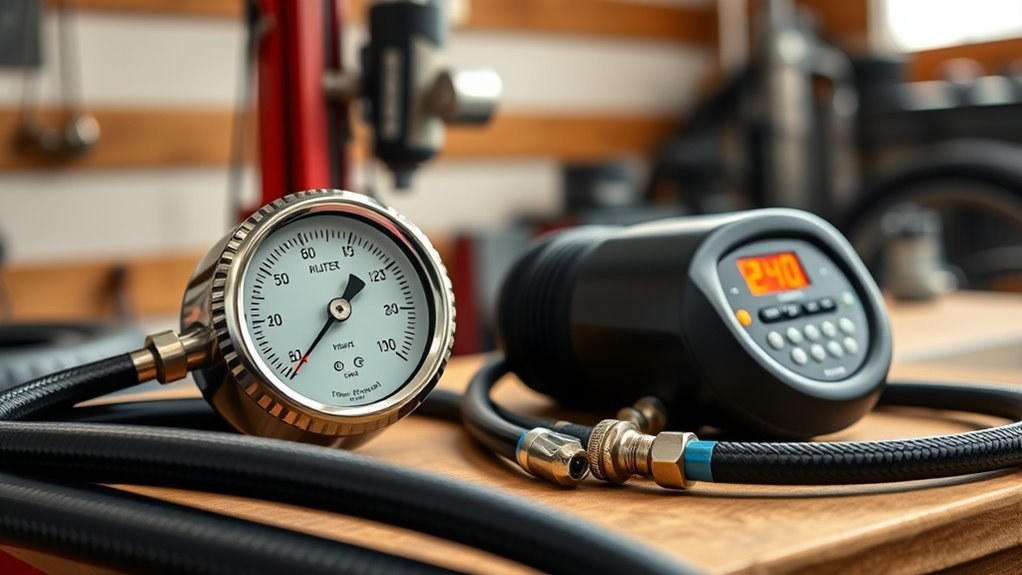
Digital inflator gauges use an electronic pressure sensor that converts pressure into a reading on an LCD or LED screen. Analog gauges use a mechanical movement, usually a small geared needle, to show pressure on a dial.
Digital units tend to be more repeatable and easier to read in low light. Analog gauges have no battery to drain, but they are harder to read precisely and can be damaged by drops. For a deeper comparison, see our guide to digital vs. analog tire pressure gauges.
Temperature Effects and the Cold-Pressure Rule
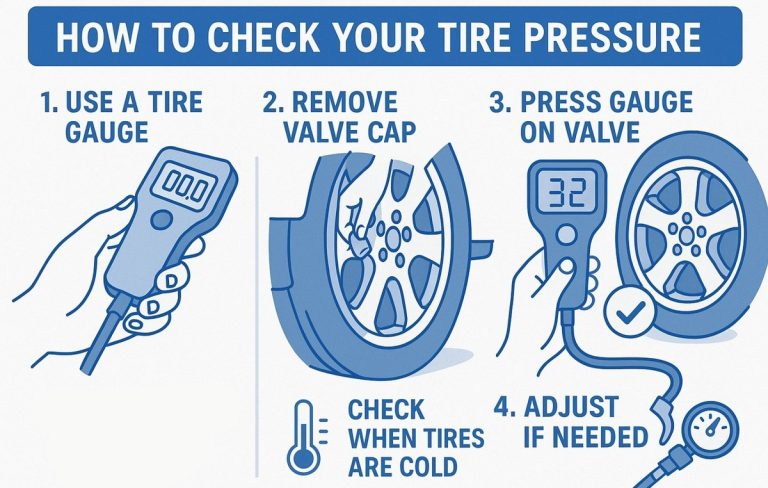
Tire pressure changes roughly 1 PSI for every 10°F change in air temperature. Driving also heats tires, which raises pressure. That is why the cold-pressure rule exists: check and set tire pressure when the tires are cold, meaning the vehicle has sat for at least three hours or has been driven less than about one mile.
If you fill tires after a long drive, the reading will be higher than the true cold pressure. Wait for the tires to cool, then recheck. Our guide on how long to wait before checking tire pressure after driving explains the timing in more detail.
Where the 1-3 PSI Figure Comes From: Manufacturer Specs and Independent Testing
The 1-3 PSI figure comes from a combination of manufacturer accuracy specifications and real-world comparisons by reviewers. Many consumer inflator brands publish specs such as ±1 PSI or ±2% of the reading, and most popular models have been observed landing within 1-3 PSI of a calibrated reference gauge.
There is no single industry standard that forces every inflator maker to meet the same accuracy requirement. The published spec for one model may not match another, so check the product manual or spec sheet before assuming a gauge is accurate.
Start With the Door-Jamb Placard, Not the Sidewall Numbers
The correct tire pressure for your vehicle is printed on the placard, usually on the driver’s side door jamb, the fuel filler door, or inside the glove box. It lists the cold inflation pressure for the original tire size.
The number molded into the tire sidewall is the maximum pressure the tire can hold, not the recommended pressure for your vehicle. Filling to the sidewall number is a common mistake that leads to over-inflation.
How to Read the Placard and Set Cold Tire Pressure
Check the placard for the front and rear cold pressures; they may be different. Use the inflator to add air when the tires are cold, then verify each tire with a separate gauge. If you overfill, release air with the gauge’s bleed button or the valve stem until the reading matches.
Check: Verify the placard pressure for your exact make, model, year, and trim. Limitations: The placard applies to the original tire size; aftermarket tires may require a different pressure.
Battery-Powered Inflators: Voltage, Chemistry, and Gauge Drift
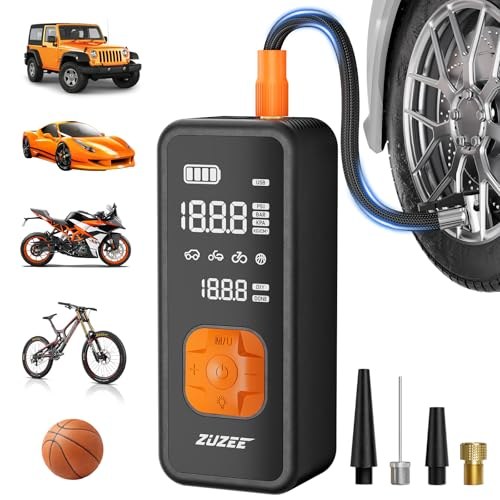
Battery-powered inflators fall into two groups: cordless units with an internal rechargeable battery and corded 12V units that plug into the vehicle’s accessory port. Both can experience gauge drift related to voltage.
Digital pressure sensors need stable voltage to produce accurate readings. When the battery sags under the load of the compressor, the gauge can read low. This is more noticeable near the end of a battery’s charge.
State of Charge vs. Battery Health: Why a Full Battery Can Still Read Low
A battery can show a full charge and still sag under load if the cells are old, cold, or damaged. The compressor is the highest-draw component, so a weak battery can cause the gauge to report a lower pressure than what is actually in the tire.
If you suspect the reading is off, stop inflating, let the battery recover, and verify with a standalone gauge. Replacing a worn battery, if the model allows it, restores consistent performance.
Correct Connection Order and Damaged-Battery Stop Conditions
For corded 12V inflators, plug into the accessory port, then start the vehicle if the manufacturer’s instructions require it to power the port. For units with battery clamps, connect the positive lead first, then the negative lead, and reverse the order when disconnecting. Follow the manual for your specific model.
Hybrid and EV Cautions for Portable Inflators
Hybrids and electric vehicles have high-voltage traction batteries under the hood and floor. The 12V accessory system is separate, and you should only connect a portable inflator to the 12V accessory port or the designated low-voltage battery terminals.
Inflator Duty Cycle: Why Overheating Skews Your Pressure Readings
Duty cycle is the amount of time a compressor can run continuously before it needs to cool down. Most consumer inflators have a duty cycle such as 10 minutes on followed by 10 minutes off. Running the unit longer than the rated duty cycle can overheat the motor and the pressure sensor.
Heat affects sensor accuracy and can cause the inflator to shut off mid-fill. If your inflator keeps stopping, review our article on why portable tire inflators keep shutting off for common causes.
Understanding Duty Cycle Ratings and Cool-Down Periods
Read the manual and note the duty cycle before inflating multiple tires. Inflate one tire, let the unit cool, then move to the next. This prevents overheating and keeps gauge readings more stable. A hot inflator can also transfer heat to the valve stem, which slightly raises the air temperature inside the tire and skews the pressure reading.
TPMS Relearn Limits and When the Inflator Isn’t the Fix
Your vehicle’s Tire Pressure Monitoring System (TPMS) warns you when a tire drops below a set threshold. Inflating the tire with a portable inflator can turn off the warning light, but it cannot repair a leak or replace a failing sensor.
If the light stays on after you have inflated the tire to the placard pressure, the issue may be a dead sensor battery, a damaged sensor, or a slow leak. A portable inflator cannot diagnose or fix those problems.
TPMS Relearn Limits and Sensor Compatibility
After a tire rotation or sensor replacement, many vehicles require a TPMS relearn procedure so the system knows which sensor is at which wheel. Most portable inflators cannot perform this relearn. You may need a TPMS service tool or a visit to a tire shop. See our guide on how to reset the TPMS light after a tire rotation for the steps.
When a Professional Diagnosis Is Required
If a tire loses pressure again within a few days of inflating, there is likely a puncture, a bead leak, a cracked wheel, or a faulty valve stem. Inflating the tire repeatedly is a temporary workaround, not a solution. A professional can inspect the tire, locate the leak, and recommend a repair or replacement. Our article on why the tire pressure light comes on when tires seem fine covers related scenarios.
Portable Inflator Gauges Compared Side by Side
Choosing between a cordless battery inflator and a corded 12V inflator depends on how you drive, where you store the unit, and how often you plan to use it.
| Option | Best for | Owner consideration | Driver consideration |
|---|---|---|---|
| Cordless battery inflator | Quick top-offs, no cord management, roadside emergencies | Battery replacement and recharge time add to ownership cost | No running vehicle needed; easier to use in a safe parking spot |
| Corded 12V inflator | Frequent use, longer fill times, budget-conscious owners | Lower upfront cost but slower; cord can be awkward to reach | Requires the vehicle’s accessory port to be powered |
Cordless Battery Inflators: Evaluation Criteria and Ideal Users
When evaluating a cordless inflator, check the battery capacity, recharge time, gauge accuracy spec, and whether the battery is replaceable. Cordless units are ideal for commuters who want to top off a tire without running the engine and for drivers who park far from an outlet.
Corded 12V Inflators: Drawbacks, Alternatives, and Warranty Support
Corded 12V inflators are usually cheaper and never run out of battery, but they are slower and tie you to the vehicle’s accessory port. Check the warranty terms before buying; some manufacturers cover the compressor but not the accessory cable or gauge. If you need faster fill times, a larger 12V air compressor or a cordless unit with a higher flow rate may be a better alternative.
Which Option Fits Your Driving Situation
For a daily commuter, a cordless inflator is convenient. For someone who frequently airs down and refills off-road tires, a higher-flow corded or cordless model matters more. Review our best portable tire inflator guide for model-specific comparisons.
Roadside Inflation Safety: Location, Visibility, and Post-Use Inspection
Inflating a tire on the roadside is riskier than doing it in a driveway. The safest approach is to move the vehicle to a flat, stable surface away from traffic before using the inflator.
Safe Location and Traffic Visibility: Know New Jersey’s Move-Over Law
If you must inflate a tire on the shoulder, turn on your hazard lights, position the vehicle as far from traffic as possible, and stay aware of approaching vehicles. New Jersey’s Move-Over Law requires drivers to move over or slow down when approaching stopped emergency vehicles with flashing lights. The law protects roadside workers, and you are safer if you avoid being on the roadway side of your vehicle entirely.
Storage Conditions, Cable Condition, and Post-Use Inspection
Store the inflator in a clean, dry place where it will not be crushed by cargo. Before each use, inspect the power cable for cracks, the hose for leaks, and the gauge display for damage. A cracked cable or leaking hose can produce false pressure readings and create a safety hazard. Check the inflator’s gauge against a known-good tire gauge a few times a year, and recharge cordless batteries according to the manual to extend their life.
Ownership Costs, Temporary-Repair Limits, and Next Steps
A portable inflator is an ownership tool, not a repair tool. It can get you to a shop, but it cannot fix a damaged tire. Understanding the limits of temporary repair keeps you safe and avoids unnecessary replacement costs.
Puncture Location and Temporary-Repair Limits
Tire plugs are a temporary fix for small punctures in the tread area. Sidewall damage, punctures near the shoulder, or damage larger than about a quarter-inch is generally not repairable. Our comparison of tire plugs vs. patches explains which repair is safer and when a tire must be replaced.
Professional-Repair Thresholds and Next Steps
If a tire loses pressure after being inflated, or if you can see a nail, screw, bulge, or cut, do not rely on repeated inflation. Have a professional inspect the tire. A proper patch or replacement is safer than a temporary plug, especially for highway driving.
- Verify the inflator’s reading with a separate tire gauge
- Use the door-jamb placard pressure, not the sidewall maximum
- Let the inflator cool according to its duty cycle
- Inflate a hot tire and assume the reading is the cold pressure
- Ignore a TPMS light that stays on after inflation
- Use a temporary plug as a permanent repair
- Best for: Drivers who want a quick, convenient way to top off tires and check pressure within a few PSI of the target.
- Think twice if: You need precision for performance driving, off-road airing, or exact placard pressure; a separate calibrated gauge is a better tool.
- Next step: Check the placard pressure on your vehicle, test your inflator’s gauge against a known-good gauge, and keep a standalone gauge in the vehicle.
Frequently Asked Questions
Most consumer models read within 1-3 PSI of true tire pressure when used correctly. That is accurate enough for topping off tires, but not precise enough for exact placard pressure. Verify with a separate gauge.
You can trust it for a rough reading, but not as a precision tool. Built-in gauges can drift due to heat, vibration, and low battery voltage. Confirm the final pressure with a standalone tire gauge.
TPMS sensors have their own accuracy range and may only warn when pressure drops well below the placard value. The inflator gauge and the TPMS can also be reading at different tire temperatures. Compare both readings when the tires are cold.
Temperature affects tire pressure by about 1 PSI per 10°F, and it can also affect the sensor inside a digital inflator. Set tire pressure when tires are cold and avoid using the inflator immediately after a long drive.
Compare it against a known-good digital tire gauge on the same tire. If the readings differ by more than 1-2 PSI, use the standalone gauge as the reference and adjust your inflating habit accordingly.
Yes, but only on the 12V accessory system. Never connect a 12V inflator to high-voltage components or orange cables. Check the owner’s manual for the 12V battery location.