How to Pass Emissions After Clearing Codes Without Failing Readiness
Drive the vehicle until the required readiness monitors show ready, then confirm status with a scan tool before inspection. Do not clear codes again, and do not test while monitors are still incomplete.
Knowing how to pass emissions after clearing codes comes down to one rule: do not test right away. You need the required OBD2 readiness monitors to switch from not ready to ready, keep the check engine light off, and confirm status with a scan tool before you book the inspection.
- Main rule: Clearing codes usually resets emissions readiness and can cause an automatic inspection failure.
- Best method: Use mixed cold-start, city, highway, and deceleration driving instead of chasing a universal magic.
- Battery matters: Weak voltage, recent jump-starts, or a battery disconnect can interrupt monitor completion.
- EVAP delay: EVAP often sets last, especially with the wrong fuel level or short-trip driving.
- Pre-test check: Verify readiness, pending codes, and stable voltage before your appointment.
How to pass emissions after clearing codes: drive until all required monitors are ready, keep the check engine light off, and verify readiness before your test
Most emissions failures after a recent reset happen for a simple reason. The car is not proving that its self-checks have finished yet. Clearing codes, disconnecting the battery, or losing power can erase the emissions monitor history that inspection stations look for.
That means the fastest path is usually not another reset. It is a complete drive pattern with the right fuel level, stable battery voltage, no active faults, and a scan check before the appointment. If even one key monitor is still incomplete, some states will fail the vehicle automatically.
Why a recent code clear causes an automatic readiness failure in many states
When you clear codes, the engine computer often wipes monitor status back to incomplete. Inspection programs use that status to confirm the vehicle has checked systems such as the catalyst, oxygen sensors, EVAP system, and EGR if equipped. If those tests have not run, the station cannot confirm emissions performance.
That is why code clearing right before inspection is a bad shortcut. Even if the check engine light stays off, the car may still fail for readiness. Some states allow a limited number of incomplete monitors on certain model years, but many do not allow enough margin to count on luck.
What “ready,” “not ready,” “unsupported,” and “permanent code” mean on a 2026-era OBD2 scan
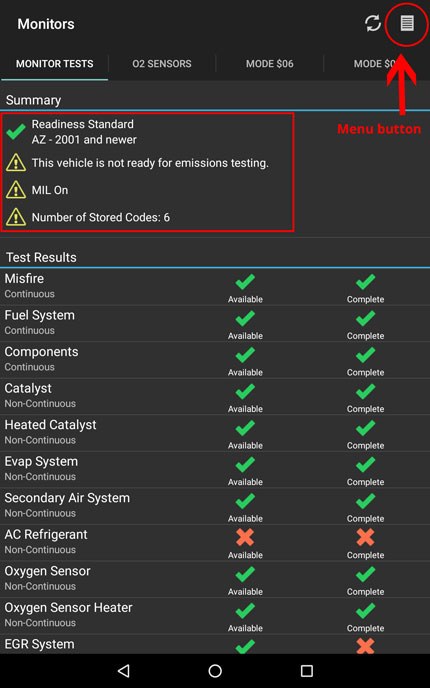
Ready means that monitor has completed its self-test since the last reset. Not ready means the test has not completed yet. Unsupported means your vehicle does not use that monitor, so it is not counted against you.
Permanent codes confuse many owners. A permanent code can remain stored even after repairs and even with no active check engine light. On many vehicles, it clears only after the fault is fixed and the computer sees enough successful drive cycles. That is different from a current fault code or a pending code.
What actually resets when you clear codes, disconnect the battery, or lose power
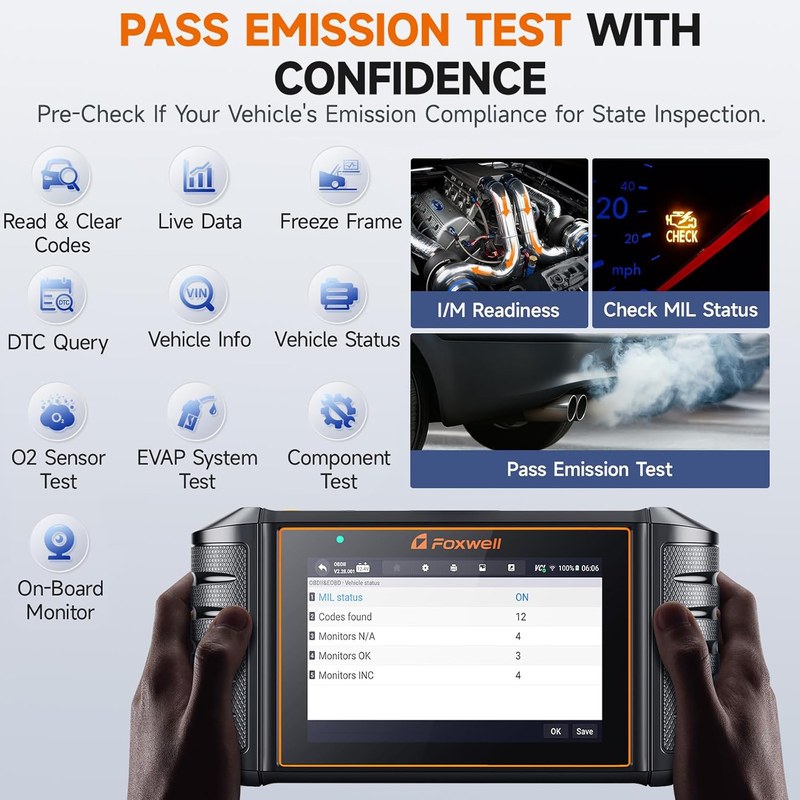
A code clear does more than turn off the warning light. It can erase stored fault history, freeze-frame data, fuel-trim learning on some vehicles, and the readiness results that emissions stations read through the OBD2 port. A battery disconnect or dead battery can do much the same thing.
Readiness monitors that usually reset first: catalyst, EVAP, oxygen sensor, EGR, secondary air, and heated catalyst
Not every vehicle has every monitor, but the common emissions-related ones are catalyst, EVAP, oxygen sensor, oxygen sensor heater, EGR, secondary air, and heated catalyst. Misfire, fuel system, and comprehensive component monitors may run sooner, while EVAP often takes longer because it needs narrower conditions.
That matters because a car can look fine on a simple code reader yet still be unprepared for inspection. If your tool can show readiness by monitor name, use that screen instead of guessing from miles driven alone.
State of charge vs battery health, system voltage, and why weak batteries can interrupt monitor completion
A battery can have enough charge to crank the engine but still be weak enough to cause unstable voltage. Low voltage can interrupt module communication, delay warm-up logic, or cause odd monitor behavior. That is especially important after the battery has gone flat, been jumped, or sat unused for a long time.
If you suspect battery trouble, check voltage and battery condition before chasing readiness. CarValleyNJ has a separate guide on how to test a battery with a battery tester if you want a simple starting point.
Correct battery connection order and damaged-battery stop conditions before attempting a reset
If you must disconnect or reconnect the battery for service, follow the vehicle manual and use the correct sequence. On most 12-volt vehicles, the negative cable is removed first and installed last, but always verify the factory procedure because access and module requirements vary.
Do not attempt resets on a swollen, leaking, cracked, or overheating battery. Stop if you smell sulfur, see melted terminals, or notice repeated no-start and charging problems. Those are repair issues first, not readiness issues.
OBD2 basics that affect emissions readiness before you start driving
Before you burn fuel trying random trips, make sure your scan method is reliable. A weak adapter, outdated app, or wrong ignition position can make the readiness screen look incomplete or unavailable even when the vehicle is fine.
Model-year and protocol coverage: what 1996+ gasoline and diesel owners should expect in the United States
In the United States, most 1996 and newer light-duty vehicles use OBD2, but monitor support and inspection rules vary by fuel type, model year, and state program. Gasoline and diesel vehicles can have different readiness items, and newer diesel systems may involve more aftertreatment checks than older gas cars.
Check: Verify your vehicle’s make, model, year, engine, fuel type, and scan-tool protocol support before trusting readiness results. Limitations: Some basic readers show generic emissions data only and may not explain manufacturer-specific monitor behavior.
OBD2 port location, ignition mode, and scan-tool limits for codes, pending faults, permanent codes, and live data
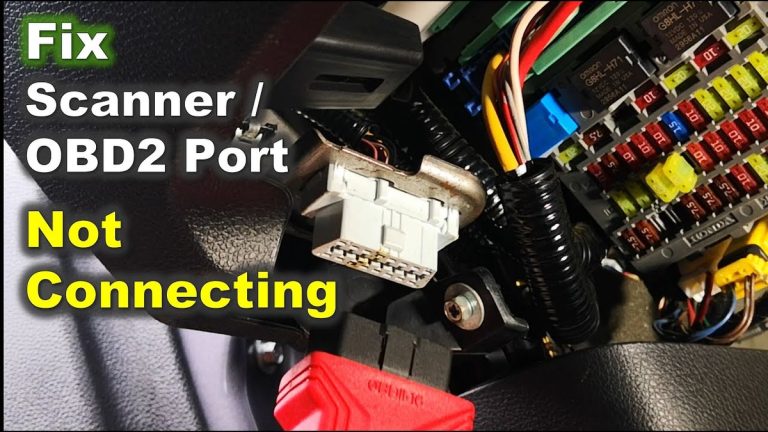
The OBD2 port is usually under the driver-side dash, but the exact location varies. Many tools need the ignition in key-on engine-off mode to connect, while others work best with the engine running for live data. If the tool fails to connect, the issue may be setup, not the vehicle.
Basic readers often show stored codes and readiness, while better tools add pending codes, permanent codes, freeze-frame data, and live data like coolant temperature and fuel trim. If you need a refresher on scanner basics, see CarValleyNJ’s guides on how to use the Foxwell NT301 OBD2 scanner and whether the Foxwell NT301 can check emissions.
App permissions, Bluetooth security, firmware updates, and when cheap adapters create misleading readiness results
Bluetooth dongles and scan apps can be very useful, but they depend on app permissions, phone compatibility, firmware support, and stable pairing. Cheap adapters sometimes drop connection, report generic labels poorly, or fail to show permanent codes correctly.
If your app says every monitor is unsupported or keeps changing results between scans, treat that as a tool problem until proven otherwise. Update the app, confirm supported protocols, and compare with a second scanner if possible.
The fastest safe way to set readiness monitors without failing the test
The best strategy is controlled, normal driving that matches common monitor conditions. Start with a true cold start if possible, avoid clearing codes again, and use a route that includes idle time, city driving, steady cruise, and closed-throttle deceleration.
Cold start, idle, steady cruise, deceleration, stop-and-go, and fuel-level conditions that commonly help monitors run
Many vehicles need an overnight cold soak, then a start without heavy throttle. After that, a few minutes of idle, moderate acceleration, steady highway cruise, gentle deceleration without hard braking, and some stop-and-go driving can help several monitors run.
Fuel level matters more than many owners expect. EVAP often wants the tank neither nearly empty nor completely full. A common safe target is roughly one-quarter to three-quarters full, though the exact threshold varies by vehicle.
- Drive a mix of city and highway routes after one reset only
- Keep fuel level in a moderate range unless the manual says otherwise
- Recheck readiness after each full warm-up cycle
- Clear codes again just because one monitor is still incomplete
- Assume 20 or 30 miles is always enough
- Force EVAP completion with repeated short trips and a full tank
Why there is no universal “magic drive cycle” and how manufacturer-specific cycles differ by make and model
There is no single drive cycle that works for every car. Some manufacturers want a longer steady cruise. Others need a specific coolant temperature, ambient temperature range, or deceleration pattern. Hybrids and diesels can differ even more.
If you can access the factory service information or a reliable repair database, use the exact drive cycle for your engine and emissions package. That is often faster than trying internet advice meant for a different vehicle.
How many miles, trips, and warm-up cycles are realistic before retesting in 2026
There is no guaranteed mileage number, but many vehicles need more than one trip. A realistic plan is several complete warm-up cycles over a few days, with mixed driving and at least one longer steady-speed run. Some cars finish quickly. Others, especially for EVAP or diesel aftertreatment, take much longer.
If all required monitors show ready and no pending or stored emissions codes return, then retesting is reasonable. If the same monitor refuses to set after repeated proper driving, the issue is likely diagnostic, not procedural.
Which readiness monitors matter most, and how many “not ready” monitors your state may allow
Inspection rules are not identical across the country. The number of incomplete monitors allowed can vary by state, county, model year, and fuel type. That is why “my friend passed with one not ready” may not apply to your car or your testing station.
Common U.S. legal variation by model year, fuel type, and county inspection program
Some programs allow one incomplete monitor on certain older OBD2 vehicles. Others are stricter. Diesel inspection rules can also differ from gasoline rules, and some counties use different emissions programs than the rest of the state.
Why EVAP often takes the longest, and why forcing a test too early wastes time and money
EVAP is often the last monitor to set because it may need a narrow fuel range, a longer soak period, and specific ambient conditions. That is why drivers often get every other monitor ready but still fail if they rush to the station too early.
Waiting one more day and scanning again is usually cheaper than paying for another failed test. It also gives you time to spot a pending code before it turns the check engine light back on.
Permanent codes, recent repairs, and why some vehicles still pass with no active check engine light
A permanent code does not always mean automatic failure by itself. In many cases, if the repair is complete, the check engine light stays off, and the readiness monitors are set, the vehicle can still pass because the computer has not seen the fault return.
The key is not to guess. Read the inspection rule for your state and check whether the station evaluates permanent codes directly or relies mainly on active faults and readiness status.
Troubleshooting monitors that will not set after clearing codes
If you have driven enough and one or more monitors still stay incomplete, stop thinking only about the inspection. Start thinking about the reason the monitor is refusing to run.
Using live data to spot coolant temperature, fuel-trim, oxygen-sensor, thermostat, and EVAP clues
Live data can reveal why readiness is stuck. Coolant that never reaches normal operating temperature may point to a thermostat problem. Fuel trims far out of range can suggest vacuum leaks, intake issues, or fuel delivery problems. Slow oxygen sensor switching can delay catalyst-related checks.
If your scanner supports it, watch coolant temperature, short- and long-term fuel trim, oxygen sensor activity, intake air temperature, and EVAP-related values while driving or idling safely. For a deeper look at trims, CarValleyNJ also explains how to read fuel trim on a Foxwell NT301.
How low voltage, incorrect fuel level, aftermarket tuning, exhaust leaks, or incomplete repairs block readiness
Low system voltage can interrupt monitor logic. A nearly full or nearly empty tank can block EVAP. Aftermarket tuning can change readiness behavior or trigger unsupported results. Exhaust leaks ahead of oxygen sensors can create false readings that prevent catalyst monitors from completing.
Another common problem is an incomplete repair. A loose gas cap, aftermarket sensor with poor compatibility, aging thermostat, or unresolved vacuum leak may leave the light off for now but still keep a monitor from finishing.
When diagnosis requires a professional smoke test, oscilloscope, factory scan tool, or software reflash
Some issues are hard to confirm with a basic code reader. EVAP leaks may need a smoke test. Intermittent sensor problems may need a lab scope. Module communication issues or updated calibration files may require a factory-level tool or software reflash.
If you are stuck after proper driving and basic checks, professional diagnosis is usually cheaper than repeating resets and inspections. It also reduces the risk of replacing parts that were never the real cause.
Scan tool, code reader, or repair shop: which option fits your vehicle, budget, and confidence level
Your best option depends on what you need to know. If you only want to see whether monitors are ready, a basic emissions-capable reader may be enough. If you need live data, pending codes, and deeper troubleshooting, a better scanner or a repair shop can save time.
Side-by-side comparison of basic readers, Bluetooth apps, mid-level scanners, and professional diagnostic services
| Option | Best for | Owner consideration | Driver consideration |
|---|---|---|---|
| Basic code reader | Quick readiness and generic code checks | Lower cost, but limited live data and fewer advanced functions | Simple menu use with less distraction when checked while parked |
| Bluetooth app adapter | Owners who want phone-based scans and portable access | App quality, permissions, updates, and compatibility vary widely | Never monitor app screens while driving |
| Mid-level scanner | DIY users troubleshooting stubborn monitors | Higher upfront cost, but better live data and code detail | Larger screen can improve readability during parked diagnosis |
| Repair shop diagnosis | Repeated failures, hard faults, or complex vehicles | Higher service cost, but stronger diagnostic depth | Reduces guesswork and road-test frustration |
Code and live-data limits, update support, compatibility, ownership cost, and evidence-based drawbacks of each option
Basic readers are easy to own and often enough for pass-or-fail readiness checks, but they may not show enough detail when one monitor refuses to set. Bluetooth tools are convenient, yet app support and privacy policies matter. Mid-level scanners can be a sweet spot for frequent DIY use, but only if they support your vehicle well.
Professional service costs more per visit, but it may be the least expensive path if you are dealing with diesel aftertreatment faults, hybrid communication issues, or repeated EVAP failures.
Best fit for older OBD2 cars, newer CAN vehicles, diesel trucks, hybrids, and plug-in hybrids
Older OBD2 gasoline vehicles often do fine with a simple readiness-capable reader. Newer CAN vehicles benefit from stronger software support and stable firmware. Diesel trucks may need tools that better interpret aftertreatment data. Hybrids and plug-in hybrids can need more vehicle-specific information, especially after battery or electrical work.
Special cautions for hybrids, EVs, diesels, and vehicles with recent battery or electrical work
These vehicles deserve extra care because a simple reset may affect more than the engine computer. High-voltage systems, battery management logic, and emissions hardware can change the normal readiness process.
Hybrid and EV high-voltage cautions, 12-volt battery chemistry differences, and why some resets create new faults
Many hybrids still use OBD-based emissions checks for the gasoline engine, but they also have high-voltage systems that should not be disturbed casually. Some use different 12-volt battery types or charging behavior than a conventional car. A low 12-volt battery can trigger strange communication faults after service.
Diesel readiness concerns including glow system, NOx/SCR, DPF, and long-drive monitor requirements
Diesel readiness can involve glow plug systems, NOx controls, SCR operation, DPF behavior, and longer drive requirements than many gasoline owners expect. Short trips may not be enough, especially if the vehicle needs full warm-up and stable highway operation to complete aftertreatment checks.
If the truck has active regeneration issues, DEF-related faults, or repeated low-power warnings, fix those first. Readiness will often remain incomplete until the underlying diesel emissions problem is resolved.
What to check after jump-starts, low-voltage events, alternator issues, or module replacement
After a jump-start or charging-system problem, verify battery condition, charging voltage, and whether the computer lost learned data. If you recently replaced a module, confirm it was programmed correctly and that no communication faults remain.
Repeated dead-battery events are a clue, not bad luck. If that sounds familiar, a separate battery drain problem may be behind your readiness trouble.
What to do before your inspection appointment so you do not restart the readiness problem
The final step is simple: do not undo your progress. Many last-minute failures happen because the battery gets disconnected again, a code is cleared out of caution, or the car is tested without one final scan.
Pre-test checklist: verify monitor status, fuel level, no pending codes, stable voltage, and no fresh battery disconnect
Before heading to the station, confirm required monitors are ready, the check engine light is off, and no pending emissions codes are waiting in the background. Keep fuel in a normal range, make sure the battery is stable, and avoid disconnecting power again.
Safe next steps if you still have one stubborn monitor, a permanent code, or a returning check engine light
If one monitor is still incomplete, check your state rule before testing. If a permanent code remains but the repair is done and no active fault returns, you may still be fine depending on the inspection program. If the check engine light comes back, postpone the test and diagnose the cause first.
When to postpone the test, seek a waiver path where allowed, or schedule a professional diagnosis
Postpone the test if monitors are incomplete, voltage is unstable, or the warning light returns. If your state offers a waiver process after qualifying repair attempts, review the exact requirements with the inspection authority. For repeated failures or unclear data, schedule a professional diagnostic visit instead of gambling on another test.
- Best for: Owners who recently cleared codes and need a clear path to pass emissions without resetting the problem again.
- Think twice if: You have a returning check engine light, unstable battery voltage, or a monitor that will not set after proper driving.
- Next step: Scan for readiness, pending codes, and battery-related issues before scheduling the inspection.
Frequently Asked Questions
Usually no. Clearing codes often resets readiness monitors, and many states will fail the vehicle until the required monitors complete.
It depends on the vehicle, weather, fuel level, and driving pattern. Some monitors set quickly, but EVAP and some diesel monitors may take several trips and full warm-up cycles.
Often yes. A battery disconnect or major low-voltage event can erase monitor history and force the car to run its emissions self-checks again.
Sometimes, but not always. Many vehicles can still pass if the repair is complete, required monitors are ready, and the state program does not treat that permanent code as an automatic failure.
A moderate fuel level is usually best. Many vehicles prefer the tank somewhere between about one-quarter and three-quarters full, but the exact target varies.
It is highly recommended. A scan tool helps you confirm readiness, spot pending codes, and avoid paying for a test before the vehicle is actually ready.