Can Cold Weather Cause a TPMS Light to Come on? Yes, Here’s the Fix
Yes, cold weather can trigger your TPMS light because falling temperatures shrink the air inside your tires. Check the door-jamb placard, fill cold tires to that pressure, and relearn the system if the light stays on.
Can cold weather cause a TPMS light to come on? Yes—and it’s one of the most common seasonal warnings on US roads. When temperatures drop overnight, the air inside your tires contracts, pressure falls, and the dash light can appear before you even leave the driveway.
- Cold drops pressure: Expect about 1 PSI loss per 10°F drop, so a cold snap can trigger.
- Use the placard: The door-jamb number is the cold pressure target, not the number molded on the.
- Fill cold, recheck later: Check before driving or wait two hours after a drive, then recheck after filling.
- Light still on? Many vehicles need a relearn procedure or a short drive before the warning clears.
- One tire low? That usually means a leak, not cold weather—have it inspected if it drops again.
Yes, Cold Weather Can Turn On the TPMS Light—Here’s Why
The tire pressure monitoring system (TPMS) compares each tire’s air pressure against a stored threshold. When cold air makes the pressure drop far enough, the system triggers the amber warning light.
The 1 PSI per 10°F Rule and the Overnight Temperature Drop
Tire pressure changes with temperature because air contracts when cold and expands when warm. A widely cited rule from tire engineers is that pressure drops about 1 PSI for every 10°F drop in outside temperature.
That may sound small, but consider a typical overnight swing. If the temperature falls from 70°F to 20°F, that’s a 50°F drop. Your tires could lose about 5 PSI before morning.
A tire set to 35 PSI on a mild afternoon can read near 30 PSI the next morning—enough to trigger a warning on many vehicles.
Why the Warning Often Appears on the Coldest Morning of the Season
TPMS warning thresholds are not random. Under Federal Motor Vehicle Safety Standard No. 138, the system must warn you when pressure falls 25% or more below the manufacturer’s recommended cold inflation pressure.
If your placard says 35 PSI, the warning typically triggers around 26 PSI. A single cold night rarely causes that large a drop. The coldest morning of the season, though, often follows several days of falling temperatures, so pressure finally crosses the threshold.
If you’ve already checked your tires and they look fine, the cold is still the most likely cause. This is also why drivers ask why their tire pressure light comes on when the tires are fine—the system is working, but the cold changed the math.
Read the Door-Jamb Placard Before You Add Any Air
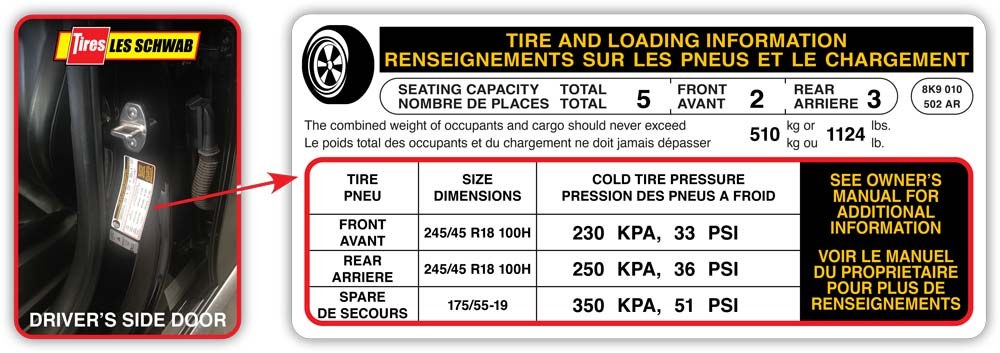
Before you add air, find the correct pressure for your vehicle. The number is printed on a placard, usually on the driver’s side door jamb, inside the fuel door, or in the glovebox. It lists cold inflation pressures for the front and rear tires.
Cold Pressure vs. Hot Pressure: Which Number Actually Matters
The placard number is a cold pressure. That means the tires should be near outside temperature, not warmed up from driving. After a 20-minute drive, tire pressure can rise 3 to 5 PSI from heat alone.
If you check hot tires and they read above the placard, do not bleed air out. Wait for the tires to cool, then recheck. Adding or removing air from hot tires leads to under-inflated cold tires.
Not sure how long to wait? See how long you should wait to check tire pressure after driving for practical guidance.
When the Owner’s Manual and the Placard Disagree
Most of the time, the placard and the owner’s manual agree. When they don’t, the placard is usually correct for normal everyday loads. The manual may list higher pressures for heavy loads, towing, or sustained high-speed driving.
If you carry a full load or tow regularly, use the higher figure listed in the manual. For daily commuting with light loads, the placard pressure is the safer baseline.
How to Inflate a Cold Tire Correctly
Inflating a tire sounds simple, but small mistakes can leave the TPMS light on or create an unsafe tire. Here’s how to do it right.
Gauge Accuracy and Inflator Duty Cycle Limits
Use a gauge you trust. Digital gauges are generally easier to read, but any gauge can drift out of calibration. If your gauge disagrees with a gas station gauge by more than 2 PSI, replace it.
If you use a portable inflator, know its duty cycle. Many 12-volt compressors are rated for 10 minutes of running followed by 10 minutes of cooling. Running one past its limit can overheat it or blow a fuse.
Step-by-Step: From Placard Pressure to Final Recheck
Check pressure before driving, or wait at least two hours after a drive so the tires return to cold temperature.
Note the front and rear cold pressures. They may be different.
Press the gauge firmly over the valve stem and read the number. Write down each tire’s reading.
Inflate to the placard pressure, then recheck. If you overshoot, press the center pin on the valve stem to release air.
If your vehicle has a TPMS-monitored spare, include it. Replace all valve caps snugly by hand.
Many systems clear the warning after a short drive once pressures are correct. Others need a relearn procedure.
The Light Is Still On: TPMS Relearn, Sensor Batteries, and Limits
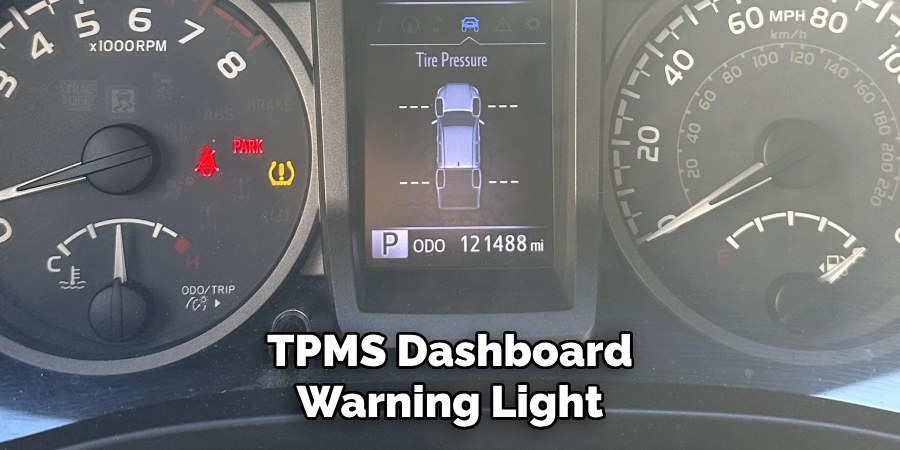
You filled the tires to the placard pressure, but the light is still glowing. That doesn’t mean you did something wrong. Many TPMS systems need a reset or relearn before the light turns off.
Relearn Procedures and Why They Sometimes Fail
Some vehicles relearn automatically after driving for 10 to 20 minutes. Others require a manual relearn using a button under the dash, a menu in the infotainment screen, or a TPMS reset tool.
Relearns fail for common reasons: incorrect tire pressure when the relearn started, the vehicle moving, or the tool signal not reaching the sensor.
If the light stays on after a proper fill, you’re not alone. See why the TPMS light stays on after filling the tires for the most common causes and fixes.
Sensor Battery Life, Chemistry, and Cold-Weather Failures
TPMS sensors are battery-powered. Most sensor batteries are designed to last 5 to 10 years, but cold weather can shorten the useful life of a weak battery. A sensor that was marginal in October can fail on the first freezing morning.
When a sensor battery dies, the light usually comes on and stays on, or flashes briefly at startup. Some vehicles show a message like “Tire Pressure System Fault” or “Service TPMS.”
If a sensor fails, you’ll need to decide between a battery replacement and a new sensor. Our guide on TPMS sensor battery replacement vs. a new sensor explains the trade-offs.
DIY Relearn vs. Shop Relearn: Which Fits Your Vehicle
Some vehicles let you relearn with a simple sequence: turn the ignition on, press the TPMS reset button, and watch the light blink. Others need a handheld TPMS tool to trigger each sensor in a specific order.
If your vehicle needs a tool, you can buy one or ask a tire shop to do the relearn. Tire shops often include the relearn when they rotate tires or fix a puncture, but it’s worth confirming before you book.
Is It Just the Cold, or a Real Tire Problem?
Cold weather explains a pressure drop across all four tires. A real leak usually shows up in one tire, or drops faster than the others. Here’s how to tell the difference.
Puncture Location, Temporary-Repair Limits, and Professional Thresholds
If one tire keeps losing pressure after you fill it, check for a nail, screw, or puncture. Look at the tread area first. Sidewall damage is not safely repairable with a plug kit.
Plug kits are temporary repairs. A plugged tire should be inspected by a professional, and the tire should be replaced if the puncture is in the sidewall, near the shoulder, or larger than about 1/4 inch.
Slow Leaks and the 25% Warning Threshold You Shouldn’t Ignore
Remember the 25% threshold. A tire at 35 PSI won’t warn you until it drops to about 26 PSI. That means a slow leak can go unnoticed for weeks in cold weather, especially if you don’t check pressures regularly.
If your TPMS light came on and only one tire was low, treat it as a leak, not a cold-weather quirk. Fill it, check it again in a few days, and have it inspected if it drops again.
- Check all four tires when the TPMS light comes on, not just the one that looks low
- Use the placard cold pressure as your target
- Recheck a filled tire after 24 hours to confirm the leak is fixed
- Ignore a TPMS light that returns within a few days
- Plug a sidewall puncture or drive far on a temporary repair
- Bleed air from hot tires to match the placard
What an OBD2 Scanner Can and Can’t Tell You About TPMS
An OBD2 scanner is a useful tool for many car problems, but TPMS is a special case. Here’s what it can and can’t do.
Port Location, Ignition Mode, and Model-Year Protocol Coverage
The OBD2 port is usually under the dashboard on the driver’s side. The scanner needs the ignition in the “on” position, not necessarily the engine running, to communicate with the vehicle’s computer.
TPMS data availability depends on the vehicle’s protocol and model year. Some vehicles report TPMS codes and live tire pressure data through the OBD2 port. Others keep TPMS data on a separate module that a basic scanner cannot reach.
Code Limits, Live Data, and Emissions Readiness
A basic OBD2 scanner reads engine and emissions codes. TPMS codes are often stored in a different module, so a generic scanner may show no codes even when the TPMS light is on.
Some mid-range scanners can read live data from the TPMS module, including individual tire pressures. Emissions readiness status is a separate function and does not relate to TPMS.
Reset Limitations, App Permissions, and Firmware Updates
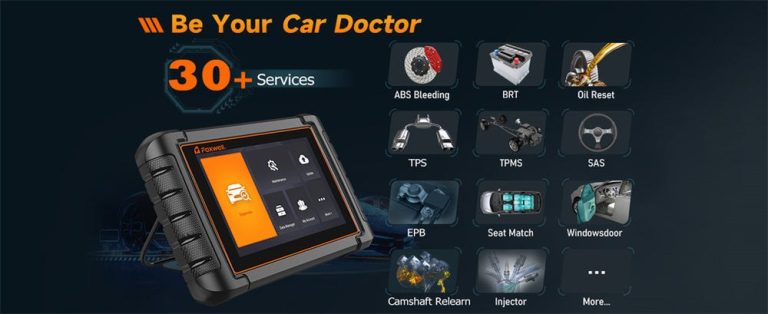
Most OBD2 scanners cannot reset or relearn TPMS sensors. That task usually requires a dedicated TPMS reset tool or a shop-level scanner with bidirectional control.
If your scanner uses a smartphone app, review the permissions it requests. Some apps collect vehicle data, location, or diagnostic codes. Check the privacy policy before connecting it.
When to Stop Diagnosing and Call a Professional
If you’ve inflated all tires correctly, performed a relearn, and the light still flashes or stays on, stop guessing. A flashing TPMS light usually means a system fault, not low pressure.
A professional with a TPMS-specific tool can read each sensor’s ID, signal strength, and battery status. This is faster and safer than replacing sensors one by one.
If your light flashes before staying on, that pattern points to a sensor or system fault. See why a TPMS light flashes then stays on for a clear breakdown.
Roadside TPMS Emergencies in Freezing Weather
Sometimes the light comes on while you’re already on the road. Cold weather makes roadside tire work harder, so plan before you need it.
Safe Location, Traffic Visibility, and Storage Conditions
Pull off the road as far as possible, onto a level surface away from traffic. Turn on hazard lights and, if it’s dark, use a flashlight or roadside flares. If you can reach a parking lot instead of a highway shoulder, do that.
Cold weather also affects your tools. A portable compressor stored in the trunk is fine, but a battery-powered inflator loses capacity in extreme cold. Keep emergency gear charged and stored where you can reach it.
Portable Compressors, Emergency Kits, and Post-Use Inspection
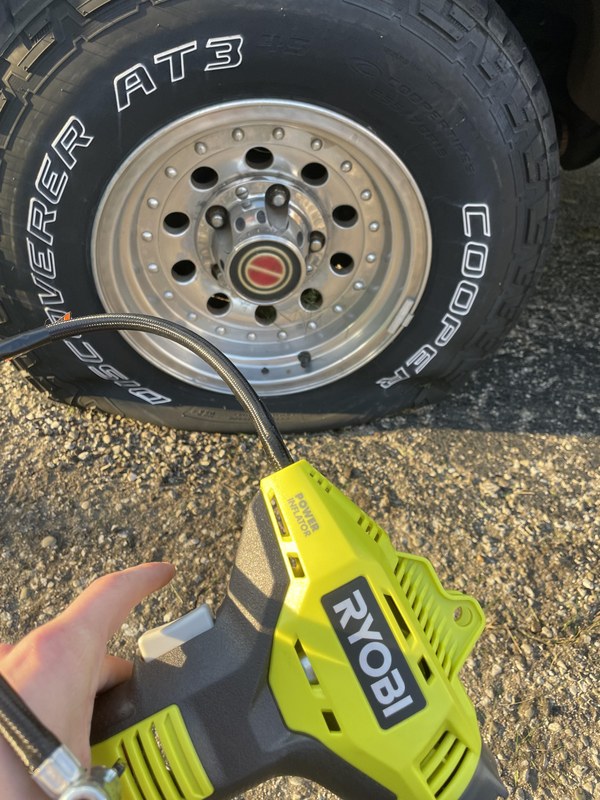
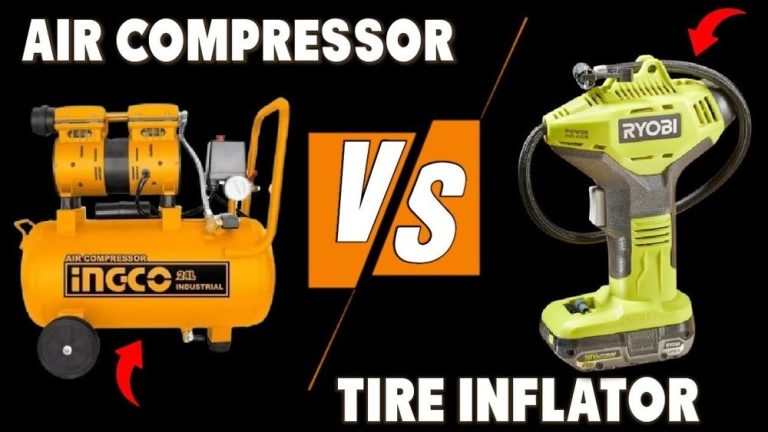
A portable 12-volt compressor can add enough air to get you to a shop, but it has limits. It will take longer to fill a tire in cold weather, and its duty cycle means it needs rest periods. Fill to the placard pressure, then recheck after a short drive.
After using a compressor, inspect the hose and connections for cracks. Cold makes rubber stiff, and a cracked hose can fail the next time you need it.
Your Winter Tire-Pressure Plan: Next Steps
Cold-weather TPMS warnings are predictable. A small seasonal routine can prevent most of them.
Monthly Checks, Seasonal Adjustments, and Sensor Health
Check tire pressure at least once a month and before long trips. In fall, check more often as temperatures swing. When the season changes, expect to add air—not because the tire is leaking, but because the air inside it has contracted.
Also watch sensor health. If your vehicle is more than five years old and you’ve never serviced the TPMS sensors, plan for a battery check before winter.
When to Replace Sensors vs. When to Just Relearn
If a sensor fails, you have two choices: replace the sensor or, on some models, replace just the battery. Sensor batteries are often sealed inside the unit, so battery replacement may not be an option.
If the sensors are more than 7 to 10 years old, replacing them with new units is usually the better investment. If they’re young and one fails, a single replacement may be enough. Either way, the new sensor must be programmed and relearned to your vehicle.
- Best for: Drivers who want to avoid a cold-morning TPMS scare by checking placard pressure before the first freeze.
- Think twice if: The light returns within days or one tire drops faster than the others—that’s a leak, not the cold.
- Next step: Check all four tires cold, fill to the door-jamb placard, and complete a relearn if the light stays on.
Frequently Asked Questions
Yes. Cold air makes tire pressure drop by about 1 PSI for every 10°F decrease in temperature. A large overnight temperature drop can push pressure below the TPMS warning threshold, even with no leak.
A commonly cited rule is about 1 PSI per 10°F drop. If the temperature falls 50°F overnight, a tire could lose roughly 5 PSI.
Some systems need a short drive to recheck pressures and clear the light. Others require a manual relearn procedure using a button, menu, or TPMS reset tool.
Check your owner’s manual for the specific procedure. Many vehicles relearn automatically after driving, while others need a reset button or a TPMS tool.
Most TPMS sensor batteries are designed to last 5 to 10 years. Cold weather can shorten the life of a weak battery, causing a sensor fault on a freezing morning.
Check tire pressure before driving. If a tire is visibly low or flat, do not drive on it. If all tires are near placard pressure, drive to a safe location and recheck.