TPMS Sensor Battery Replacement vs New Sensor: Which Is Cheaper?
A new TPMS sensor is almost always the cheaper and safer choice because rebuild kits only fit a few sensor models and leave the old sealed housing in service. Choose battery replacement only if you own a confirmed rebuildable sensor and can do the tire and reseal work yourself.
When your tire pressure light stays on, the TPMS sensor battery replacement vs new sensor decision comes down to more than the sticker price. For most US drivers, a new sensor is the cheaper and safer choice once you count labor, sealing, and the risk of a failed rebuild.
- Cost: New sensors cost more upfront but usually win on total cost once labor and.
- Safety: Factory-sealed new sensors avoid the water-ingress failures common after DIY reseals.
- Compatibility: Rebuild kits fit only specific sensor part numbers, and most OEM sensors cannot be.
- Relearn: Either option still requires a TPMS relearn so the vehicle recognizes the sensor ID.
- Warranty: New sensors carry a whole-unit warranty; rebuild kits usually cover only the kit parts.
TPMS Sensor Battery Replacement vs New Sensor: The Bottom Line
Here is the short answer: buy a new sensor unless you own a rebuildable aftermarket sensor and have the skill to service it yourself. Rebuild kits cost less upfront, but they only fit specific sensor models and leave the old sensor body in service.
Why a new sensor is almost always the cheaper and safer choice
A new sensor arrives with a fresh battery, new seals, and a warranty. A rebuilt sensor keeps the old housing and valve stem, and it depends on your workmanship to stay sealed. Moisture is the biggest killer of TPMS sensors, and opening a sealed unit invites water in.
Labor also stacks up. Mounting, balancing, and programming a new sensor costs about the same as doing those steps for a rebuilt one, so the small parts savings of a rebuild kit often disappear.
The one scenario where battery replacement actually wins
Battery replacement wins only if three things are true: you own a sensor model designed to be rebuilt, you have the tools to do it, and you accept the water-ingress risk. For a skilled DIYer, a kit can save a modest amount per sensor. For everyone else, it is a gamble.
What this guide covers: costs, installation, safety, and legal considerations
This guide compares both options on price, installation difficulty, TPMS relearn requirements, safety, compatibility, and US legal rules.
How TPMS Sensors Work: Sealed Batteries, Lifespan, and the 2026 Reality
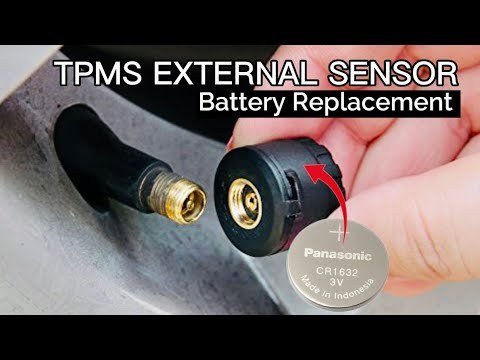
Why most OEM sensors are sealed units with no user-replaceable battery
Most factory TPMS sensors are sealed plastic or metal units. The battery is soldered or spot-welded inside, and the housing is bonded shut. That design keeps moisture out and keeps the sensor balanced, but it also means there is no battery door.
By 2026, many vehicles on US roads are 10 to 15 years old. Millions of original sensors are reaching the end of their expected service life, which is why this question keeps coming up.
Battery chemistry, state of charge vs battery health, and damaged-battery stop conditions
TPMS sensors typically use small lithium batteries designed to last about 5 to 10 years depending on the vehicle, climate, and how often the sensor transmits. When battery voltage drops below a threshold, the sensor sends a low-battery fault code.
State of charge is how full the battery is right now. State of health is how much usable life it has left. A sensor can show normal voltage and still be near the end of its life, which is why a scan tool code matters more than a quick voltage check.
Never open a sensor with a swollen, corroded, or physically damaged battery. Damaged lithium cells can leak or overheat. Stop and replace the sensor instead.
System voltage: why the car battery matters during sensor replacement
TPMS programming and relearn procedures depend on stable electrical system voltage. If your car battery is weak, a programming session can fail partway through and leave the sensor unregistered. Check battery condition first, especially on older vehicles.
Full Cost Breakdown: Rebuild Kit vs New Sensor vs Shop Labor
Parts pricing: rebuild kits, OEM sensors, and aftermarket sensors
Rebuild kits are the cheapest part, commonly priced well under $30. Aftermarket sensors typically cost more, and OEM sensors from the dealer cost the most. Exact prices vary by vehicle, brand, and region, so treat any number here as a planning range, not a quote.
In general, aftermarket sensors cost less than dealer OEM sensors. The trade-off is that aftermarket sensors may need a programming tool to copy the original sensor ID.
Labor, mounting, balancing, and programming costs
Every sensor replacement requires removing the tire from the wheel, mounting the new sensor, and rebalancing the wheel. Some shops charge a single per-tire fee that includes the sensor; others charge separately.
Programming adds another step. Some vehicles relearn automatically, some need a magnet or a TPMS tool, and some need an OBD2 scan tool. If you are paying a shop, ask whether programming is included in the quoted price.
Rebuild kit review: evaluation criteria, evidence limits, and ideal user
To judge a rebuild kit fairly, look at four things: exact sensor model fit, seal and gasket quality, battery type, and warranty. A kit that fits one sensor brand usually does not fit another.
The ideal user is a DIYer who already owns a rebuildable aftermarket sensor and accepts that a failed seal means doing the job again. If you are paying a shop, a rebuild kit rarely makes sense because labor cancels the savings.
Rebuild kit drawbacks, alternatives, compatibility, warranty, and verdict
Drawbacks are real. The sensor body may be aged, the valve stem may be brittle, and the original electronics may be close to failure even with a fresh battery. Water ingress after a DIY reseal is the most common failure mode.
The main alternative is a new aftermarket sensor with a fresh housing, new valve stem, and a warranty on the whole unit. Compatibility is the hard part: rebuild kits list specific sensor part numbers, and the wrong kit means leaks or no signal.
Verdict: choose a rebuild kit only for a known rebuildable sensor on a vehicle you plan to keep for a short time. For almost everyone else, a new sensor is the better value.
Installation and TPMS Relearn: What Each Option Requires
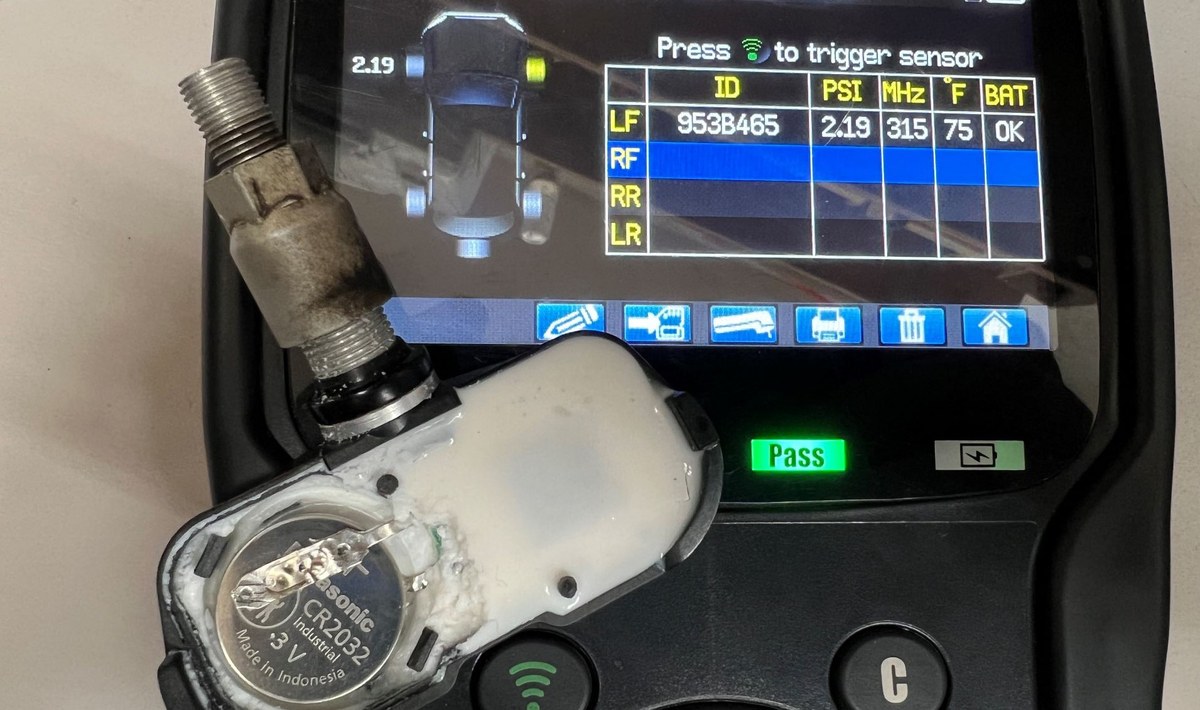
DIY battery replacement: tools, skill, water-ingress risks, and relearn limits
Rebuilding a sensor takes specialty tools, a new battery, fresh seals, and a clean workspace. The housing must be opened without damaging the electronics, and the new seal must seat perfectly. The tire still has to come off the wheel, and the sensor still has to be relearned.
If you do not have a tire machine, you cannot complete the job at home. That alone pushes most DIYers to a shop for at least part of the work.
TPMS relearn procedures: OBD2 port location, ignition modes, and model-year/protocol coverage
After any sensor replacement, the vehicle must learn the new sensor ID. Relearn methods vary by make and model. Some use the OBD2 port under the dash, some use a magnet near the valve stem, and some trigger a relearn by cycling the ignition and adjusting tire pressure. Older vehicles may need a different procedure than newer ones, so check the owner’s manual.
Knowing the difference between a relearn and a reset prevents wasted time. Our article on TPMS relearn vs TPMS reset breaks down which procedure your car actually needs.
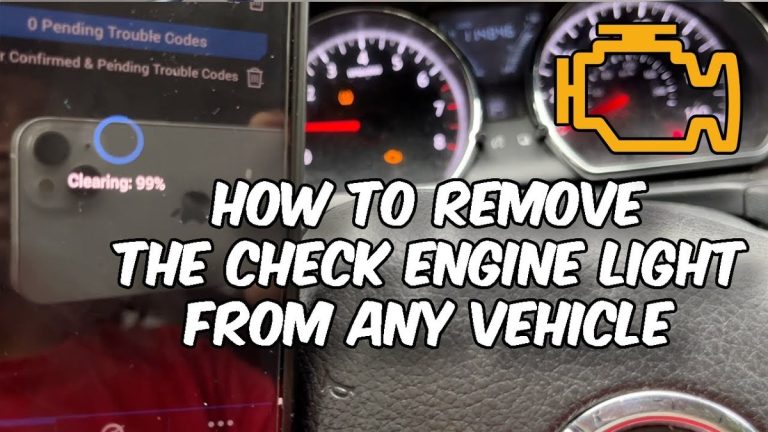
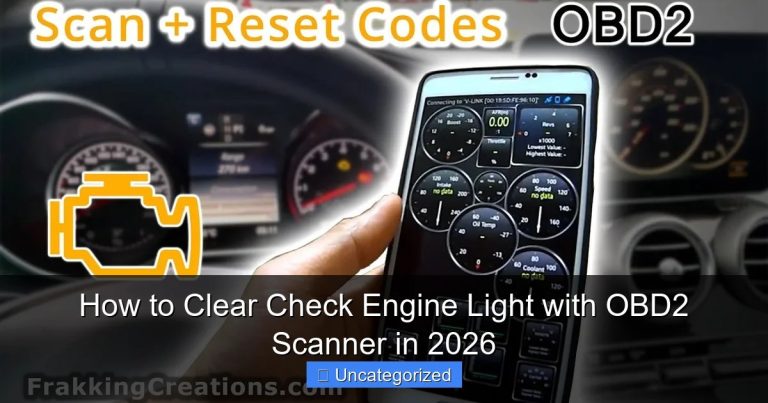
Code reading, live-data limits, reset limitations, and when to call a professional
A scan tool with TPMS coverage can read the fault code, show each sensor’s pressure and battery status, and confirm which wheel is the problem. Live data usually shows sensor ID, pressure, temperature, and battery state, but it cannot tell you if the sensor body is cracked or leaking.
If the TPMS light flashes for about a minute before staying on, the system is reporting a fault, not low pressure. Our guide on why the TPMS light flashes then stays on explains the difference. When a scan tool shows a dead sensor battery, stop diagnosing and plan the replacement.
Safety, Tire Repair, and Roadside Reality
Puncture location, temporary-repair limits, and professional-repair thresholds
Not every tire puncture is repairable. Punctures in the sidewall, shoulder, or near the edge of the tread are usually too close to the structure to repair safely. A plug can seal a small tread puncture temporarily, but a proper patch from inside the tire is the professional standard.
Our comparison of tire plug vs patch explains why the repair method matters for long-term safety. If the tire has been driven flat or shows cords, replace it.
Cold pressure, the door-jamb placard, gauge accuracy, and inflator duty cycle
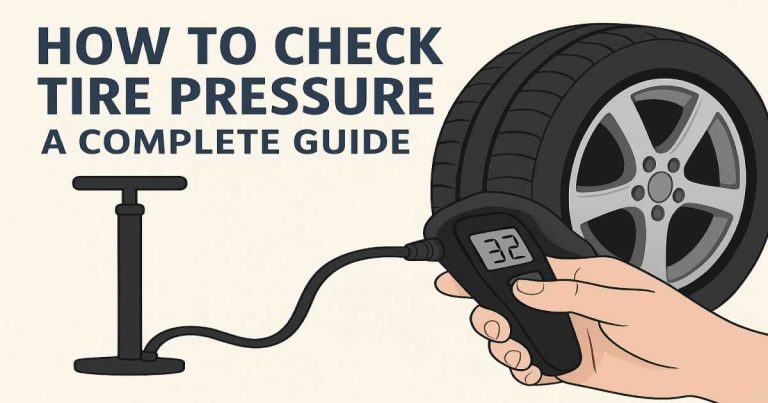
Set tire pressure to the cold pressure on the driver’s door-jamb placard, not the number molded into the sidewall. The sidewall number is the maximum, not the recommendation. Check pressure when the vehicle has been parked for a few hours.
A cheap gauge can be off by several psi. Our article on digital vs analog tire pressure gauges compares accuracy. If you use a portable inflator, remember that most have a duty cycle: run them too long and they overheat.
Roadside safety: safe location, traffic visibility, and tool storage
If you deal with a tire or sensor issue on the road, pull far off the travel lane onto level ground. Turn on hazard lights, set the parking brake, and wear a reflective vest if you have one. Never work beside a highway when you can safely wait for help.
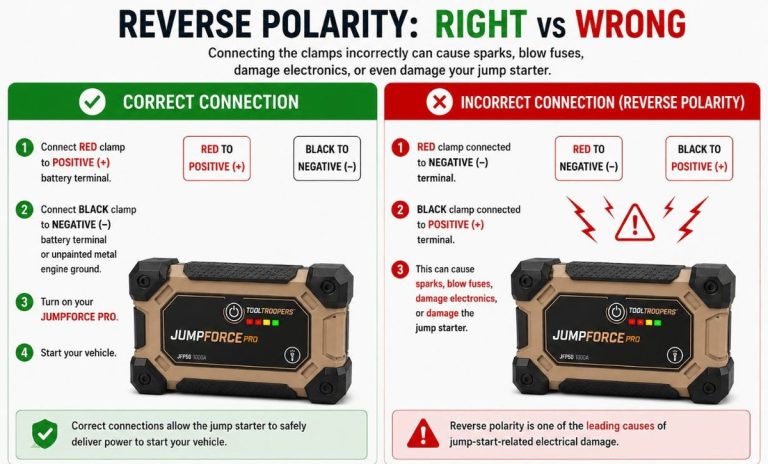
Emergency tool checks: cable/pack condition, current limits, and post-use inspection
Before using any emergency jump pack or inflator, inspect the cables, connectors, and housing for cracks, corrosion, or swelling. A damaged pack can fail under load. Follow the current limits printed on the device, and recharge it according to the manual.
Compatibility and Legal Considerations for US Drivers
315 MHz vs 433 MHz sensors and vehicle compatibility
Most US vehicles use 315 MHz TPMS sensors, while some import models use 433 MHz. The wrong frequency means no signal, no matter how new the battery is. Check the original sensor part number or use a programming tool that reads the frequency before ordering.
Check: Verify the exact TPMS sensor part number, frequency (315 or 433 MHz), and whether your vehicle needs OEM or programmable aftermarket sensors. Limitations: Rebuild kits only fit specific sensor models; most OEM sensors cannot be rebuilt at all.
FMVSS 138, state inspections, and emissions-readiness confusion
Federal Motor Vehicle Safety Standard 138 requires TPMS on passenger vehicles, light trucks, and SUVs under 10,000 pounds, phased in from 2006 through 2008 model years. That law requires the system to warn the driver, but it does not dictate how you repair it.
Hybrid and EV cautions: 12V disconnect order, high-voltage safety, and correct connection order
Hybrid and electric vehicles still use a 12V battery for the computer and TPMS system, but the high-voltage battery pack is a serious hazard. Never disconnect the 12V battery without checking the owner’s manual for the correct order, and never touch orange high-voltage cables.
Side-by-Side Comparison: Which Option Fits Your Driving Profile?
Same criteria compared: cost, lifespan, reliability, warranty, and downtime
| Criteria | Rebuild kit | New sensor |
|---|---|---|
| Parts cost | Lowest, but only if your sensor is rebuildable | Higher, with a full new housing and battery |
| Total cost with shop labor | Savings often erased by labor | Better value for most drivers |
| Lifespan | Depends on the age of the old sensor body | Fresh battery and new seals from day one |
| Reliability | Water-ingress risk after resealing | Factory-sealed, lower leak risk |
| Warranty | Usually limited to the kit parts | Usually covers the whole sensor |
| Downtime | Same tire removal and relearn required | Same tire removal and relearn required |
Best pick for daily commuters, long-haul drivers, and older vehicles
Daily commuters should choose new sensors because downtime matters. Long-haul drivers should also choose new sensors for reliability, since a failed sensor on the road means an unscheduled stop. For older vehicles with rebuildable aftermarket sensors, a rebuild can make sense if you do the work yourself.
Next Steps: Diagnose First, Then Decide
Check the door-jamb placard and verify cold tire pressure with an accurate gauge
Start with the simplest fix. Inflate all four tires to the cold pressure on the door-jamb placard using an accurate gauge. If the light goes out after a short drive, the sensor was never the problem.
Confirm the sensor is the problem: scan tool codes, live data, app permissions, and firmware updates
If the light stays on, use a scan tool with TPMS coverage to read the fault code and live data. Look for a low-battery code or a missing sensor signal. If your scan tool uses a phone app, check permissions and updates, and review the privacy settings for how your data is handled.
A TPMS-specific programming tool can also read and copy sensor IDs. Our guide to the best TPMS programming tool for all sensors covers what to look for if you plan to do your own programming.
Where to buy, what warranty to look for, and when to have a shop handle it
Buy sensors from a reputable parts supplier so the warranty is honored if the sensor fails. Look for at least a one-year warranty and confirm whether programming is covered. If you lack a tire machine or TPMS tool, a shop can handle the job.
- Best for: Most US drivers should choose a new TPMS sensor for reliability, warranty, and lower long-term cost.
- Think twice if: You only want a rebuild kit if you own a confirmed rebuildable sensor and can do the labor yourself.
- Next step: Verify the exact sensor part number and frequency, then check your car battery before programming.
Frequently Asked Questions
Only if the sensor is a rebuildable aftermarket model. Most OEM TPMS sensors are sealed units with the battery soldered or spot-welded inside, so the entire sensor must be replaced.
Most TPMS sensor batteries last roughly 5 to 10 years depending on the vehicle, climate, and how often the sensor transmits. When the battery voltage drops, the sensor sends a low-battery fault code.
A rebuild kit is only worth it if you own a confirmed rebuildable sensor, have the tools and skill to open and reseal it, and accept the water-ingress risk. For most drivers, a new sensor is cheaper in the long run.
Yes, in most cases the vehicle must learn the new sensor ID. Some vehicles relearn automatically, while others need a magnet, a TPMS tool, or an OBD2 scan tool to complete the relearn.
Costs vary by vehicle and region. A rebuild kit is the cheapest part, aftermarket sensors cost more, and OEM sensors cost the most. Mounting, balancing, and programming add labor on top of the parts price.
A weak car battery can interrupt TPMS programming or relearn procedures, leaving a new sensor unregistered. Check the car battery condition before starting sensor work, especially on older vehicles.