Battery Tester vs Multimeter: Which One Prevents Stranding?
A battery tester prevents stranding by measuring your battery’s real cranking ability. A multimeter helps you diagnose electrical faults after they happen.
The “battery tester vs multimeter” question usually comes up right before winter, when drivers start worrying about a no-start morning. A battery tester checks whether your battery can still deliver the cranking power to start the engine, while a multimeter measures voltage and helps you find electrical faults after they happen.
- Best for prevention: A battery tester measures CCA and gives a clear replace warning.
- Best for diagnosis: A multimeter checks alternator output, fuses, and parasitic drains.
- Voltage trap: A battery can read 12.6 volts and still fail under load.
- Check compatibility: Confirm the tester supports flooded, AGM, EFB, or lithium batteries.
- Safety first: Never test a swollen, cracked, leaking, or frozen battery.
The Short Answer: A Battery Tester Prevents Stranding, a Multimeter Helps You Diagnose It
A battery tester is the tool that predicts failure. It measures the battery’s ability to deliver cold cranking amps (CCA) and gives you a clear verdict: good, charge, or replace. A multimeter tells you the battery’s voltage, which is useful for checking the alternator, finding a parasitic drain, or testing fuses and wiring.
The key difference is timing. A battery tester helps you replace the battery before it leaves you stranded. A multimeter helps you figure out why the car won’t start after it has already left you stranded.
Why Voltage Alone Is a Poor Predictor of a Dead Battery
A battery can show 12.6 volts and still be too weak to start your car. Voltage measures the electrical pressure in the battery, not the battery’s ability to deliver current under load. Think of it like a water tank: the gauge may show full, but a rusted pipe can still prevent water from reaching the faucet.
Internal damage, sulfation, and dead cells can all leave voltage looking normal while the battery collapses under the heavy draw of a starter motor. That is why shops use load testers or conductance testers instead of trusting a voltage reading alone.
When a Multimeter Is Actually the Better Tool to Own
A multimeter is the better tool when the problem is electrical, not the battery itself. You can check alternator output, measure voltage drop across cables, test fuses, and hunt for parasitic drains that kill a battery overnight.
If your car starts fine and you want to monitor charging voltage, a cheap multimeter is enough. But if your goal is to avoid a cold-morning no-start, the multimeter will not give you the warning you need.
What Each Tool Really Measures: Voltage, Conductance, and CCA
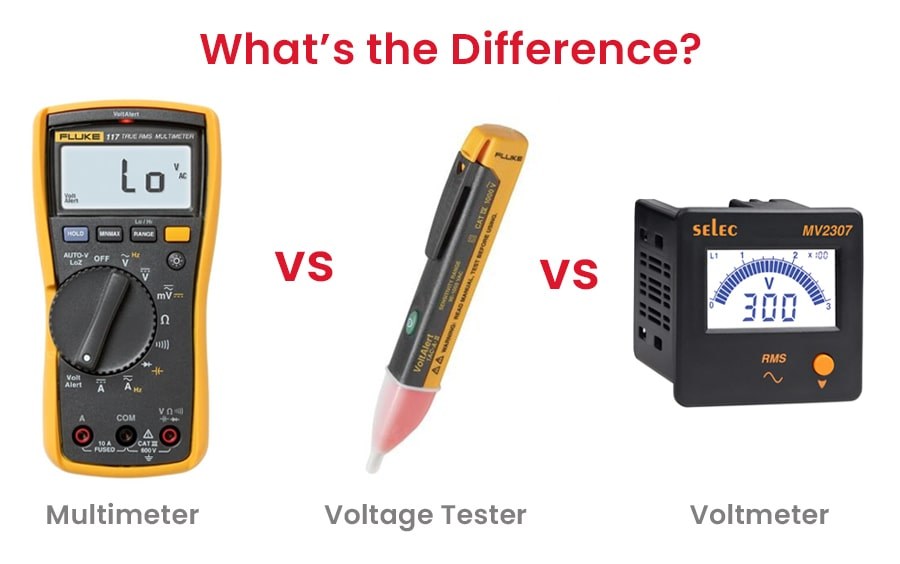
Multimeter: Instant Voltage Readings, No Judgment Calls
A multimeter measures electrical potential in volts. You set it to DC voltage, touch the red lead to the positive terminal and the black lead to the negative terminal, and read the number. That is it. The tool does not interpret the result for you.
You compare the reading to a chart. A fully charged battery should read about 12.6 volts with the engine off. While the engine runs, you should see roughly 13.5 to 14.7 volts from the alternator. Any number outside those ranges is a clue, not a verdict.
Battery Tester: Conductance-Based Health and CCA Estimation
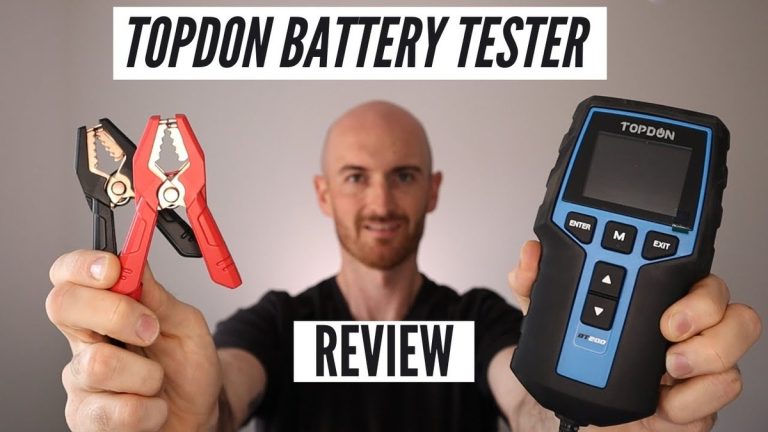
Most modern battery testers use conductance testing. The tester sends a small signal through the battery and measures how easily current flows. It compares that result to the battery’s rated CCA and estimates the battery’s overall health.
The tester asks you to enter the battery type and its CCA rating, which is printed on the battery label. After a few seconds, it shows a state of health percentage and a simple recommendation. That recommendation is what makes a battery tester more useful for preventing stranding.
Smart Testers, App Permissions, and Firmware Considerations
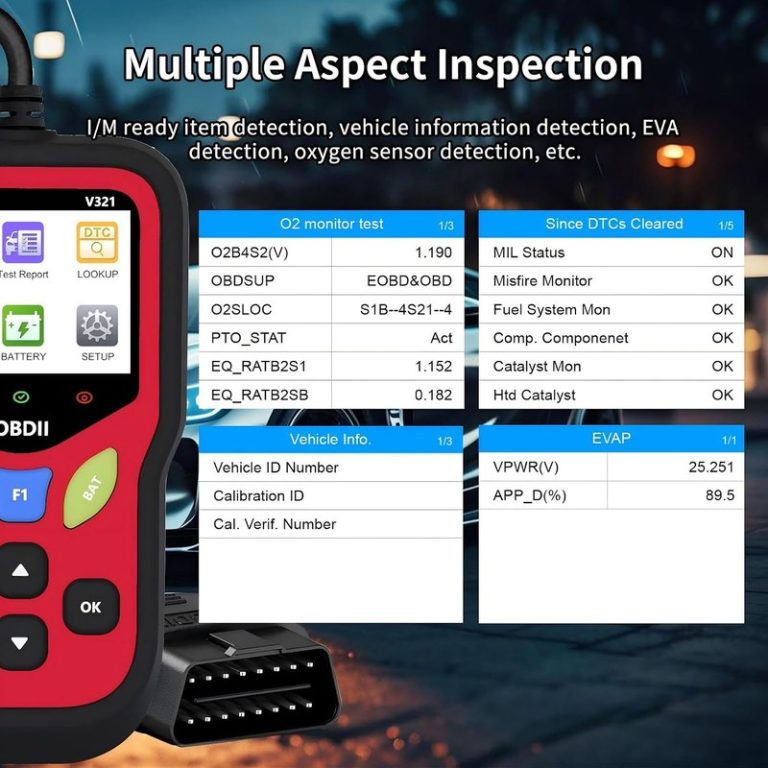
Some battery testers connect to a smartphone app through Bluetooth. The app may display graphs, store test history, or print reports for warranty claims. Before you install one, check what permissions the app requests and what data it collects.
Firmware updates can add support for new battery types or fix measurement bugs. Check the manufacturer’s support page before buying a tester from a brand with no update history.
Side-by-Side Comparison: Multimeter vs Battery Tester on the Same Criteria
| Option | Best for | Owner consideration | Driver consideration |
|---|---|---|---|
| Multimeter | Checking alternator output, fuses, wiring, and parasitic drain | Low upfront cost and no consumables; requires some electrical knowledge | Gives a voltage number but no clear “replace now” warning |
| Battery tester | Checking battery health and CCA before a no-start happens | Higher upfront cost; needs correct battery type and rating entry | Provides a clear good, charge, or replace verdict |
Failure Prediction Accuracy: Which Tool Catches a Dying Battery First?
The battery tester catches a dying battery first. It measures the battery’s ability to deliver cranking current, which is exactly what fails as the battery ages. A multimeter can show a low state of charge, but it cannot measure the internal wear that causes sudden no-start failures.
If you want an early warning, a battery tester is the accurate choice. If you want to confirm a suspected charging problem, a multimeter answers that question well.
Ease of Use for a Beginner: No Electrical Degree Required
A battery tester is easier for a beginner. You enter the battery’s CCA rating, clamp the leads, and read the result. The tester makes the judgment call.
A multimeter requires you to select the correct setting, understand the reading, and know what it means for your specific vehicle. That is not difficult, but it is more work than a tester’s simple verdict.
Price, Build Quality, and Long-Term Value for the Average Driver
Multimeters are inexpensive and many drivers already own one. Battery testers cost more, but a basic model is affordable and can save you the cost of a tow and a rushed battery purchase.
Build quality varies at every price point. Read recent owner reviews and check the warranty before buying, especially for testers with clamps and cables that see regular use.
How to Test Your Battery Without Guessing: Step-by-Step With Both Tools
Multimeter Test: Resting Voltage, Cranking Voltage, and Charging Voltage
For the most useful multimeter test, let the car sit overnight so the battery surface charge fades. With the engine off, connect the red lead to the positive terminal and the black lead to the negative terminal. A reading near 12.6 volts means the battery is fully charged.
Next, have a helper crank the engine while you watch the voltage. It should stay above roughly 9.5 to 10 volts during cranking. Finally, with the engine running, check the voltage again. It should read about 13.5 to 14.7 volts, which shows the alternator is charging. For a fuller walkthrough, see our guide on testing a battery with a multimeter.
Battery Tester Test: Entering Battery Ratings and Reading Health Percentage
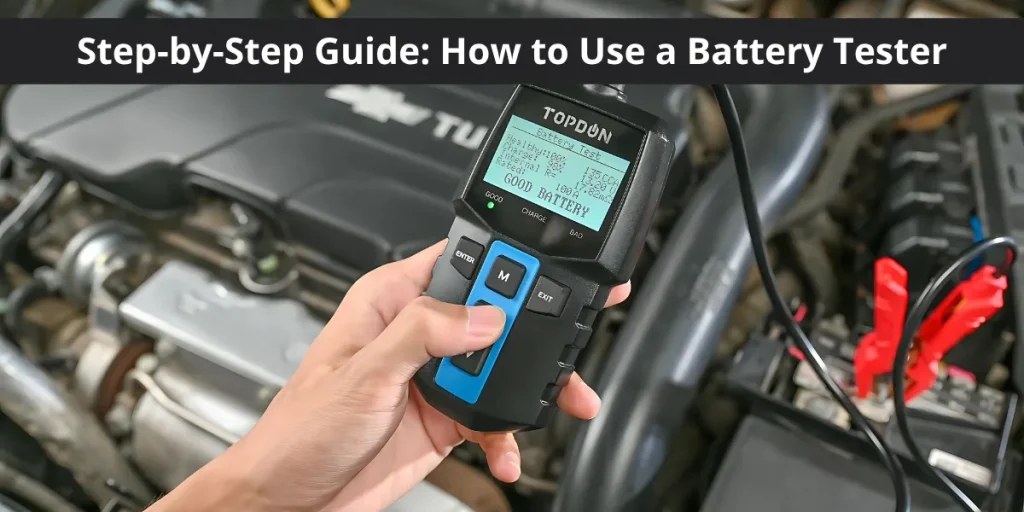
Start by finding the CCA rating on the battery label. Enter the battery type, such as flooded, AGM, or EFB, and the rated CCA into the tester. Connect the clamps positive first, then negative, and start the test.
The tester will show a state of health percentage and a verdict. A healthy battery usually reads above 80 percent. If the tester says replace, do not ignore it. For the full process, read our step-by-step guide on how to test a battery with a battery tester.
Correct Connection Order and Damaged-Battery Stop Conditions
Always connect the positive clamp first, then the negative clamp. When you disconnect, remove the negative clamp first, then the positive. This order reduces the risk of a short circuit if your wrench touches metal.
State of Charge vs State of Health: Why 12.6 Volts Can Still Mean a Dead Battery
State of charge is how full the battery is. State of health is how much life the battery has left. A multimeter measures state of charge through voltage. A battery tester estimates state of health through conductance or load testing.
A battery with low state of health can still show a full charge. That is why a voltage reading alone can mislead you. A tester that reports a low state of health reading is warning you that the battery is aging even if the car still starts today.
How Battery Chemistry (Flooded, AGM, EFB) Changes the Numbers
Different battery types have different fully charged voltages. A flooded battery reads about 12.6 volts, an AGM battery reads closer to 12.8 or 12.9 volts, and an EFB battery sits between the two. If you enter the wrong battery type into a tester, the result will be wrong.
Check the battery label before testing. If you own a vehicle with a start-stop system, it likely uses an EFB or AGM battery, and a basic tester may not support it. Confirm compatibility before buying.
Why Cold Cranking Amps Predict Starting Failure Better Than Voltage
Cold cranking amps measure how much current a battery can deliver at 0 degrees Fahrenheit for 30 seconds while staying above 7.2 volts. As a battery ages, its real CCA output drops even though voltage looks normal.
A battery tester compares the battery’s measured output to its rated CCA and reports the difference. That comparison is what catches a battery that will fail on a cold morning. Voltage alone cannot show that loss of cranking power.
Which Tool Should You Buy? Matching the Tool to Your Driving Habits
For the Daily Commuter Who Just Wants to Get to Work
Buy a basic battery tester. Test your battery twice a year, especially before winter and before a long road trip. A two-minute test can prevent a stranded morning, a missed shift, and an expensive roadside jump.
A multimeter is still useful to have, but it is not the tool that will warn you about a weak battery.
For the Multi-Vehicle Household and Weekend Mechanic
A mid-range battery tester that supports flooded, AGM, and EFB batteries is worth the extra cost. You will also want a multimeter for alternator checks, parasitic drain tests, and wiring repairs across multiple vehicles.
Owning both tools covers the full picture: the tester predicts battery failure, and the multimeter diagnoses the electrical system around it.
Hybrid and EV Owners: Special Cautions and Tool Limitations
Hybrids and electric vehicles still have a 12-volt auxiliary battery that can leave you stranded. You can test that battery with a standard tester, but never touch the orange high-voltage cables under the hood or under the car.
Some modern 12-volt batteries are lithium-based, and not every tester supports them. Check the tester’s specifications and the battery label before connecting anything. When in doubt, have the auxiliary battery tested by a dealer or a qualified shop.
Ownership Cost, Safety, and Knowing When to Call a Professional
What You’ll Spend: Entry-Level vs Professional-Grade Testers
Prices vary by retailer, brand, and feature set, so compare current listings before you buy.
Battery Disposal, Warranty Claims, and Legal Notes for DIYers
When a Professional Diagnosis Is the Only Safe Next Step
If the battery tester says the battery is good but the car still will not start, the problem may be the starter, alternator, wiring, or a security system fault. If the tester says replace but the car still starts, the battery may be close to failure. Both situations deserve a closer look. A common scenario is a battery tester that says replace the battery while the car still starts, which usually means the battery has lost enough capacity to fail soon.
Stop testing and call a professional if you see heavy corrosion, damaged cables, a swollen battery case, or any sign of a high-voltage system in a hybrid or EV.
The Bottom Line: One Tool Prevents Stranding, the Other Diagnoses It
A battery tester is the tool that prevents stranding. It measures the battery’s real cranking ability and gives you a clear warning before failure. A multimeter is the tool that diagnoses problems after they appear, from a failing alternator to a parasitic drain.
Most drivers benefit from owning both. If you can only buy one, and your goal is avoiding a cold-morning no-start, buy the battery tester.
- Best for: Daily drivers who want a two-minute battery health check before winter or a long trip.
- Think twice if: You only need to check alternator output or trace wiring faults; a multimeter may cover those tasks at a lower cost.
- Next step: Check your battery label for the type and CCA rating, then confirm the tester supports both before you buy.
Frequently Asked Questions
Not reliably. A multimeter shows voltage, which reflects state of charge, not state of health. A battery can read 12.6 volts and still fail to start your car.
State of charge is how full the battery is. State of health is how much usable life remains. A battery tester estimates both, while a multimeter only shows charge level through voltage.
If your goal is preventing a no-start, yes. A multimeter can check charging voltage and wiring, but it cannot measure the battery’s cranking ability. A basic battery tester gives you a clear replace warning.
Only if the tester supports those battery types. Check the product specifications and your battery label before buying. Many entry-level testers only handle flooded batteries.
Yes, if you follow the instructions. Connect the positive clamp first, then the negative. Stop if the battery case is swollen, cracked, or leaking, and never test a frozen battery.
Twice a year is a good habit, especially before winter and before a long road trip. Batteries usually last three to five years, but heat and short trips can shorten their life.