What Is a Misfire Counter on an OBD2 Scanner? Explained for Drivers
A misfire counter on an OBD2 scanner tracks how many times each cylinder fails to fire, even before the check engine light comes on. Reading it helps you identify the problem cylinder and decide whether to fix it yourself or call a mechanic.
If you’ve ever wondered what is a misfire counter on an OBD2 scanner, the short answer is that it’s a per-cylinder counter your engine computer keeps to track how often each cylinder fails to fire. It’s one of the most useful diagnostic numbers you can pull from a modern car, and it often reveals problems before the check engine light even turns on.
- Counter vs. code: The counter shows real-time evidence; the code is the confirmed conclusion after a threshold.
- Mode 06 access: You need a scanner that supports Mode 06; basic code readers often can’t show.
- High 200-rev count: A high short-window count can damage the catalytic converter, so stop driving if the.
- Compatibility limits: Vehicle protocol, model year, and scanner firmware all affect whether counters are visible.
- Record before clearing: Write down counts before clearing codes or you lose the diagnostic evidence.
What Is a Misfire Counter on an OBD2 Scanner?
A misfire counter is a running tally of ignition events that failed inside a specific cylinder. Your engine’s powertrain control module (PCM) watches crankshaft speed hundreds of times per second. When a cylinder doesn’t fire, the PCM records it.
Most scanners display these as numbers like “Cylinder 1: 0” or “Cylinder 3: 42.” A zero means the cylinder fired cleanly. A rising number means repeated failures.
Misfire Counter vs. Misfire Code: What the Scanner Is Really Telling You

A misfire code is a conclusion. A misfire counter is evidence. When the PCM sees enough misfires to cross a threshold, it sets a code and turns on the check engine light. The counter starts climbing long before that.
The 200-Revolution and 1000-Revolution Counters Explained
Modern OBD2 systems track misfires over two windows. The 200-revolution window catches severe misfire bursts that could push unburned fuel into the exhaust and damage the catalytic converter. The 1000-revolution window gives a broader picture of misfire frequency during normal driving.
Both counters are stored separately for each cylinder. A small number of misfires in the 1000-rev window might not set a code. A high count in the 200-rev window is more serious because it signals a fast, repeating failure.
Why You Can Have a High Count With No Check Engine Light
Manufacturers program a misfire threshold that must be crossed before a code is stored and the light comes on. Below that threshold, the PCM keeps counting but stays quiet. This is why a car can run rough or idle unevenly while the dashboard looks normal.
This is why reading the counter matters. A scanner that only checks codes will tell you nothing is wrong. A scanner that reads the counter will show the problem is already underway. If your scanner shows no codes but the engine feels rough, the misfire counter is often the missing piece. Our guide on why an OBD2 scanner shows no codes while the check engine light is on covers this in more detail.
How to Read the Misfire Counter on Your OBD2 Scanner
Reading the misfire counter requires the right scanner and the right menu. Not every tool exposes these numbers, and the steps vary by brand. The general process is the same on most scanners.
Finding the OBD2 Port and Using the Correct Ignition Mode
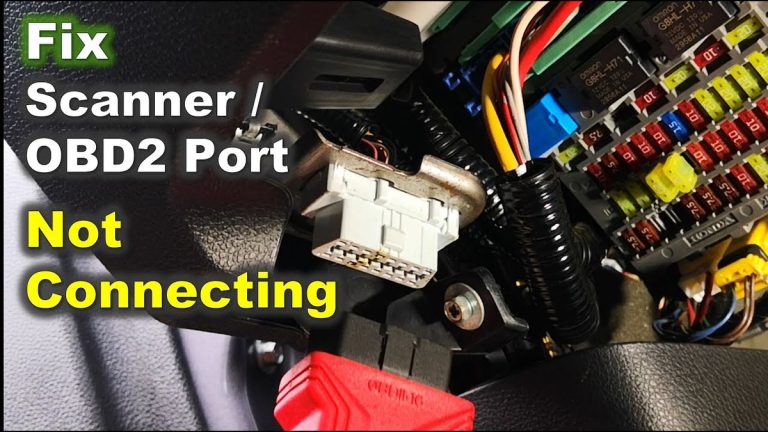
The OBD2 port is usually under the driver’s side dashboard. Plug the scanner in, turn the ignition to the “on” position without starting the engine, and let the scanner connect.
For live misfire counts, start the engine and keep it at idle or a steady rpm. Some counters only update while the engine runs. If the counter stays at zero during a smooth idle, that’s a good sign, but it doesn’t clear the engine of a load-related misfire.
Locating the Misfire PID: Mode 06 vs. Mode 01 Live Data
Misfire counters appear in two places. Mode 01 live data streams sensor values like rpm and fuel trim. Some vehicles expose misfire counts here, but many do not. If you don’t see a misfire PID in live data, check Mode 06.
Mode 06 is the on-board monitoring test results menu. It contains pass-fail data for every emissions-related monitor, including misfire. This is where the 200-rev and 1000-rev counters live. The menu name varies, but look for “Mode 6” or “OBD Monitor Test Results.” Our guide on what Mode 6 data means on an OBD2 scanner explains how to read it.
Interpreting Cylinder-Specific Counts and Thresholds
Each cylinder gets its own row in the misfire data. A count of zero across all cylinders means the engine is firing cleanly. Low single-digit counts on one cylinder can be normal on some vehicles, especially during cold starts or wet weather.
The trouble starts when one cylinder shows counts that keep climbing while the others stay near zero. That pattern points to a cylinder-specific cause like a weak coil or fouled plug. If all cylinders show similar counts, the cause is likely shared, such as a vacuum leak or fuel pressure issue.
What a High Misfire Count Means: Diagnosing the Root Cause
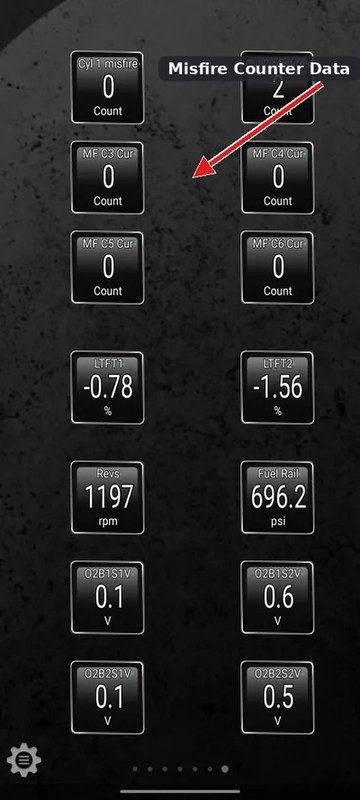
A high misfire count is a symptom, not a diagnosis. It tells you which cylinder is failing and how often. It doesn’t tell you why. The next step is to work through the most common causes in order of likelihood and cost.
Spark, Fuel, Compression, and Vacuum Leaks: Tracing the Power Loss
Start with spark. Check the ignition coil, spark plug, and plug wire for the affected cylinder. Swap the coil with a neighboring cylinder and see if the misfire moves. If it does, the coil is the problem.
Next, check fuel delivery. A clogged injector or weak fuel pump can starve a cylinder. Then check compression. Low compression from a burned valve, worn ring, or head gasket leak causes a steady misfire that no spark or fuel parts will fix.
Finally, check for vacuum leaks. A leak that pulls unmetered air into the intake can lean out the mixture and cause misfires across multiple cylinders. Use the inspection methods in your vehicle manual to find the leak safely.
Intermittent vs. Persistent Misfires: How the Counter Changes Your Approach
An intermittent misfire appears only under certain conditions, like cold starts, heavy rain, or high load. The counter climbs slowly and may reset when conditions improve. Moisture, cracked plug wire insulation, or a coil that fails when warm often causes these.
A persistent misfire shows a steady climb in the counter every time you drive. These are usually mechanical or electrical failures that won’t fix themselves. If the count climbs every drive cycle, treat it as persistent. If it only climbs in specific conditions, look for an environmental trigger. Understanding what a pending code means on an OBD2 scanner helps you catch intermittent misfires early.
Safety Alert: When to Stop Driving to Protect the Catalytic Converter
If the check engine light is flashing, the PCM has detected a misfire severe enough to threaten the catalytic converter. Pull over safely and turn off the engine. A flashing light means damage is happening right now.
OBD2 Scanner Compatibility: Model-Year, Protocol, and Firmware Limits
Not every scanner can read misfire counters, even if it can read codes. Compatibility depends on the vehicle, the scanner’s protocol support, and the scanner’s firmware.
Which Vehicles Report Misfire Counters? (1996 and Newer, With Caveats)
All 1996 and newer light-duty vehicles sold in the US must have OBD2 and monitor misfires as part of their emissions system. The data exists on the vehicle side. The question is whether your scanner can access it.
Generic scanners that only read codes often skip misfire counters entirely. Scanners with Mode 06 support can usually read them, but the layout varies by manufacturer. If your scanner shows “vehicle not supported” when you access Mode 06, it may lack the correct protocol or firmware. Our guide on what “vehicle not supported” means on an OBD2 scanner explains the common causes.
OBD2 Protocols, CAN, and Why Firmware Updates Matter
OBD2 uses several communication protocols. Since 2008, CAN (Controller Area Network) has been required for vehicles sold in the US. Older vehicles may use earlier protocols. A scanner that supports CAN but not the older protocols won’t talk to a 1999 vehicle.
Firmware updates matter because manufacturers change how they report data. A scanner designed for 2010 vehicles may not recognize misfire PIDs on a newer model. Confirm the tool supports Mode 06, not just live data.
Misfire Counter vs. Other Diagnostic Tools: What Do You Really Need?
You don’t need a professional scan tool to read a misfire counter, but you do need more than a basic code reader. The middle ground is a scanner with Mode 06 and live data support.
Consumer Scanners vs. Professional Scan Tools: A Side-by-Side Comparison
| Option | Best for | Owner consideration | Driver consideration |
|---|---|---|---|
| Basic code reader | Reading and clearing simple codes | Usually no Mode 06 access; low cost | Won’t show misfire counters at all |
| Consumer OBD2 scanner with Mode 06 | DIY owners tracking misfires | Moderate cost; check firmware updates | Shows counters and live data while parked |
| Professional scan tool | Shops and advanced diagnostics | Higher cost; often subscription-based | Adds bidirectional controls and enhanced data |
For most drivers, a consumer scanner with Mode 06 support is enough to read misfire counters and identify the problem cylinder. Professional tools add value when you need bidirectional controls or manufacturer-specific data.
Bluetooth Scanner Apps: Permissions, Privacy, and Data Limits
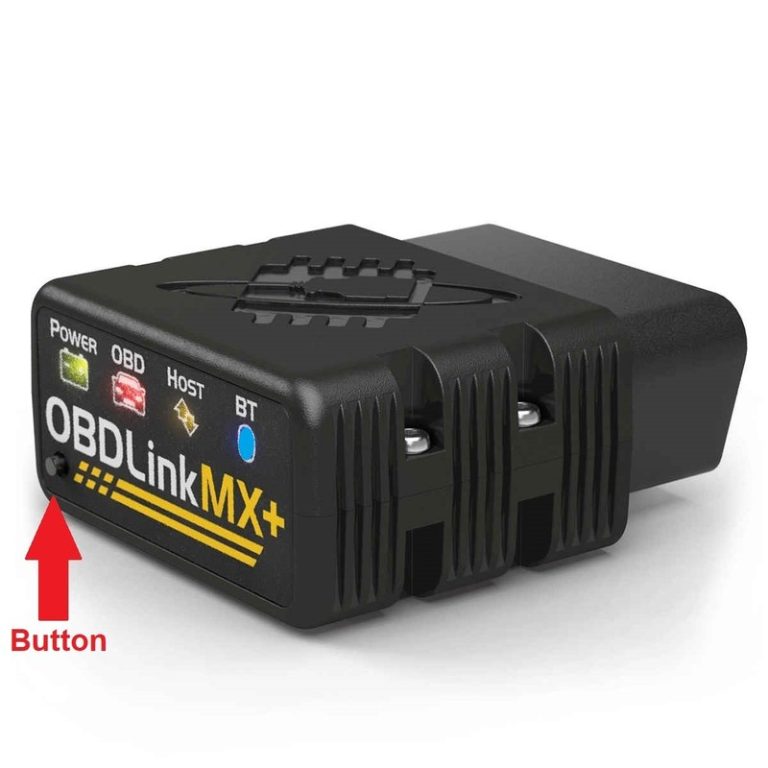
Bluetooth OBD2 adapters paired with smartphone apps are cheap and easy to use. Many apps expose misfire counters in their live data or Mode 06 screens.
Some apps require an in-app purchase to unlock Mode 06. Others only show a subset of PIDs, and the misfire counter may be missing entirely. Check the app’s supported PID list before buying.
Emissions Readiness, Reset Limits, and Legal Considerations
Misfire counters are tied to the emissions system, so they interact with readiness monitors and state inspection rules.
How Misfire Counts Affect Emissions Readiness Monitors
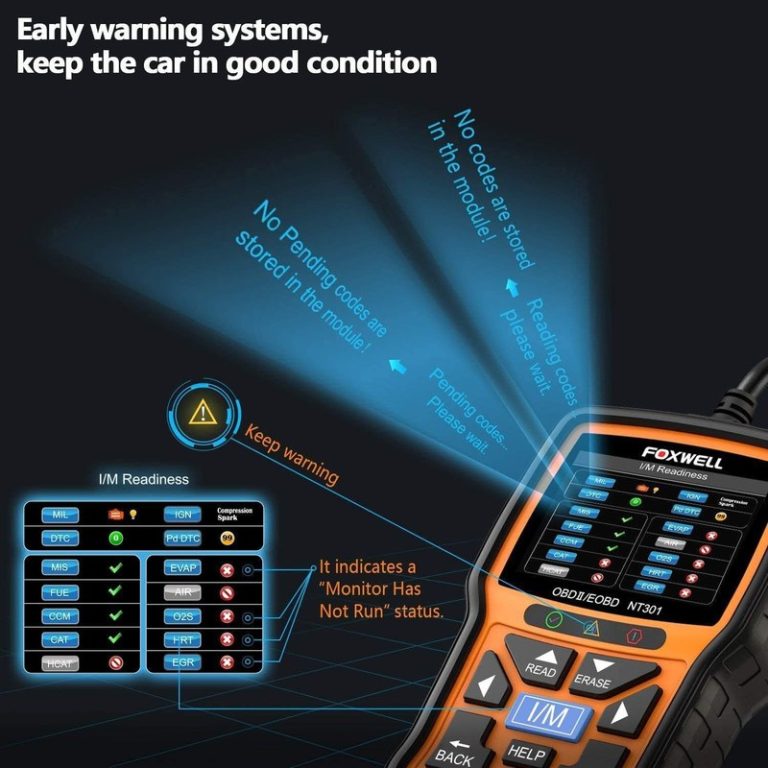
The misfire monitor is one of the continuous monitors required by OBD2. Continuous monitors run constantly while the engine is running. A confirmed misfire can prevent other monitors from completing and can cause a vehicle to fail an emissions inspection.
If you clear a misfire code, the readiness monitors reset to “not ready.” Some states allow one or two not-ready monitors, but others do not. Clearing codes to pass an inspection is not a fix.
Clearing Codes vs. Fixing the Problem: Reset Limitations and State Testing Rules
Clearing codes wipes the misfire counters, freeze frame data, and readiness status. The misfire will return if the cause is still there, and you’ll lose the evidence you needed.
If you clear a code to verify a repair, drive through a full drive cycle afterward so the monitors can run again. Do not clear codes to hide a misfire from an inspection.
When to Stop Diagnosing and Call a Professional
Misfire counters give you a strong starting point, but they don’t replace a mechanic’s diagnostic equipment and experience. Know when to stop.
DIY vs. Professional Diagnosis: Ownership Cost and Value
A consumer scanner with Mode 06 support costs less than one hour of shop labor at many repair shops. For a simple misfire caused by a bad coil or spark plug, the DIY route can save real money. The counter tells you which cylinder to focus on, cutting down on guesswork.
But if the counter points to a mechanical problem like low compression or a timing issue, the diagnosis gets more involved. A professional can run a cylinder leakage test, scope the ignition waveform, and check fuel trims. Paying for that diagnosis upfront is often cheaper than replacing parts that don’t fix the problem.
Your Next Steps: Documenting Counts and Preparing for the Shop
Before you take the vehicle to a shop, write down the misfire counts for each cylinder, any pending codes, and when the misfire happens: cold start, warm idle, or hard acceleration. This helps the technician reproduce the problem and confirm the repair.
- Record misfire counts for each cylinder before clearing anything
- Note the driving conditions when the count climbs
- Check the scanner’s firmware and Mode 06 support before buying
- Clear codes before you have written down the evidence
- Drive with a flashing check engine light
- Replace parts based on the counter alone without checking the cause
- Best for: DIY owners who want to identify a misfiring cylinder before paying a shop for diagnosis.
- Think twice if: Your scanner only reads codes and has no Mode 06 access; the counter will stay hidden.
- Next step: Confirm your scanner supports Mode 06, then record the counts before you clear any codes.
Frequently Asked Questions
A misfire code is a confirmed diagnostic trouble code that the engine computer sets after the misfire rate crosses a threshold. A misfire counter shows the raw number of misfires per cylinder, which can climb before a code is ever set.
The engine computer only turns on the check engine light after the misfire rate exceeds a programmed threshold. Below that threshold, the computer keeps counting misfires but stays quiet, so the counter can reveal a developing problem that the light hasn’t flagged yet.
Look for a Mode 06 or “OBD Monitor Test Results” menu on your scanner. Misfire counts are also sometimes shown in Mode 01 live data, but Mode 06 is the more reliable place to find cylinder-specific 200-revolution and 1000-revolution counts.
Not always. Basic code readers often only read and clear codes. You need a scanner that supports Mode 06 data, and the scanner’s firmware must recognize the vehicle’s misfire PIDs.
No. A high misfire count sends unburned fuel into the exhaust, which can overheat and destroy the catalytic converter. If the check engine light is flashing, stop driving and have the vehicle diagnosed.
Yes. Clearing codes wipes the misfire counters, freeze frame data, and emissions readiness monitors. Write down the counts before clearing so you keep the diagnostic evidence.