How to Test for a Parasitic Battery Drain at Home with a Multimeter
A parasitic battery drain is any electrical load that keeps pulling power after the ignition is off. With a digital multimeter, patience, and the fuse-pull method, you can find the culprit at home without special tools.
Learning how to test for a parasitic battery drain at home is one of the most useful electrical skills a car owner can pick up. A battery that dies overnight or after a few days of sitting usually points to something drawing power while the car is off. With a multimeter and about an hour, you can find the culprit yourself and avoid repeated jump starts or an unnecessary battery replacement.
- Normal draw: Most cars use 20-50 milliamps when asleep; anything above 100 milliamps is usually a.
- Wait for sleep: Give the vehicle 20-60 minutes before trusting the reading.
- Series connection: Connect the multimeter between the negative battery post and cable, never across the posts.
- Fuse-pull method: Remove one fuse at a time and watch the amp reading drop to find.
- Safety first: Wear eye protection, and never test high-voltage hybrid or EV systems at home.
What Is a Parasitic Battery Drain? (And How to Spot It Before You’re Stranded)
A parasitic battery drain is any electrical load that keeps pulling power after the ignition is off. Modern cars always draw a small amount of current to keep the clock, security system, radio presets, and keyless entry alive. That normal draw is expected and harmless. The problem starts when something draws too much for too long.
Common warning signs include a slow cranking engine, a battery that needs a jump start after sitting for a few days, or electronics that reset their settings overnight. You might also notice dim interior lights or a battery warning light on the dash. If your battery tests good but still dies, a parasitic drain is often the reason. That exact situation is covered in our guide on why a car battery tests good but still dies.
Tools and Safety: What You Need Before Testing Your Car’s Battery
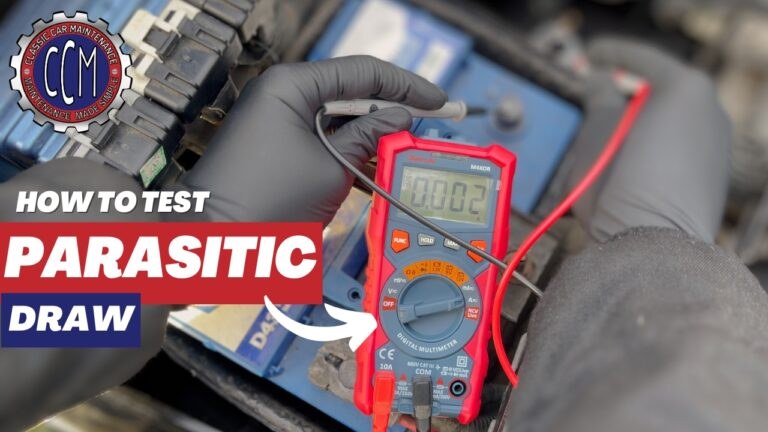
You do not need a shop full of equipment for this test. The essentials are a digital multimeter that can read DC amps, a basic socket or wrench set, and the owner’s manual for your vehicle. A wire brush or terminal cleaner helps if the battery posts are corroded.
Before you start, make sure the battery is in decent shape. A weak or damaged battery can produce confusing results. If you are new to using a multimeter on a car, our article on testing a battery with a multimeter explains the basics of voltage and current readings.
System Voltage, State of Charge, and Battery Health: Know the Difference
System voltage tells you the electrical pressure in the battery. A healthy 12-volt battery should read around 12.6 volts when fully charged and resting. State of charge is how full the battery is, while battery health is its ability to hold that charge over time.
These are not the same thing. A battery can show full voltage but have poor health, or show low voltage simply because it was not charged recently. If the battery is low, charge it fully before testing for a drain. Our guide on whether you should charge a battery before testing it explains why this step matters.
Battery Chemistry and Safety: Flooded, AGM, and Hybrid/EV Cautions
Most cars use either a flooded lead-acid battery or an AGM (absorbent glass mat) battery. The test procedure is similar for both, but the charging requirements differ. AGM batteries prefer a charger designed for their chemistry. Flooded batteries may need distilled water top-ups, while AGM batteries are sealed.
Step-by-Step: How to Test for a Parasitic Drain with a Multimeter
This test measures the current flowing from the battery while the car is off. The multimeter becomes part of the circuit, so all power must pass through it. That is called connecting in series. It is the only correct way to measure current with a standard multimeter.
Park on a level surface, turn off all lights and accessories, close the doors, and make sure the keys are away from the ignition. Open the hood and locate the battery and fuse box.
Set the meter to DC amps on the highest range, usually 10A. Plug the black lead into the COM port and the red lead into the 10A port. Confirm the meter reads zero before connecting.
Loosen the negative battery terminal clamp and remove the cable. Do not let the cable touch the battery post or any metal part of the car.
Connect one meter lead to the negative battery post and the other lead to the disconnected negative cable. The meter now completes the circuit.
Leave everything connected and wait. Most vehicles need 20 to 60 minutes for the body control module and other computers to enter sleep mode.
Why You Must Wait for the Modules to Fall Asleep
Modern cars do not shut down instantly when you turn off the ignition. The computers, radio, and security system can stay awake for several minutes. If you test too soon, you will see a high reading that looks like a drain but is actually normal shutdown activity.
How to Connect the Multimeter in Series Without Blowing a Fuse
The most common mistake is connecting the meter in parallel, which means touching both leads to the battery posts. That can blow the meter’s fuse or damage the meter. In series, the current flows through the meter, not around it.
Another mistake is starting on a low amp range. Always start on the highest amp setting, then switch down if the reading is small. If the meter shows a negative number, the leads are reversed. That is not dangerous, but it means the current is flowing in the opposite direction. Simply swap the leads to get a positive reading.
- Start on the highest DC amp range and switch down only if needed
- Wait at least 20 to 60 minutes for modules to sleep
- Keep the meter leads clean and firmly connected
- Connect the meter across the battery posts in parallel
- Open doors or touch the key fob while the test is running
- Try to start the engine with the meter in the circuit
Reading the Results: Normal Draw vs. a Real Parasitic Drain
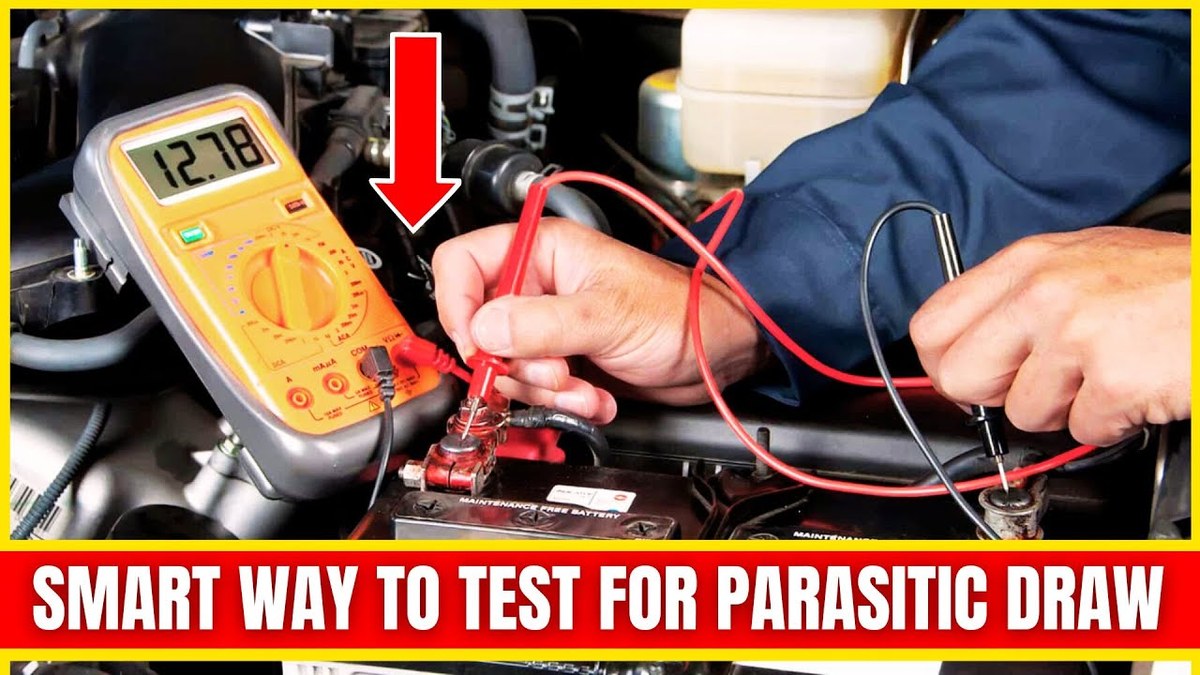
Once the modules are asleep, read the amp value on the meter. A normal parasitic draw is usually between 20 and 50 milliamps, which is 0.02 to 0.05 amps. Some vehicles with advanced electronics may sit slightly higher, especially if they have telematics or remote features.
A draw above 50 milliamps is worth investigating. A draw above 100 milliamps, or 0.1 amps, is almost always a problem. To put that in perspective, a 100 milliamp drain will pull about 2.4 amp-hours per day. A typical car battery holds 45 to 70 amp-hours, so a week of sitting can leave it too low to start.
If your reading is high, do not panic. The next step is finding which circuit is responsible. Write down the reading so you can compare it as you pull fuses.
Isolating the Culprit: The Fuse-Pull Method and Common Suspects
The fuse-pull method is the standard way to find the source of a parasitic drain. With the multimeter still connected, remove one fuse at a time from the fuse box. Watch the amp reading as you pull each fuse. When the reading drops to normal, you have found the circuit with the drain.
Replace each fuse before pulling the next one. This keeps the circuit complete and prevents other modules from waking up. Write down the fuse number and location for any fuse that causes a big drop. You may need to check both the interior fuse box and the one under the hood.
Aftermarket Accessories: The #1 Cause of Parasitic Drain
Aftermarket electronics are the most common source of parasitic drains. Dash cameras, alarm systems, remote starters, stereo amplifiers, GPS trackers, and phone chargers left plugged in can all draw power when they should be off.
Some accessories are wired directly to the battery or fuse box instead of the ignition. That means they never turn off. If you recently installed an accessory and the drain started soon after, that is the first place to look. Unplug the accessory and see if the amp reading drops.
Factory Modules That Can Stay Awake and Fool You
Factory systems can also cause drains. A stuck door switch can keep the interior lights on. A faulty glove box light or trunk light can do the same. The infotainment system, telematics unit, or a failing body control module may stay awake because it never receives the sleep signal.
These factory issues can be harder to diagnose because the module may not throw a code. If the fuse-pull method points to a factory module, check for software updates and recalls before replacing parts. A simple firmware update can fix a module that stays awake.
When Modern Electronics Make the Test Tricky: OBD2, CAN Bus, and Firmware
Modern cars use a CAN bus network where modules talk to each other constantly. A single module that fails to go to sleep can keep the whole network awake. This makes the drain harder to trace because pulling one fuse may not stop the activity.
Some vehicles also wake up periodically to run self-checks or communicate with the manufacturer. These brief wake-ups can cause the amp reading to jump around. If the reading fluctuates, watch the meter for a few minutes and note the highest steady value.
OBD2 Dongles, App Permissions, and Port Location
An OBD2 dongle left plugged into the diagnostic port is a common and sneaky drain. Many dongles stay powered even when the car is off. If you use a Bluetooth or Wi-Fi scanner, unplug it when the car is parked for long periods.
Some dongles also keep the vehicle’s network awake because they maintain a connection to a phone app. That can prevent the modules from sleeping entirely. If you have a dongle installed, remove it before running the parasitic drain test.
Emissions Readiness, Reset Limitations, and When to Call a Pro
If the drain is tied to the engine computer or emissions system, the fix may require more than a fuse pull. Clearing codes or disconnecting the battery can reset emissions readiness monitors, which can cause a failed inspection in some states. Our guide on passing emissions after clearing codes explains how those monitors work.
If you have pulled fuses, checked accessories, and still cannot find the drain, it is time to call a professional. A shop with a current clamp and a wiring diagram can trace the drain faster and safer than guessing. There is no shame in stopping when the diagnosis gets too deep.
After the Test: Reconnecting, Recharging, and Preventing Future Drains
When the test is done, remove the multimeter leads and reconnect the negative battery cable. Tighten the terminal clamp securely. Then start the car and let it run for a few minutes so the alternator can begin replacing the charge used during the test.
If the battery was low before the test, put it on a proper charger. A battery that sits at low voltage for a long time can lose capacity permanently. If the battery is old or failed a load test, replacement may be the smarter move.
To prevent future drains, unplug phone chargers and dash cameras when parking for long periods. Have aftermarket accessories installed with a relay that cuts power when the ignition is off. And check the battery terminals and cables for corrosion at least twice a year.
The Bottom Line: When to DIY and When to Hire a Professional
Testing for a parasitic drain at home is a realistic DIY job if you have a multimeter, basic hand tools, and patience. The test itself is safe when you follow the steps and respect the battery. The fuse-pull method gives you a clear path to the culprit.
But the job is not for everyone. If you are not comfortable working around battery acid and electrical connections, or if the drain involves a hybrid or EV high-voltage system, hire a professional. A misstep can damage the meter, the car’s electronics, or worse, cause a safety hazard.
- Best for: Car owners who want to find a battery drain without paying for repeated shop visits.
- Think twice if: You drive a hybrid or EV, or the drain involves complex factory modules that stay awake.
- Next step: Confirm your multimeter can read DC amps, charge the battery fully, and give the car time to sleep before trusting the reading.
Frequently Asked Questions
Most vehicles draw between 20 and 50 milliamps (0.02 to 0.05 amps) when the modules are asleep. A reading above 100 milliamps is usually a problem worth investigating.
Most cars need 20 to 60 minutes for the computers and modules to enter sleep mode. Some newer or European vehicles can take longer than an hour, so patience is important.
You can use a clamp-style DC amp meter around a battery cable without disconnecting it, but these meters are less accurate at low currents. The series method with a standard multimeter is more reliable for finding small drains.
Aftermarket accessories such as dash cameras, alarm systems, remote starters, and phone chargers are the most common culprits. Many are wired directly to the battery and never turn off.
Yes. A constant drain slowly discharges the battery, and repeated deep discharges can shorten its lifespan. Sulfation can build up on the plates when a lead-acid battery sits at low voltage.
Call a professional if you cannot find the drain after checking fuses and accessories, or if you drive a hybrid or EV with high-voltage components. A shop with a current clamp and wiring diagrams can trace the drain faster and safer.