How Long Do TPMS Sensors Usually Last? Expect 5-10 Years
Most direct TPMS sensors last 5 to 10 years, and the sealed lithium battery inside the sensor is the reason they fail. Cold weather, frequent driving, and low vehicle voltage can shorten that window.
How long do TPMS sensors usually last? For most vehicles with a direct tire pressure monitoring system, the practical answer is 5 to 10 years, with seven years as a common failure point. The sealed lithium battery inside each sensor sets that clock, not the electronics around it.
- Lifespan: Most direct TPMS sensors last 5 to 10 years, with 7 years a common.
- Battery: The sealed 3-volt lithium battery, not the electronics, sets the expiration date.
- Diagnosis: A TPMS tool reads sensor health; an OBD2 scanner reads vehicle-side codes.
- Cost: Replacement costs vary widely; replacing all four at once saves on programming fees.
- Safety: A flashing or intermittent TPMS light deserves a pressure check, not a delay.
TPMS Sensors Usually Last 5 to 10 Years — Here’s Why
The internal lithium battery, not the electronics, sets the expiration date
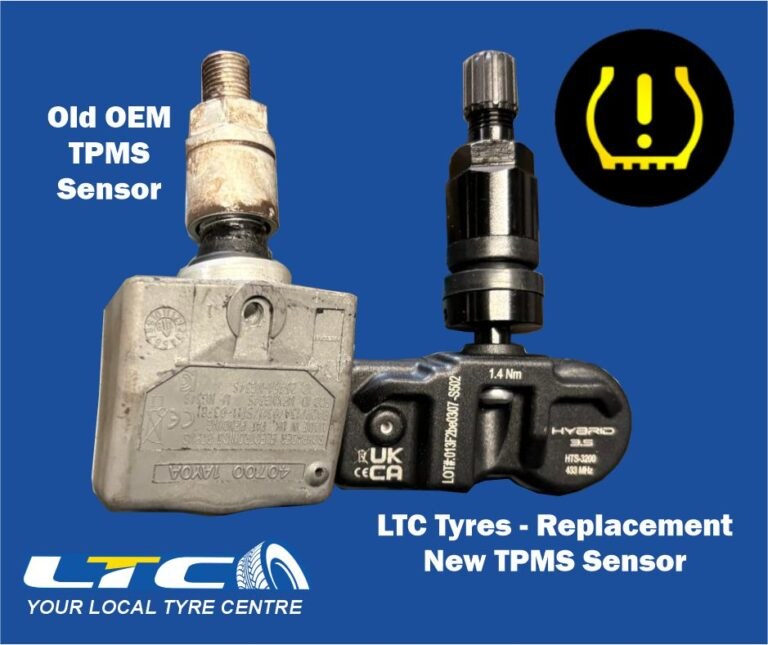
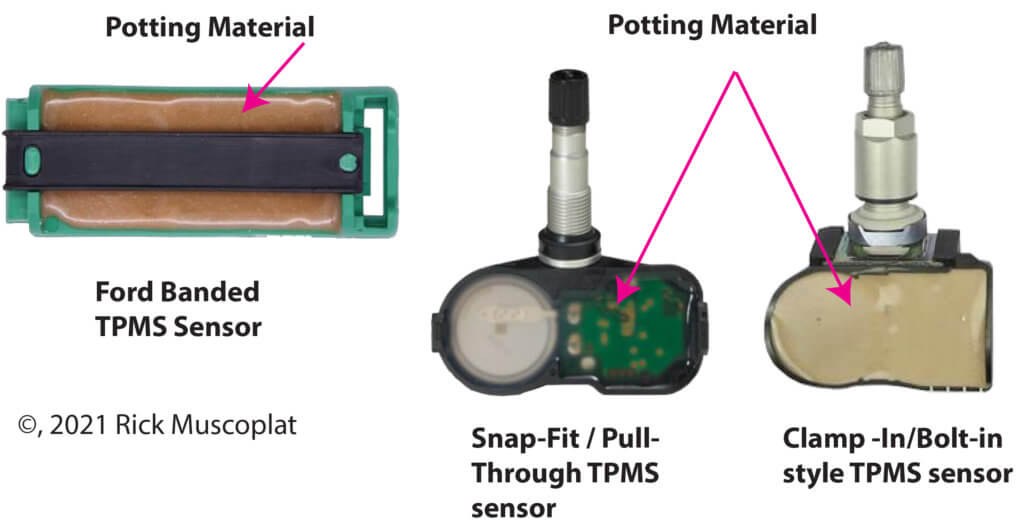
Every direct TPMS sensor contains a small lithium battery, a pressure transducer, a temperature chip, and a radio transmitter. The electronics rarely fail on their own. The battery is the weak link, and it is sealed inside the sensor housing.
Most manufacturers design these batteries to deliver roughly 5 to 10 years of service. Seven years is a realistic midpoint for many vehicles. Once the battery drops below the voltage the transmitter needs, the sensor stops reporting and the dash light comes on.
How climate, driving habits, and vehicle voltage shift the lifespan
Cold weather is hard on weak batteries. A sensor that is already marginal can fail on the first freezing morning of the year. Heat is just as damaging because high tire temperatures accelerate chemical aging inside the cell.
Driving habits matter too. Every time the vehicle moves, the sensor wakes up and transmits. More miles and more frequent trips mean more transmissions. Low vehicle battery voltage can also make sensors work harder, which drains them faster.
How TPMS Sensors Work and What Wears Out First
Direct vs. indirect TPMS: only one has a battery
Direct TPMS uses a pressure sensor inside each wheel that broadcasts live pressure and temperature data. Indirect TPMS uses the anti-lock brake system’s wheel speed sensors to estimate pressure by comparing rotation speeds.
Only direct sensors have batteries. Indirect systems have nothing inside the tire, so there is no battery to replace. That is why indirect systems rarely trigger a “sensor not found” error.
Inside a direct sensor: lithium chemistry, 3-volt output, and a sealed case
A typical direct sensor runs on a 3-volt lithium cell. The case is sealed to keep out moisture, road salt, and tire sealants. That sealing is what makes battery replacement impractical for most factory sensors.
When the battery dies, the entire sensor is replaced. Some aftermarket brands offer replaceable batteries, but they are the exception, not the rule.
Duty cycle and signal frequency: 315 MHz vs. 433 MHz transmission stress
In the United States, most sensors transmit on 315 MHz or 433 MHz. The frequency itself does not determine lifespan. What matters is duty cycle, or how often the sensor wakes up and sends a signal.
Every transmission draws current from the same small battery. A sensor that transmits more often, because of frequent driving or a vehicle that demands constant updates, will wear out faster than one that sleeps most of the time.
Hybrid and EV cautions: low-voltage quirks and high-voltage safety
Hybrids and EVs present two concerns. On the low-voltage side, a weak 12-volt battery can cause TPMS sensors to drop off the network, producing a false warning. On the high-voltage side, never work near orange cables or high-voltage components when servicing wheels.
If you drive a hybrid or EV, keep the 12-volt battery healthy and leave high-voltage work to a qualified technician.
Diagnosing a Failing TPMS Sensor: Tools, Codes, and Limits
Early warning signs: intermittent dash lights and cold-weather false alarms
A failing sensor often gives clues before it dies. The light may blink and then stay on, or it may appear only on cold mornings. A sensor that reports “no signal” during a relearn is usually dead.
Intermittent behavior points to a weak battery, not a tire leak. Confirm the actual pressure with a gauge before assuming the sensor is wrong. If you suspect a failed sensor, check whether you can drive with a bad TPMS sensor while you wait for a replacement.
TPMS scan tools vs. OBD2: what each can read, write, and reset
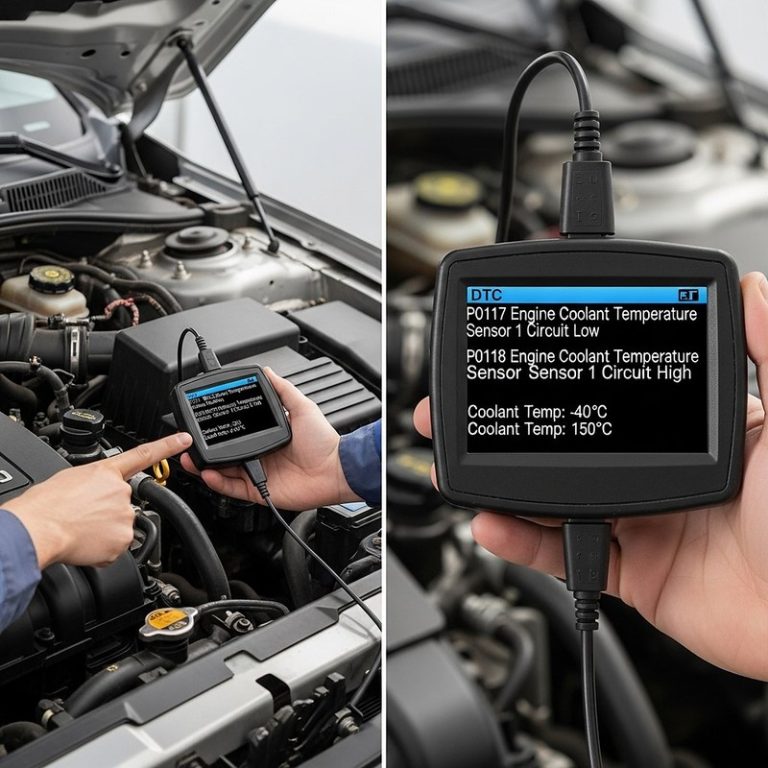
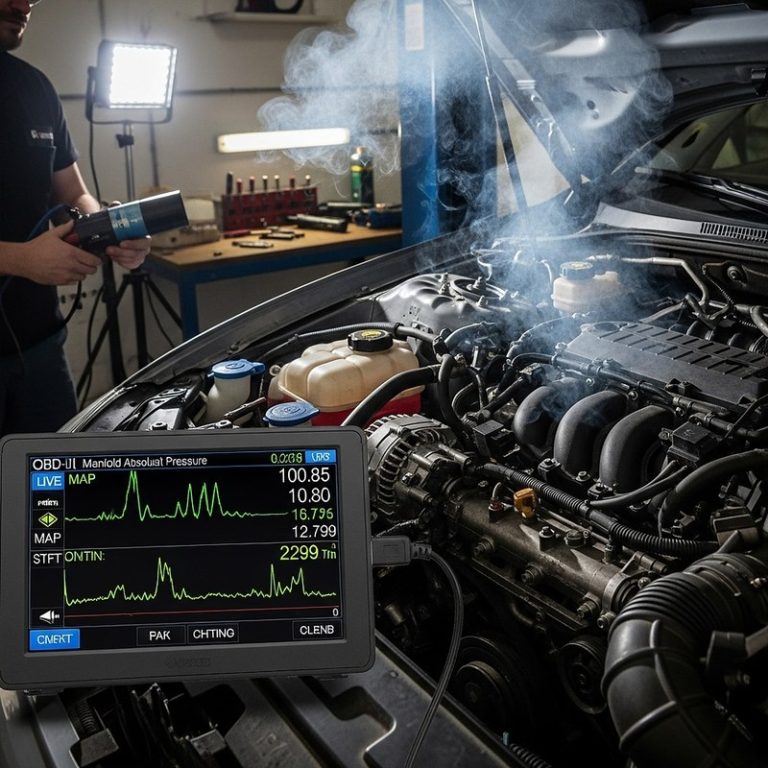
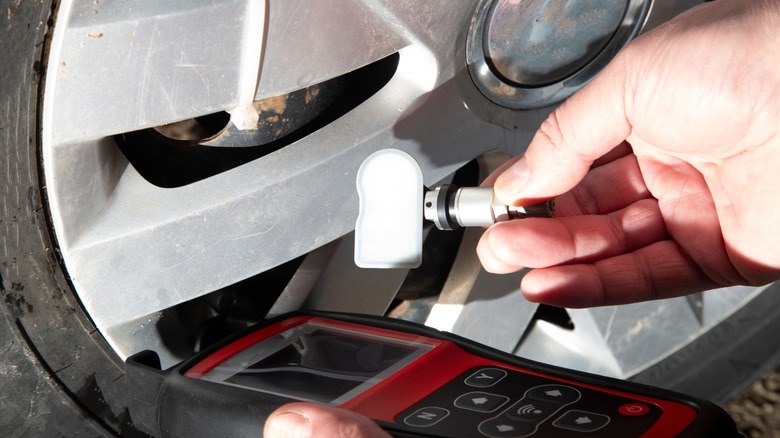
A dedicated TPMS tool talks directly to the sensor. It can read sensor ID, pressure, temperature, and battery health, and it can trigger a sensor to transmit. An OBD2 scanner talks to the vehicle’s computer and can read TPMS-related trouble codes, but it cannot wake up a sensor sitting in a tire.
For diagnosing a dead sensor, a TPMS tool is the right choice. For reading vehicle-side codes, an OBD2 scanner works. Many shops use both.
Model-year and protocol coverage, OBD2 port location, and ignition mode
TPMS tools and OBD2 scanners vary in vehicle coverage. Some tools support only certain brands or model years. Before buying, confirm the tool covers your vehicle’s protocol and that you can reach the OBD2 port, usually under the dash near the driver’s knees.
Most diagnostic work requires the ignition in the “on” position with the engine off. Check the tool manual for the exact mode.
Code and live-data limits, emissions readiness, and reset restrictions
Not every scanner can read TPMS live data. Some entry-level units only read engine codes. Others can display sensor pressure values and battery status. Know the difference before relying on a scan to diagnose a sensor.
If you clear codes, the vehicle’s emissions monitors may reset. That can cause a failed emissions test in states with readiness requirements. Clear codes only when you have a reason.
App permissions, firmware updates, and when to call a professional
Bluetooth TPMS tools often require a phone app, which may ask for location, Bluetooth, or account permissions. Review what the app collects before connecting it to your vehicle.
Firmware updates can add coverage for newer vehicles, but they can also change behavior. If a sensor will not respond to your tool, a tire shop with a professional TPMS tool can usually identify the problem quickly.
TPMS Replacement Cost and Ownership Value
OEM vs. aftermarket sensor pricing and battery trade-offs
OEM sensors cost more than aftermarket units, but they come with factory-matched frequencies and programming. Aftermarket sensors cost less, and some brands offer warranties that match or exceed OEM coverage.
The trade-off is consistency. Cheap aftermarket sensors may use lower-grade batteries, which can shorten lifespan. A mid-range aftermarket sensor from a known brand is often the best balance for older vehicles.
Programming and relearn fees: what adds to the final bill
The sensor itself is only part of the cost. Most replacements require programming and a vehicle relearn. Some shops bundle these into the installation price; others charge separately.
If you buy sensors online, factor in the cost of having a shop program and install them. That is often where the final bill grows. Most shops recommend a new sensor over a battery swap; our comparison of TPMS sensor battery replacement vs new sensor explains why.
State of charge vs. battery health: why a “good” sensor still fails
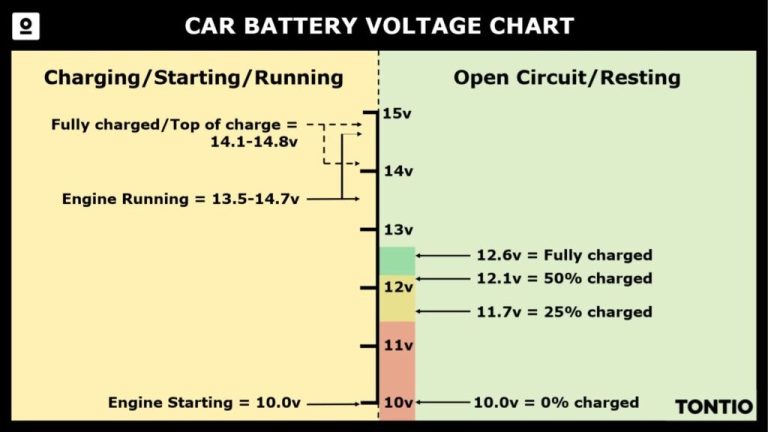
A TPMS tool can report battery voltage, but voltage alone does not tell the whole story. A sensor can show an acceptable resting voltage and still fail under load when it tries to transmit.
That is why a sensor can test “good” and then die a week later. Battery health, not just state of charge, determines remaining life.
TPMS Compatibility and U.S. Legal Requirements
TREAD Act coverage: 2008 and newer vehicles
The TREAD Act required automakers to equip passenger vehicles with TPMS. The phase-in started in 2006, and all new passenger vehicles sold in the United States have had TPMS since the 2008 model year.
That means most vehicles on the road today use direct or indirect TPMS, and replacement sensors must match the vehicle’s system.
Frequency, FCC ID, and part-number matching
Replacement sensors must match the vehicle’s frequency, usually 315 MHz or 433 MHz, and the correct FCC ID. The part number must also be compatible with the vehicle’s make, model, and model year.
Using the wrong frequency means the vehicle will never receive the sensor’s signal, and the warning light will stay on.
State inspection rules and replacement-sensor legality
Some states include TPMS operation in their safety inspections. A vehicle with a dead sensor or an illuminated TPMS light can fail inspection in those states.
Rules vary, so check your state’s requirements before assuming a non-functioning sensor is acceptable.
Check: Verify your vehicle’s make, model, year, TPMS frequency, and sensor part number before buying. Limitations: Aftermarket sensors may not support every vehicle protocol, so confirm coverage with the seller.
Maintenance and Tire Work That Extends or Kills Sensor Life
Use the door-jamb placard, not the sidewall, for cold pressure
The correct cold tire pressure is printed on the driver’s door-jamb placard, not on the tire sidewall. The sidewall number is the maximum pressure, not the recommended pressure.
Inflate tires when they are cold, meaning the vehicle has sat for at least three hours or has been driven less than a mile. If you are unsure how long to wait, our guide on how long to wait to check tire pressure after driving covers the details.
Gauge accuracy, inflator duty cycle, and over-inflation risk
A cheap gauge can be off by several PSI, which makes TPMS warning lights confusing. Use a gauge you trust and check it against a known-good source.
Portable inflators have duty cycles. Running one too long can overheat it and damage the compressor. Over-inflating a tire can also stress the sensor mount and cause false readings.
Tire rotation, mounting torque, and sensor orientation
During tire rotation, the sensors move with the wheels. That is normal, but the vehicle may need a relearn so the system knows which sensor is in which position.
When mounting tires, use the correct torque on the lug nuts and avoid over-torquing, which can damage the sensor stem. The sensor should sit properly in its pocket so the tire bead does not pinch it.
Puncture location, temporary-repair limits, and professional-repair thresholds
Not every puncture can be repaired. Damage in the sidewall or shoulder, or a puncture larger than about a quarter inch, usually means the tire must be replaced. A plug alone is a temporary fix, not a permanent repair.
If a shop patches the tire, the sensor is usually removed and reinstalled. That is a good time to check the sensor battery and valve stem. If you have a nail in the tire, read how long you can drive with a nail in your tire before deciding on a repair.
TPMS relearn limits and when a shop must handle it
Some vehicles allow a simple relearn using the dash buttons or a reset tool. Others require a professional scan tool to complete the process.
If the relearn fails, the sensor may be dead, or the tool may not support your vehicle. A shop with a professional TPMS tool can usually finish the job in minutes.
TPMS Warning on the Road: Emergency Steps and Tool Checks
Pull to a safe location and make your vehicle visible
When the TPMS light comes on while driving, do not stop in the middle of the road. Pull to a safe, flat location away from traffic, turn on your hazard lights, and set up warning triangles or flares if you have them.
Check the tires visually for obvious damage before you go further.
Check pressure with a calibrated gauge and respect inflator duty cycles
Use a calibrated tire gauge to check all four tires, including the spare if your vehicle has one. Compare the readings to the door-jamb placard.
If you use a portable inflator, follow its duty cycle. Most inflators need rest periods to avoid overheating. Inflate in short bursts and recheck the pressure with the gauge.
Jump-start connection order, cable and pack condition, and storage limits
A dead 12-volt battery can cause TPMS sensors to drop off and trigger false warnings. If you need a jump start, connect the positive cable first, then the negative, and disconnect in reverse order.
Inspect the cables or jump pack for damage before use. Store a jump pack within its recommended temperature range so it holds a charge when you need it.
Current limits, tool completeness, and post-use inspection
Jump packs have current limits. Using one that is too small for the engine can overheat the pack or the vehicle’s wiring. Check the pack’s rated output against your vehicle’s needs.
After any roadside repair, inspect the tools, cables, and inflator for wear. A cracked cable or dirty connector can fail the next time you need it.
OEM vs. Aftermarket TPMS Sensors: Side-by-Side Comparison
Lifespan, accuracy, and warranty compared on the same criteria
OEM sensors are built to the automaker’s exact specification, which usually means reliable battery life and accurate readings. Aftermarket sensors vary widely by brand, price, and battery quality.
Warranty coverage also differs. Some aftermarket brands offer a 3-year warranty, while others offer limited coverage. Read the warranty terms before you buy.
| Option | Best for | Owner consideration | Driver consideration |
|---|---|---|---|
| OEM sensor | Factory-matched fit and reliability | Higher upfront cost; warranty varies by brand | Consistent dash-light behavior and relearn compatibility |
| Aftermarket sensor | Budget replacements and older vehicles | Lower cost; quality and battery life vary by brand | May need a programming tool; verify frequency and FCC ID |
Which option fits daily drivers, older vehicles, and performance cars
For a daily driver you plan to keep for years, OEM sensors are the safest bet. For an older vehicle with high mileage, a quality aftermarket sensor saves money without a major trade-off.
Performance cars often need sensors that support higher pressures and faster data rates. Confirm the sensor is rated for your vehicle’s pressure range before buying.
How to Buy Replacement TPMS Sensors: Criteria and Verdict
Evaluation criteria: battery chemistry, build quality, warranty, and support
When comparing sensors, look at battery chemistry, build quality, warranty length, and manufacturer support. A sensor with a known battery brand and a solid warranty is a better value than a cheap unit with no support.
Check that the sensor is pre-programmed or that you have a way to program it. Some sensors come pre-programmed with a universal ID, which simplifies installation.
Ideal vehicle fit, drawbacks, and alternative approaches
The ideal sensor matches your vehicle’s frequency, part number, and protocol. The main drawback of aftermarket sensors is inconsistency between brands. An alternative is to buy OEM sensors from a discount parts supplier, which gives you factory quality at a lower price.
Another approach is to replace all four sensors at once as a preventive measure, especially if the vehicle is near the 7-year mark.
Transparent verdict: what we can and cannot verify without hands-on testing
We have not tested TPMS sensors in our own shop, so we cannot claim first-hand performance results. What we can verify is that battery chemistry, frequency matching, and warranty terms are the factors that determine real-world lifespan.
Use those criteria when you compare sensors, and confirm compatibility with your vehicle before you buy.
- Best for: Most owners should expect 5 to 10 years from a direct TPMS sensor and plan a replacement around the 7-year mark.
- Think twice if: You buy a no-name aftermarket sensor with an unclear warranty or an unverified battery brand.
- Next step: Check your vehicle’s TPMS frequency and part number, then decide whether to replace one sensor or all four.
Frequently Asked Questions
Most direct TPMS sensors last 5 to 10 years, with 7 years being a common failure point. The sealed lithium battery inside the sensor is what wears out, not the electronics.
Most OEM sensors are sealed, so the battery cannot be swapped without damaging the sensor. In practice, replacing the whole sensor is the reliable fix for most vehicles.
Costs vary by vehicle, region, and shop, but a single sensor plus programming and installation typically lands in the range of $50 to $200. Aftermarket sensors usually cost less than OEM parts.
Yes, in most cases. A new sensor must be programmed with the correct frequency and vehicle protocol, then the system must complete a relearn so the car recognizes the new sensor.
You can drive, but you lose the low-pressure warning, which increases the risk of tire damage and unsafe handling. Replace the sensor as soon as you can and check tire pressure manually in the meantime.
Quality varies. Some aftermarket sensors match OEM lifespans, while cheaper units may fail sooner. Check the battery chemistry, warranty, and brand reputation before buying.