Permanent Code vs Stored Code on OBD2 Scanner: Know the Difference
Stored codes can be read and cleared with a generic scanner, but permanent codes stay locked until the vehicle’s emissions monitors prove the fault is fixed. If a used car has permanent codes but no stored codes, someone cleared the light recently and the emissions system may still be failing.
Permanent code vs stored code on obd2 scanner might sound like the same thing, but they behave very differently. A stored code is the normal diagnostic trouble code (DTC) that a scanner can read and clear. A permanent code is a protected record of a confirmed emissions fault that generic tools cannot erase.
- Stored codes clear easily: A scanner or battery disconnect can erase confirmed DTCs and freeze-frame data.
- Permanent codes fight clearing: They are stored in protected memory so scanners and battery pulls can’t hide a.
- Drive cycles end them: Permanent codes only disappear after the vehicle’s monitors run and pass following a real.
- Used-car red flag: Permanent codes without stored codes mean the seller cleared the system just before you.
- Scanner limits matter: Check for permanent-DTC and Mode 06 support before buying a tool for emissions or.
Permanent vs. Stored Code on OBD2: The Four-Line Summary
Here is the short version before we go deeper.
- A stored code is a confirmed DTC with freeze-frame data that most scanners can clear.
- A permanent code is the same fault kept in protected memory that resists normal clearing.
- Clearing codes or pulling the battery removes stored codes but not permanent codes.
- Permanent codes disappear only after the vehicle’s emissions monitors run and pass a real repair.
What Are Stored Codes? Confirmed DTCs and Pending Codes Explained
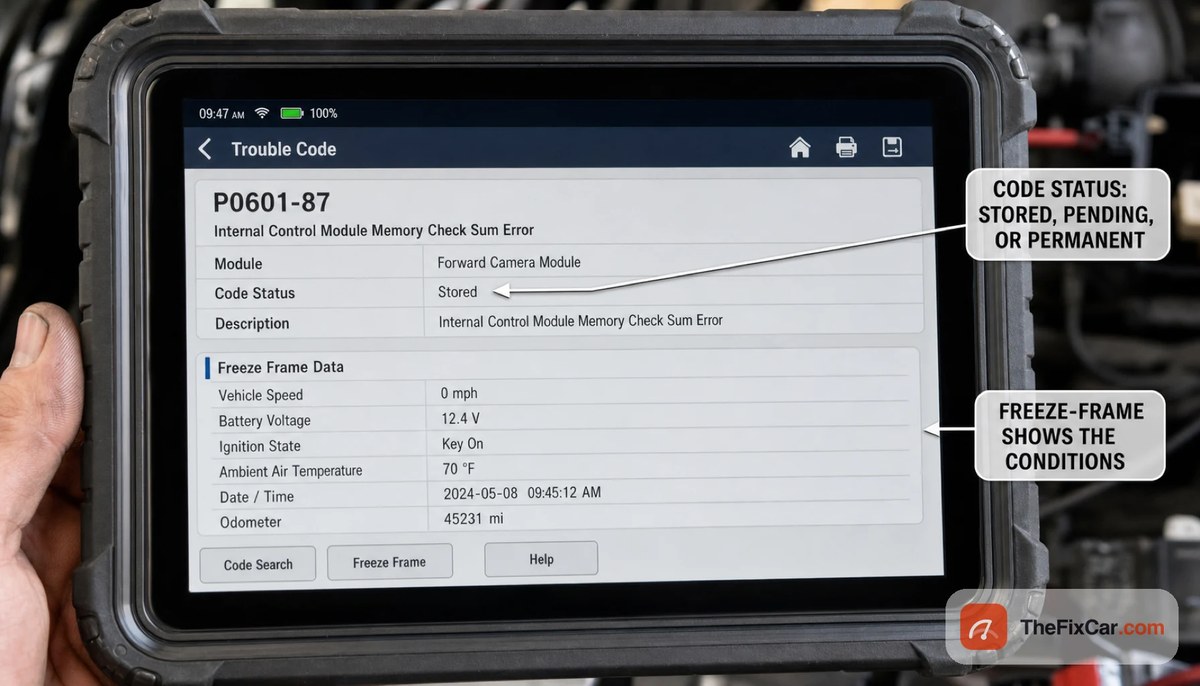
A stored code appears after the computer sees the same problem during two consecutive drive cycles. Stored codes are what usually turn on the check engine light. Most scanners show them as a letter plus four digits, such as P0301 for a cylinder one misfire.
Every stored code starts out as a pending code.
How a Code Moves from Pending to Confirmed
When a fault happens once, the computer records a pending code. It is not convinced the problem is real yet. If the same fault repeats on the next trip under similar conditions, the code becomes confirmed and the check engine light can turn on.
For more detail on why pending codes appear without a warning light, read our guide on what a pending code means on an OBD2 scanner.
The Data Behind the Code: Freeze-Frame and Live Data Limits
When a code becomes stored, the computer also saves a freeze-frame snapshot. It captures engine speed, coolant temperature, vehicle speed, and other values from the exact moment the fault happened. That snapshot gives you a starting point without guessing.
Live data is different. It streams real-time sensor values while the ignition is on or the engine is running. Most consumer scanners do not record live data over time, so you have to watch the screen carefully. That limits how useful live data is for an intermittent fault.
What Are Permanent Codes? The Emissions Tripwire You Can’t Clear
A permanent code is the same fault parked in a separate, protected memory area. It was built for emissions programs, not for driver convenience. Generic scan tools cannot erase it, and disconnecting the battery usually will not erase it either.
Why Carmakers Programmed Permanent Codes (CARB and Federal Rules)
Requirements from the California Air Resources Board (CARB) and federal EPA rules pushed automakers to add permanent codes. Before this feature, someone could clear codes right before an emissions inspection and pass even with a serious fault. Permanent codes close that loophole.
The system does not trust a cleared status. If the fault still exists, the permanent code stays until the repair is done and the vehicle’s own monitors prove the system is healthy again.
Permanent vs. Stored vs. Pending: What Each Code Tells You
A pending code means one failed test that needs a second failure to confirm. A stored code means a confirmed fault with freeze-frame data, usually tied to the check engine light. A permanent code means that same confirmed fault is protected from normal clearing.
The wording matters when you read a scanner report. A stored code tells you what to fix. A permanent code tells you whether someone tried to hide the problem.
OBD2 Scanner Compatibility: What You Need to Read Permanent Codes
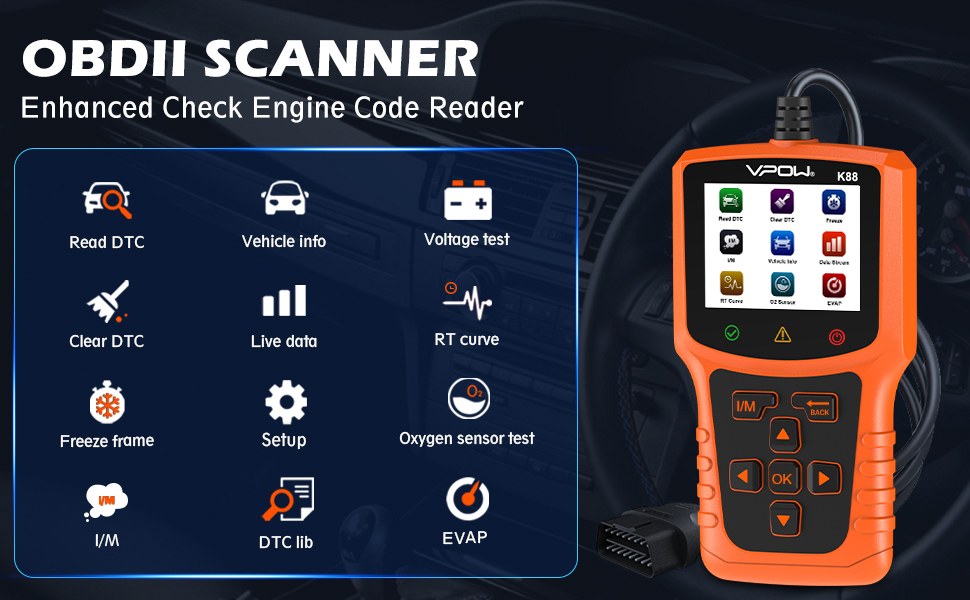
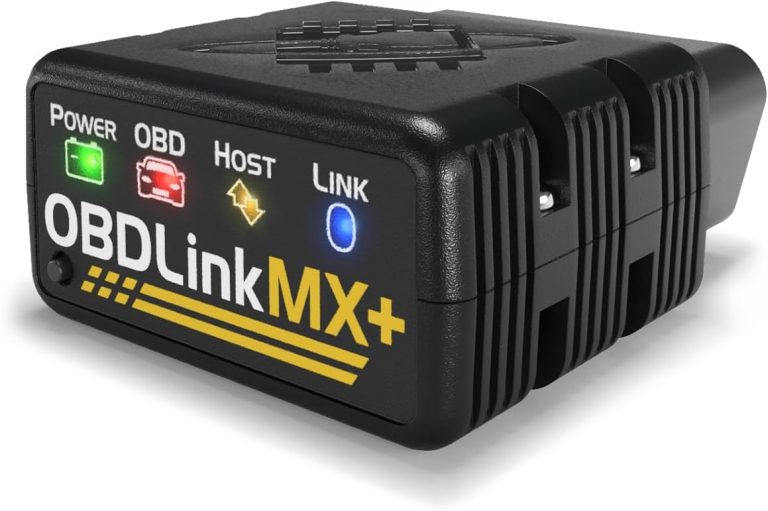
Not every scanner displays permanent codes. The OBD2 standard includes a data mode for reading them, but many basic code readers skip it. If you want to check permanent codes yourself, look for a scanner that lists permanent DTC support on the box or in the spec sheet.
Model-Year and Protocol Coverage (CAN, J1850, and Beyond)
OBD2 became standard on 1996 model-year gasoline vehicles in the United States. Some older vehicles still use the J1850 protocol, while 2008 and newer light-duty vehicles use CAN. A scanner that works on a friend’s 2015 truck may not talk to a 1997 sedan, so confirm coverage before buying.
Permanent code support also varies by brand. Some enhanced scanners read permanent codes through the generic OBD2 connector, while others need vehicle-specific software. Always check the compatibility list for your exact make and model.
Port Location, Ignition Mode, and App Permissions That Matter
The diagnostic link connector (DLC) is usually under the dashboard on the driver’s side. Most scanners need the ignition on with the engine off to read codes. Smartphone scanners often ask for Bluetooth, location, and account permissions, so review what the app actually needs before pairing it.
Firmware, Mode 06 Data, and Code/Live-Data Limits on Consumer Scanners
Firmware updates fix bugs and expand vehicle coverage. Cheap scanners often skip Mode 06, which reports raw emissions monitor results. Once you understand how monitors report their results, Mode 06 data on an OBD2 scanner becomes useful for advanced diagnosis.
Consumer scanners also limit how many live-data values they show at once. A professional-grade or bidirectional tool gives more access, but it costs more and takes more skill to use correctly.
Resetting a Scanner vs. Disconnecting the Battery: What Actually Clears
Most generic scanners have a “clear codes” function. That command wipes stored codes and freeze-frame data. It does not wipe permanent codes, and this is not a bug. It is the entire purpose of the permanent-code system.
Why a Cheap Scanner Can Clear Stored Codes but Not Permanent Ones
The clearing command targets normal DTC memory. Permanent codes sit in a separate, protected part of the computer. The only ways to remove them are factory-level tools or the vehicle’s own drive-cycle process after a successful repair.
That difference explains why clearing a light with a cheap tool and passing an emissions test are two different challenges. If you are shopping for a tool, our comparison of cheap vs expensive OBD2 scanners shows where the extra money goes.
Battery Disconnect Myths: Voltage, Connection Order, and Hybrid/EV Cautions
Disconnecting the 12-volt battery can erase stored codes, freeze-frame data, and learned settings like idle trim. On many vehicles it will not erase permanent codes. Pulling the battery cable is not a universal reset button.
Always check the owner’s manual before disconnecting anything. Some vehicles need a memory saver or a relearn procedure afterward, and many lose radio presets or window settings during the process.
Emissions Readiness and Drive Cycles: When Permanent Codes Finally Disappear
After a repair, the vehicle must prove the system works. That proof happens during drive cycles, which are specific driving patterns that let the computer run its emissions monitors. Until the monitors complete, the permanent code stays visible.
A scanner’s readiness screen shows whether each monitor has passed, failed, or not run. This also explains why a check engine light can stay on with no stored codes in some situations, as we explain in our article about OBD2 scanners that say no codes while the light is on.
How Many Drive Cycles Does It Take? Watch Monitor Status, Not the Calendar
The number of drive cycles varies by vehicle make, model, year, and which monitor failed. Some cars complete the needed monitors in one long highway trip. Others need several cold starts with specific speeds and wait times. Watch your scanner’s readiness screen instead of guessing by the calendar.
Do not clear codes again during the repair process. Every clear can reset monitor progress and force you to start from zero.
Buying a Used Car? Run the Permanent-Code Check Before You Sign
Bring a scanner that reads permanent codes when you inspect a used car. Plug it in before you negotiate anything. If stored codes are gone but permanent codes remain, the seller recently cleared the check engine light and hoped no one would notice.
Spotting a “Code-Cleared” Car and Navigating State Emissions Variations
Permanent codes are the clearest evidence of a cleared car. Another clue is a reset clock, lost radio presets, or an “unknown” monitor status on the readiness screen, since those settings can be wiped during a recent battery disconnect. Permanent codes tell you the emissions system has not verified the repair.
Emissions testing rules vary by state and county. Some areas test every vehicle annually. Others test only on resale or not at all.
OBD2 Scanner Limitations: When to Stop and Call a Professional
An OBD2 scanner is a useful tool, but it has limits. Many basic scanners cannot read ABS, airbag, or transmission codes. Those systems need enhanced or manufacturer-level tools, and safety-related modules should not be diagnosed by guesswork.
If the same code returns after multiple repairs, stop guessing. Intermittent faults, wiring issues, and small EVAP leaks often need smoke machines, oscilloscopes, and factory-level data that a consumer scanner cannot provide.
Your Next Steps: Use This Knowledge to Skip Expensive Guesswork
Here is a simple order that works for most check-engine situations:
- Write down every code, including pending and permanent codes.
- Save the freeze-frame data before clearing anything.
- Research the code and fix the root cause, not just the symptom.
- Clear the stored code and complete the required drive cycle.
- Re-check monitor status and permanent codes before an emissions test or resale.
Following this order prevents the classic mistake of clearing codes first and losing the evidence you needed. It also protects you from the false confidence that comes when a light turns off before the vehicle actually verifies the repair.
- Best for: Owners who want to understand their own diagnostic codes, catch hidden faults on a used car, and pass emissions tests with real evidence instead of guesswork.
- Think twice if: You only need to read one or two codes a year — a basic reader can handle that, but it will not show permanent codes or system-specific modules like ABS and airbags.
- Next step: Check your scanner’s spec sheet for permanent DTC and Mode 06 support, then practice reading codes with the ignition on and the engine off before you need it in a stressful moment.
Frequently Asked Questions
Not always. Many basic code readers only show stored and pending codes. You need a scanner that lists permanent DTC support and matches your vehicle make and model.
On most vehicles, no. Disconnecting the battery can clear stored codes and freeze-frame data, but permanent codes live in protected memory. Check your owner’s manual for your specific vehicle.
It depends on the vehicle and the repair. The code clears only after the car’s own emissions monitors run and pass during the required drive cycles, which can take from one trip to several days of specific driving.
A pending code is a first-time failure. A stored code is a confirmed fault with freeze-frame data. A permanent code is a protected record of that confirmed fault that survives normal clearing.
No. Permanent codes are designed to resist clearing by generic tools, battery disconnects, and most aftermarket scanners. Permanent codes mean the recent clearing did not fix the underlying fault.
No. Emissions testing rules vary by state and county. Even if your state does not test, permanent codes still point to an unverified emissions repair, so they matter for used-car buying and reliability.