Why Does My Tire Inflator Stop Before Reaching the Set Pressure? Fix
Your tire inflator usually stops early because of a sensor calibration error, weak 12V power, a tripped thermal cutoff, or an air leak. Check the gauge with a second reader and confirm the battery connection before replacing the unit.
Wondering why does my tire inflator stop before reaching the set pressure? The short answer is that the pump is following a bad signal, losing power, protecting itself from heat, or fighting a leak. This guide shows you how to tell which one is happening within a few minutes, without special tools.
- First check: Verify the pressure with a separate gauge; built-in inflator sensors are often off by.
- Power matters: A weak 12V socket or low battery voltage can stop the pump before it.
- Let it cool: Duty-cycle and thermal protection are normal; most pumps need 20–45 minutes to reset.
- Find the leak: Worn chuck seals, kinked hoses, and damaged valve stems make the inflator chase escaping.
- Check TPMS: Sensor faults and relearn limits can stop the tool early even when tire pressure.
The Short Answer: Why Your Tire Inflator Stops Before the Set Pressure
Most portable inflators stop early for one of four reasons. Three of them have simple fixes you can do in your garage or at the side of the road.
Four Triggers Behind an Early Shutoff
- Pressure-sensor or gauge error: The built-in gauge reads a slightly different number than the actual tire pressure, so it shuts off at the wrong moment.
- Weak power supply: The 12V socket, cord, or battery can’t deliver enough current, so the motor slows and the unit stops to protect itself.
- Thermal overload: The pump got hot and tripped its duty-cycle protection. It needs a cool-down period before it will restart.
- Air escaping: A loose air chuck, kinked hose, or damaged valve stem leaks air faster than the inflator can deliver it.
If your inflator shuts off repeatedly across multiple tires, a pattern emerges. Our related guide on why portable tire inflators keep shutting off covers the same symptoms from a different angle.
Sensor Stop vs. Power Failure vs. Thermal Cutoff: How to Tell the Difference
You don’t need a multimeter to sort these out. Watch and listen during the next fill.
Sensor stop: The inflator runs normally, reaches a number near your target, then stops with a beep or a “done” reading. Restarting it usually adds a little more air. This points to gauge read lag or an inaccurate built-in sensor.
Power failure: The motor slows down, the display dims or flickers, and everything shuts off without a completion message. This points to the 12V socket, the battery, or the power cord.
Thermal cutoff: The pump runs strong, then stops mid-fill after several minutes. It won’t restart right away, even with a fresh power source. After 20 to 45 minutes of cooling, it works again. That’s duty-cycle protection doing its job.
Leak-driven stop: The inflator seems to run forever, pressure climbs slowly, and then drops quickly once the pump stops. You’ll usually hear hissing at the chuck or valve stem.
Pressure-Sensor and Gauge Accuracy: It Shut Off for a Reason, But Is the Reason Right?
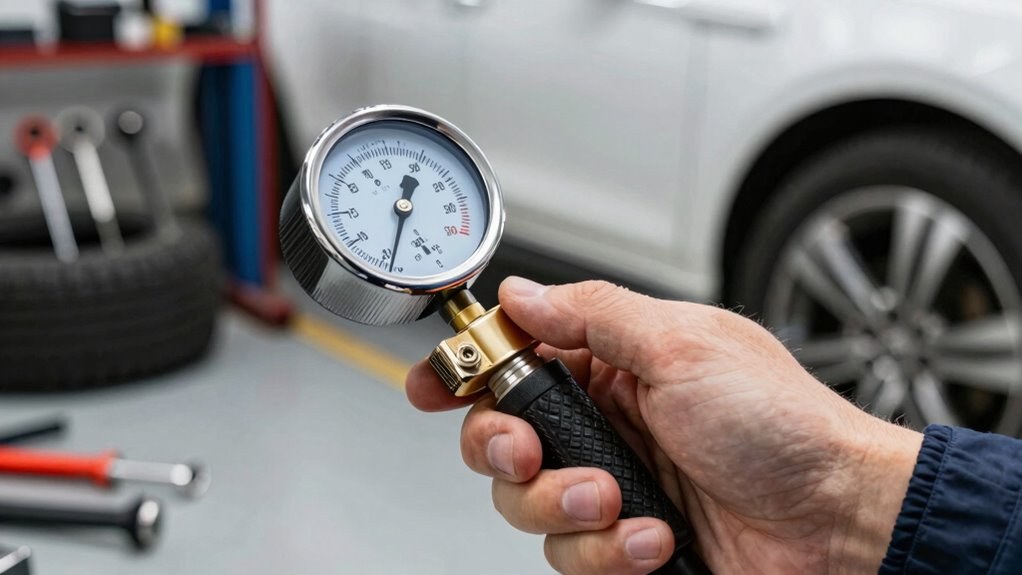
An inflator that stops at 32 PSI when the tire is actually at 29 PSI isn’t malfunctioning. It’s following a sensor that needs calibration, or a target that was never right in the first place.
Match the Door-Jamb Placard, Not the Dashboard or a Guess
The correct cold pressure for your tires is printed on the driver’s side door-jamb placard, not on the tire sidewall. The sidewall number is the maximum pressure, not the recommended one. Dashboard TPMS displays, when your vehicle has them, may round to the nearest PSI or show no numbers at all. Use the placard as your target.
Cold vs. Hot Pressure: Why the Target Changes With Tire Temperature
Tire pressure climbs several PSI as tires warm up during a drive. If you set the inflator to the cold placard number on a hot tire, it reads “full” before the tire actually has enough air once it cools.
Fill tires before driving, or let the vehicle sit for a few hours first. If you must fill a warm tire, add 1–2 PSI above the placard and verify later with a trusted gauge.
Inflator Gauge Accuracy: When Overfilling by 1–2 PSI Is the Wise Move
Portable inflators commonly carry built-in gauges accurate to about ±1–2 PSI. That works for emergency fills, but not for exact settings. If the placard says 35 PSI and your inflator tends to under-read, aim for 36–37 PSI, then confirm with a separate gauge. The exact offset varies by unit, so check the manual. For a deeper look, see our article on how accurate portable tire inflator gauges really are.
Power Supply Issues: Low Voltage, 12V Socket Limits, and Battery Health
Portable inflators are power-hungry. Many draw 10 to 15 amps at peak load, which is more than some 12V accessory sockets deliver.
Voltage Drop: Why the Motor Slows Down and Then Gives Up
As tire pressure rises, the pump works harder and draws more current. If the socket wiring, extension cord, or battery can’t keep voltage stable, the inflator’s internal protection cuts power. The motor slows, the display dims, and the unit stops before reaching the set pressure.
Fix: plug directly into the vehicle’s 12V socket, avoid long extension cords, and keep the engine running while filling larger tires. Some cars limit accessory output when the key is in the “accessory” position.
State of Charge vs. Battery Health: A “Good” Battery Can Still Stall the Pump
A battery that tests fine but sits at a low state of charge can still drop below the inflator’s voltage cutoff under load. The pump needs steady voltage, not just a battery that can start the engine. Weak alternator output and corroded terminals make it worse. If your vehicle’s electrical system shuts down during a fill, our article on why a car battery tests good but still dies explains the rest.
Correct Connection Order and Damaged-Battery Stop Conditions
For inflators that clamp directly to a battery, connect the positive clamp first, then the negative, and remove in reverse order. If the inflator refuses to start or stops near a visibly damaged battery, stop and follow the manufacturer’s instructions.
Hybrid and EV Cautions: Different Batteries, Different Inflator Rules
Most hybrids and EVs still use a standard 12V battery to power accessories like inflators, even though a high-voltage battery pack drives the wheels. Connect your inflator only to the 12V system, found under the hood, in the trunk, or behind a labeled access panel. Never touch the orange high-voltage cables or the high-voltage pack. If you’re unsure where the 12V battery is, check the owner’s manual first.
Duty Cycle and Thermal Overload: The Hidden Adversary
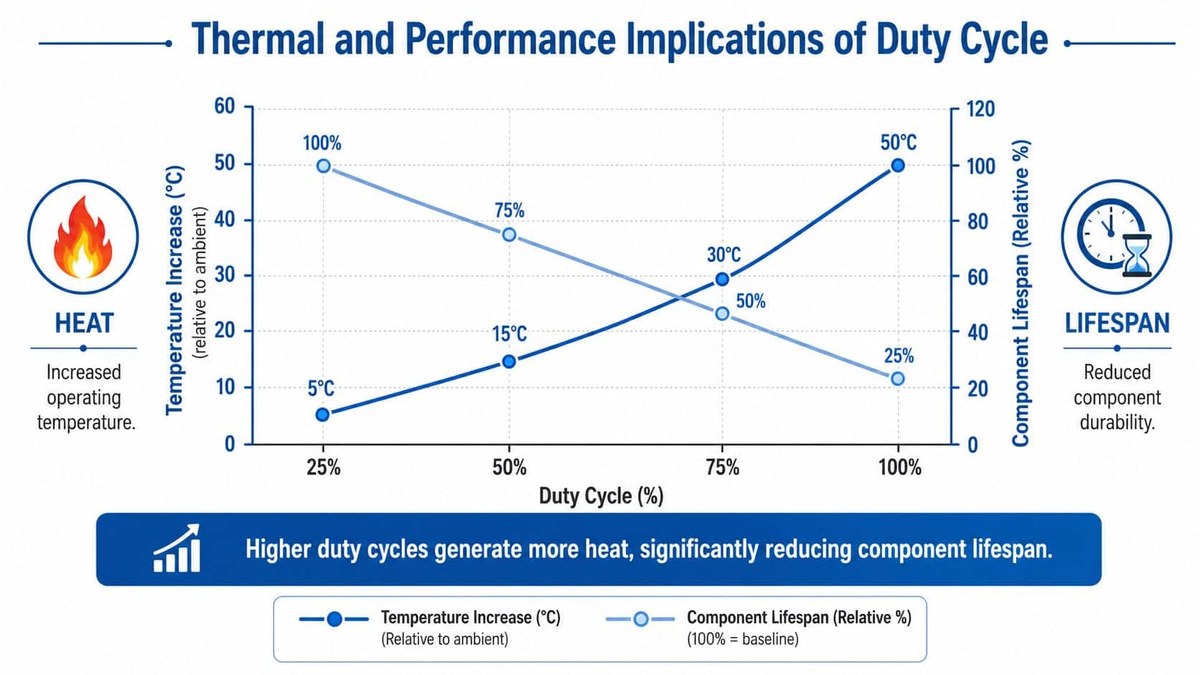
Every inflator has a duty cycle printed in the manual. It tells you how long the pump can run continuously before it must rest.
What a Duty-Cycle Rating (e.g., 10 Minutes On / 30 Minutes Off) Actually Means
A rating of “10 minutes on / 30 minutes off” means the pump should run no longer than 10 minutes at a stretch, then cool for at least 30 minutes. Exceeding that heats the motor, and a thermal switch cuts power to prevent damage. A large SUV tire might need 8–10 minutes per wheel, which means you could hit the cutoff by the third tire.
Heat builds faster when the pump works harder: filling a 40-PSI truck tire, running in direct sunlight, or using a long extension cord. Pump heat deserves its own coverage, so see our guide on why tire inflators get hot for the full breakdown.
Heat, Motor Stall, and the Reset Time Nobody Reads In the Manual
When the thermal switch trips, the inflator usually won’t restart until the motor cools. That can take 20 to 45 minutes depending on the unit. If it stops mid-fill and works again after a long break, you’ve tripped the duty-cycle protection. The fix isn’t a repair; it’s better planning: fill fewer tires per session, wait between tires, or use a higher-duty inflator for large rubber.
TPMS Relearn and Sensor Quirks: When the Early Stop Is a Sensor Issue, Not an Air Issue
Some inflators communicate with the tire pressure monitoring system through a vehicle’s OBD2 port. If the vehicle is mid-relearn or the sensor data conflicts, the inflator may stop early even when tire pressure is fine.
Direct vs. Indirect TPMS: Model-Year Coverage and Relearn Limits
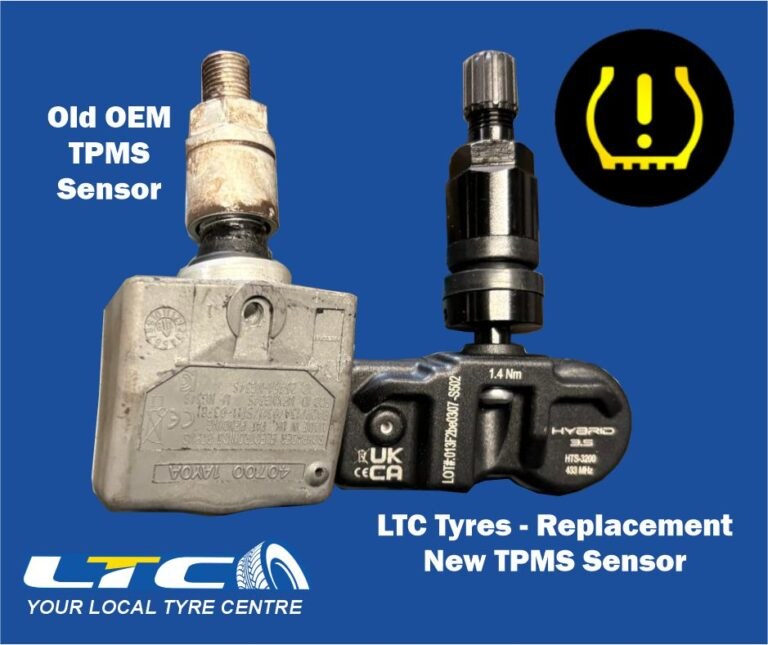
Direct TPMS uses sensors inside each wheel that broadcast pressure readings. Indirect TPMS uses ABS wheel-speed sensors and broadcasts no pressure data at all. An inflator that reads or programs TPMS only works with direct systems, and only on compatible model years. Check the compatibility list against your exact make, model, and year first. If your warning light is behaving oddly, some vehicles need a relearn, which we explain in our article on why the tire pressure light comes on when tires are fine.
TPMS Reset Limitations: When a Scan Tool or Professional Diagnosis Is Required
Some early stops happen because the inflator can’t read or clear a TPMS fault. A simple reset button may not be enough. Vehicles with a failed sensor or a wheel swapped without a relearn often need a TPMS scan tool or a professional visit. If the inflator stops early and the TPMS light is flashing, suspect the sensor, not the air level.
Air Chuck, Hose, and Valve Stem Leaks: Pressure That Escapes While You Watch
A leak between the inflator and the tire can make the pump run longer, stop early, or appear to lose pressure the instant it shuts off.
The Chuck Seal: The Most Common “Phantom” Leak and How to Check It
The air chuck that presses onto the valve stem has a small rubber seal inside. If it’s worn, cracked, or misaligned, air escapes around the valve. The inflator keeps filling, the built-in gauge reads low, and the pump may hit its duty cycle before reaching the target. Test it by pressing the chuck firmly and listening for hissing. Soapy water brushed around the connection bubbles where air escapes.
Hose Kinks and Damaged Valve Stems: Why the Inflator Keeps Catching Up
A kinked hose reduces airflow dramatically, so pressure builds slowly. A bent or corroded valve stem can leak at its base for the same reason. Push-on chucks are more prone to leaks than screw-on chucks, which is why truck and off-road drivers often prefer threaded styles. Straighten the hose, inspect the stem, and replace the chuck seal if damaged.
When the Tire Itself Is the Problem
Sometimes the inflator stops early because the tire won’t hold the pressure you’re aiming for. That’s not a tool fault; it’s a tire fault.
Puncture Location: Center Tread vs. Sidewall and What It Means for a Fix
Most simple punctures in the center tread area can be repaired when the damage is small. Sidewall damage, shoulder damage, or punctures larger than about a quarter-inch usually mean replacement. A sidewall leak won’t hold pressure reliably and is unsafe to drive on, even if it holds air briefly.
Temporary-Repair Limits, Legal Variation, and Professional-Repair Thresholds
Tire repair rules vary by state and by tire manufacturer guidelines. In general, a permanent repair means removing the tire, inspecting the inside, and applying a patch or plug-and-patch combination from inside. A simple string plug from outside is a temporary fix for reaching a shop, not a permanent repair. When in doubt, a professional tire shop should make the call based on the exact damage.
Tires That Won’t Hold Air at All: Cut Your Losses Before the Inflator Does
If pressure drops from 35 PSI to 10 PSI while you close the trunk, no inflator will fix it. Pull the wheel or call a tow, then have the tire inspected. Repeatedly reinflating a tire that deflates instantly wastes time and can damage the tire further.
If you must fill a tire on the roadside, move to a flat, safe spot away from traffic, turn on hazard lights, and stay clear of passing vehicles while you work.
Fix It or Replace It: Resets, Maintenance, and Next Steps
Once you know the cause, the fix is usually simple. Here is the order to work through it.
Step-by-Step Reset for Sensor-Caused Early Stops
Power down the inflator and remove it from the 12V socket or battery.
Verify the set pressure matches the door-jamb placard. A mis-set target stops the pump correctly, but for the wrong reason.
Attach the chuck to the valve, wait about 10 seconds, and restart. On many units, this clears a false reading.
If the pump stops again, check pressure with a trusted gauge. If the tire is correct, the inflator’s sensor carries a calibration offset.
- Confirm the target matches the door-jamb placard for cold tires
- Use a screw-on chuck or press a push-on chuck firmly to avoid seat leaks
- Run the engine or connect to a healthy 12V battery when filling multiple tires
- Bypass thermal protection; that risks tool damage and fire
- Ignore a swollen, leaking, or hot battery when the inflator refuses to run
- Treat a temporary plug as a permanent repair
Inflator Care: Gauge Calibration, Chuck Cleaning, and Storage Conditions
Inflators are simple tools, but they need basic care. Wipe the chuck seal clean so dirt doesn’t hold it open. Check the hose for cracks before each use. Store the unit in a dry place at room temperature, because cold can affect the display and any internal battery. If the gauge reads off by a known amount, note the offset or have it calibrated when the manufacturer supports it.
Smart Inflator Firmware and App Permissions: A 2026 Edge Case Worth Knowing
Some connected inflators released around 2026 pair with a phone app to set target pressure, log fills, or update firmware. An early stop can sometimes trace to a stale firmware bug rather than a hardware fault. If the unit behaves fine on manual controls but stops early when the app is active, update the app and the inflator firmware, then re-pair it.
When to Buy a Better Inflator (Duty Cycle, Flow Rate, and Warranty)
If a correct placard target, a healthy power connection, and a proper cool-down still lead to early stops on multiple tires, the unit may be undersized. Check the manual for duty-cycle rating and flow rate, often stated in liters per minute (L/min) or cubic feet per minute (CFM). A compact inflator built for sedans may never finish a large SUV tire in one go.
Higher-duty models aimed at trucks and off-road rigs offer longer run times and higher flow rates, and they usually carry longer warranties. Confirm the replacement hose and chuck are available before you buy, because consumables matter over the life of the tool.
- Best for: Most drivers whose inflator stops early will find the fix is a calibrated target, a stable power source, or a cool-down wait.
- Think twice if: The inflator consistently stops early with a correct placard target on a healthy battery; that points to an undersized unit or a failing internal sensor.
- Next step: Verify pressure with a second gauge, confirm the battery connection, and check the duty-cycle rating before spending money on a replacement.
Frequently Asked Questions
The most common causes are a built-in sensor that reads a few PSI off, a 12V power source that drops voltage under load, a thermal cutoff that needs cool-down time, or an air leak at the chuck, hose, or valve stem. Verify with a separate tire pressure gauge first, then check the power connection.
Yes. Many inflators draw 10 to 15 amps, so a low or weak 12V battery can drop below the unit’s voltage threshold mid-fill and cause an early stop. Run the engine while filling larger tires and check battery terminal connections first.
Most inflators with thermal protection need 20 to 45 minutes to cool before restarting. Check the duty-cycle rating in the manual; a 10-minutes-on and 30-minutes-off rating makes a long rest normal, not a defect.
It can when the inflator reads or programs TPMS sensors through the OBD2 port. A vehicle mid-relearn, an incompatible model year, or a sensor fault can make the tool stop early even when the tire pressure is correct.
Usually within plus or minus 1 to 2 PSI, which is enough to cause an early stop when the target is close to the placard number. Use a separate accurate gauge to verify, and set the inflator 1–2 PSI above or below based on its known offset.
Replace it when a correct placard target, a healthy 12V connection, and a proper cool-down still result in early stops on multiple tires. Check the duty-cycle rating first; an undersized inflator for large tires may simply lack the run time and flow rate.