Can You Test an Agm Battery with a Regular Battery Tester? the Risks
Physically, yes — a regular battery tester can clamp onto an AGM battery and show a reading. But the result is unreliable because the tester uses flooded-battery settings, so confirm any verdict with an AGM-rated tester or a professional before replacing anything.
Can you test an AGM battery with a regular battery tester? Technically, yes — the clamps fit and the screen will light up. But the reading can be misleading enough to cost you time, money, or a working battery. This guide explains why regular testers struggle with AGM batteries, what the real risks are, and how to get an accurate answer without guessing.
- Physical fit: Regular testers can connect to AGM terminals, but they use flooded-battery test logic.
- Accuracy risk: A “good” reading can hide a failing AGM, and a “replace” reading can condemn.
- Safety: Stop testing if the battery swells, leaks, hisses, or gets hot — damaged AGM.
- Hybrid/EV: Only test the 12V auxiliary battery, never the high-voltage traction pack.
- Next step: Confirm any verdict with an AGM-compatible tester or a professional before spending money.
Can You Test an AGM Battery with a Regular Tester? Yes—But the Verdict May Be Wrong
The Short Answer: Physical Connection Works, Accuracy Doesn’t
A regular battery tester can physically connect to an AGM battery. The clamps fit standard top or side terminals, and the tester will produce a voltage, conductance, or load reading. The problem is that the tester applies test logic designed for flooded lead-acid batteries, not for AGM chemistry. AGM batteries behave differently under load, and a standard tester has no way to account for that difference.
Why This Matters Before You Spend Money on a Replacement
An incorrect test result can push you in the wrong direction. The tester may say “replace battery” when the AGM is still healthy, or “good battery” when it is close to failure. Either mistake costs money. A replacement AGM battery can cost well over $200, and a surprise failure can leave you stranded. Knowing what your tester can and cannot tell you is the first step toward a smarter decision.
AGM vs. Flooded Lead-Acid: Why Chemistry Changes the Test
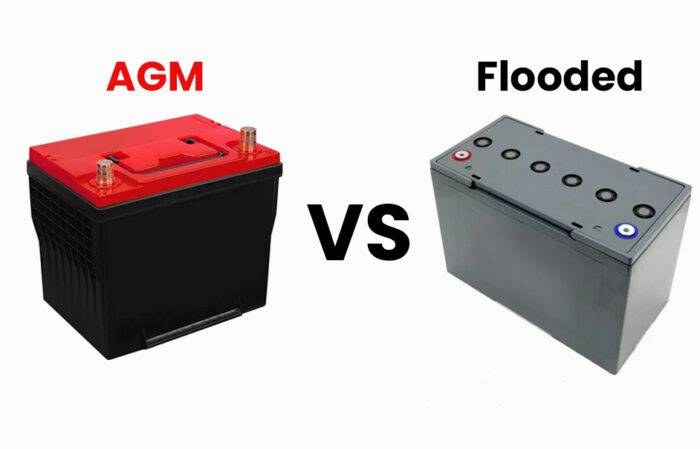
AGM stands for absorbed glass mat. The electrolyte is held in a fiberglass mat between the plates instead of freely sloshing around a flooded case. That design lowers internal resistance, resists vibration, and lets the battery deliver high current. It also changes how the battery responds to testing.
Voltage, Conductance, and Internal Resistance: What a Standard Tester Actually Measures
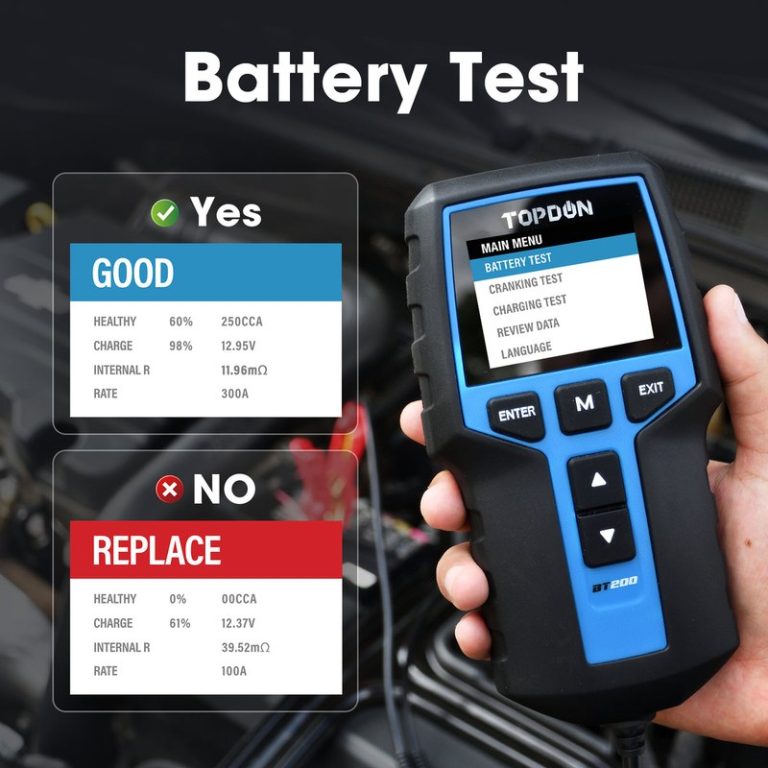
Most regular battery testers measure one or more of three things: voltage, conductance, and internal resistance. Voltage tells you the electrical pressure at the terminals. Conductance estimates the battery’s ability to deliver current. Internal resistance measures how easily current flows through the battery. For flooded batteries, these readings map to a well-known set of expected values. AGM batteries have different internal resistance and discharge characteristics, so the same readings mean different things. If you want a plain-language breakdown of these numbers, see what a battery tester tells you.
Why a “Good” Reading on a Regular Tester Can Still Mean a Failing AGM
An AGM battery can show normal voltage while its capacity drops. Voltage only reflects surface charge and chemical state, not how much usable energy the battery can store. A regular tester may also apply a load profile tuned for flooded batteries. That profile can under-stress or over-stress an AGM, producing a reading that looks fine when the battery is actually weak. This is why a “good” result from a regular tester is not proof that the AGM is healthy.
The Real Risks of Testing an AGM with a Regular Tester
Misdiagnosis Costs: A $250 Battery vs. a $100 Tester
A regular battery tester might cost $30 to $150. A replacement AGM battery often costs $200 to $350 or more, depending on the vehicle. Using the wrong tester can convince you to replace a battery that still has life, or convince you to keep one that is about to fail. Either way, the savings from skipping an AGM-rated tester disappear quickly.
Can a Regular Tester Damage an AGM Battery? The Overload and Overvoltage Risks
A regular tester that applies a heavy load can push an AGM battery harder than its design allows. AGM batteries handle deep discharge poorly, and repeated heavy load tests can stress the plates and shorten service life. Some testers also use charging pulses or overvoltage checks meant for flooded batteries. Applying those to an AGM can cause gassing, heat buildup, or internal damage. Most quality testers limit current, but a cheap or generic unit may not.
State of Charge vs. State of Health: Know What You’re Measuring
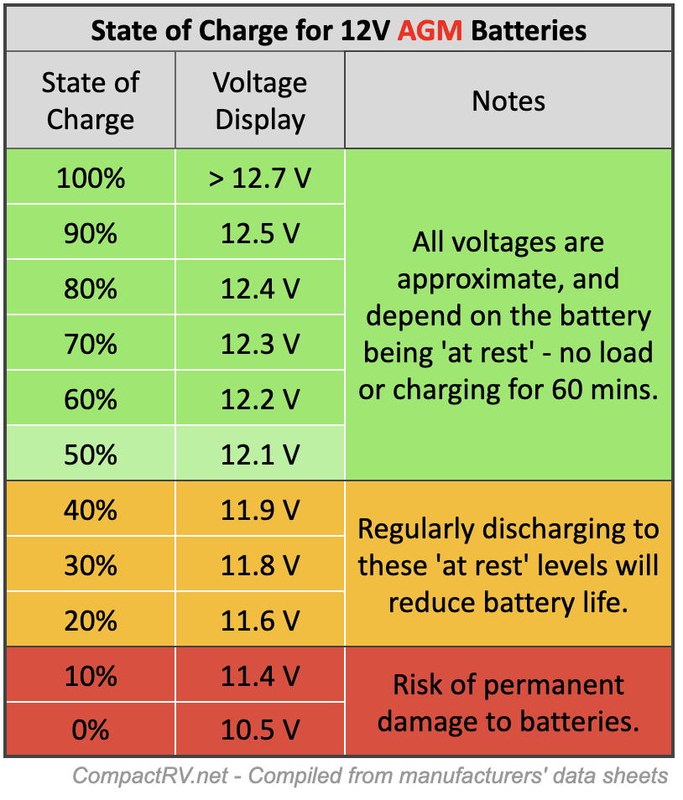
State of charge (SOC) tells you how full the battery is. State of health (SOH) tells you how much usable life remains. A regular tester often blurs the two. It may show a voltage that looks healthy, but voltage alone cannot reveal internal damage, sulfation, or lost capacity.
How to Check State of Charge Correctly: Resting Voltage, Temperature, and Surface Charge
To get a useful state of charge reading, the battery must rest. That means no charging, no load, and no recent driving for at least several hours. Surface charge — the leftover voltage from recent charging — can push a reading higher than the true value. Temperature also matters. Cold lowers voltage and cranking power, while heat speeds up chemical wear. For guidance on whether to top up the battery before testing, see our article on whether you should charge a car battery before testing it.
Damaged-Battery Stop Conditions: When to Stop Testing Immediately
Stop testing if you see any of these signs: a cracked or swollen case, leaking fluid, a strong sulfur smell, corrosion that looks wet or crusty around the terminals, or a battery that gets hot to the touch. Do not continue with load tests or charging. A damaged battery can fail suddenly. Move it away from flammable materials and have it handled by a professional or a recycling center.
If You Must Use a Regular Tester: Safe Procedure and Connection Order
If you only have a regular tester and need a quick check, you can still gather useful information — as long as you treat the result as a rough guide, not a final verdict. For a full walkthrough of the basic process, our guide on how to test a battery with a battery tester covers the fundamentals.
Step-by-Step: Testing an AGM with a Standard Tester Without Fooling Yourself
Wait at least a few hours after driving or charging so the surface charge fades.
Remove corrosion and make sure the clamps have solid metal contact.
Firmly attach the red clamp to the positive terminal, then the black clamp to the negative terminal.
Record voltage, CCA, and the tester’s verdict. Treat the verdict as a clue, not a diagnosis.
Reverse the connection order when you disconnect to reduce spark risk.
Connection Order and Safety Precautions: Positive First, Negative Last, and Why
Always connect the positive clamp first and the negative clamp last. This lowers the chance of a spark near the battery, which can ignite hydrogen gas. When removing the tester, take off the negative clamp first, then the positive. Wear safety glasses and gloves. Keep metal tools away from both terminals at the same time.
- Confirm the battery is resting and the vehicle is off
- Follow the positive-first, negative-last connection order
- Record the voltage and CCA readings for comparison
- Use an AGM-rated tester before making a replacement decision
- Test a swollen, leaking, or hot battery
- Trust a “good” verdict from a tester without AGM settings
- Jump-start or load-test a battery with visible damage
- Ignore the vehicle manual’s battery and charging instructions
Hybrid and EV Cautions: The 12V AGM Is Not the Traction Battery
Many hybrids and electric vehicles use a small 12V AGM battery to power lights, computers, and the main contactors. That battery is separate from the high-voltage traction pack. If you test the wrong battery — or the wrong system — you create a serious safety risk.
Why Hybrid and EV 12V Auxiliary Batteries Need Extra Care
The 12V AGM in a hybrid or EV sits near high-voltage cables and components. The battery management system (BMS) may also control how the 12V battery is charged and monitored. Disconnecting or testing it incorrectly can trigger fault codes, reset learned settings, or leave the vehicle unable to start. Some manufacturers require specific test procedures or special tools for the auxiliary battery.
High-Voltage System Warnings and Battery Management System Interactions
Never open or probe the orange high-voltage cables under a hybrid or EV. The traction battery can deliver lethal voltage even when the vehicle is off. If you are not certain which battery is the 12V auxiliary unit, stop and check the owner’s manual. A regular battery tester is not designed for high-voltage packs, and using it there is dangerous.
Better Options: AGM-Compatible Testers and When to Call a Professional
A basic tester is fine for flooded batteries, but AGM batteries need a tester with AGM-specific settings. These testers use different conductance curves, load profiles, and voltage limits to match the battery chemistry.
What to Look For in an AGM-Compatible Tester: Calibration, Conductance, and Load Settings
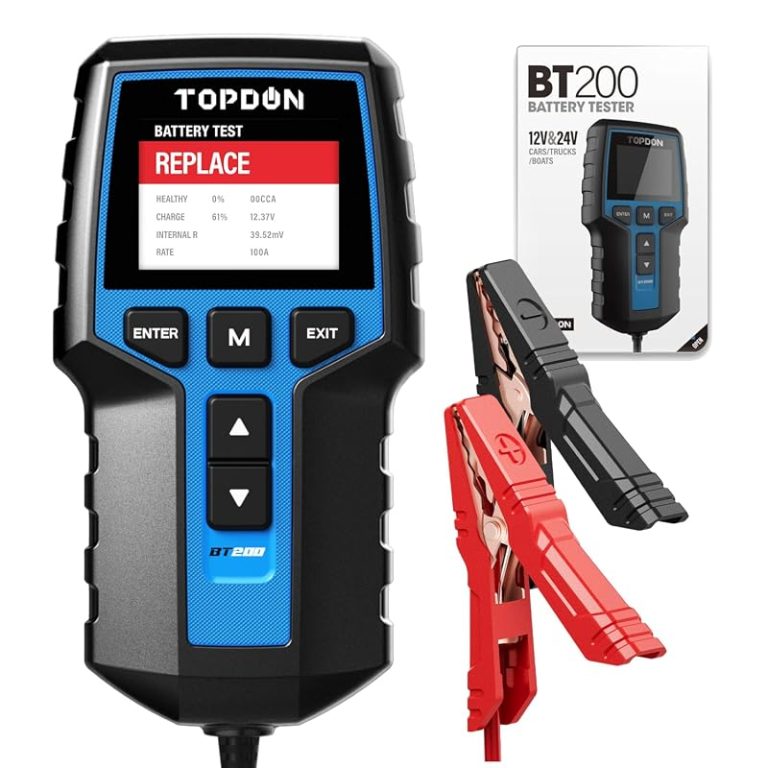
Look for a tester that lists AGM, VRLA, or EFB settings in the menu. Check that it supports the CCA range of your battery. A tester with conductance testing is usually safer for AGM than a simple carbon-pile load tester. Also check whether the tester has temperature compensation and a clear state-of-health readout. For a rundown of models that fit this job, see our list of the best AGM battery testers for cars.
Check: Confirm the tester supports your vehicle’s battery type (AGM, EFB, flooded), voltage (12V or 24V), and CCA range. Limitations: Many budget testers claim AGM support but only adjust the voltage target, not the load profile.
When a Professional Diagnosis Is Worth the Cost
If the AGM battery is more than three years old, the vehicle is a hybrid or EV, or the battery fails intermittently, a professional diagnosis is worth the cost. A shop with an AGM-rated analyzer and a charging system test can tell you whether the battery, alternator, or parasitic drain is the real problem. That single test can prevent a needless replacement or a roadside breakdown.
The Bottom Line: Test Smart, Not Just “Testable”
What CarValleyNJ Owners Should Remember
Physically, a regular tester can connect to an AGM battery — but the verdict may be wrong. Use a resting voltage check as a quick screening tool, and treat any “good” or “replace” result from a regular tester as a clue, not a conclusion. Before spending money on a new battery, confirm the result with an AGM-compatible tester or a professional.
Your Next Steps: Charge, Test, or Replace
Start with a resting voltage reading. If the voltage is low, charge the battery with an AGM-compatible charger and let it rest again. If the voltage holds but the battery still cranks slowly, move to an AGM-rated tester. If the tester shows low state of health, or the battery is old and swollen, replace it. If you are unsure at any step, a professional battery test is cheaper than a tow.
- Best for: A quick voltage screening when you understand the limits of a regular tester.
- Think twice if: You are about to replace or keep an AGM battery based only on a regular tester’s verdict.
- Next step: Confirm the result with an AGM-compatible tester or a professional before spending money.
Frequently Asked Questions
Yes, physically, a regular tester can connect and produce a reading. However, the tester uses test logic designed for flooded batteries, so the verdict may be inaccurate. Use the result as a rough clue, not a final diagnosis.
In most cases, a standard conductance test will not damage an AGM battery. But heavy load tests, charging pulses, or overvoltage checks meant for flooded batteries can stress AGM plates and shorten battery life. Stop testing if the battery gets hot, swells, or leaks.
State of charge tells you how full the battery is. State of health tells you how much usable life remains. A regular tester often blurs the two, which is why a good voltage reading does not prove the battery is healthy.
Check the tester’s menu for AGM, VRLA, or EFB settings. Confirm it supports your battery’s CCA range and uses conductance testing. If the tester only has one generic setting, it is not truly AGM-compatible.
You can test the 12V auxiliary AGM battery, but only if you confirm its location and follow the vehicle manual. Never test the high-voltage traction battery with a regular tester. When in doubt, use a dealer or qualified shop.
Have a professional test the AGM if the battery is more than three years old, the vehicle is a hybrid or EV, or the battery fails intermittently. A shop-grade analyzer and charging system test can identify the real cause. That single test is cheaper than a needless replacement or a tow.