Should You Charge a Car Battery Before Testing It? Yes, Charge First
Always charge your car battery before testing it. A low battery fails tests even when healthy, so charging first gives you an accurate result.
Should you charge a car battery before testing it is easier to understand when you compare compatibility, safe use, ownership needs, and real limitations.
Yes, you should charge a car battery before testing it—and here’s why skipping this step wastes your time. A low battery produces misleading test results that can make a healthy battery look dead or a weak battery look worse than it really is.
Charging before testing takes a few hours, but it saves you from buying a battery you don’t need or chasing a starting problem that lives somewhere else. This guide explains why charging matters, how to do it safely, and what to do after the test.
- Charge first: A low battery reads as weak even when it’s healthy, so charge before testing.
- Safety order: Connect the charger positive first, negative last, and stop if the battery is swollen.
- Use a smart charger: A short drive won’t fully recharge a depleted battery; a smart charger will.
- Test correctly: Measure resting voltage, then run a load or conductance test after the battery rests.
- Check the alternator: A good battery with a bad alternator still won’t start the car reliably.
Yes, Charge Your Car Battery First—Here’s Why Testing a Low Battery Misleads You
Most people test a battery only after the engine cranks slowly or fails to start. That is exactly the wrong moment for an accurate test. A battery with a low state of charge will fail almost any test, even if the battery is still healthy. Charging first gives the tester a fair chance to measure what the battery can actually do. If you test a battery sitting at 40 percent charge, you’re measuring a lack of charge, not a lack of health.
State of Charge vs. Battery Health: What the Test Actually Measures
State of charge tells you how much energy is in the battery right now. Battery health tells you how much energy the battery can hold compared to when it was new. A tester cannot accurately measure health when the battery is low. It needs a full charge to separate “this battery is empty” from “this battery is worn out.”
Many common battery testing mistakes come from skipping this step. Testing a discharged battery often produces a “replace battery” reading that disappears after a full charge. Charge first, then judge the battery.
System Voltage and Chemistry: Why Lead-Acid and AGM Batteries Need a Full Surface Charge
Lead-acid and AGM batteries both rely on chemical reactions to store and release energy. When a battery is discharged, the electrolyte changes and the plates lose active material. A tester sends signals through the battery and measures how the plates respond. A partially charged battery gives a weak response that looks like a failing battery.
AGM batteries are especially sensitive. They have lower internal resistance than flooded batteries, so a low charge can skew readings even more. Charging the battery to full before testing creates a consistent baseline for both types.
Pre-Charge Safety: Connection Order, Damaged Batteries, and Hybrid/EV Cautions
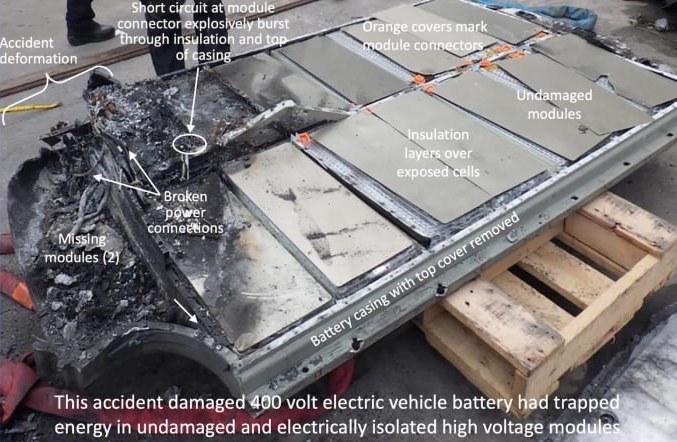
Charging a car battery is safe when you follow basic rules. The order of connections matters, and so does the condition of the battery.
Correct Connection Order: Positive First, Negative Last—and Why It Matters
Always connect the positive clamp first, then the negative clamp. When you disconnect, remove the negative clamp first, then the positive. This order reduces the chance of a spark near the battery, where hydrogen gas can collect. A spark near a damaged or venting battery can ignite gas.
Make sure the charger is off before you connect or disconnect the clamps. If your charger has a power switch, turn it off. If it doesn’t, plug it in only after the clamps are connected.
Stop-Charging Conditions: Swollen Cases, Acid Leaks, and Sulfation Smells
A swollen case usually means the battery was overcharged or overheated. Acid leaks can burn skin and damage your car. The rotten egg smell comes from hydrogen sulfide gas, which is toxic. None of these conditions are safe to charge at home.
Hybrid and EV Battery Cautions: When to Leave It to a Professional
The 12V battery in a hybrid or EV is similar to a regular car battery, but the surrounding system is not. High-voltage cables are often orange and can run near the 12V battery. Follow the vehicle manual exactly, or call a professional.
How to Bring Your Battery to Full Charge Before the Test
You have two main options for charging: a smart charger or the car’s alternator. They are not equal in this situation.
Smart Charger vs. Alternator Charging: Why a Short Drive Isn’t Enough
A smart charger is the right tool. It monitors the battery’s voltage and adjusts the charge rate automatically. It also stops when the battery is full, which prevents overcharging. Smart chargers are affordable and available at most auto parts stores.
Driving the car for 15 minutes is not enough. The alternator is designed to maintain a charged battery, not to deeply recharge a depleted one. It can take hours of highway driving to bring a low battery back to full, and the battery may never reach full charge if the drive is short. A smart charger does the job in a few hours while the car sits safely in your garage.
Charging Time and Voltage Targets: What “Full” Looks Like on a Multimeter
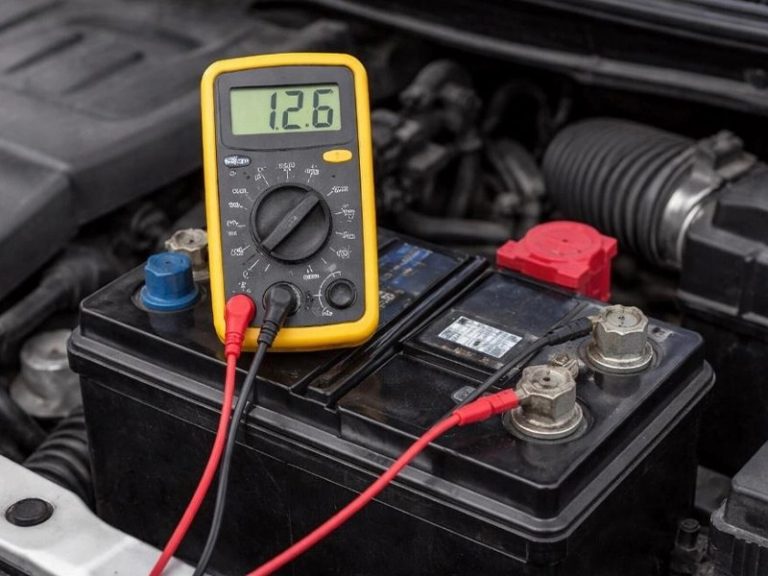
A fully charged battery should read about 12.6 volts after it rests for a few hours. Right after charging, the battery carries a surface charge that reads higher. Let it rest for at least two hours, or overnight, before you test it.
If the battery won’t reach 12.6 volts after a full charge, it may have a weak cell or heavy sulfation. Check out what battery voltage is too low to start a car to understand the danger zone.
After Charging: Pick the Right Battery Tester for Your Car
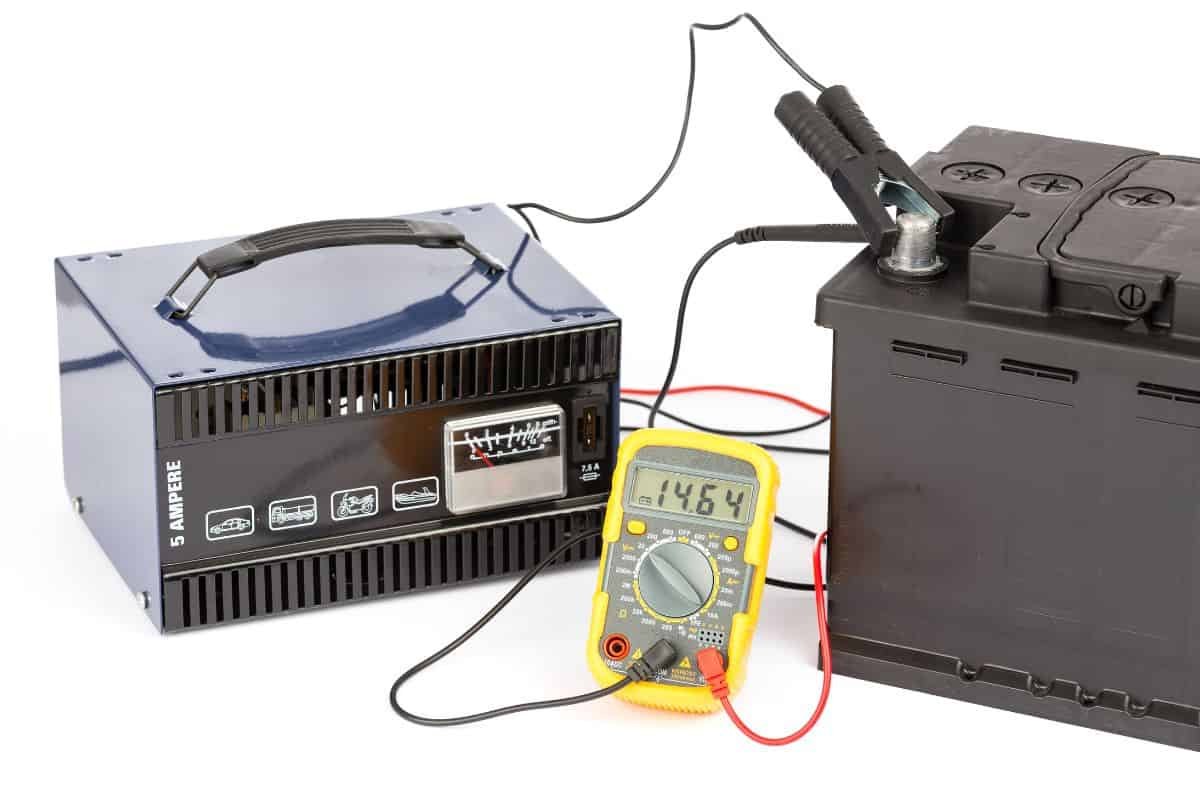
Once the battery is charged and rested, you need a tester that matches your battery type. The two main options are load testers and conductance testers.
Load Test vs. Conductance Test: Which One Matches Your Battery Type?
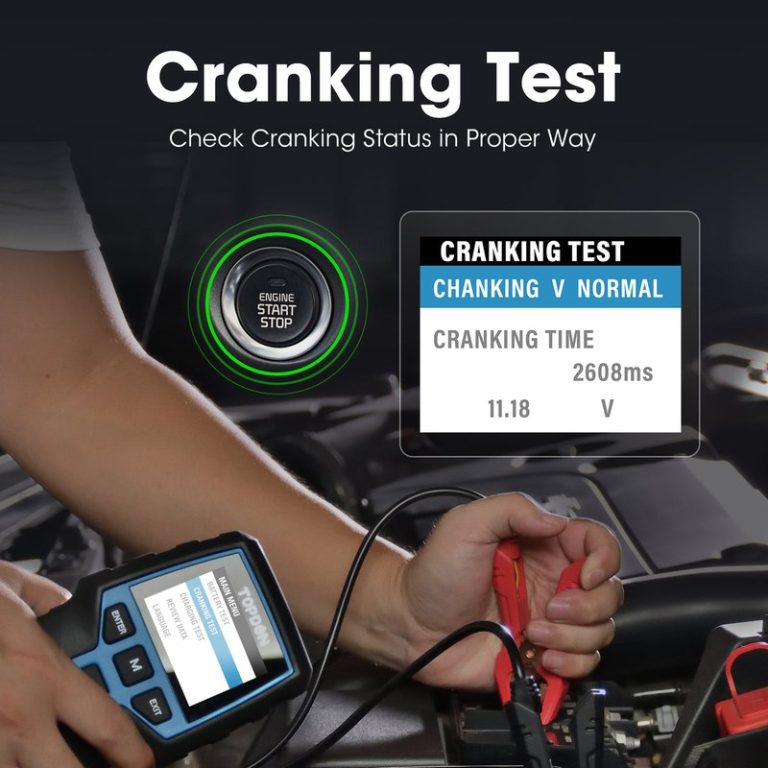
A load test applies a heavy electrical load to the battery and measures how the voltage holds up. It is a direct test of cranking power. Load testers work well for traditional flooded lead-acid batteries.
A conductance test sends a small signal through the battery and measures the electrical response. It is faster and doesn’t drain the battery, but it works best with the battery at full charge. Many modern testers use conductance and can test AGM, flooded, and some lithium batteries.
For an explanation of which tool fits your needs, compare a battery tester vs multimeter for car batteries before you buy.
Simple Multimeter Resting-Voltage Test: What Your Readings Mean
A multimeter is the cheapest way to check a battery, but it only measures voltage. After a full charge and rest period, these readings give you a rough idea:
- 12.6V or higher: Fully charged
- 12.4V: About 75 percent charged
- 12.2V: About 50 percent charged
- 12.0V or lower: Discharged and needs attention
Voltage alone doesn’t tell you if the battery can deliver cranking amps. A battery can read 12.6 volts and still fail under load. That’s why a load test or conductance test is more useful.
Step-by-Step Battery Test After a Full Charge
Follow this order to get reliable results.
Measure Resting Voltage First—Then Test Under Cranking Load
Check that the charger shows full and the battery has rested for at least two hours.
Set the multimeter to DC volts and connect it to the battery terminals. Record the reading.
Follow the tester’s instructions for your battery type, rating, and temperature. Record the result.
If the tester says “good,” the battery is likely fine. If it says “replace,” the battery is weak even at full charge, which is a reliable sign of end-of-life.
Test the Alternator: A Key Step to Avoid a Misdiagnosis
A bad alternator can drain a good battery and make it look like the battery is the problem. With the engine running, measure voltage across the battery terminals. A healthy alternator should produce about 13.8 to 14.7 volts. If the reading is below 13 volts, the alternator may not be charging the battery.
If the battery tests good and the alternator charges correctly, the problem may be elsewhere. Read about what happens when a battery tester says good battery but the car will not start for the next steps.
Battery Passes the Test but the Car Still Won’t Start? Check These Next
A good battery doesn’t guarantee a good start. The starting system has many parts, and the battery is only one of them.
OBD2 Diagnostic Scan: Protocol Coverage, Port Location, and Live-Data Limits
Plug an OBD2 scanner into the diagnostic port under the dashboard and read any stored trouble codes. Codes can point to crankshaft position sensor faults, fuel delivery issues, or security system problems that prevent starting. Keep in mind that an OBD2 scanner only reads what the engine computer reports. It won’t directly measure a bad starter or a corroded cable.
Parasitic Drain and Ignition-Mode Checks: When a Code Isn’t the Full Story
If the battery drains overnight, a parasitic drain may be the cause. With everything off and the doors closed, connect a multimeter in series between the negative battery terminal and the negative cable. A draw above about 50 milliamps may indicate a problem. Also check whether the ignition switch, dome lights, or trunk light stay on in a specific mode.
Common Missed Faults: Corroded Terminals and Voltage Drops at the Starter
Corroded battery terminals can pass enough current to charge the battery but not enough to crank the engine. Remove the cables, clean the terminals with a wire brush, and retighten. A voltage drop test at the starter can also reveal a bad cable or connection. These faults are common and easy to miss.
Battery Maintenance After Testing: Extend Life and Avoid a Dead Start
Once the battery passes, keep it healthy with simple maintenance.
Cleaning Terminals, Securing the Tray, and Watering Flooded Batteries
Vibration is a silent battery killer. A loose battery rattles around and damages the internal plates. Check the hold-down bracket while you’re cleaning the terminals.
Storage, Extreme Weather, and Battery Recycling Rules by State
If you store a car for more than a few weeks, connect a maintainer to keep the battery full. Extreme heat and cold both shorten battery life. Heat speeds up chemical reactions and water loss; cold makes the battery work harder to deliver cranking power.
When to Replace Your Battery: Ownership Cost, Warranty, and Next Steps
Testing tells you whether the battery is healthy. If it fails at full charge, replacement is the next step.
Battery Replacement Costs and Warranty Considerations
Car battery prices vary by type, brand, and vehicle. A standard flooded battery is typically the most affordable option, while AGM batteries cost more. Many retailers offer free installation with purchase, and warranties often include a prorated or free-replacement period. Check the warranty terms before you buy.
Professional Diagnosis Thresholds: When DIY Testing Isn’t Enough
If the battery tests good, the alternator charges correctly, and the car still won’t start, stop guessing. A professional can perform a voltage drop test, check the starter, and inspect the wiring. This is also the right time to check for recalls or service bulletins related to your vehicle’s starting system. You can search your VIN on the NHTSA website for current recall information.
- Charge the battery fully before any health test
- Connect the charger positive first, negative last
- Let the battery rest before measuring voltage
- Test the alternator after the battery passes
- Test a deeply discharged battery and trust the result
- Charge a swollen, leaking, or smelly battery
- Rely on a short drive to fully recharge a dead battery
- Ignore corroded terminals when the car won’t start
- Best for: Owners who want an accurate battery health reading without replacing a good battery too early.
- Think twice if: The battery is damaged, swollen, leaking, or the vehicle is a hybrid or EV with high-voltage systems you don’t understand.
- Next step: Charge the battery with a smart charger, let it rest, then test it with a load tester or conductance tester before making any replacement decision.
Frequently Asked Questions
Charge time depends on the charger and battery size. A smart charger may take several hours to fully recharge a depleted battery. Let the battery rest for at least two hours after charging before you test it.
You can test it, but the result won’t be reliable. A low battery will often fail a health test even when it’s still healthy. Charge it first for an accurate reading.
A fully charged, rested battery should read about 12.6 volts. If it reads lower after a full charge, the battery may have a weak cell or sulfation.
Yes. AGM batteries are sensitive to low charge levels, and testing them while discharged can produce misleading results. Charge fully and let the battery rest before testing.
No. A short drive only maintains a charged battery. The alternator isn’t designed to deeply recharge a depleted battery, so use a smart charger instead.
The problem may be a bad starter, corroded terminals, a parasitic drain, or a charging system fault. Test the alternator and check the starting system if the battery passes.