Digital vs Analog Tire Pressure Gauge: Which Reads More Accurately?
Digital gauges are more accurate and easier to read in low light, while analog gauges are cheaper, battery-free, and better as emergency backups. Choose digital for regular checks and track or off-road use, but keep a simple analog gauge in your emergency kit.
When you compare the digital vs analog tire pressure gauge options at any auto parts store, the accuracy difference is real, but it is not the whole story. Both types can keep your tires safe if you use them correctly, and each has trade-offs that matter more in some situations than others.
- Accuracy: Digital gauges typically rate ±1%, while analog gauges often rate ±2-3%; the gap matters.
- Readability: Digital screens shine in the dark but wash out in sunlight; analog dials are.
- Reliability: Analog gauges have no battery to die, but drops can damage the needle and.
- Technique: Always check cold tire pressure against the door-jamb placard, not the tire sidewall, and.
- TPMS: A correct gauge reading does not mean the TPMS system is working; a lit.
The Short Answer: Digital Wins on Accuracy, But Analog Still Has a Place
For most drivers, a digital gauge gives a faster, easier-to-read number and holds a tighter accuracy rating. That does not make analog gauges useless. Many analog models are cheap, tough, and simple enough to keep in a glovebox for years without worrying about batteries.
What “Accuracy” Actually Means on a Tire Gauge (and Which Specs to Trust)
Accuracy on a tire gauge means how close the displayed reading is to the true pressure in the tire. Manufacturers usually publish this as a percentage, such as ±1% or ±2%. The lower the number, the smaller the error.
Look for the accuracy spec on the package or in the manual. A gauge that lists no accuracy rating may still work fine, but you have no way to know how much you can trust it. Resolution is different from accuracy. A digital gauge may show tenths of a PSI, but that does not mean it is accurate to a tenth.
Real-World Difference: ±1% Digital vs. ±3% Analog at 32 PSI
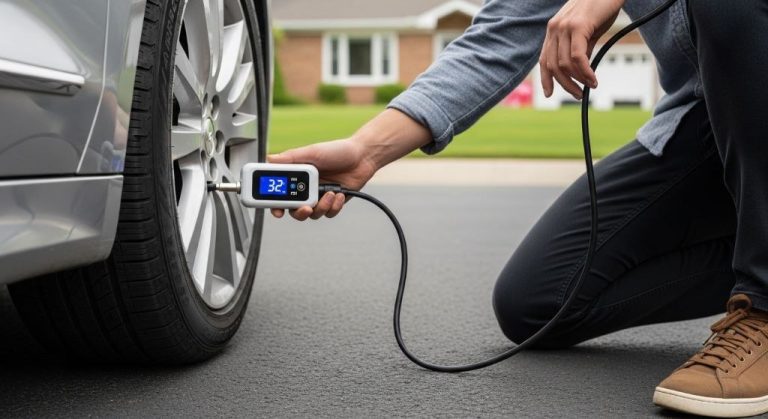
Many digital gauges are rated at ±1%, while quality analog gauges often fall in the ±2% to ±3% range. At 32 PSI, a ±1% gauge can read between about 31.7 and 32.3 PSI. A ±3% gauge can read between about 31.0 and 33.0 PSI.
That spread matters for track use, off-road air-downs, or any situation where a precise number changes how your vehicle behaves. For a daily commute, both ranges are usually close enough to keep tires safe.
How Digital and Analog Gauges Work (And Where Each Can Fail)
Digital: Pressure Sensor, Electronics, and Battery Dependency
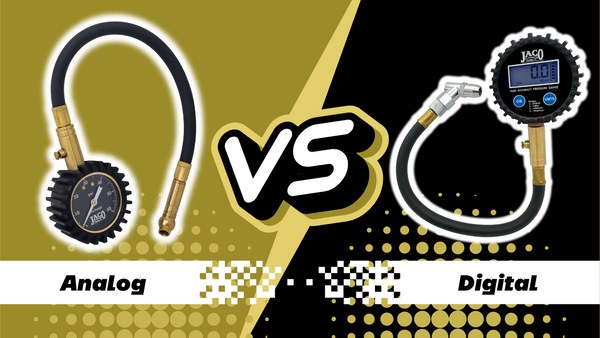
A digital gauge uses a small pressure sensor that sends an electrical signal to a processor, which shows the number on a screen. Because there are fewer moving parts, digital units tend to stay consistent over time.
The main weakness is the battery. A dead battery means no reading, and a low battery can cause flickering numbers or shutdowns at the worst moment. Many digital gauges also have an auto-off feature to save power, which is helpful but can cut off mid-read if you are slow.
Analog: Bourdon Tube, Gear, and Needle Wear Over Time
Analog gauges use a curved metal tube called a Bourdon tube. When pressure enters, the tube straightens slightly and moves a gear that turns the needle on the dial.
Mechanical parts can wear, and a hard drop can bend the needle or knock the movement off zero. Many analog gauges have a small adjustment screw, but not all owners know it exists. Reading the dial at an angle can also cause parallax error, where the needle appears at a different number than it actually points to.
Digital vs Analog: Side-by-Side Comparison on the Same Criteria
| Option | Best for | Owner consideration | Driver consideration |
|---|---|---|---|
| Digital gauge | Quick, precise readings in low light | Battery replacement and occasional calibration checks | Bright screen can be hard to read in direct sunlight |
| Analog gauge | Budget buyers, glovebox storage, emergency kits | No battery to replace, but mechanical wear after drops | Small dial markings can be hard to read in the dark |
Accuracy, Readability, and Ease of Use in Bright Sunlight and Dark Garages
Digital screens are easy to read in a dark garage but can wash out in direct sunlight. Analog dials work in sunlight but are nearly useless at night without a flashlight or a lighted model.
Digital gauges also lock the reading on screen until you release the button or pressure. Analog needles can move back down quickly if you remove the gauge too fast, which makes it harder to read the number after the fact.
Durability, Drop Resistance, Battery Life, and Total Ownership Cost
Analog gauges are simpler and usually survive drops better, but a hard impact can damage the needle or mechanism. Digital gauges vary widely; some are sealed and rugged, while others are fragile plastic.
Battery life on digital units ranges from months to years depending on the model and how often you use the backlight. Analog gauges have no battery cost, but cheap mechanical models may drift out of spec sooner than a quality digital unit.
Which Gauge Fits Your Driving Style and Vehicle?
Daily Commuter with Factory TPMS vs. Enthusiast, Track, or Off-Road Driver
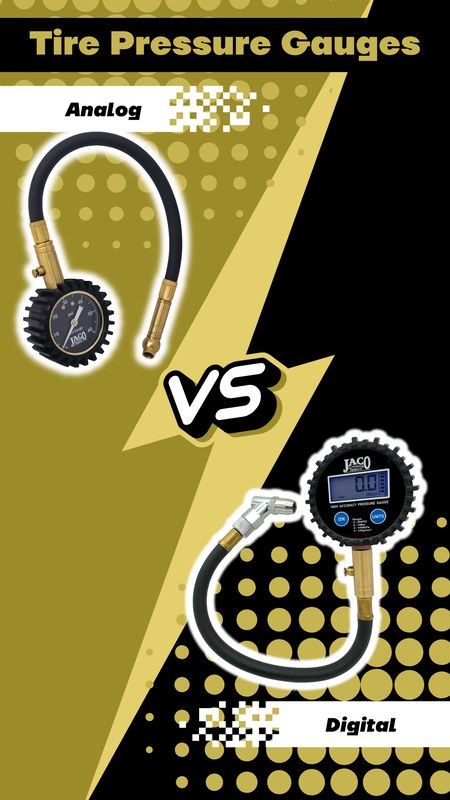
If your car has a working factory TPMS, a basic digital gauge is enough for monthly checks and after air pump fills. TPMS is a warning system, not a precision measuring tool, so it should not replace a manual check.
Enthusiasts who adjust pressures for track days or off-road trails need the tighter accuracy of a digital gauge and a repeatable technique. Off-road drivers who air down to low pressures should look for a digital gauge that reads accurately below 15 PSI. Not every cheap gauge is reliable at the low end of its range.
Winter, Emergency, and Multi-Vehicle Households: Where Analog Still Shines
Analog gauges shine in emergency kits because they do not depend on batteries. A budget analog gauge can sit in a door pocket for years and still work when you need it.
For a household with several vehicles, a digital gauge with a backlight and a hose makes it easier to check pressures in the dark. Keep one gauge in the garage and one in the car if you want both convenience and backup.
Using Your Gauge Correctly: Placard Pressure, Cold Tires, and Technique
Read the Door-Jamb Placard, Not the Sidewall Number
The correct pressure for your vehicle is printed on the placard inside the driver’s door jamb, not on the tire sidewall. The sidewall number is the maximum pressure the tire can hold, not the recommended pressure for your car.
Check the placard for both front and rear pressures. Some vehicles require different pressures for loaded driving or towing, and the placard will show those values too.
Cold Pressure Checks, Valve Stem Seating, and Getting a Consistent Reading
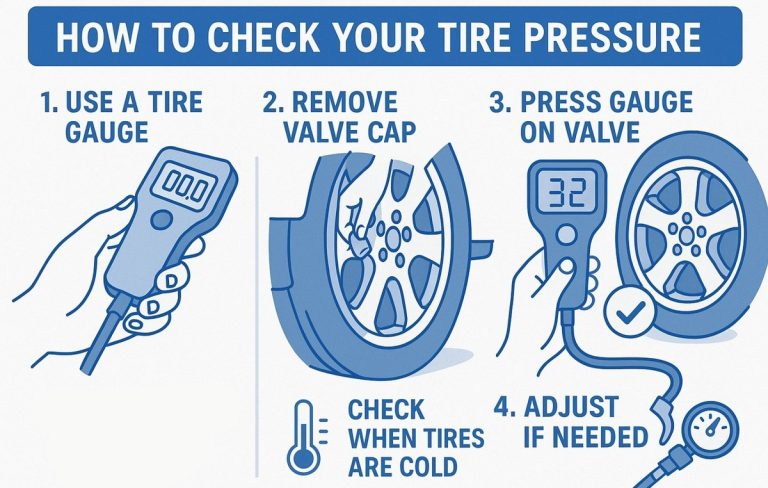
Check pressures when tires are cold, meaning the car has not been driven for at least a few hours. Driving heats tires and raises pressure, so a warm reading will not match the placard. For the full timing details, see how long to wait after driving before checking tire pressure.
Press the gauge onto the valve stem straight and firmly. A hissing sound means air is escaping, and a bad seal will give a false reading. Remove the valve cap and set it somewhere you will not lose it before you start. If you need a refresher on the full process, our guide on checking tire pressure at home walks through it step by step.
Combo Gauge-Inflator Units: Duty Cycle Limits and Accuracy Trade-Offs
Portable inflators with built-in gauges are convenient, but their accuracy varies. Many use the same sensor as a handheld digital gauge, while others use a simple mechanical gauge that is less precise.
Inflators also have duty cycle limits, meaning they need to rest after a few minutes of running. If you rely on the inflator’s gauge, verify it against a separate gauge occasionally. You can read more about how accurate portable tire inflator gauges really are.
TPMS Warning Light, Relearn Limits, and When to See a Professional
Gauge Says Fine but TPMS Light Is On: Sensor Battery, Relearn, or System Fault
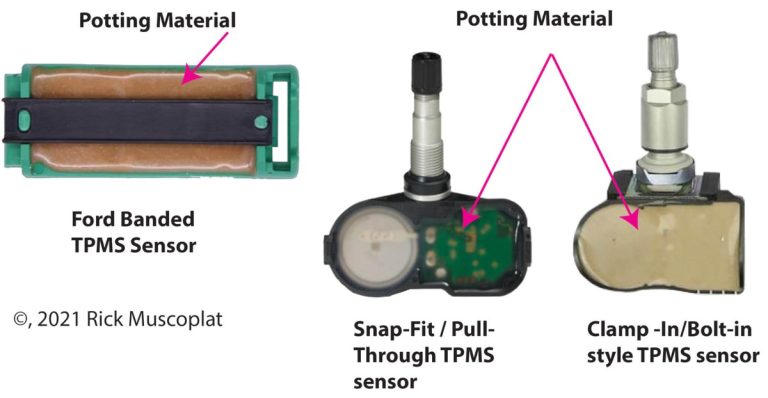
If your gauge shows the correct pressure but the TPMS light stays on, the system may need a relearn, a sensor battery may be low, or a sensor may have failed. A relearn is a normal procedure after tire rotation or sensor replacement.
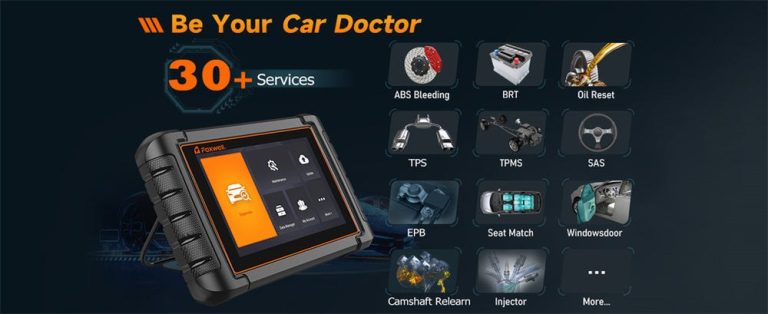
Do not ignore the light just because the gauge reads fine. If the light blinks, it usually means a system fault, and a scan tool or professional diagnosis is the next step. See our guide on why the TPMS light comes on when tires look fine for the common causes.
Puncture Location, Temporary-Repair Limits, and Professional-Repair Thresholds
A tire gauge tells you pressure, not damage. If a tire keeps losing air, find the cause before adding more air. Punctures in the tread can sometimes be repaired, but sidewall damage or a puncture larger than about a quarter inch usually means replacement.
Temporary plug kits are meant to get you to a shop, not to serve as a permanent fix. A professional patch-and-plug repair is the safer route for a repairable puncture, and a tire shop can tell you whether the tire is within repairable limits.
New Jersey Inspection Rules and TPMS Legal Considerations
New Jersey requires a valid inspection for passenger vehicles, and the TPMS warning light is part of the emissions and safety inspection process in many states. A vehicle with a lit TPMS light may fail inspection depending on the state’s rules.
Check current New Jersey Motor Vehicle Commission requirements before your inspection date, because rules and equipment standards can change.
Maintenance, Battery, and Long-Term Ownership Costs
Digital: Battery Replacement, Calibration Drift, and App Permissions
Digital gauges need small button-cell batteries. Keep a spare in your glovebox if the gauge is your only pressure tool. Some digital gauges also have a calibration mode, but most are sealed and cannot be adjusted by the owner.
Calibration drift is rare but possible. If a digital gauge starts reading differently from a known-good source, replace it rather than trying to guess the error. App-connected digital gauges add another layer; you may need to create an account, grant Bluetooth permissions, and accept firmware updates.
Analog: Zeroing, Mechanical Wear, and Drop Damage
Check the needle position when the gauge is disconnected. It should rest at zero. If it does not, some models have a small screw to reset it, but others are not adjustable.
A drop can bend the needle or damage the internal gear. If an analog gauge reads inconsistently after a fall, replace it. They are cheap enough that repair is rarely worth it.
App-Connected Digital Gauges: Privacy, Firmware, and Bluetooth Limitations
Bluetooth gauges let you log pressures on your phone, which is useful for track days or fleet use. But they depend on the app continuing to work, and app permissions can change with updates.
If you value privacy and simplicity, skip the app version. A standard digital gauge gives you the same reading without the data trail.
The Verdict: Which Gauge Should You Buy in 2026?
Buy Digital If… / Buy Analog If… (Driver Profiles and Budget)
Buy digital if you want the most accurate reading, need to see numbers in the dark, or adjust pressures for track or off-road driving. Buy analog if you want a cheap, battery-free backup for an emergency kit or if you prefer a simple tool with no electronics to fail.
Many experienced owners keep both: a digital gauge for regular checks and a cheap analog gauge as a spare. That way, a dead battery never leaves you without a way to check pressure.
Final Recommendation, Warranty Considerations, and Next Steps
Look for a gauge with a published accuracy spec, a warranty that covers defects, and a build quality that matches where you will store it. Check the retailer’s return policy before buying, because a gauge that reads inconsistently should be returnable.
- Confirm the gauge reads in PSI and covers the pressure range your vehicle needs
- Check for a published accuracy spec and a readable display or dial
- Decide between a simple gauge and an app-connected model based on your privacy comfort
- Keep a spare battery for digital models or choose analog for zero-battery reliability
- Verify the warranty and return policy before you purchase
- Best for: Most US drivers will get the most value from a digital gauge with a backlight and a published ±1% accuracy rating.
- Think twice if: You want a zero-maintenance emergency tool; a quality analog gauge is a better backup choice.
- Next step: Check your door-jamb placard, verify your current pressures with a known-good gauge, and keep one reliable gauge in the car.
Frequently Asked Questions
Digital gauges are typically more accurate, with many rated at ±1%, while quality analog gauges often fall in the ±2% to ±3% range. At 32 PSI, that difference is small, but it matters for track driving, off-road air-downs, and other precise pressure tasks.
No, most analog gauges are fully mechanical and use a Bourdon tube and needle instead of electronics. That makes them useful as battery-free backups in emergency kits, but they can still be damaged by drops or wear over time.
Check tire pressure at least once a month and before long trips, using the cold pressure listed on the door-jamb placard. Tires lose air slowly over time, so a monthly check catches small leaks before they become safety issues.
Portable inflator gauges vary in accuracy, and some use simple mechanical gauges that are less precise. Verify the inflator’s reading against a separate handheld gauge occasionally, and remember that inflators have duty cycle limits that require rest periods.
A correct gauge reading does not always mean the TPMS system is working. The system may need a relearn after tire rotation, a sensor battery may be low, or a sensor may have failed. A blinking TPMS light usually indicates a system fault that needs professional diagnosis.
Compare your gauge against a known-good source, such as a shop air chuck or a second gauge, every few months. For analog models, check that the needle rests at zero when disconnected, and replace any gauge that reads inconsistently after a drop.