How Long Should You Wait to Check Tire Pressure After Driving? 3 Hrs
Wait three hours after driving to check tire pressure, so the tires cool to a true cold reading. Checking sooner gives you a hot reading that can be 3-5 PSI higher than the real pressure.
How long should you wait to check tire pressure after driving is a question that matters more than most drivers realize, and the correct answer is three hours. That wait lets your tires cool to what tire makers call “cold” pressure, which is the only reading that matches the numbers on your door-jamb placard. Check too soon, and you’ll be adjusting pressure based on heat, not reality.
- Cold-tire rule: Wait 3 hours after driving, or check after a drive of less than 1.
- Hot readings mislead: Driving adds 3-5 PSI, so hot checks cause under- or over-inflated tires.
- Placard first: Use the door-jamb sticker, not the maximum number on the sidewall.
- TPMS has limits: The light warns at about 25% low, so monthly manual checks still matter.
- Seasonal shifts: Pressure changes about 1 PSI per 10°F, so adjust in fall and spring.
The 3-Hour Rule: The Definitive Answer to “How Long Should I Wait?”
Wait three hours after driving before you check tire pressure. That simple rule applies to nearly every car, truck, and SUV on US roads. The three-hour wait is the standard definition of a cold tire, and it’s the condition your vehicle’s recommended pressure is based on.
Why 3 Hours? The Cold Tire Standard Explained
A cold tire is one that hasn’t been driven for at least three hours, or one driven less than one mile at low speed. Tire manufacturers and the National Highway Traffic Safety Administration (NHTSA) use this same cold-tire standard. The pressure number on your door-jamb placard assumes the tire is at ambient temperature, not warmed up from driving.
When you drive, the tire flexes, grips the road, and builds heat. That heat raises the air pressure inside the tire. A reading taken right after a drive reflects that heat, not the normal operating pressure your vehicle was designed around.
The 1-Hour Exception: When It’s Acceptable to Check Early
There is one narrow exception to the three-hour rule. If you drive less than one mile at low speed, your tires barely warm up. In that case, a one-hour wait is usually enough to get a cold reading. This helps if you pull out of your driveway, notice a low tire, and drive to a nearby gas station.
The exception has limits. A short trip on a hot summer day still warms tires more than the same trip in winter. If you’re not sure, wait the full three hours. An extra hour costs you nothing; an inaccurate reading can cost you tire life and safety.
The Physics of Tire Pressure: Why Heat Is the Enemy of Accuracy
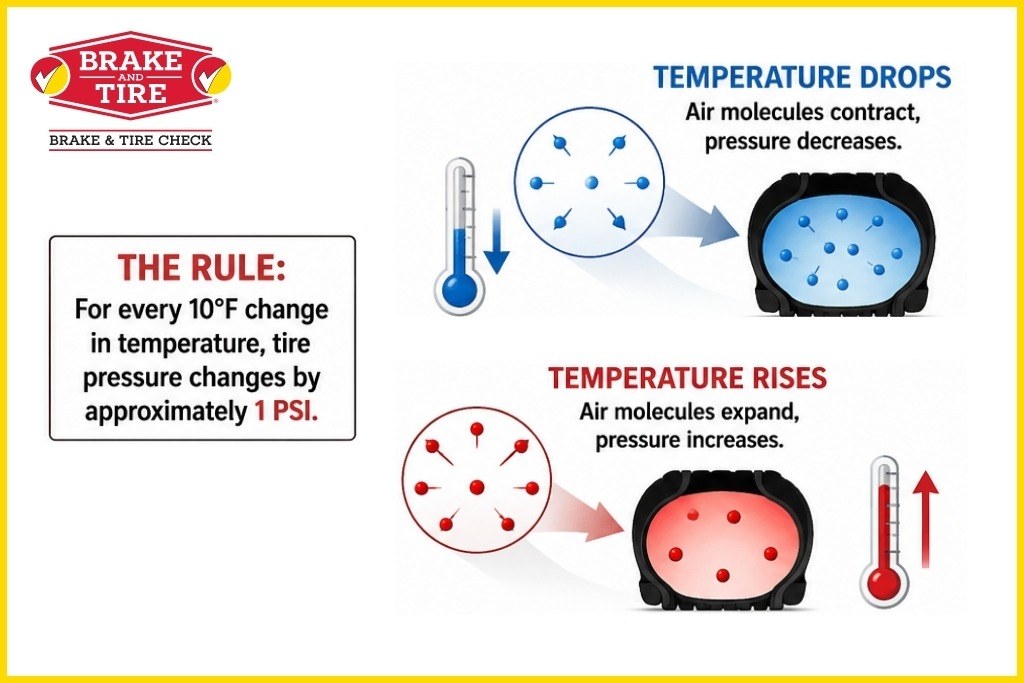
Tire pressure measures air molecules pushing against the inside of the tire. Heat makes them move faster and spread out, which increases pressure. Cold makes them slow down and contract, which lowers pressure. That’s why the same tire can read 33 PSI in your garage and 38 PSI after an hour on the highway.
How Driving Raises Tire Temperature and PSI (The 3-5 PSI Jump)
Driving raises tire pressure by roughly 3 to 5 PSI under normal conditions. Highway speeds, heavy loads, hot pavement, and aggressive braking can push that number even higher. The tire flexes with every rotation, and that flexing creates friction and heat. The faster and longer you drive, the hotter the tire gets.
This is why a tire that reads exactly at the recommended pressure when cold can read several PSI higher when hot. It’s also why a tire that reads “normal” when hot can actually be several PSI low once it cools. Heat hides the real picture.
How to Check Tire Pressure Correctly After the Wait
Once the three hours are up, checking pressure takes less than five minutes. You need a gauge, the correct pressure number, and a few minutes before you drive anywhere. Even a short drive changes the reading.
Find the Door-Jamb Placard First — Ignore the Sidewall Numbers
Open the driver’s door and look at the sticker on the door jamb. That placard lists the recommended cold tire pressure for the front and rear tires, and sometimes a separate number for heavy loads. This is the number you should use, and it applies to the original tire size listed on the same sticker.
The number molded into the tire sidewall is the maximum pressure the tire can hold, not the recommended pressure for your vehicle. Filling to the sidewall number will almost always overinflate your tires. If you’re new to this, our guide on how to check tire pressure at home walks through the full process step by step.
Digital vs. Analog Gauges: Accuracy, Cost, and Which to Buy
You have two main choices in a tire pressure gauge: digital or analog. Digital gauges are easier to read and generally more accurate, with many models accurate to within 1 PSI. They cost more and need a battery, but they’re the better choice for most drivers who want a quick, reliable reading.
Analog gauges, including pencil-style and dial gauges, cost less and never need batteries. Dial gauges can be accurate if you read them carefully, but pencil gauges are harder to read precisely. For a detailed breakdown of the trade-offs, see our comparison of digital vs analog tire pressure gauges.
| Option | Best for | Owner consideration | Driver consideration |
|---|---|---|---|
| Digital gauge | Quick, easy reading in any light | Higher upfront cost; battery replacement needed | Large display reduces reading errors |
| Analog dial gauge | No battery, long service life | Low cost; needs careful reading | Small dial can be hard to read at night |
| Pencil gauge | Emergency use in a glovebox | Cheapest option; least precise | Hard to read exact PSI |
How to Read the Reading: PSI, Bar, and When to Adjust
US vehicles use PSI, or pounds per square inch. Some digital gauges also show bar or kPa, which are metric units. Make sure your gauge is set to PSI so the reading matches your door placard.
If the reading is below the placard number, add air until it matches. If it’s above, let air out by pressing the small pin inside the valve stem. Recheck after each adjustment. A reading within 1 PSI of the placard is fine; you don’t need to be perfect to the decimal point.
The Safety Stakes: Why Checking a Hot Tire Leads to Dangerous Mistakes
Checking tire pressure on a hot tire isn’t just inaccurate. It can lead to decisions that make your tires unsafe. The mistakes work in two directions, and both are common.
The Underinflation Trap: How Hot Readings Cause Underinflated Tires
Here’s the trap: you drive home, your tires read 35 PSI, and your placard says 35 PSI. Everything looks fine, so you do nothing. But that 35 PSI reading was taken hot. Once the tires cool down, they might drop to 30 or 31 PSI. You’ve been driving on underinflated tires without knowing it.
Underinflated tires flex more, run hotter, wear faster on the edges, and increase the risk of a blowout. They also hurt fuel economy. If you’re unsure whether your tires are safe to drive on, read our guide on driving with low tire pressure before you hit the road.
The Overinflation Trap: When Hot Pressure Looks Normal but Isn’t
The second trap works in reverse. Suppose you check a hot tire and it reads 32 PSI, below your 35 PSI placard. You add air to bring it up to 35 PSI while the tire is still hot. When the tire cools, that same tire might read 29 or 30 PSI. You add more air the next morning, and now the tire can climb well above 35 PSI on a hot highway run.
Overinflated tires have a smaller contact patch, which means less grip, a harsher ride, and faster wear down the center of the tread. In extreme cases, overinflation makes the tire more vulnerable to impact damage from potholes and debris.
TPMS, Inflators, and Relearn: The Tech Side of Tire Pressure
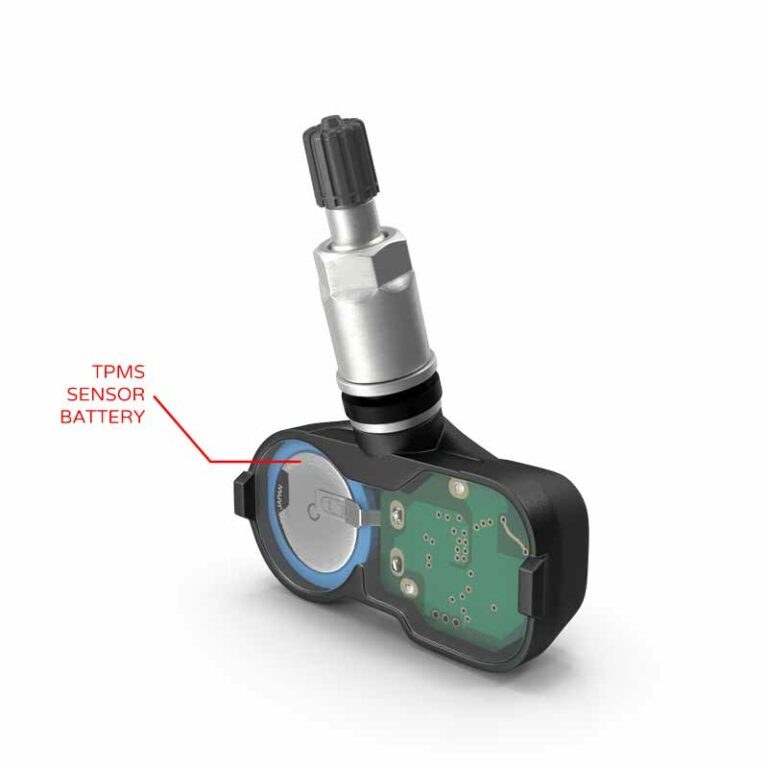
Modern cars have a Tire Pressure Monitoring System, or TPMS, that alerts you when pressure drops. It’s helpful, but it has limits. It can’t tell you the exact pressure, and it doesn’t replace regular cold-pressure checks.
Why Your TPMS Light Comes On — and When It Needs a Relearn
Federal rules require TPMS to warn you when a tire is about 25 percent below the placard pressure. That means your light usually comes on after a significant drop, not the first PSI of loss. If your light is on but the tires look fine, the issue could be a slow leak, a temperature swing, or a sensor problem.
After a tire rotation or sensor replacement, many vehicles need a TPMS relearn so the system knows which sensor is in which corner. Some cars relearn automatically; others need a reset tool or a specific button sequence. If you just rotated your tires, check our guide on how to reset the TPMS light after a tire rotation.
Inflator Duty Cycle and Power Limits: Don’t Burn Out Your Compressor
Portable tire inflators have a duty cycle, which is the amount of time they can run continuously before they need to cool down. A common duty cycle is 10 minutes on, then 30 minutes off. If you ignore it and try to fill four low tires back to back, you can overheat the motor and shorten the inflator’s life.
If you’re topping off multiple tires, work one at a time and let the inflator rest between tires. Fill time depends on tire size and how low the tire is, so plan for a few minutes per tire.
Seasonal, Regional, and Legal Factors: US Weather and State Inspection Rules
Tire pressure changes with the seasons, and the rules around tire safety vary from state to state. Understanding both helps you avoid surprises.
The 1 PSI per 10°F Rule: Adjusting for Winter and Summer
For every 10°F drop in air temperature, tire pressure drops by about 1 PSI. That’s why your TPMS light often appears on the first cold morning of fall. A tire set at 35 PSI in 80°F summer weather can read around 31 PSI when the temperature drops to 40°F.
This doesn’t mean you need to adjust pressure every week. It means you should check pressure monthly and add air when the seasons change. Set your pressure in the morning, when the tires are cold and the temperature is close to what you’ll drive in.
Altitude, Humidity, and State Inspection Variations Across the US
Altitude affects tire pressure readings slightly, but the change is small enough that most drivers don’t need to compensate. Humidity has a minimal effect and can be ignored for practical purposes.
Puncture Repairs: When a Quick Fix Isn’t Enough
If you find a nail or screw in your tire during a pressure check, the fix depends on where the damage is and how big it is. Not every puncture can be safely repaired.
Puncture Location: Why Sidewall and Shoulder Damage Means a New Tire
Punctures in the tread area can often be repaired. Punctures in the sidewall or shoulder cannot. The sidewall flexes constantly as the tire rolls, and a plug or patch in that area can work loose or let the tire fail suddenly. If the damage is in the sidewall or shoulder, the tire needs to be replaced.
If you find a nail in your tire, don’t pull it out until you’re ready to repair or replace the tire. Pulling it out can cause rapid air loss and leave you stranded.
Temporary Repair Limits and Professional Repair Thresholds
A plug from a tire repair kit is a temporary fix, not a permanent one. Professional repairs use a patch, or a combination plug-and-patch, applied from the inside of the tire after it’s removed from the wheel. Most tire shops follow the guideline that a puncture larger than about a quarter inch, or multiple punctures too close together, means the tire should be replaced.
If you’ve already used a plug, treat it as an emergency measure and have the tire inspected by a professional as soon as possible. Fewer plugs in a tire are always safer than more.
What If You Can’t Wait 3 Hours? Practical Workarounds
Sometimes you need to add air right now, not three hours from now. There are a few ways to handle that without guessing.
The Short-Trip Compromise, Smart Inflators, and App Privacy Concerns
The short-trip compromise is simple: if you must drive to get air, keep the trip under one mile and drive slowly. Then wait one hour before checking. That gets you close to a cold reading without the full three-hour wait.
Smart inflators with auto-stop can help. You set the target PSI, and the inflator stops automatically when the tire reaches that number. Just remember that the target should be based on a cold reading. If you fill a hot tire to the placard pressure, it will be low once it cools.
Next Steps: Build a Tire Maintenance Routine That Saves Money
The three-hour rule matters most when you’re setting pressure. A monthly routine keeps your tires at the right pressure so you rarely need to make big corrections.
Monthly Checks, Seasonal Adjustments, and When to See a Pro
Check tire pressure once a month, in the morning, before you drive. Use the door placard numbers and adjust as needed. Add a visual check for nails, cuts, or bulges while you’re down there. In fall and spring, expect a pressure change of a few PSI as temperatures shift.
See a professional if you notice uneven tread wear, a vibration at speed, a tire that loses pressure repeatedly, or any bulge or crack in the sidewall. These are signs of a problem that a pressure check can’t fix.
- Best for: Drivers who want accurate, safe tire pressure readings that match their vehicle’s placard.
- Think twice if: You’re tempted to adjust pressure on a hot tire or rely only on your TPMS light.
- Next step: Wait three hours after driving, check pressure against the door-jamb placard, and add air only when the tires are cold.
Frequently Asked Questions
Wait three hours after driving to get a cold tire reading. If you drove less than one mile, a one-hour wait is usually enough.
Yes, but only if you drove less than one mile at low speed. A longer drive heats the tires enough that a one-hour wait won’t give an accurate cold reading.
A hot tire reads 3 to 5 PSI higher than its cold pressure. Adjusting pressure based on a hot reading can leave your tires underinflated or overinflated once they cool.
The TPMS light triggers when pressure is about 25 percent below the placard, which may not be visible to the eye. Temperature drops, slow leaks, or sensor issues can also cause it.
Use the door-jamb placard. The sidewall number is the maximum pressure the tire can hold, not the recommended pressure for your vehicle.
Check at least once a month and before long trips. Tire pressure also changes about 1 PSI for every 10°F temperature shift, so check again when seasons change.