Can a Portable Tire Inflator Inflate Truck Tires? Yes, with Limits
Yes, a portable tire inflator can top off and refill most truck tires, but large tires and high pressures push its duty cycle hard. Match the inflator’s pressure rating and power source to your truck’s needs before you rely on it.
The short answer to “can a portable tire inflator inflate truck tires” is yes—but only within the limits of its motor, duty cycle, and power source.
Portable inflators are built for convenience, not heavy shop duty. They will top off a slightly low truck tire or bring a slow leaker back to pressure. But filling a large tire from empty pushes compact units to their limit. This guide explains what you need to know before relying on one for your truck.
- Know the placard: Use the cold tire pressure on the driver’s door jamb, not the maximum number.
- Match the rating: Confirm the inflator’s maximum pressure and airflow exceed your truck’s needs.
- Respect the duty cycle: Long fills heat the motor, so let the unit cool between tires.
- Verify the gauge: Built-in gauges can be off; check with a separate gauge on high-pressure truck tires.
- Know the limits: An inflator adds air, but it cannot relearn TPMS sensors or repair punctures.
The Short Answer: Yes, a Portable Inflator Can Fill Truck Tires—Within Limits
Most portable inflators sold in the US can handle an occasional truck tire top-off. A half-ton pickup with light-truck tires at 60 to 80 psi is within reach for many 12V and cordless models. The catch is time and heat.
Filling a tire from 15 psi to 65 psi moves a lot of air. That takes longer, makes the unit hotter, and pushes the duty cycle harder than topping off a car tire from 30 to 32 psi.
Why the Answer Isn’t a Simple “Yes” for Every Truck
Three factors decide whether a portable inflator can handle your truck: required pressure, tire volume, and the inflator’s output rating.
A heavy-duty truck with commercial tires may need 80 psi or more. Some compact inflators stop at or below that range or struggle to reach higher pressures. Always check the maximum pressure spec before relying on one at the roadside.
Know Your Truck Tire Specs: Pressure, Volume, and the Door-Jamb Placard
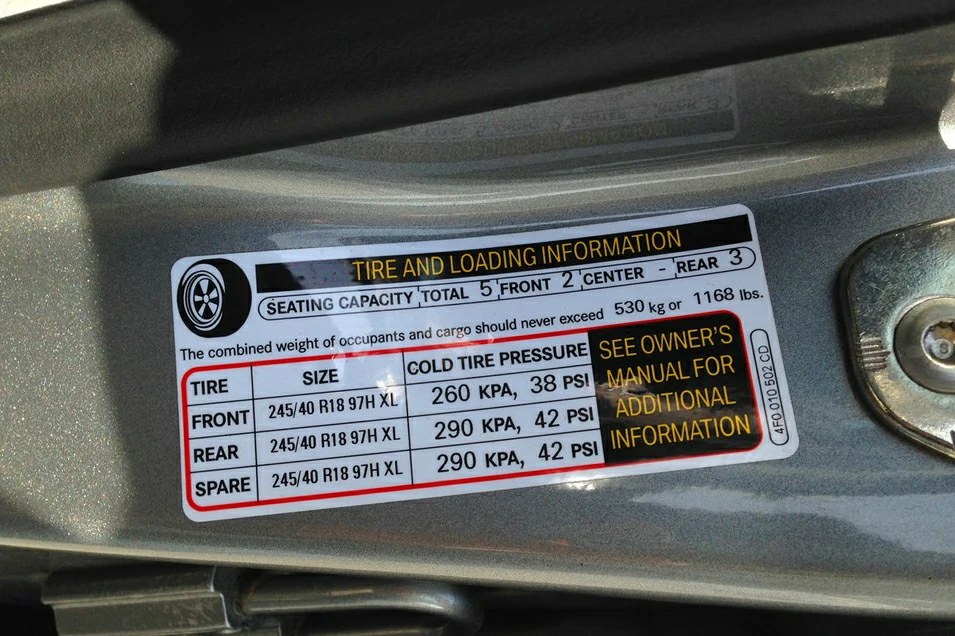
Cold Pressure and the Door-Jamb Placard
Your truck’s correct cold tire pressure is printed on the driver’s door-jamb placard, not on the tire sidewall. The sidewall shows the maximum pressure the tire can hold, not what your vehicle needs for load and handling.
Cold pressure means the tires have not been driven on for at least a few hours. Warm tires read higher, which can cause you to under-inflate if you fill right after driving. Fill to the placard number and re-check later.
Volume vs. Pressure: Why Big Tires Take Longer
Larger tires hold more air. A 33-inch off-road tire has much more volume than a standard passenger tire, so the same pressure increase takes longer. This is where portable inflators hit their practical limit.
The time gap between a car tire and a truck tire is significant. Our guide to how long it takes a portable tire inflator to fill a tire explains how output ratings translate to real-world fill times for different tire sizes.
Power and Duty Cycle: Why Battery Type and Motor Size Matter
Battery Chemistry, State of Charge, and Health
Cordless inflators rely on internal or tool-platform lithium batteries. Cold weather, low state of charge, and battery age all reduce output. A healthy, fully charged pack performs much better than one sitting at 20 percent.
Some cordless models share a battery platform with your power tools. That is convenient, but the inflator’s performance depends on the specific battery you insert and its condition.
Connection Order, Stop Conditions, and Hybrid/EV Cautions
For 12V inflators, plug into the accessory socket before turning on the unit. Follow the order in your owner’s manual. If the manual allows it, many drivers keep the vehicle running while filling to avoid draining the battery.
Most inflators have a duty cycle, such as 10 minutes on and 10 minutes off. Exceeding it can trip thermal protection or damage the motor. If the unit shuts off mid-fill, let it cool before continuing. Our guide to why portable tire inflators keep shutting off covers this failure mode in detail.
Portable Inflator Types Compared: 12V, Cordless, and Mini Compressors
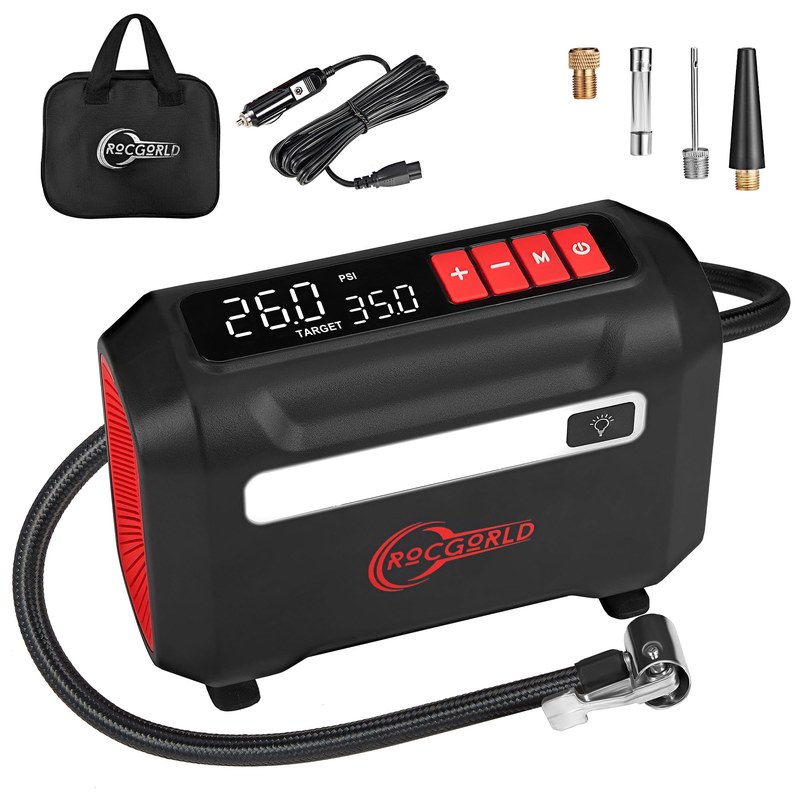
12V Inflators: Wired Power, Limited by the Vehicle
12V inflators draw power from your truck’s accessory socket. They are affordable and always ready, but the socket’s circuit limits how much power the motor can use. That cap keeps output modest.
Cordless Inflators: Portability With Duty-Cycle Tradeoffs
Cordless models run on internal batteries or tool-platform packs. They are easy to use away from the vehicle, but battery drain during a long fill is a real concern. A large truck tire can deplete a small pack before reaching the target pressure.
Mini Compressors: Higher Output, Heavier Price
Mini compressors are bulkier units with stronger motors. Many connect directly to the battery with clamps and push more air per minute. They cost more and take up cargo space, but they handle truck tires far better than a pocket-sized inflator.
Which Type Fits Your Driving Profile?
| Type | Best for | Owner consideration | Driver consideration |
|---|---|---|---|
| 12V inflator | Occasional top-offs | Low upfront cost, no battery to charge | Slow fill times on large tires |
| Cordless inflator | Portable quick fixes | Battery maintenance and replacement cost | May stop mid-fill if battery runs low |
| Mini compressor | Regular truck and off-road use | Higher price, more storage space needed | Faster, more reliable fills |
Using a Portable Inflator at the Roadside: Safety, Placement, and Technique
Safe Location and Traffic Visibility
Never inflate a tire while the vehicle sits in a travel lane. Move to a wide shoulder, a parking lot, or a driveway. Turn on hazard lights and set out reflective triangles if you carry them.
Step-by-Step Inflation and Post-Use Inspection
Use the cold pressure from the door-jamb placard. Add a few psi only if the owner’s manual calls for a higher loaded pressure.
Seat the hose firmly on the valve stem, start the unit, and watch the gauge. A loose connection causes false readings.
Stop at the target pressure, remove the hose, and listen for hissing around the valve. Re-check with a separate gauge if you have one.
TPMS, Valve Stems, and Relearn Limits: What the Inflator Can and Can’t Do
TPMS Relearn Limits and Gauge Accuracy
A portable inflator adds air, but it cannot reprogram or relearn your truck’s TPMS sensors. Some vehicles need a relearn procedure with a separate tool after a sensor battery change, rotation, or replacement. The inflator has nothing to do with that step.
Built-in gauges also vary in accuracy. Budget units can read several psi off, which matters on high-pressure truck tires. Our look at portable tire inflator gauge accuracy explains how much you can trust built-in readings and when to use a separate gauge.
Valve Stem Compatibility
Most inflator hoses use standard Schrader valves, the same type found on virtually all US passenger and light truck tires. Some units include adapters for Presta valves, which you won’t need on a typical truck.
Check that the hose end seats snugly on the valve stem. A loose fit causes slow air loss and makes the gauge read high while the inflator runs.
Maintenance and Storage: Keeping Your Inflator Road-Ready
Storage Temperature, Charge, and Cable Care
Store the inflator in a dry spot away from extreme heat or cold. If it is cordless, keep the battery at a moderate charge level. If it is wired, coil the cable loosely so it doesn’t kink.
Inspect the hose for cracks and the valve fitting for debris before each use. A damaged hose can fail under pressure at the worst time.
Duty Cycle and Post-Use Inspection
Respect the inflator’s duty cycle even when it seems fine. Letting it cool after each fill extends motor life. If the housing feels hot, stop and wait before the next tire.
After a heavy fill, check the hose, battery connection, and valve fitting again before stowing the unit.
When to Stop: Puncture Location, Temporary Repairs, and Professional Thresholds
Puncture Location and Temporary Repair Limits
An inflator can bring a leaking tire back to pressure, but it cannot fix the cause. If the tire loses air quickly, or if the puncture is in the sidewall, it’s time to stop and call for service.
Legal and Warranty Considerations
Roadside repair rules vary by state. Emergency lighting requirements, where you may stop, and how long you can work near a roadway differ across the US. Check your state’s rules before you plan a roadside inflation or a temporary plug repair.
Temporary repairs also affect tire warranties. Some manufacturers will not cover a tire that has been plugged. Check your tire warranty terms or ask the dealer before relying on a plug as a permanent fix.
How to Choose the Right Inflator for Your Truck: A Practical Buying Guide
Evaluation Criteria and Evidence Limits
Before you buy, compare maximum pressure, airflow output, duty cycle, power source, and build quality. Set realistic expectations: no portable inflator replaces a full-size air compressor for heavy daily use.
Manufacturer specs describe ideal conditions. Real fill times depend on temperature, battery state, and tire size. Look for independent measurements and long-term owner reviews instead of marketing claims alone.
Ideal User, Drawbacks, and Alternatives
A portable inflator suits drivers who need occasional top-offs and emergency pressure recovery. It’s not the best choice if you regularly air down off-road and refill large tires, or if your truck needs 80 psi commercial pressures.
For larger rubber, our picks for the best portable tire inflators for 33-inch tires cover units built for bigger tires and heavier duty. A mini compressor or a full-size compressor is a better match for frequent heavy use.
Warranty Support and Transparent Verdict
Check the warranty terms before purchase. Some brands back their inflators with multi-year warranties and accessible US customer support. Others are cheap but essentially disposable.
A good portable inflator is a practical emergency tool for most truck owners. It won’t match shop equipment, but on the right tire with a reasonable pressure target, it gets the job done.
- Best for: Truck owners who need occasional top-offs, slow-leak management, and emergency pressure recovery.
- Think twice if: You frequently refill large tires from flat, air down off-road, or need 80 psi commercial pressures.
- Next step: Check your door-jamb placard, confirm the inflator’s maximum pressure rating, and test it at home before you need it at the roadside.
Frequently Asked Questions
Some can, but it takes a long time and pushes the motor’s duty cycle hard. Most portable inflators are better suited to topping off a low tire than filling a fully flat one from zero.
Use the cold tire pressure on the driver’s door-jamb placard. The number on the tire sidewall is the maximum pressure the tire can hold, not the pressure your truck needs.
It varies with tire volume, starting pressure, and inflator output. Large truck tires can take several minutes per tire, and some inflators shut off to cool before reaching the target.
Yes, if the inflator’s maximum pressure rating exceeds your placard pressure and the battery holds enough charge. Cold weather and a low state of charge reduce performance.
Normal inflation does not damage TPMS sensors. The inflator also cannot relearn or reprogram sensors, which may require a separate tool after tire service.
Choose one with a maximum pressure well above your target, a higher airflow rating, and a duty cycle long enough to finish the fill. Compact units often struggle with larger 33-inch tires.